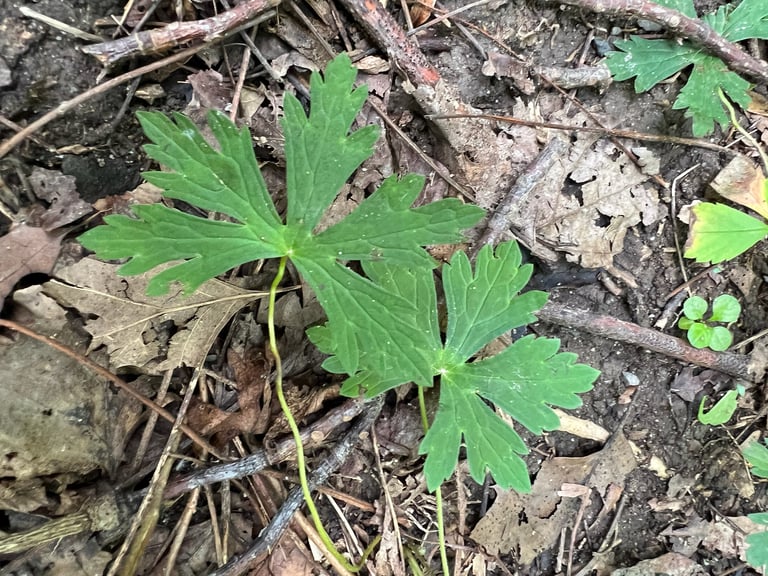
Few small wildflowers have spread as widely as Geranium purpureum. Native to Europe, Africa, and western Asia, this little-robin has been introduced on all continents except Antarctica.
The species is a flowering plant in the geranium family, Geraniaceae. It is similar in appearance to Geranium robertianum, a close relative, so the two are often confused in the field.
Identification and Appearance
The most useful field mark is the flower size. Each petal measures 6.3–8.4 mm long and 1.5–2.0 mm wide, so the whole flower is only about 7.5 mm across.
The flower has five sepals and five petals, with ten stamens that each carry a yellow anther. A single fused style rises from the center and ends in five stigmas. The fruit is a schizocarp that splits into five one-seeded parts when ripe.
The plant is an annual, though some plants live two years. It is often confused with Geranium robertianum, whose petals are at least twice as large, at 10.5–12.5 mm long. Its anthers are purplish rather than yellow.
Both species have yellow pollen, so anther color alone cannot separate them reliably. Botanists also look at the hairs on the sepals and the lobing of the middle leaf segment.
Distribution and Habitat
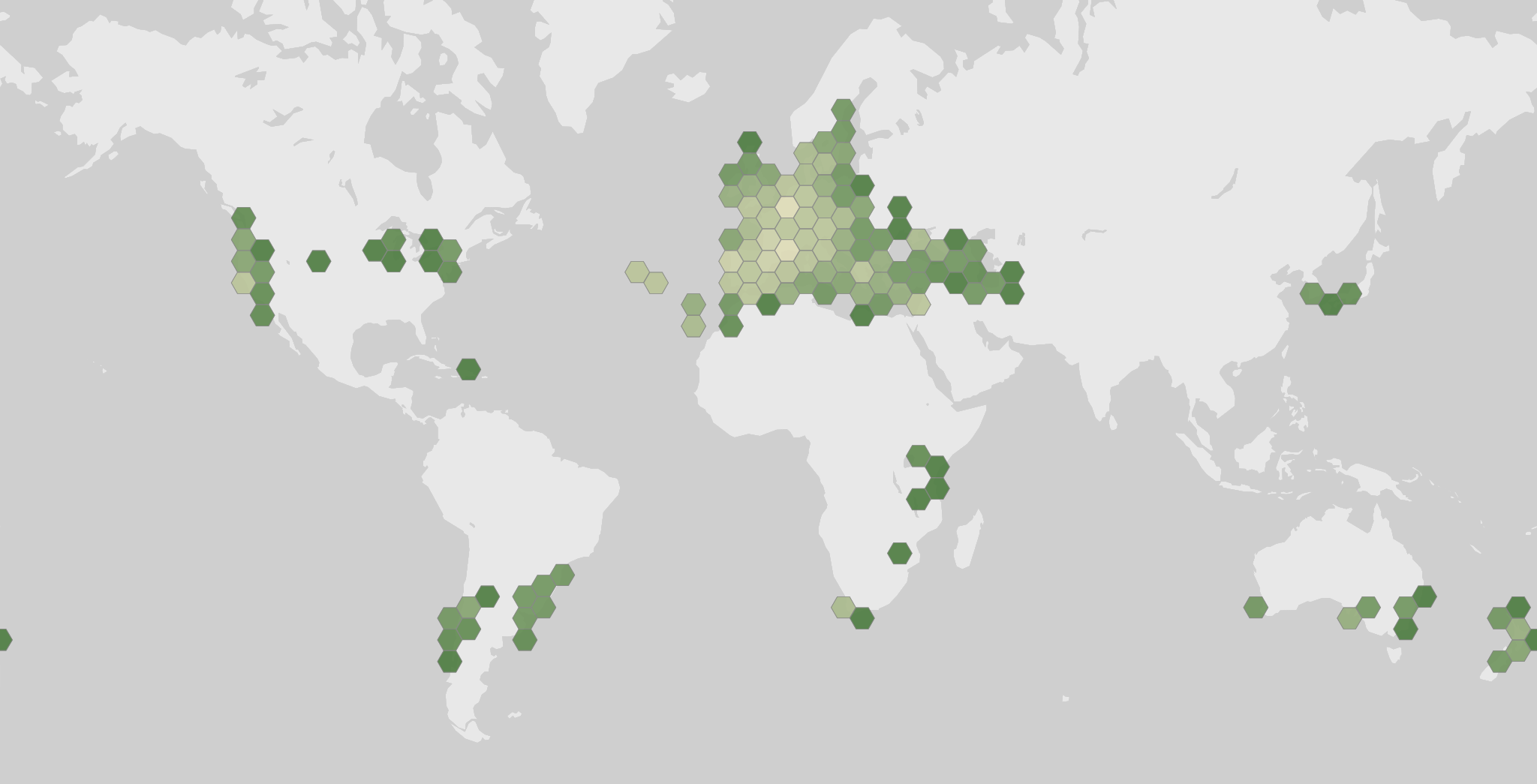
Geranium purpureum ranges from Great Britain southeast to the Caucasus. Its native populations reach as far south as central Africa, including Morocco, Tunisia, Kenya, and Tanzania.
In the wild it grows across much of the Mediterranean, from the Canary Islands and Madeira to Cyprus and Iran. Its native climate is temperate.
Outside its native range, the plant is established in parts of South America, North America, Asia, Australia, and New Zealand. In California, Chile, and South Australia it is found well away from its original home.
Introduced populations are often found along railway corridors. Observations are most frequent from April through June, with a clear peak in May.
Growth and Form
Geranium purpureum is a forb or herb. It is usually an annual, though some plants are biennial and live for two years.
Because it is a small herb, the whole plant stays low, with its tiny flowers held on slender stalks.
Ecology and Relationships
Flies and bees visit the flowers, and the hoverfly Episyrphus balteatus is the most frequent of them. Bumblebees such as Bombus pascuorum and mason bees such as Osmia bicornis also visit, though less often.
The plant is sensitive to cold. It cannot survive winters where the average January temperature is 4 °C (39 °F) or lower, which limits where it can persist.
Its habitat is shaped by people. Introduced populations are often found along railway corridors, where disturbed ground suits the species.
Photos
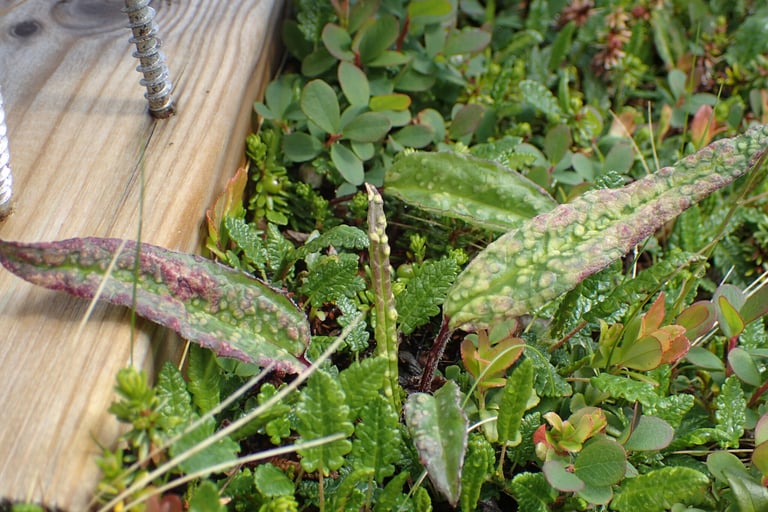
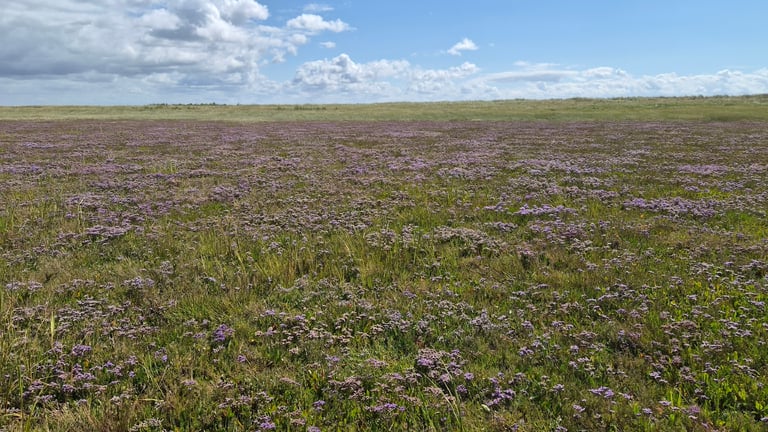
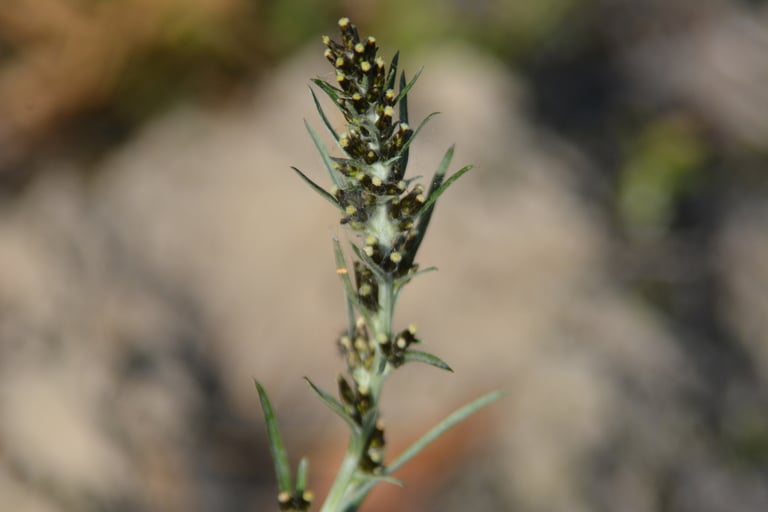
Photographs from via iNaturalist, licensed under CC0 1.0., by Pluto Hooper via iNaturalist, licensed under CC BY 4.0., by Shaun via iNaturalist, licensed under CC BY 4.0., by zebedeugalinha via iNaturalist, licensed under CC BY 4.0., and by trundlingwombat via iNaturalist, licensed under CC BY 4.0., credited on each photo.
Ecology and classification
Habitat
Growth habit
- Herb
Classification
- Phylum
- Tracheophyta
- Class
- Magnoliopsida
- Order
- Geraniales
- Family
- Geraniaceae
- Genus
- Geranium
- Species
- Geranium purpureum
Sources
- GBIF Species names and classification
- iNaturalist Photos
- Wikidata Common names and conservation status
- Wikipedia Summary extract
- Plants of the World Online Native range, life form and climate (WCVP)
- USDA Plants US plants: growth habit and growing conditions
- GloBI What it eats, what eats it, parasites and pollinators
- DoPI