An oily, almost unpleasant scent is the surest way to know you have found Lactarius quietus. That smell, combined with faint concentric bands across its cinnamon-brown cap, sets it apart from most other milkcaps growing in the same woods.
This is a gilled mushroom in the genus Lactarius, part of the family Russulaceae. It grows exclusively under oak trees across Europe, appearing solitarily or in scattered groups through the autumn months. Its scientific epithet, quietus, likely refers to the dull, matte surface and subdued coloration of its cap.
What makes this species worth a closer look is the tension between its easy identification and its uncertain place at the table: mycologists disagree on whether it is truly edible.
Fruiting Body and Identification
The single most reliable clue to Lactarius quietus is its smell: a strong, oily odor that has been compared to bedbugs or wet laundry. Combined with the concentric bands or spots visible on the cap, this scent makes the species one of the more distinctive milkcaps to identify in the field.
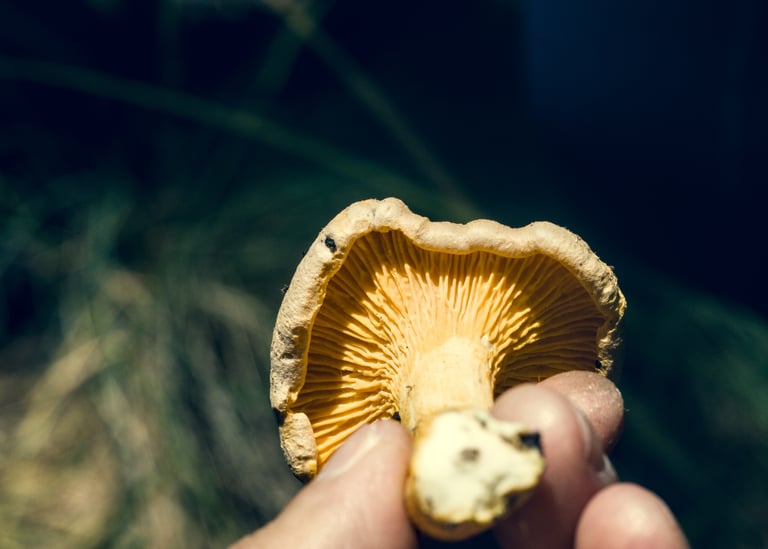
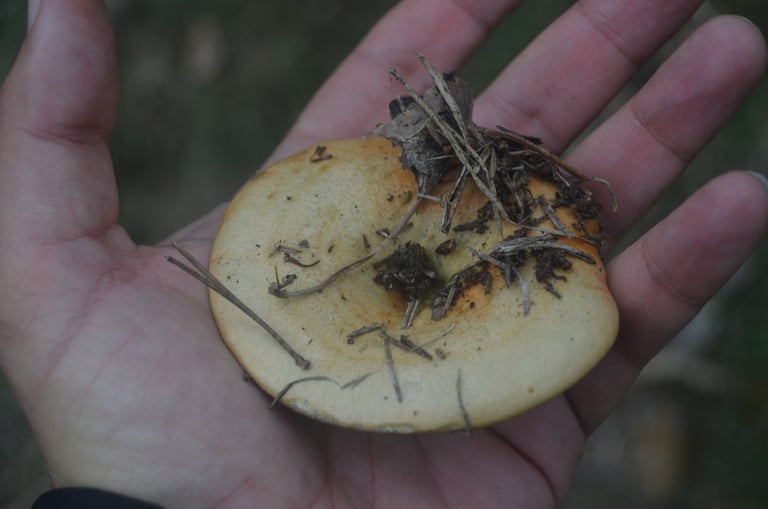
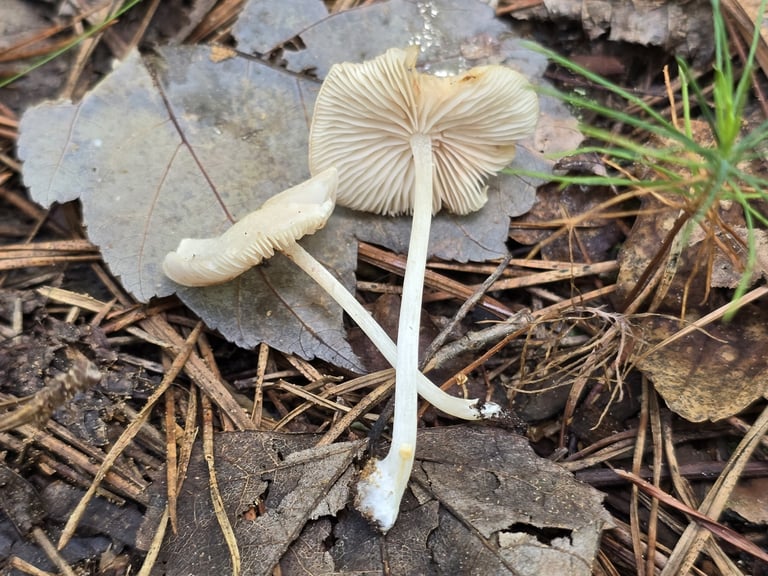
The cap spans 5 to 8 centimeters across, starting convex before flattening or developing a shallow central depression with age. It is a dull reddish brown with a cinnamon tint, dry and matte to the touch, never sticky even when wet. Beneath the cap lies a thick layer of firm, whitish-buff flesh. The gills are brownish-white at first, slightly decurrent, and shift with age toward a pale reddish brown tinged with mauve, while the milk they exude stays white or cream.
The stem measures 4 to 9 centimeters tall and 10 to 15 millimeters thick, cylindrical but sometimes furrowed lengthwise, lacking any ring. It matches the cap in color or runs slightly darker, and is occasionally hollow inside. Under magnification, the oval spores measure 7.5 to 9 by 6.5 to 7.5 micrometers, marked with plentiful warts joined by ridges into a well-developed network, and they leave a cream-colored spore print.
A North American variety, L. quietus var. incanus, grows slightly larger and shows a whitish bloom on younger specimens, along with a sweeter smell reminiscent of maple syrup rather than the oily scent of the nominate form. It can be confused with L. aquifluus and L. mutabilis, though both of those species are restricted to coniferous woodland rather than the oak habitat this variety favors.
Distribution and Habitat
Lactarius quietus grows exclusively at the base of oak trees, appearing solitarily or in scattered groups directly in the soil beneath them. It is an ectomycorrhizal partner of oak, though some studies suggest it can also feed saprotrophically on organic matter in the soil, giving it more flexibility than a strict symbiotic relationship would allow.
The species is found only in Europe, where it is common enough to rank among the one hundred most frequently encountered mushroom species in the United Kingdom. Its North American counterpart, the variety L. quietus var. incanus, is fairly common in the same oak-associated habitat across the eastern part of the continent.
Monthly observation data show a sharp seasonal pattern, with counts climbing from a few dozen in spring months to over 12,000 in September and remaining high into October, before falling away by November. This pattern points to a strong autumn fruiting season, though as presence records rather than abundance counts, the figures describe when the species is observed, not how many individuals exist or the full extent of its range.

Fun Facts
- The species goes by several common names, including oak milkcap, oakbug milkcap, and southern milkcap, all pointing to its tight association with oak woodland.
- Its scientific name, quietus, meaning "quiet," is thought to describe the dull, matte, understated look of its cap rather than any behavior of the fungus itself.
Ecology
Habitat
- Forest
- Woodland