This brittle mushroom grows on the forest floor and on rotting wood, and it is fairly common in Europe, North America and eastern Asia. It belongs to the milkcap genus Lactarius, in the family Russulaceae.
The fruiting bodies appear in autumn. Their most distinctive feature is the white milk that the crowded gills produce when cut or damaged.
It forms an ectomycorrhizal partnership with surrounding trees and favors birch, which makes it a useful indicator of the woodland it shares with those trees.
Fruiting Body and Identification
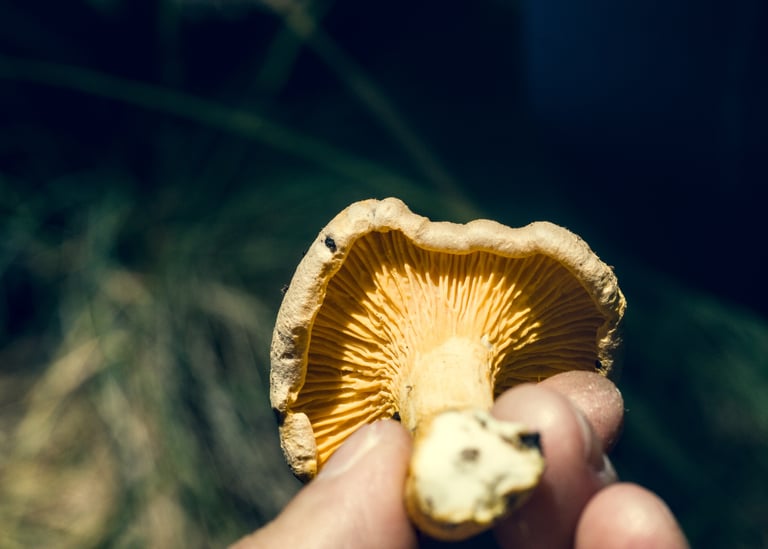
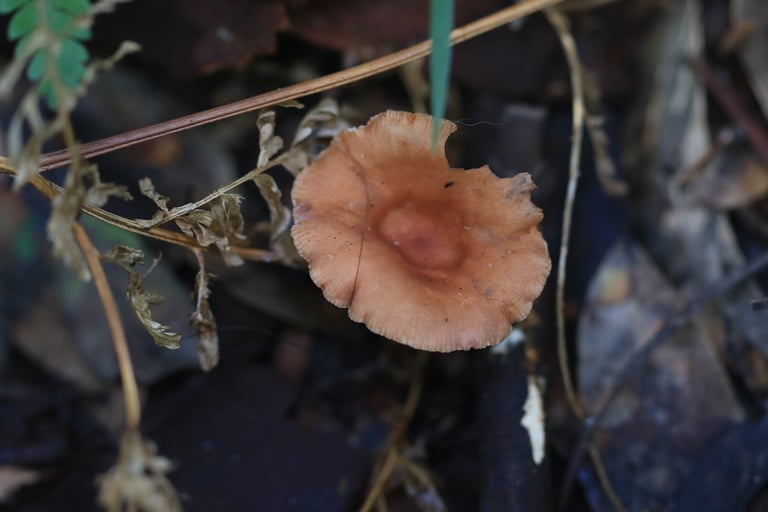
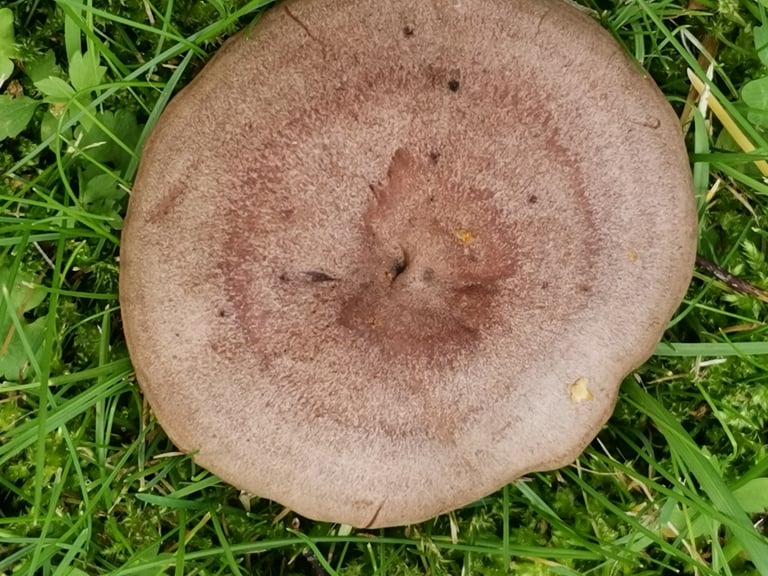
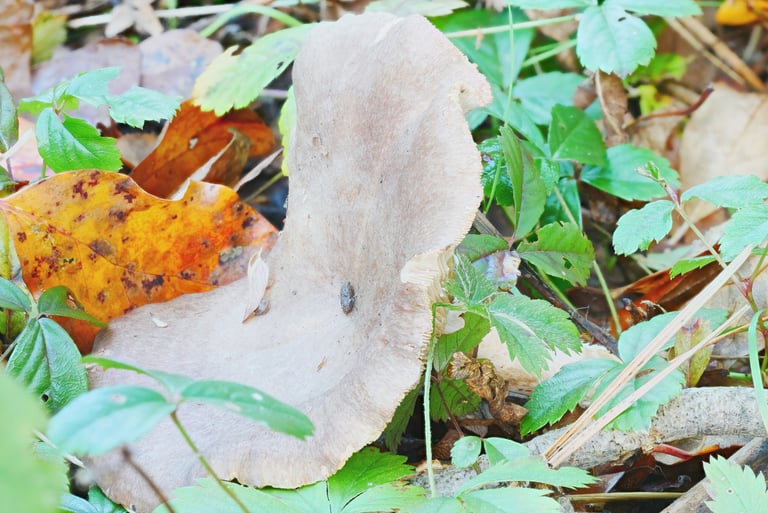
The cap is grey, sometimes tinged with violet, flesh-colored, pale yellowish-brown or red, and typically measures 2.5 to 7.5 centimeters (1 to 3 inches) across. It is flattened-convex when young and can become widely funnel-shaped, with a depressed center. The surface is smooth and can be slimy or sticky when wet.
The stem is 2.5 to 8 centimeters (1 to 3 inches) tall and 2 to 7 centimeters (0.8 to 3 inches) wide, usually cylindrical and whitish or greyish, paler at the top. It is weak, easily broken, and often hollow because the flesh is absent inside.
The crowded gills are whitish to dirty buff and may run down the stem. They are thin and flaccid, with three to four tiers of short lamellulae. The white milk dries brownish or greenish grey after about 20 minutes. The spore print is usually creamy white with a slight salmon tinge, but it can range from white to yellow, so it does not reliably identify the species.
Distribution and Habitat
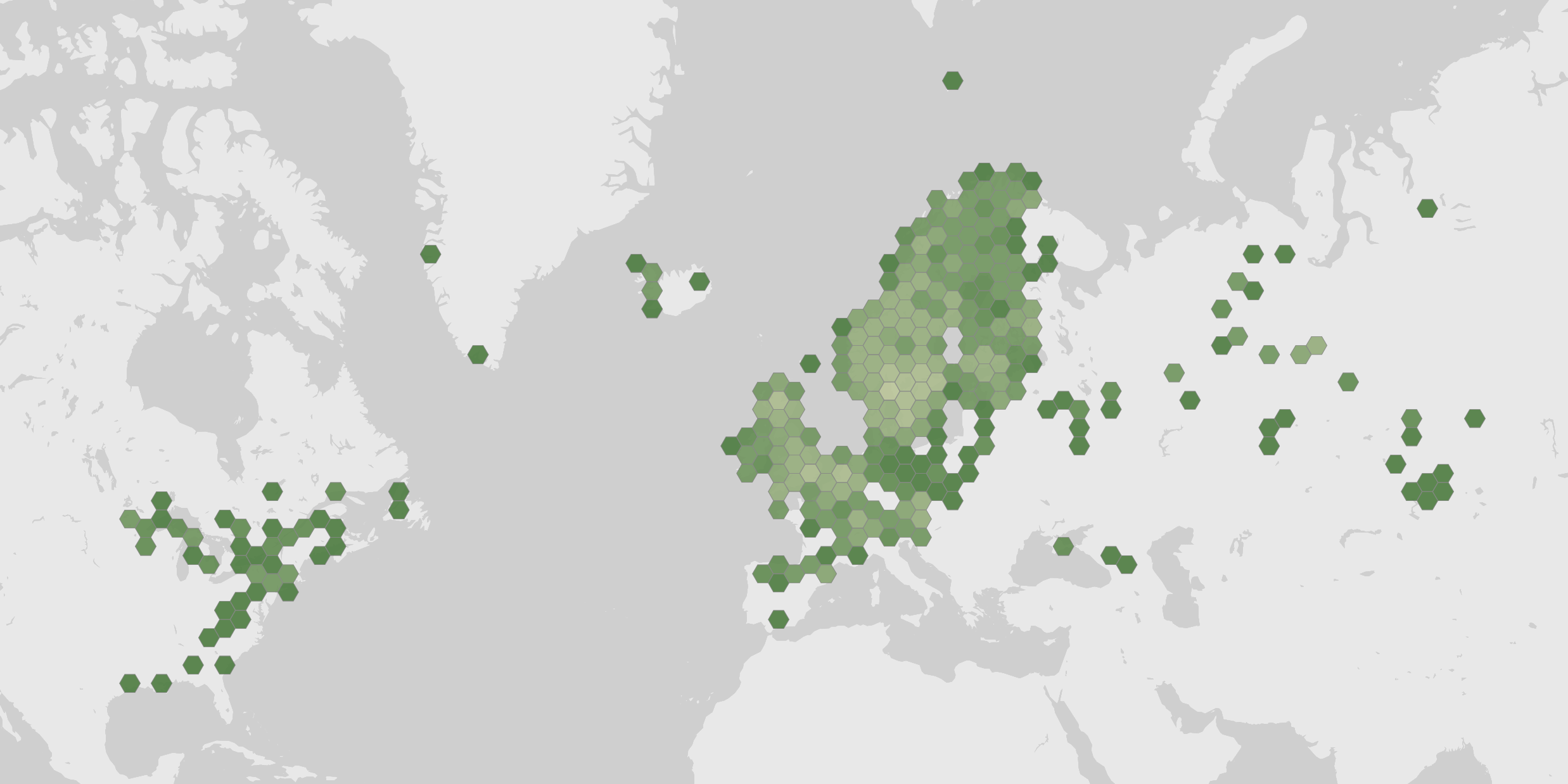
The species occurs in Europe, including Scandinavia, the British Isles, Bulgaria, Germany and northern Turkey. In North America it is recorded as common in Canada and in both the northern and southern United States. In northern Asia it has been found near the Oka River and the central Angara River in Siberia, and in eastern Asia it has been collected in China.
It grows in moist areas under trees in autumn, often among Sphagnum moss. It strongly favors birch but has also been found under oak. Mushrooms may appear in large numbers, in tight clumps, or singly when fruiting out of season.
The fungus also grows on rotting conifer and hardwood logs. These log-dwelling specimens are typically smaller. Its mycelium connects with tree roots growing through or near the wood, which helps it when the soil is wet or nutrient-poor.
Observation records peak from August to October, with the highest counts in September. Records are concentrated in autumn, when the mushrooms fruit.
Photos
Photographs from via iNaturalist, licensed under CC0 1.0., by Andrejus Gaidamavičius via iNaturalist, licensed under CC BY 4.0., by Enrico Tomschke via iNaturalist, licensed under CC BY 4.0., by akhmelyuk via iNaturalist, licensed under CC BY 4.0., by juniperus_com via iNaturalist, licensed under CC BY 4.0., by Tatiana Strus via iNaturalist, licensed under CC BY 4.0., by Tomos Hughes via iNaturalist, licensed under CC BY 4.0., by Victoria M. via iNaturalist, licensed under CC BY 4.0., by tinyclayman via iNaturalist, licensed under CC BY 4.0., by Kirsten via iNaturalist, licensed under CC BY 4.0., and by Nina Filippova via iNaturalist, licensed under CC BY 4.0., credited on each photo.
Ecology and classification
Classification
- Phylum
- Basidiomycota
- Class
- Agaricomycetes
- Order
- Russulales
- Family
- Russulaceae
- Genus
- Lactarius
- Species
- Lactarius vietus
Sources
- GBIF Species names and classification
- iNaturalist Photos
- Wikidata Common names and conservation status
- Wikipedia Summary extract