Lycopodium clavatum is the most widespread species in its genus, a clubmoss that grows across several continents. It belongs to the clubmoss family Lycopodiaceae, and it is a spore-bearing vascular plant rather than a moss.
Across its range it goes by many names, including wolf's-foot clubmoss, common clubmoss, running ground-pine, running pine, and princess pine. Its habit of creeping along the ground explains several of them.
Identification and Appearance
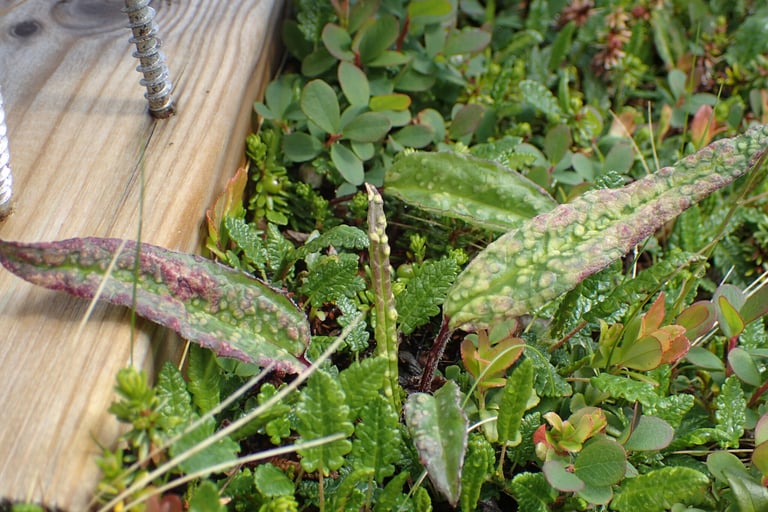
The most useful field mark is the creeping, densely leafy stem. It looks like a small conifer seedling, although the plant is not related to conifers.
The leaves are small, 3 to 5 mm long and 0.7 to 1 mm broad. They are set spirally along the stems and taper to a fine, hair-like white point.
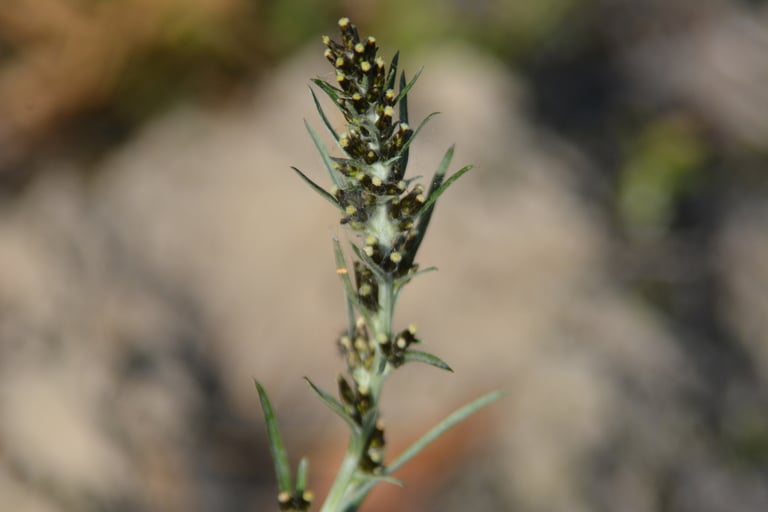
The fertile branches turn erect and rise 5 to 15 cm above the ground. Their leaves are modified into sporophylls that enclose the spore capsules.
The spore cones are yellow-green, 2 to 3 cm long and 5 mm broad.
Distribution and Habitat
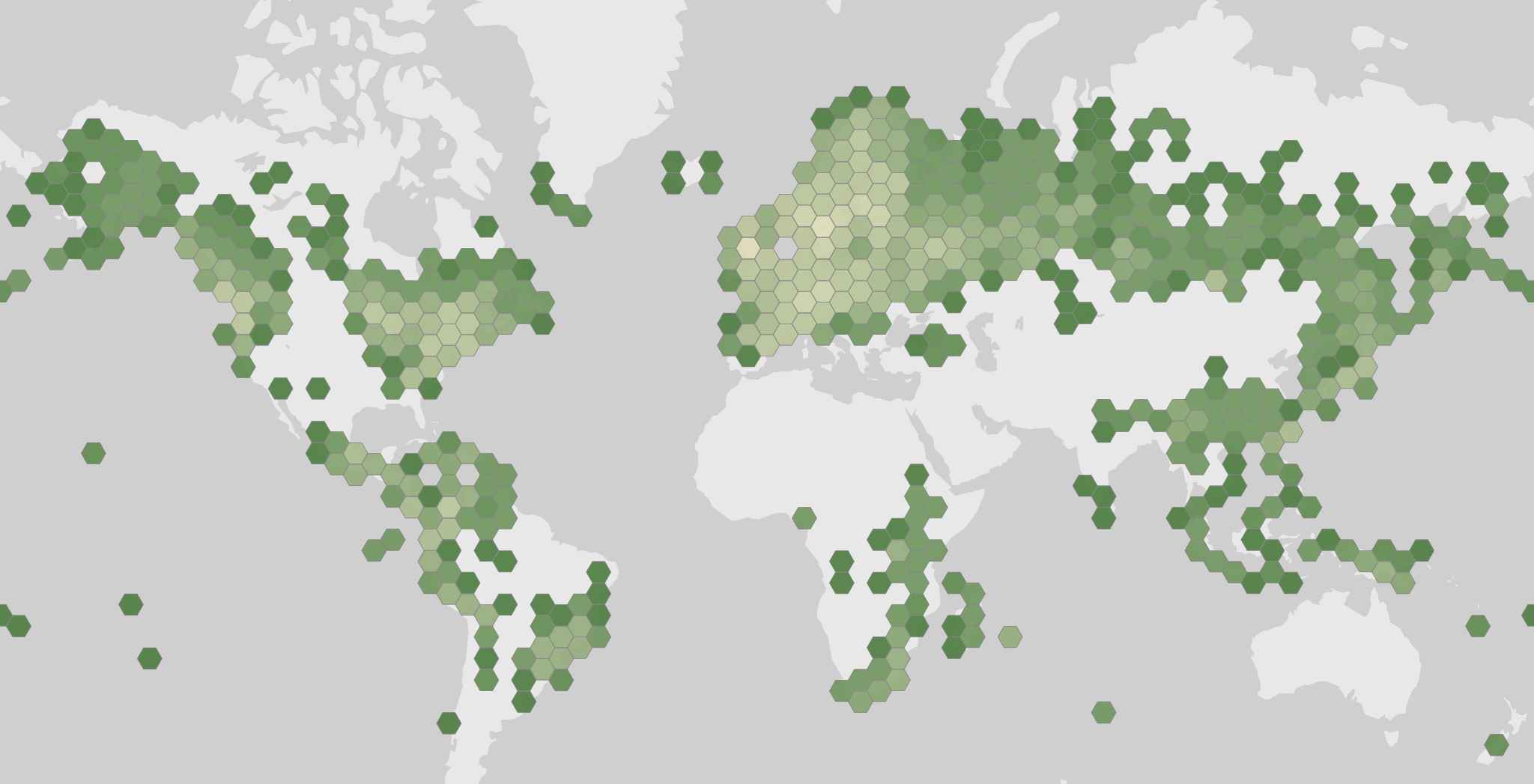
Lycopodium clavatum occurs across several continents, from Europe and Asia to North America, Africa and South America. It is most typical of the Northern Hemisphere's temperate zone and extends into tropical mountains.
The species is divided into subspecies and varieties that differ by region. The typical variety occurs in Europe, Asia and North America, while var. asiaticum is found in Japan and northeast China, and var. borbonicum in central and southern Africa.
In the tropics, var. kiboanum grows in the mountains of tropical Africa, and subsp. contiguum occurs in southern Central America and northern South America.
It grows in fields and woods at elevations from 100 to 1,800 m. It is confined to undisturbed sites. Sightings of the plant are busiest in July and August.
Growth and Form
Lycopodium clavatum is a perennial herb with a creeping habit. Its stems grow mainly along the ground and can reach up to 1 m (39 inches) in length.
The stems branch extensively and produce roots at frequent intervals along their length. This lets the plant spread indefinitely along the ground.
Ecology and Relationships
Songbirds are the main birds that feed on Lycopodium clavatum. Redpolls, skylarks and greenfinches stand out among them.
Pigeons, including the wood pigeon, along with gamebirds, ducks and geese, also feed on it, though these groups appear less often among its partners. Moth caterpillars and carnivorous mammals are also listed as partners, but far less frequently.
Because it is confined to undisturbed sites, it disappears from farmed land and from places that burn regularly.
Photos
Photographs from via iNaturalist, licensed under CC0 1.0., by Murray McGoogan via iNaturalist, licensed under CC BY 4.0., by brettaugust via iNaturalist, licensed under CC BY 4.0., by Ирина Хохрякова via iNaturalist, licensed under CC BY 4.0., by Steven Lamonde via iNaturalist, licensed under CC BY 4.0., by Harold Smith via iNaturalist, licensed under CC BY 4.0., by botanygirl via iNaturalist, licensed under CC BY 4.0., by arthur_haendler via iNaturalist, licensed under CC BY 4.0., by Karolina Skorb via iNaturalist, licensed under CC BY 4.0., and by Nick Kleinschmidt via iNaturalist, licensed under CC BY 4.0., credited on each photo.
Ecology and classification
Classification
- Phylum
- Tracheophyta
- Class
- Lycopodiopsida
- Order
- Lycopodiales
- Family
- Lycopodiaceae
- Genus
- Lycopodium
- Species
- Lycopodium clavatum
Sources
- GBIF Species names and classification
- iNaturalist Photos
- Wikidata Common names and conservation status
- Wikipedia Summary extract
- Encyclopedia of Life Habitat, diet and behavior traits
- Plants of the World Online Native range, life form and climate (WCVP)
- USDA Plants US plants: growth habit and growing conditions
- GloBI What it eats, what eats it, parasites and pollinators
- trophiCH