Few fungi announce spring as reliably as Morchella esculenta, whose honeycomb-textured cap pushes up through the soil just as the last frost lifts. It is probably the most familiar of all morels, recognized by pale ridges that stay lighter than the pits throughout its growth.
This species belongs to the fungal family Morchellaceae, within the phylum Ascomycota. It grows on the ground in forests, orchards, and gardens across a wide range, appearing in a short, predictable window each year. That brief, unmistakable spring appearance, paired with its status as one of the most sought-after wild edibles, is what draws so many foragers and naturalists to look for it every year.
Fruiting Body and Identification
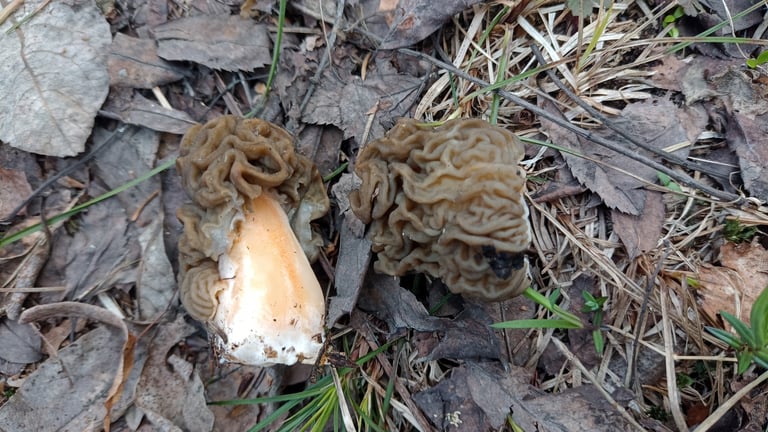
The clearest identifying feature of Morchella esculenta is its pale, honeycomb-like cap, where the ridges remain lighter in color than the pits throughout development, unlike darker-ridged relatives such as M. angusticeps. The cap is pale brownish cream to yellow, tan, or grayish brown, oval to bluntly cone-shaped, hollow, and attached to the stem at its lower edge. It typically measures 2–7 centimeters across and 2–10 centimeters tall, with brittle flesh.
The stem is white to pale yellow, hollow, and finely granular, straight or with a club-shaped or bulbous base, generally 2–9 centimeters long and 2–5 centimeters thick. Older specimens sometimes develop brownish staining near the stem base. The spore print ranges from white to cream to pale yellow, though obtaining one can be difficult given the fruit body's shape. Spores are ellipsoidal, smooth, and thin-walled, measuring 17.5–21.9 by 8.8–11.0 micrometers, produced eight to an ascus within cylindrical, hyaline asci.
Morchella crassipes is sometimes confused with M. esculenta; young specimens of the former are especially hard to separate, though M. crassipes tends to be larger, with thinner ridges and sometimes a grooved, enlarged stem base.
Distribution and Habitat
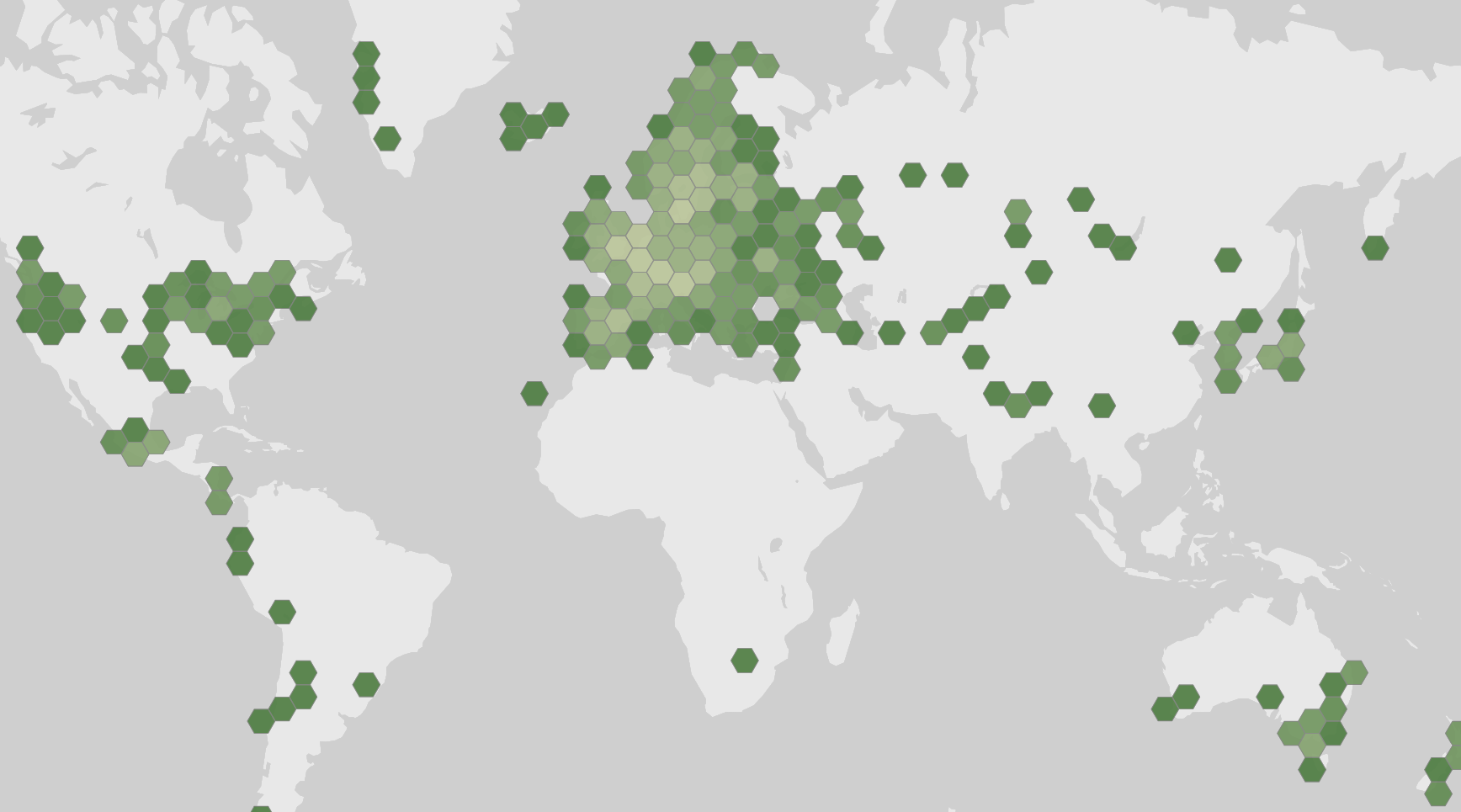
Morchella esculenta grows on the ground, singly or more often in groups, across a wide range of wooded and disturbed habitats. It shows a preference for alkaline, limestone-based soils but has also been recorded in acidic ground, and it fruits in pine, cypress, and oak forests as well as orchards, yards, gardens, and recently burned areas.
In North America the species is widespread but especially common in the eastern part of the continent and the Midwest, and large crops have been noted around the bases of elms dying from Dutch elm disease. It has also been recorded in Brazil and Bulgaria, indicating a broader distribution beyond its North American and European strongholds.
Fruiting occurs in early spring, typically from February to July depending on locale, and it is usually the last morel species to appear where multiple species occur together; in northern Canada and cooler mountainous regions it may not emerge until June. Monthly observation data show a sharp rise in spring, peaking in April and May, consistent with its reputation in North America as the "May mushroom," though these figures reflect presence records rather than true abundance or the full extent of its range.
Life Cycle
Fruiting begins as a dense underground knot of hyphae once moisture and nutrient conditions are suitable. This cup-shaped primordium stays below the surface for a time before emerging from the soil and developing into a stalked fruiting body.
As growth continues, the spore-bearing hymenium becomes convex, with the asci facing outward. Because the hymenium's surface grows unevenly, it folds into the many ridges and depressions that create the mushroom's distinctive honeycomb appearance.
Laboratory studies, including detailed cytological work by Thomas Volk and Leonard in the late 1980s following development in association with tuberous begonias, have traced this process from tiny primordia to fully formed fruit bodies, and spore germination has been linked experimentally to soil temperature, supporting the idea that the species' cool-weather spring fruiting lets it grow with less competition from other fungi.
Ecology and Relationships
Morchella esculenta fruits on soil, most often in forests associated with pine, elm, tulip, sassafras, beech, ash, sycamore, and hickory trees, and it shows a preference for alkaline, limestone-derived soils while still tolerating acidic ground. Large fruitings have also been observed around the bases of elms weakened by Dutch elm disease, suggesting the fungus can exploit stressed or dying trees.
The hollow fruit bodies sometimes host centipedes, which take up residence inside the cap; infested morels can often be recognized by a hole in the top. This is one of the few directly documented interactions between the species and other organisms in the available record.
Uses and Cultural History
Morchella esculenta is among the most highly prized of all edible mushrooms, traditionally fried in butter, baked after being stuffed with meats and vegetables, or dried by threading the caps on string to concentrate their flavor. Nutritional analysis on a dry-weight basis found it to contain 32.7% protein, 2.0% fat, 17.6% fiber, 9.7% ash, and 38.0% carbohydrates. Both the fruit bodies and mycelia contain an uncommon amino acid, cis-3-amino-L-proline, otherwise known only in M. conica and M. crassipes.
In Jammu and Kashmir, the mushroom, known locally as Gucchi, is gathered and used as a folk medical remedy. Research has also explored its mycelium's ability to bind furanocoumarins, compounds in grapefruit responsible for certain drug interactions, and its potential in solid-state fermentation to improve the nutritional value of foods such as cornmeal.
Several attempts have been made to cultivate the species, including early flower-pot cultures and later methods using inoculated hardwood sapling beds treated with potassium hydroxide to mimic post-fire soil chemistry; small-scale growers have since had some success using mulch beds inoculated with spore solutions. In some Native American cultures, morels were regarded as spiritual symbols of renewal and rebirth, tied to their springtime and post-fire appearance.
Fun Facts
- In 1901, the mycologist Repin reported harvesting morel fruit bodies from cultures established in a cave nine years earlier, in 1892, one of the earliest documented cultivation successes.
- Morchella esculenta was used to typify the genus Morchella in 1794, yet the genus remains taxonomically contested, with some mycologists recognizing as few as three species and others more than thirty.
- In Jammu and Kashmir's Great Himalayan National Park, the species (known locally as Gucchi) is considered ecologically and culturally significant, valued both for biodiversity and by local communities.
Ecology
Habitat
- Forest
- Woodland
- Urban
- Disturbed Ground