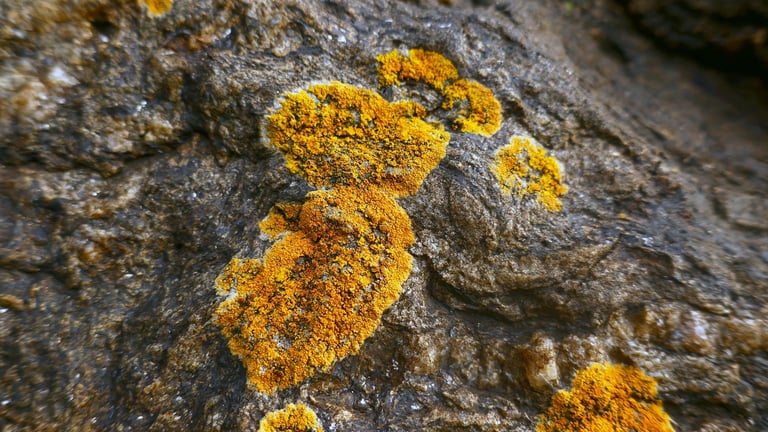
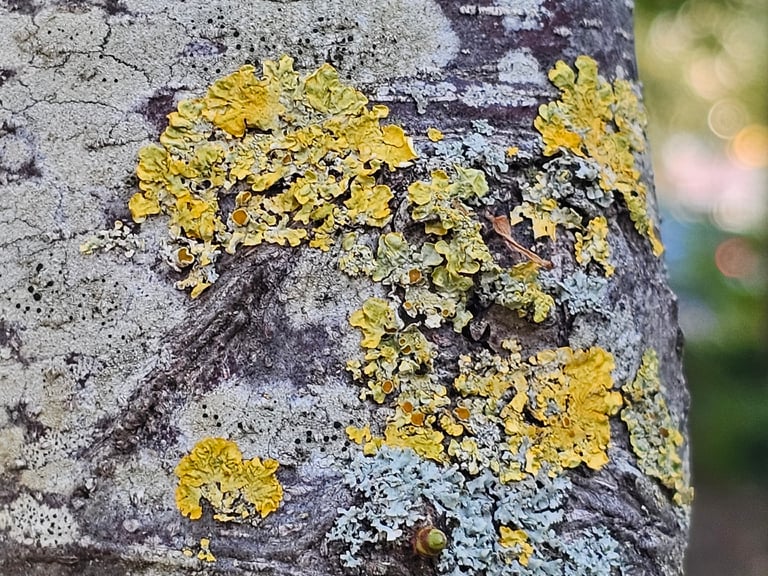
The gold-eye lichen (Niorma chrysophthalma) carries its sexual structures as bright-orange cups, called apothecia, ringed with spiny projections known as cilia.
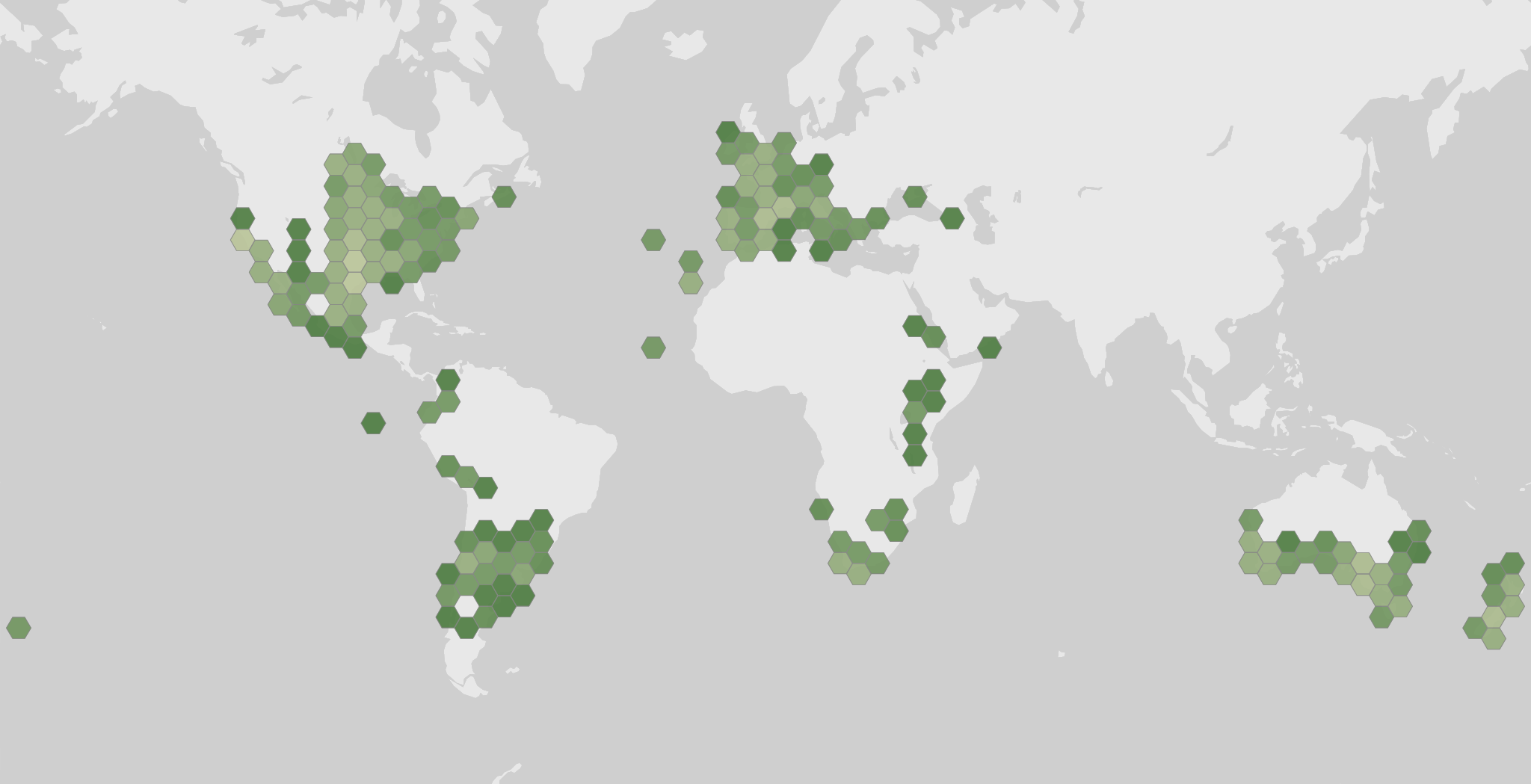
This is a fruticose lichen, meaning it grows as a branching, bush-like body rather than a flat crust. Its lobes branch repeatedly, and it belongs to the family Teloschistaceae within the class Lecanoromycetes. The lichen has a global distribution, yet it is often localized and rare across much of its range.
Colonies most often form along coastal areas, which makes the gold-eye lichen a useful subject for anyone interested in how lichens settle in coastal habitats.
Distribution and Habitat
The gold-eye lichen has a global distribution, but its populations are often localized, and it is rare in many parts of its range. Colonies most often form along coastal areas.
Sightings are most frequent in spring, peaking in April, and taper off through the summer months. This seasonal pattern shows when people most often find the lichen, and it should not be read as a measure of how many lichens are present.
Ecology and classification
Habitat
Classification
- Phylum
- Ascomycota
- Class
- Lecanoromycetes
- Order
- Teloschistales
- Family
- Teloschistaceae
- Genus
- Niorma
- Species
- Niorma chrysophthalma