The royal fern is sometimes called the "flowering fern," not because it produces true flowers but because its fertile fronds end in a dense, rust-brown cluster of spore cases that looks strikingly like a bloom rising above the foliage.
This is a large, deciduous perennial fern native to Europe, North Africa, and West Asia, where it grows in woodland bogs and along stream banks. The IUCN lists it as Least Concern.
Few ferns combine such architectural size with the folklore this species has attracted, and both qualities make it worth a closer look.
Identification and Appearance
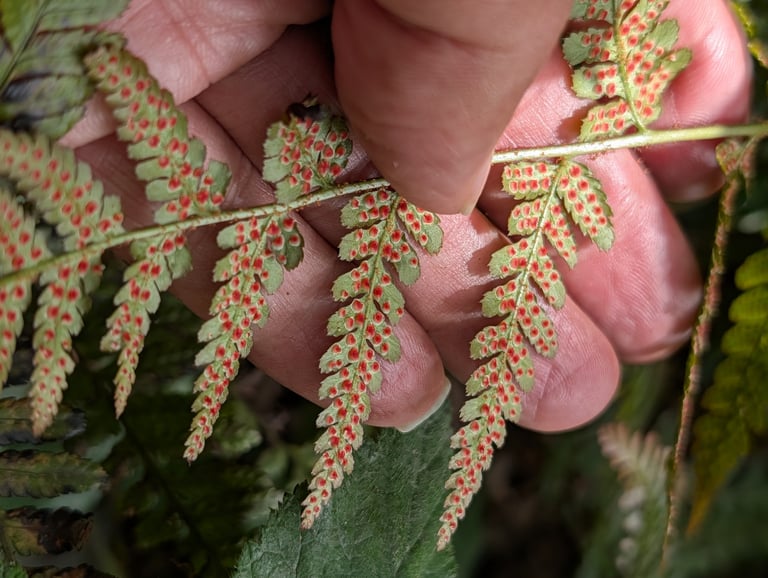
The clearest field mark is the fertile frond tip: a portion of the leaf blade reduced almost to its midrib and densely coated in brown sporangia, standing above the sterile, leafy pinnae like a separate flowering spike. No other feature identifies royal fern as quickly.
Fronds typically reach up to 120 cm long but can exceptionally grow as much as 400 cm long and 30-40 cm broad, arising directly from a stout, ascending rhizome that, over many years, builds into a woody, trunk-like base a meter or more high, wrapped in interwoven roots.
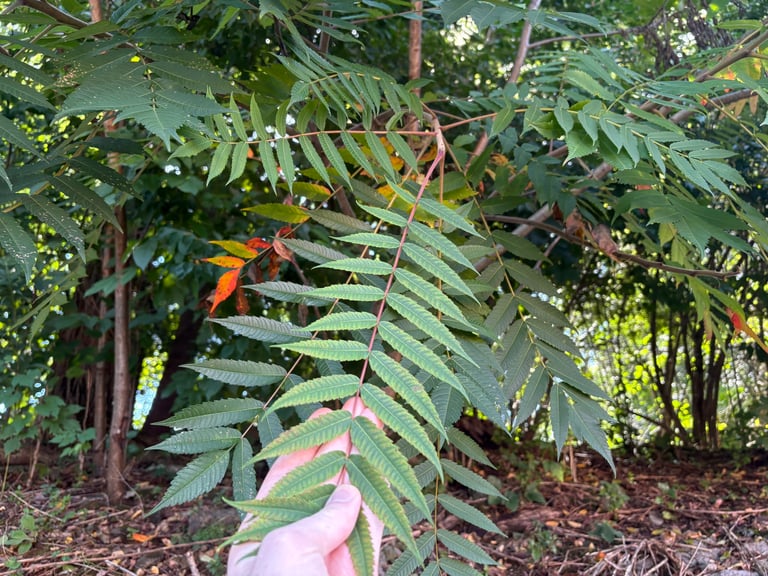
Each frond is bipinnate, with 5 to 9 pairs of pinnae up to 30 cm long, and each pinna divided into 7 to 13 pairs of pinnules 2.5-6.5 cm long and 1-2 cm broad. Young fronds emerge covered in golden-brown hairs that quickly fall away, leaving a smooth, pale green surface with veins prominent on both sides.
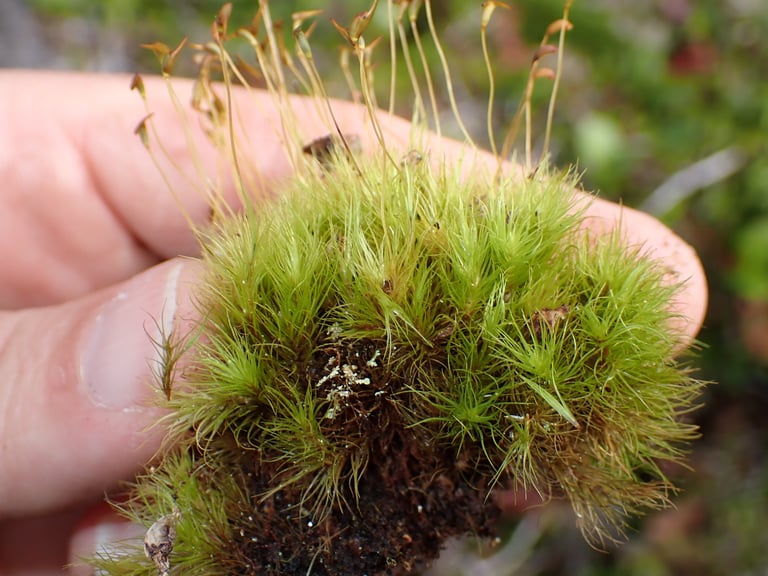
The gametophyte stage is easy to overlook by comparison: the prothallus is a small, green, fleshy structure only a few millimeters across.
Distribution and Habitat
Royal fern grows in woodland bogs and along the banks of streams, favoring the damp, shaded conditions these habitats provide.
Monthly presence-observation counts show a strong seasonal pattern, rising sharply from a low in February to a peak in June before declining again toward winter. This pattern reflects when the plant is visible and being recorded, not its actual abundance or population size.
The pronounced spring and summer peak fits with royal fern's deciduous habit: fronds emerge and expand through spring, remain conspicuous through summer, and die back in autumn, making the plant far easier to detect and record during the warmer months.

Uses and Human Relationships
Royal fern is widely cultivated in temperate gardens, valued for its architectural fronds and tolerance of a range of soils and climates, though it does best in moist, acidic ground alongside other moisture-loving plants such as Rodgersia and Gunnera. Both the species and the cultivar 'Cristata' have received the Royal Horticultural Society's Award of Garden Merit.
The roots are harvested to produce osmunda fibre, a fibrous material long used as a growing medium for cultivated orchids and other epiphytic plants. The young unfurling shoots, or fiddleheads, are eaten in some places and are said to taste similar to asparagus.
In Slavic mythology, the plant's spore clusters are known as "Perun's flowers" and are credited with powers such as defeating demons, granting wishes, unlocking secrets, and allowing the holder to understand the language of trees. Collecting them was said to require standing within a circle drawn around the plant on Kupala Night, or later on Easter eve, while withstanding the taunts and threats of demons.
Conservation and Threats
Royal fern is classified as Least Concern, reflecting its wide native range across Europe, North Africa, and the Middle East as far as Iran, spanning from Norway south to Algeria. It has also been introduced to New Zealand, though its presence in North America remains uncertain, tied to unresolved taxonomic questions over whether Osmunda spectabilis should be treated as a distinct species.
Despite its overall favorable status, the fern has become rare in many areas due to the drainage of wetlands for agriculture, which removes the boggy, streamside conditions it depends on.
Conservation status
- LC
- NT
- VU
- EN
- CR
Least Concern
Fun Facts
- The genus name Osmunda is said to derive from Osmunder, a mythological Saxon god, linking the plant's name to old Germanic tradition.
- The species name regalis means "royal" in Latin, a nod to the fern's tall, imposing fronds and trunk-like base.
- In Slavic folklore, the fern's spore clusters are called "Perun's flowers" and were believed to grant the power to defeat demons, fulfill wishes, and understand the speech of trees.
- Collecting these mythical "flowers" supposedly required standing inside a protective circle drawn around the plant while enduring the taunts of demons, traditionally on Kupala Night and later on Easter eve.
- The fern's roots are processed into osmunda fibre, still used today as a growing medium for orchids and other epiphytic plants.
Ecology
Habitat
- Wetland
- Woodland
- Freshwater
Growth habit
- Fern