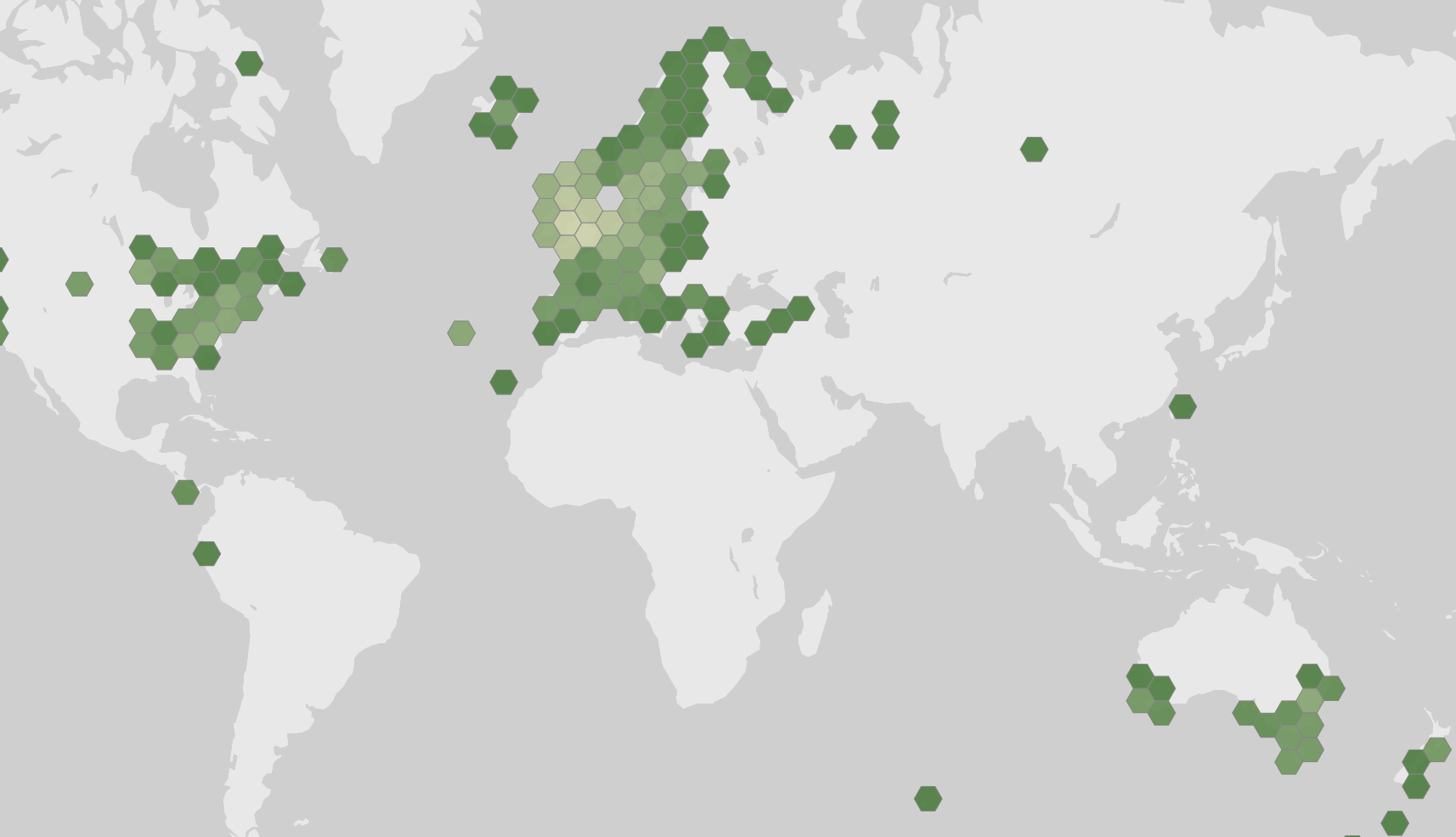
The first thing to know about Rhizocarpon reductum is how far it reaches. This crust lichen has been found on multiple continents, including Europe, Asia, Africa, North and South America, Australia, New Zealand, and even Antarctica.
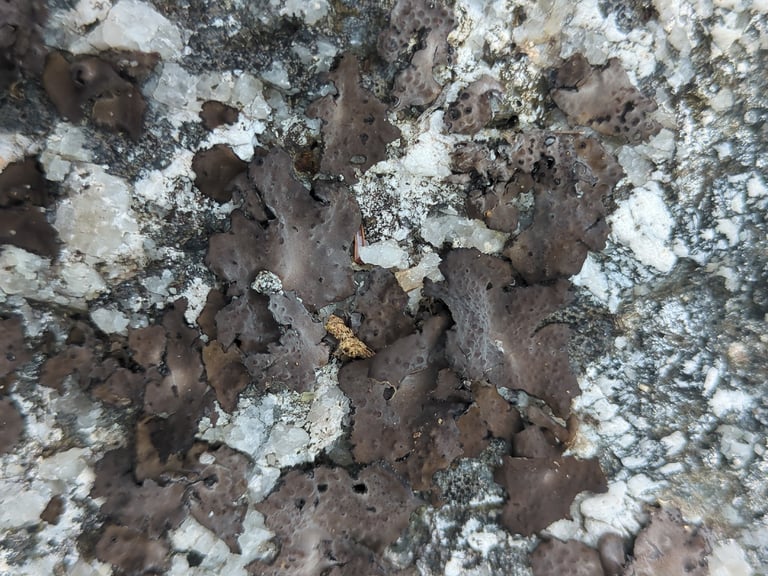
It is a saxicolous lichen, meaning it lives on rock. It forms thin, pale grey to brown crusts that crack into tiny angular plates, with scattered black disc-shaped fruiting bodies about 0.4–0.6 mm across. It belongs to the family Rhizocarpaceae in the class Lecanoromycetes.
What makes it worth a closer look is how little it needs. The crust can thrive on bare, exposed stone, and its tiny fruiting discs are visible only at close range, so the species is easy to overlook even where it is common.
Fruiting Body and Identification
The most reliable way to identify Rhizocarpon reductum is its crust of tiny, cracked plates. The thallus ranges from pale grey to brown and breaks into angular plates called areoles, about 0.2–0.4 mm wide. These plates are usually flat or gently domed, and in rare cases they lift slightly like minute scales.
The crust grows either as loose, spreading films or as discrete patches one to two centimeters across that often merge into larger fields. A thin black prothallus usually rims each colony. It can dominate shaded rock where the main thallus is reduced.
The black fruiting bodies, called apothecia, sit among the areoles. They start flush with the surface and may later become stalkless cups that rise slightly above it. Each disc is 0.4–0.6 mm across, has a rough texture, and turns strongly convex as it matures. The disc's outer rim can erode as it bulges.
Under the microscope, the club-shaped asci measure 65–80 × 25–33 μm and hold eight colorless ascospores. The spores are usually 24–26 × 8–10 μm and divided into eight to ten chambers, and rarely twelve. Chemical spot tests help confirm the species: the medulla usually shows no reaction with bleach, but turns yellow with potassium hydroxide and orange with para-phenylenediamine, which indicates stictic acid.
Distribution and Habitat
Rhizocarpon reductum is one of the most widely distributed rock lichens known. It has been recorded across Australia and New Zealand, the British Isles, continental Europe, Arctic Eurasia, Morocco, Tunisia, Turkey, Ukraine, Central Asia, China, South Africa, North America, Venezuela, Bolivia, Chile, Argentina, the Falkland Islands, and Antarctica.
In Central Europe, the species has been verified on siliceous sandstones in the Gorce Mountains of the Western Beskids in the Polish Carpathians. There it grows between 530 and 1,220 meters above sea level.
In that range, it colonizes exposed boulders that warm up in the sun, as well as road-cut faces. These are open, bare surfaces where competition from other plants is limited.
Photos
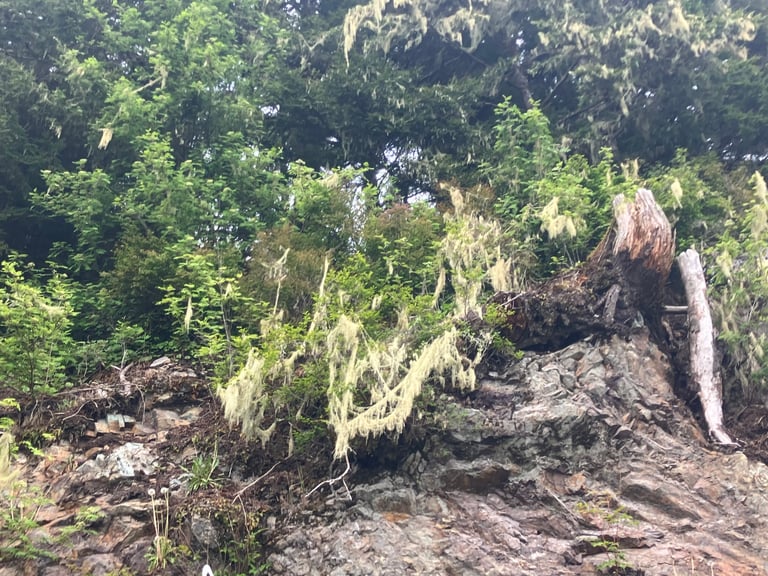
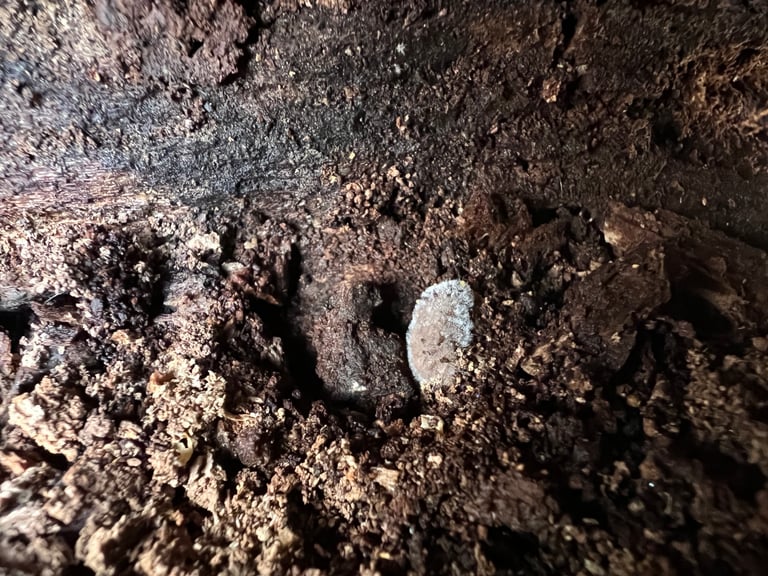
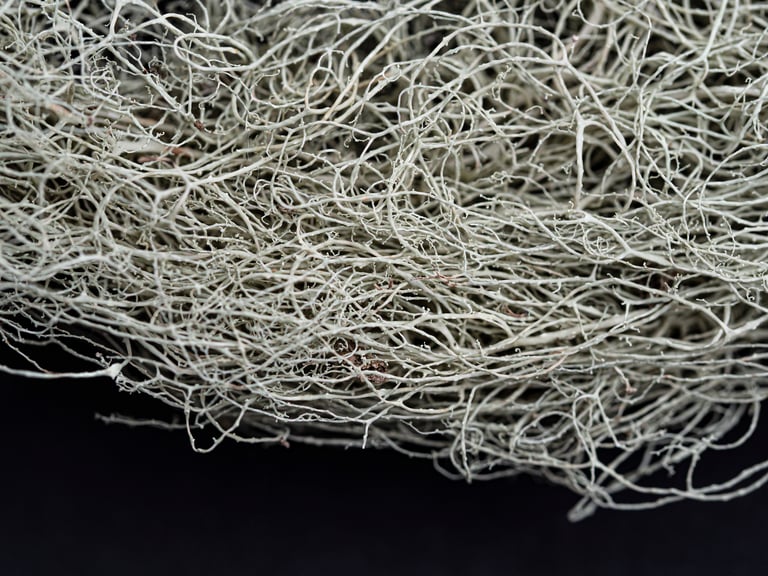
Photographs from via iNaturalist, licensed under CC0 1.0., by Owen and Carol Fawcett. via iNaturalist, licensed under CC BY 4.0., by Barry Stewart via iNaturalist, licensed under CC BY 4.0., and by Michel Langeveld via iNaturalist, licensed under CC BY 4.0., credited on each photo.
Ecology and classification
Habitat
Classification
- Phylum
- Ascomycota
- Class
- Lecanoromycetes
- Order
- Rhizocarpales
- Family
- Rhizocarpaceae
- Genus
- Rhizocarpon
- Species
- Rhizocarpon reductum
Sources
- GBIF Species names and classification
- iNaturalist Photos
- Wikidata Common names and conservation status
- Wikipedia Summary extract