Few organisms hang as far as Dolichousnea longissima, a lichen whose stems can reach 3 metres in length. Known as old man's beard or Methuselah's beard lichen, it is a fruticose lichen in the family Parmeliaceae, within the Ascomycota.
The species is a lichen rather than a plant, and it grows mostly in the canopies of coniferous trees in boreal forests and coastal woodland across Europe, Asia, and North America. Its range has shrunk in several areas, and it is listed as Endangered in the Norwegian Red List.
Its length and its slow, unusual growth make it a striking subject for anyone interested in old forests and the organisms that depend on them.
Fruiting Body and Identification
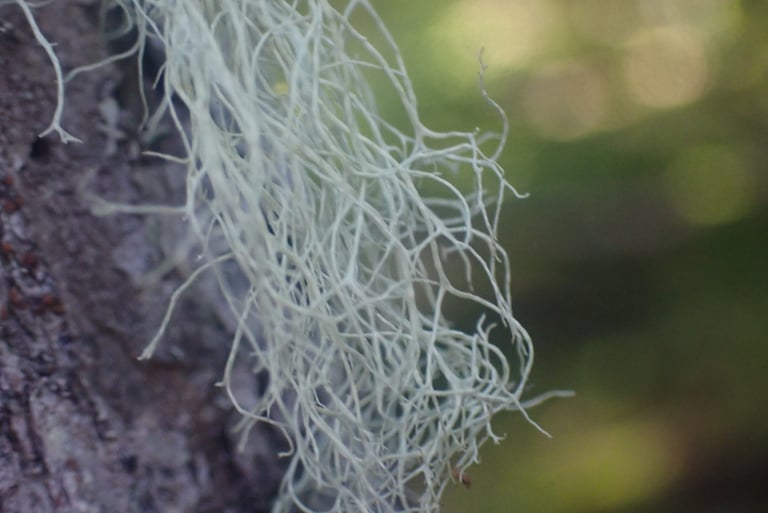
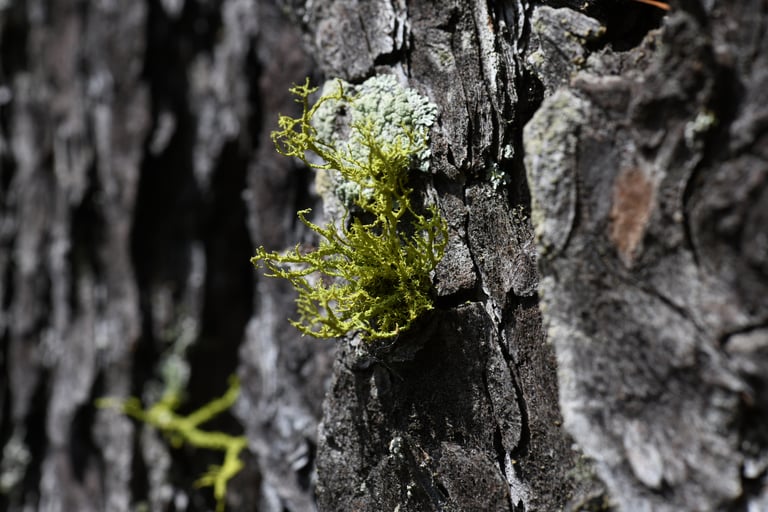
The most reliable way to recognize Dolichousnea longissima is its form: very long, thin stems with short, even side branches. Stems are usually 15 to 30 cm long, but some grow to about 3 metres. The lichen is pale green to silvery-yellow, and a distinct central cord runs through the stem. That cord is white.
The species grows fast, and it can double its length each year. It spreads mainly by fragmentation, as pieces break off and continue to grow. Spore-producing structures are rarely seen.
Distribution and Habitat
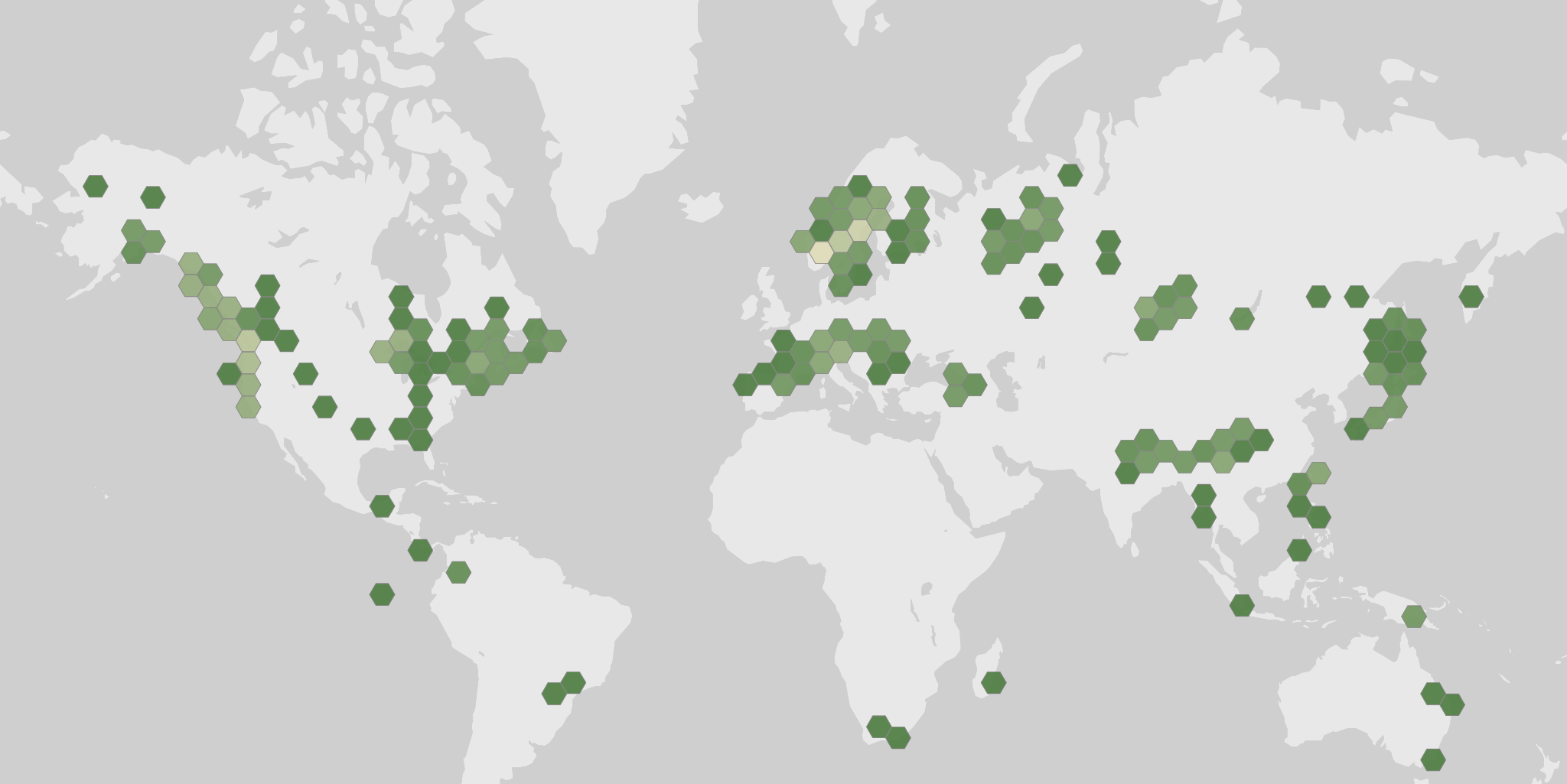
Dolichousnea longissima lives in boreal forests and coastal woodland across Europe, Asia, and North America. In North America it is found mainly on the Pacific Coast, where the largest populations are concentrated in the Pacific Northwest. It also ranges from the Upper Midwest into Canada and the Great Lakes region, and it extends to the Atlantic coast.
The species was once circumboreal, but it has disappeared from some areas of Europe and Scandinavia. In Italy it is restricted to a few of the most favorable sites in the Alps. In Nepal it has been recorded between 2,700 and 3,750 m in published records.
It grows in the canopies of coniferous trees, especially in old-growth forests with high rainfall, humidity, and frequent fog. Air pollution strongly affects its metabolism, and industrial logging has also reduced its numbers.
Uses and Cultural History
People have harvested Dolichousnea longissima for decoration. It has also been used historically as bedding and as a filtering material.
In traditional medicine, the lichen is known as an anti-inflammatory because it contains the compound longissiminone. Chinese herbal medicine described it around 500 AD, and one of its historical names translates as "pine gauze."
Photos
Photographs from via iNaturalist, licensed under CC0 1.0., by Дмитрий Дунин via iNaturalist, licensed under CC BY 4.0., by bluefeathers via iNaturalist, licensed under CC BY 4.0., by John Brew via iNaturalist, licensed under CC BY 4.0., by Jake OFlaherty via iNaturalist, licensed under CC BY 4.0., by Alexis Tinker-Tsavalas via iNaturalist, licensed under CC BY 4.0., by Conquest via iNaturalist, licensed under CC BY 4.0., by John Thomlinson via iNaturalist, licensed under CC BY 4.0., by Jackie T via iNaturalist, licensed under CC BY 4.0., by Noah How via iNaturalist, licensed under CC BY 4.0., by Liam Steele via iNaturalist, licensed under CC BY 4.0., by Jay Brasher via iNaturalist, licensed under CC BY 4.0., and by Andreas Schneider via iNaturalist, licensed under CC BY 4.0., credited on each photo.
Ecology and classification
Classification
- Phylum
- Ascomycota
- Class
- Lecanoromycetes
- Order
- Lecanorales
- Family
- Parmeliaceae
- Genus
- Dolichousnea
- Species
- Dolichousnea longissima
Sources
- GBIF Species names and classification
- iNaturalist Photos
- Wikidata Common names and conservation status
- Wikipedia Summary extract
- GloBI What it eats, what eats it, parasites and pollinators
- MammalBase