For centuries, hunters in Europe and North America packed this bright yellow-green lichen into animal fat and stuffed it into carcasses to kill wolves and foxes. The poison at work is vulpinic acid, a pigment potent enough to be lethal to meat-eating mammals while leaving plant-eaters largely unharmed.
Letharia vulpina, known as the wolf lichen, is a fruticose lichenized fungus in the family Parmeliaceae. It grows on the bark of living and dead conifers across western and continental Europe and the Pacific Northwest and northern Rocky Mountains of North America. Beyond its grim history as a predator poison, the species has a second life as a source of vivid natural dye, a role that has made it valuable to Indigenous communities for generations.
Fruiting Body and Identification
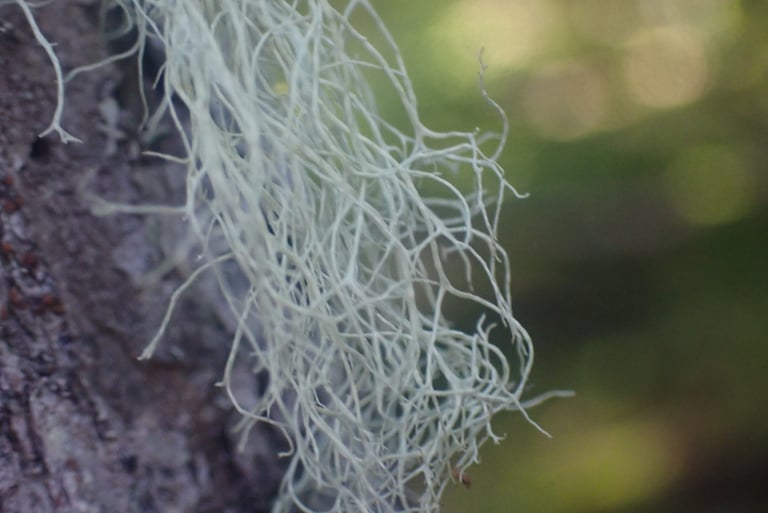
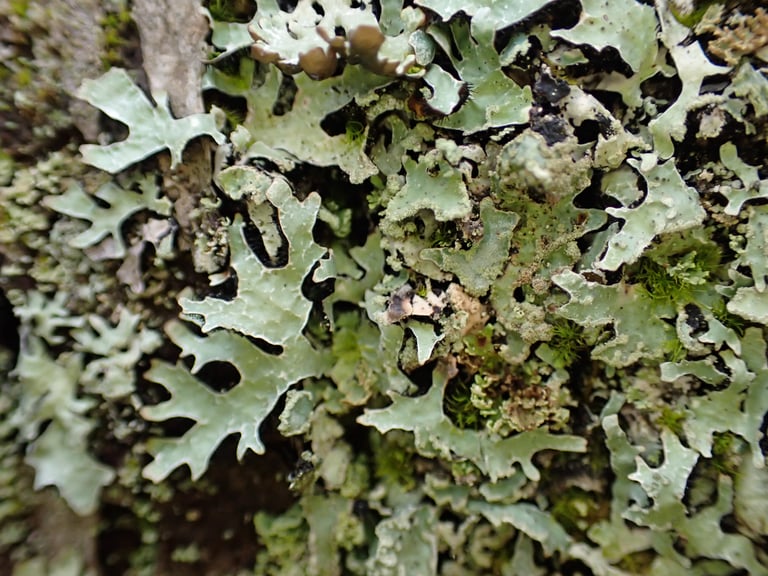
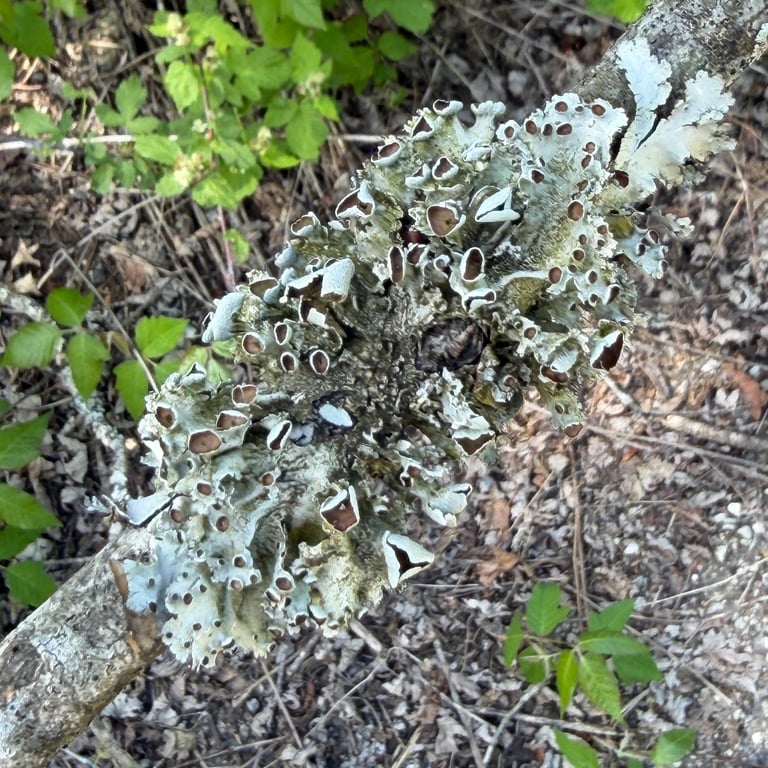
The wolf lichen is identified most reliably by its color and shape: a fruticose, shrubby, densely branched thallus in a bright yellow to yellow-green or chartreuse hue. This color is unmistakable in fresh, moist specimens, though it fades noticeably when the lichen dries out.
Thalli typically measure 2 to 7 centimeters (0.8 to 3 inches) across. The surface is often abundantly covered with soredia and isidia, small granular or peg-like vegetative structures that allow the lichen to reproduce asexually by fragmenting and dispersing.
Distribution and Habitat
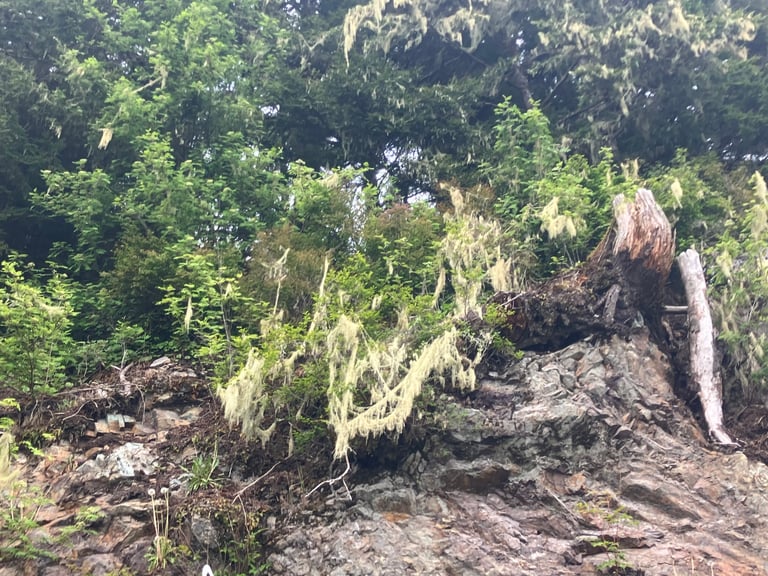
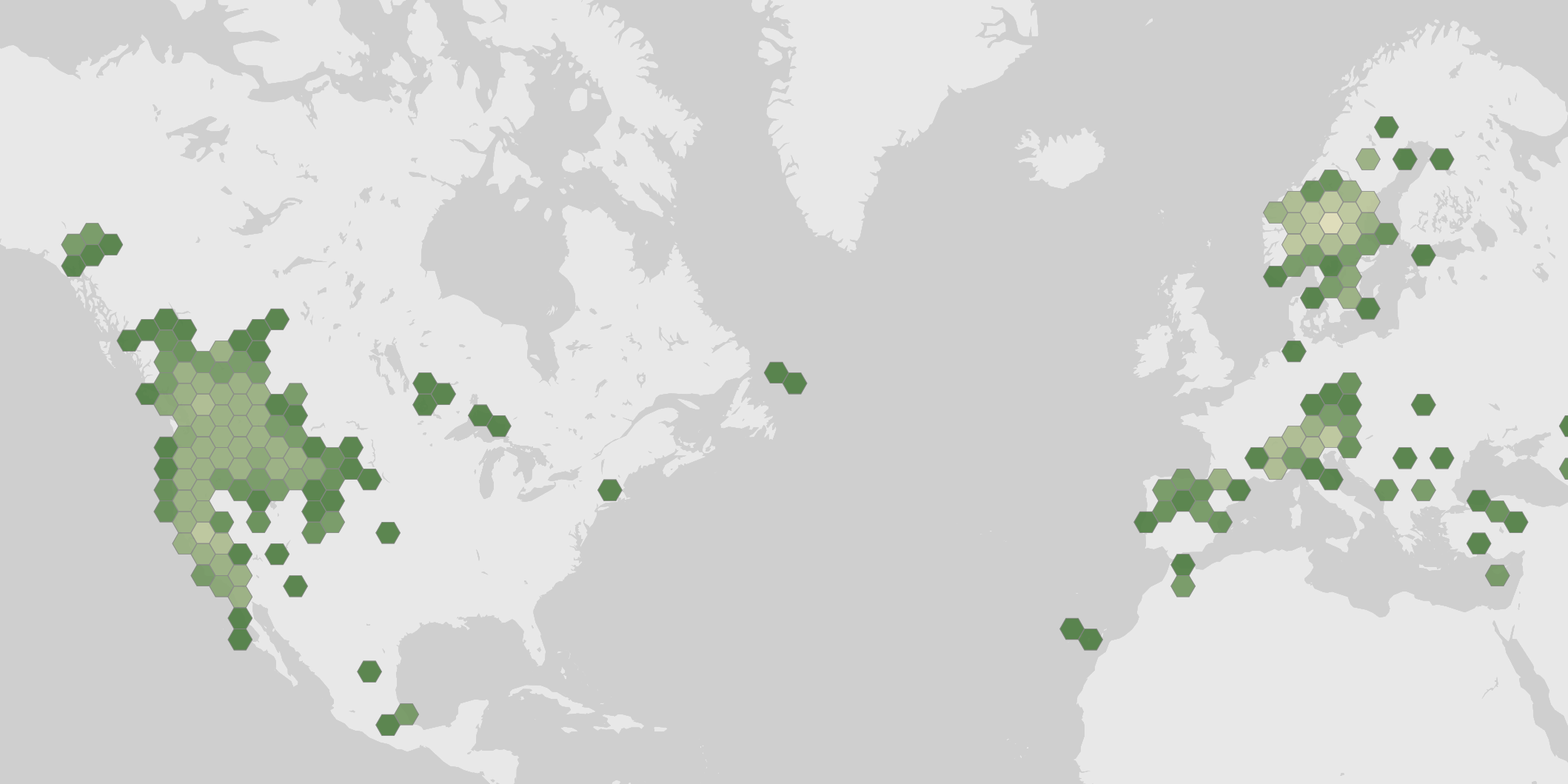
The wolf lichen grows across two widely separated regions: parts of western and continental Europe, and the Pacific Northwest and northern Rocky Mountains of North America. Within these areas it clings to the bark and wood of both living and dead conifers, often reaching high up into the canopy.
It favors open conifer forests in mountainous terrain and is often abundant on exposed branches that have shed their bark. In old, moist forests it tends to occupy drier microsites rather than the wettest ground. In the Rocky Mountains, Letharia species turn up in ponderosa pine forests along the prairie-forest boundary at relatively low elevations, as well as in Douglas fir and lodgepole pine forests at medium and high elevations. The species shows only intermediate sensitivity to air pollution, which helps explain its persistence in some forests where more sensitive lichens have disappeared.
Monthly observation records show a clear seasonal pattern, rising through spring and peaking between June and August before dropping sharply by November and December. Because these figures come from presence observations rather than systematic surveys, they should be read as a sign of when the lichen is most often noticed and recorded, not as a measure of its actual abundance or population size.
Uses and Cultural History
Indigenous peoples across western North America have used wolf lichen for both practical dye-making and traditional medicine for generations. Some Plateau Indian tribes applied it as a poultice for swelling, bruises, sores, and boils, and boiled it into a drink believed to stop internal bleeding; it was also used for stomach ailments.
The lichen's chartreuse pigment made it valuable as a natural dye. The Tlingit people traditionally used wolf moss as the yellow dye in Chilkat blankets, where it also acted as a natural pesticide protecting the wool. Notably, the lichen's natural range does not extend into the Tongass forest of Alaska, suggesting it was traded there specifically for this purpose. The Klamath Indians of California soaked porcupine quills in a chartreuse extract of the lichen to dye them yellow before weaving them into basket patterns. Its brightly colored fruiting bodies are also popular today in floral arrangements.
The species' longest-documented use, though, is as a poison. References to using it against wolves and foxes go back at least to 1759, when Christoph Gedner described the practice in a work collected by Benjamin Stillingfleet. British lichenologist Annie Lorrain Smith described reindeer carcasses stuffed with lichen and powdered glass as poison bait, though it is now understood that powdered lichen mixed into fat alone is enough to kill wolves that consume it — the vulpinic acid within it is toxic to meat-eaters but not to mice or rabbits.
Fun Facts
- French mycologist Auguste-Marie Hue transferred the species into the genus Letharia in 1899.
- Its toxic pigment, vulpinic acid, is lethal to carnivorous mammals like wolves and foxes but appears harmless to mice and rabbits.
- Although wolf lichen's natural range does not reach the Tongass forest of Alaska, its use there by Tlingit weavers points to long-distance trade of the material.
- Beyond wounds and bleeding, some tribes reportedly used it to treat headaches as well.
Photos
Photographs from by Matteo Martini via iNaturalist, licensed under CC BY 4.0., via iNaturalist, licensed under CC0 1.0., by Elias via iNaturalist, licensed under CC BY 4.0., by Daughter Dad via iNaturalist, licensed under CC BY 4.0., by Therese Phillips via iNaturalist, licensed under CC BY 4.0., by Syd Cannings via iNaturalist, licensed under CC BY 4.0., by Gregory Wada via iNaturalist, licensed under CC BY 4.0., by StarStats via iNaturalist, licensed under CC BY 4.0., by Lisa Biasillo via iNaturalist, licensed under CC BY 4.0., and by carbapple via iNaturalist, licensed under CC BY 4.0., credited on each photo.
Ecology and classification
Classification
- Phylum
- Ascomycota
- Class
- Lecanoromycetes
- Order
- Lecanorales
- Family
- Parmeliaceae
- Genus
- Letharia
- Species
- Letharia vulpina
Sources
- GBIF Species names and classification
- iNaturalist Photos
- Wikidata Common names and conservation status
- Wikipedia Summary extract
- Encyclopedia of Life Habitat, diet and behavior traits