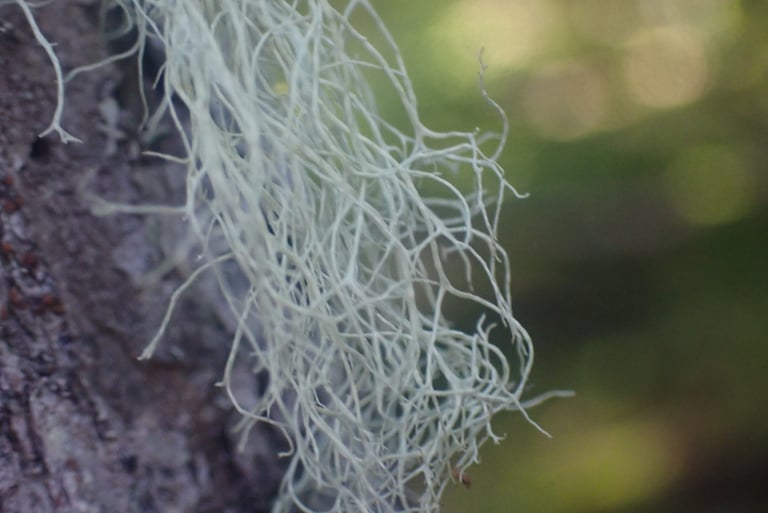
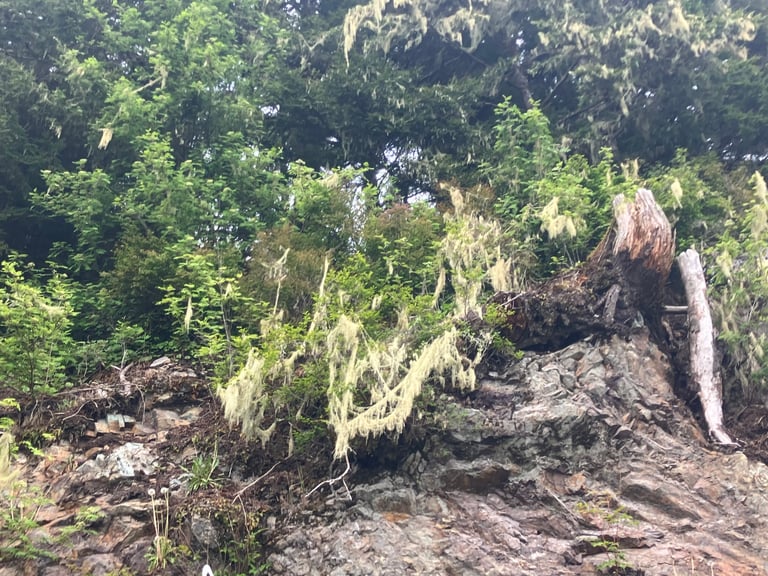
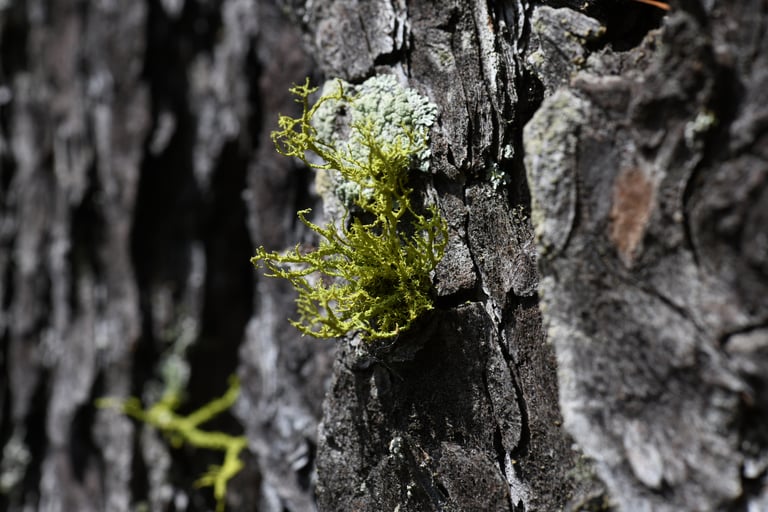
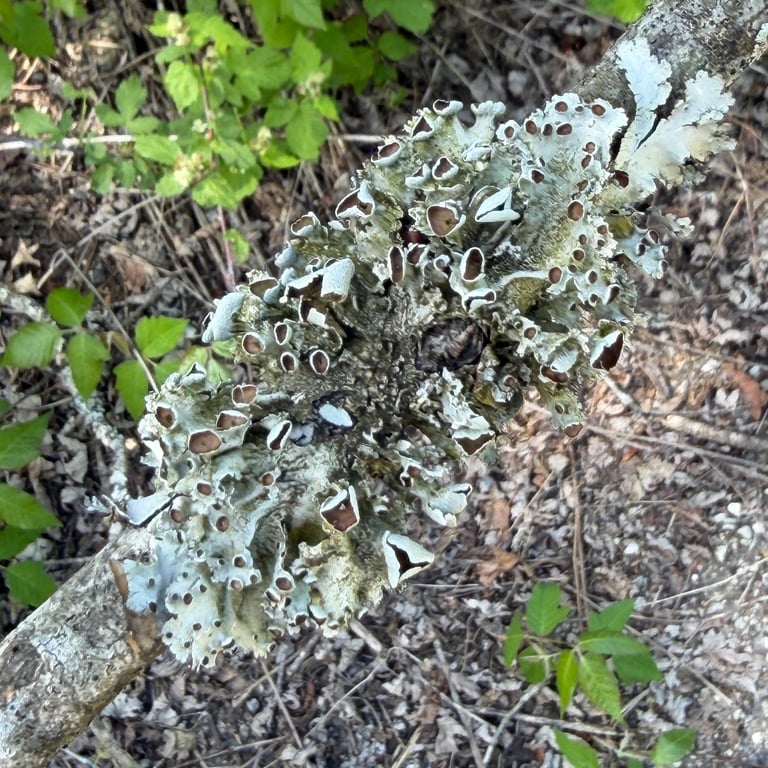
For decades, herbarium collectors mistook this lichen for a common relative, until molecular studies finally proved the two apart. Parmelia squarrosa, known as the bottlebrush shield lichen, is a foliose lichen in the family Parmeliaceae that grows chiefly on tree bark, occasionally on rocks, and rarely on moss.
The species is found across east Asia, Europe, and eastern North America, and the International Union for Conservation of Nature has assessed it as a species of Least Concern owing to its abundance, wide distribution, and stable populations. Its story of mistaken identity, later resolved through genetics, makes it a useful example of how closely related lichens can be told apart.
Fruiting Body and Identification
The most reliable way to identify Parmelia squarrosa is through its rhizines, which are squarrosely branched across most of the thallus but simple at the lobe margins, a feature that distinguishes it from the similar Parmelia saxatilis. The thallus itself is adnate to loosely adnate, greenish to whitish mineral grey in color, and forms lobes 1 to 5 millimeters wide that are divaricate, contiguous, or imbricate.
The upper surface ranges from flat to pitted, or foveolate, and often shows a reticulate network of laminal and marginal pseudocyphellae. Isidia are cylindrical, reaching up to 0.5 millimeters tall, and become dense toward the older, central part of the thallus as it ages. Pycnidia and apothecia are uncommon, though when present the ascospores measure 13 to 15 by 8 to 9 micrometers.
Chemically, the lichen contains atranorin, salazinic acid, and consalazinic acid. Standard spot tests show the cortex reacting K+ (yellow), while the medulla reacts K+ (yellow changing to red) and PD+ (orange), with no reaction to C.
Distribution and Habitat
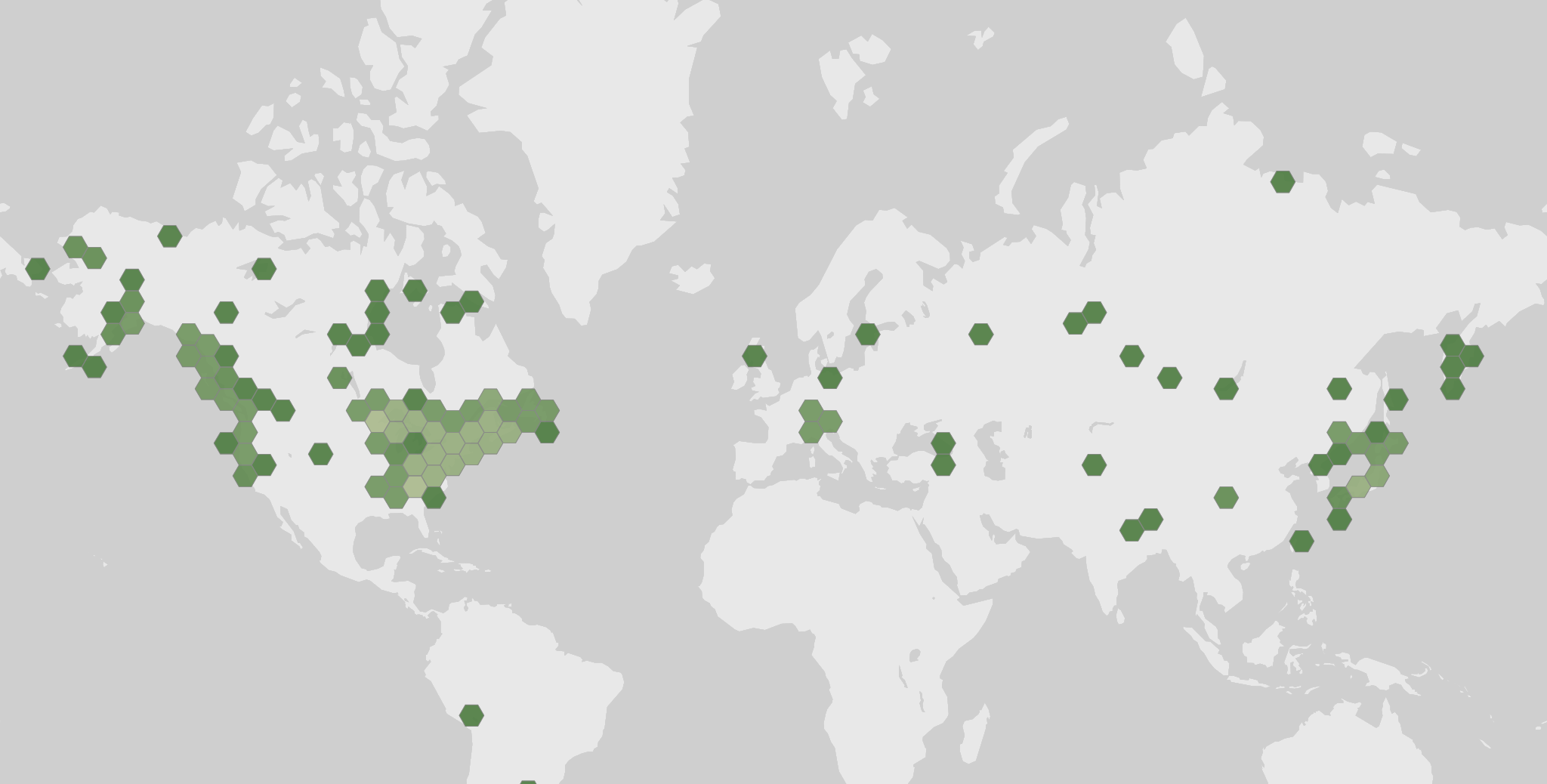
Parmelia squarrosa has a wide range spanning eastern and western North America, Europe, and eastern Asia. In North America it is concentrated in the eastern region, particularly the Great Lakes-Appalachian area, with a distribution more temperate and southern than that of Parmelia saxatilis, extending as far south as Arkansas, Alabama, and South Carolina. Its range overlaps with P. saxatilis in areas such as the Great Lakes through New York and New England to Quebec and Newfoundland, but unlike that species and P. sulcata, it extends into the lower foothills of the southern Appalachians rather than being confined to high mountains.
In Europe, the lichen was first recorded in the western Austrian Alps and southern Switzerland in 1985, growing on rock. It is also widespread across eastern Asia, with records from Japan, China, North Korea, South Korea, the Russian Far East, and Nepal, where it has been reported at elevations between 3,000 and 3,800 meters.
The species favors humid forests, especially those near coastal areas, and grows on a variety of coniferous and deciduous trees. Observation records show a clear seasonal rise from spring through summer, peaking around midsummer before tapering off into autumn and winter, suggesting greater seasonal detectability during the warmer months rather than any change in the lichen's actual presence.
Conservation and Threats
Parmelia squarrosa was assessed for the global IUCN Red List in 2021 and classified as Least Concern, a status reflecting its common occurrence, abundance, and wide, stable distribution. No major population decline is documented for the species as a whole.
Despite its overall stable status, the lichen shows clear sensitivity to pollution at a local level. A transplantation study near a copper smelter in Quebec moved lichen-bearing bark discs from an unpolluted area into the polluted zone and tracked changes over 4 and 12 months. The lichens developed color changes, detached from the substrate, cracked, and showed reductions in isidia, biomass, and chlorophyll content, with the severity of these effects increasing the closer the transplant site was to the smelter.
This pollution sensitivity means the species can serve as an indicator of air quality in areas near industrial sources, even though its global status remains secure.
Fun Facts
- The lichen grows on a notably wide range of substrates, including dead and living wood, bark, cork, plant surfaces, and bare rock.
- Its global range spans Eurasia, North America, and even reaches into Arctic regions.
- As a lichenized fungus, it lives in a mutualistic partnership that defines its entire life habit.
Photos
Photographs from via iNaturalist, licensed under CC0 1.0., by Tanner Barnharst via iNaturalist, licensed under CC BY 4.0., by alicia penney via iNaturalist, licensed under CC BY 4.0., by Annie Evankow via iNaturalist, licensed under CC BY 4.0., by Frédérique via iNaturalist, licensed under CC BY 4.0., by Eli Talhouk via iNaturalist, licensed under CC BY 4.0., and by Bethany Dennis via iNaturalist, licensed under CC BY 4.0., credited on each photo.
Ecology and classification
Classification
- Phylum
- Ascomycota
- Class
- Lecanoromycetes
- Order
- Lecanorales
- Family
- Parmeliaceae
- Genus
- Parmelia
- Species
- Parmelia squarrosa
Sources
- GBIF Species names and classification
- iNaturalist Photos
- Wikidata Common names and conservation status
- Wikipedia Summary extract