Tuber aestivum is sold under two different names, summer truffle and Burgundy truffle, and mycologists have debated for years whether these represent one species or two closely related morphotypes.
It belongs to the fungal kingdom, in the phylum Ascomycota, class Pezizomycetes, order Pezizales, and family Tuberaceae. Unlike mushrooms with an open cap and stem, it grows as an underground fruiting body, a true truffle found across Europe.
No conservation status is established for this species, but its dual identity and broad European presence make it one of the more discussed truffles among foragers and mycologists alike.
Fruiting Body and Identification
The clearest way to distinguish Tuber aestivum from its more famous relative, the Périgord black truffle, is the color and intensity of its inner flesh. The gleba of the summer truffle is a paler hazel color and carries a less intense aroma than that of Tuber melanosporum, even though the two truffles are similar in size, outer color, and general flavor profile.
The fruiting bodies, known as ascocarps, are fairly large, ranging from 2 to 10 centimeters (1 to 4 inches) in diameter. Their outer skin, the peridium, is brown to black and covered in pyramidal warts about 3 to 9 millimeters (roughly 1/8 to 3/8 inch) wide, giving the surface a rough, bark-like texture.
A hazelnut-like aroma is one of the species' most recognizable sensory traits, distinguishing it on the basis of smell alone even before the flesh is cut open.
Distribution and Habitat
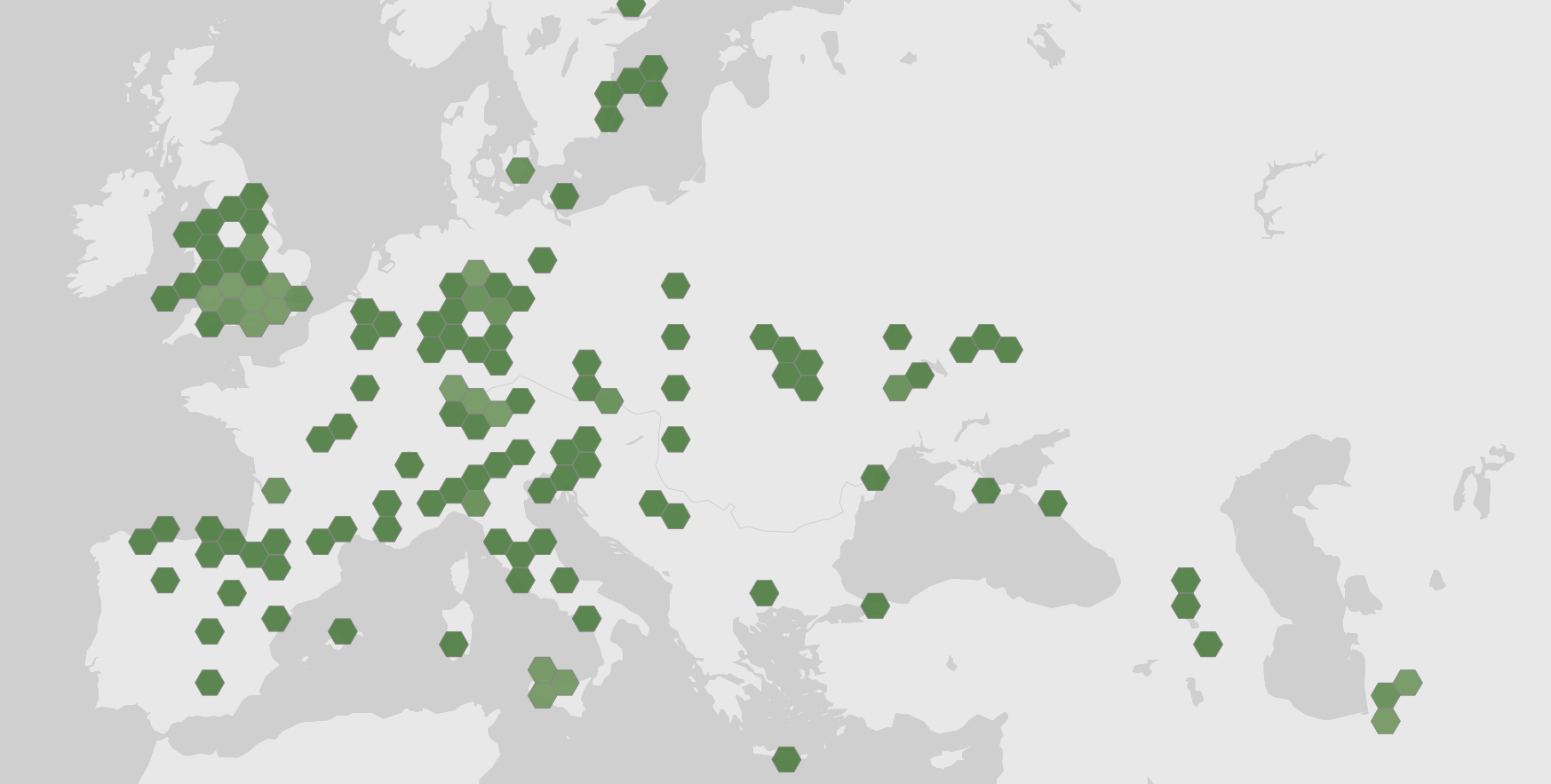
Tuber aestivum, under its Burgundy truffle identity, has a wider distribution than any other truffle species. It ranges across Europe from Spain to eastern Europe and from Sweden down to North Africa, making it far less geographically restricted than most of its relatives.
The summer truffle form is found mostly in the southern part of this range, particularly in Mediterranean climate zones of France, Italy, and Spain. Within France it concentrates in the northeast, and in Italy mainly in the north. In the United Kingdom it was once plentiful before the 20th century but has since become rare. As of 2007, unconfirmed reports suggested findings as far afield as China, though the species' full range may not yet be definitively established.
Monthly observation data show a clear rise in records from May through September, peaking in July, with a secondary bump in November. Because these figures reflect presence observations rather than abundance or a complete range map, they should be read only as a cautious sign of seasonal detectability, likely tied to fruiting and harvest periods rather than actual population size.
Uses and Cultural History
Tuber aestivum is harvested at two different times depending on which form is collected: the summer truffle from May to August, as its common name suggests, and the Burgundy truffle from September to late December, occasionally extending into late January.
Both forms are prized for their gastronomic qualities and feature in the haute cuisine of France and Italy. Because its flavor is milder than the Périgord black truffle (Tuber melanosporum), it is often used as a less expensive substitute when the pricier species is unavailable. It is also packaged and sold internationally as an export product.
More broadly, tubers hold symbolic weight in some cultural traditions, standing for sustenance and renewal; Inca lore, for instance, treated potatoes as gifts from the earth mother Pachamama, with their varied shapes even used in divination. While this tradition centers on a different tuber, it reflects a wider pattern of cultures attaching meaning to underground food sources like truffles.
Fun Facts
- Tuber aestivum and Tuber uncinatum are treated as the same species by many, but a 2004 genetic study specifically investigated whether they are two morphotypes or two separate species, a question still discussed among mycologists.
- Its range stretches farther than that of any other known truffle species, from Spain to eastern Europe and from Sweden to North Africa.
- Tubers in general carry symbolic meaning in some cultures; Inca tradition regarded them as gifts from the earth mother Pachamama, using their shapes in divination practices.
Photos
Photographs from via iNaturalist, licensed under CC0 1.0., by Tim via iNaturalist, licensed under CC BY 4.0., by Mattia Amadi via iNaturalist, licensed under CC BY 4.0., by gerardbertrand via iNaturalist, licensed under CC BY 4.0., by Umut Nuri Erdoğan via iNaturalist, licensed under CC BY 4.0., by Daniel Ghyselinck via iNaturalist, licensed under CC BY 4.0., by Brian C. Hunt via iNaturalist, licensed under CC BY 4.0., by Sarah Culliton via iNaturalist, licensed under CC BY 4.0., by Rajan Rao via iNaturalist, licensed under CC BY 4.0., by Codrin Bucur via iNaturalist, licensed under CC BY 4.0., by Enrico Tomschke via iNaturalist, licensed under CC BY 4.0., and by Davide Puddu via iNaturalist, licensed under CC BY 4.0., credited on each photo.
Ecology and classification
Classification
- Phylum
- Ascomycota
- Class
- Pezizomycetes
- Order
- Pezizales
- Family
- Tuberaceae
- Genus
- Tuber
- Species
- Tuber aestivum
Sources
- GBIF Species names and classification
- iNaturalist Photos
- Wikidata Common names and conservation status
- Wikipedia Summary extract