Trichoderma harzianum is best known not for how it looks but for what it does: this fungus is widely used as a biological fungicide, protecting crops from disease through foliar application, seed treatment, and soil treatment. It suppresses a range of fungal plant pathogens, and commercial biotechnological products such as 3Tac have proven useful against Botrytis, Fusarium, and Penicillium species.
Classified within the family Hypocreaceae, order Hypocreales, and phylum Ascomycota, this species belongs to the class Sordariomycetes. Beyond its role in disease suppression, it is also used in manufacturing enzymes, giving it value both in the field and in industrial biotechnology.
Fruiting Body and Identification
Trichoderma harzianum is identified less by a conventional cap-and-stem fruiting body and more by its colony growth, a trait typical of this mold-like fungus rather than the mushrooms most people picture.
Colonies spread quickly across the surface they colonize, starting pale or whitish and developing patches of green as spore-producing structures mature. This green coloration, concentrated in tufts or rings across the colony, is one of the most useful field marks for recognizing the genus Trichoderma in general and this species in particular.
The texture of the colony is typically cottony or powdery, depending on how densely the spores have formed, and the fungus lacks the differentiated gills, pores, or stem found in larger fruiting fungi. As the colony ages, the green zones tend to darken and spread, while the outer growing edge often remains lighter in color.
Distribution and Habitat
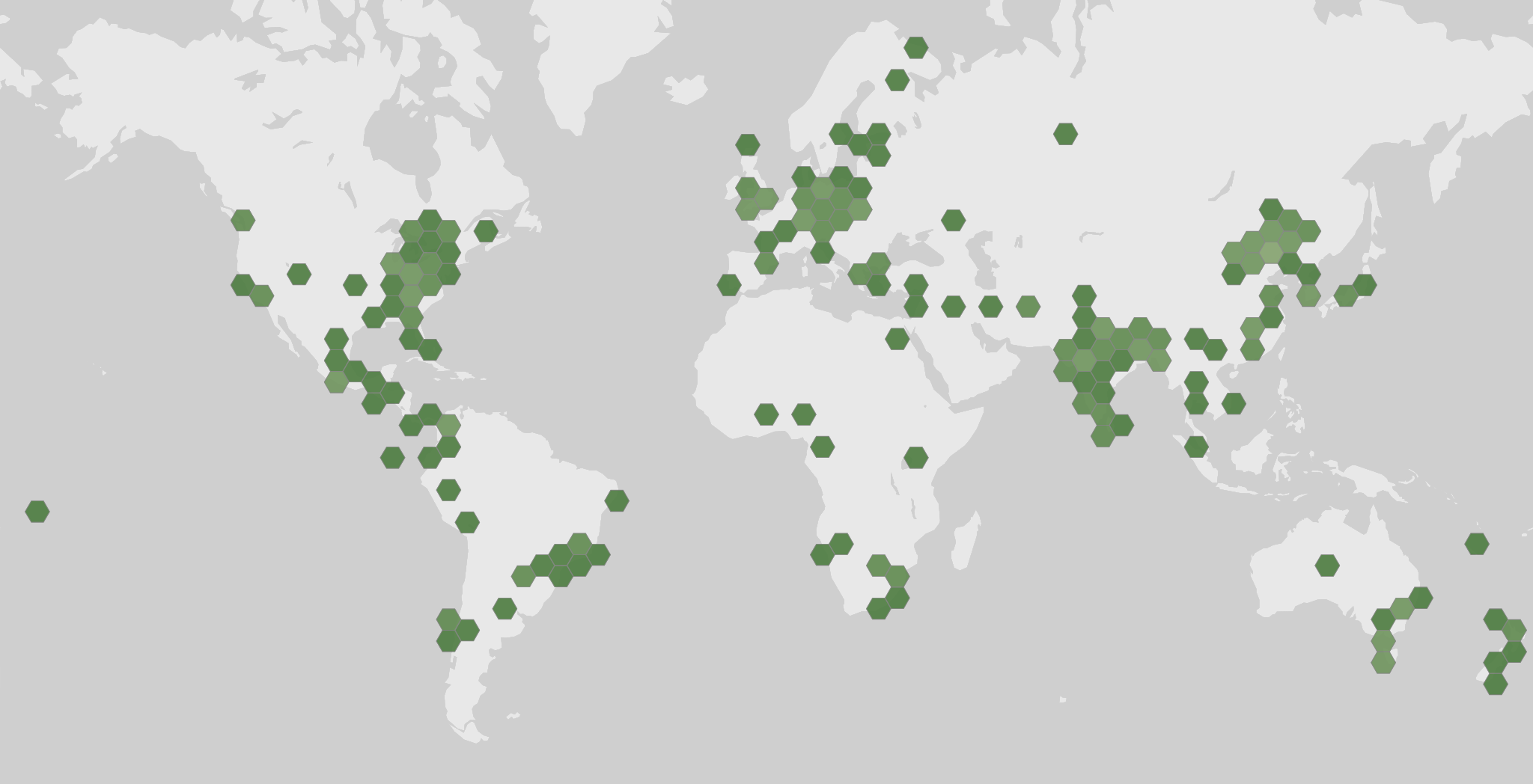
Trichoderma harzianum observations occur across all months of the year, but the counts show a clear seasonal pattern, with a pronounced peak from July through September. This period sees the highest reported occurrences, suggesting greater detectable presence during these warmer months, while observations dip noticeably in November and December.
These figures come from presence records rather than measures of abundance or population size, and they do not describe a complete range for the species. Still, the seasonal rise and fall hints at conditions, likely tied to warmer weather and active plant growth, that favor its detection in the environments it inhabits.
Ecology and Relationships
Trichoderma harzianum belongs to a genus of fungi present in nearly all soils, where it is often the most prevalent culturable fungus. It readily colonizes plant roots, and some strains are rhizosphere competent, meaning they can grow along roots as the plant develops, forming a close association with its host.
This species attacks and parasitizes other fungi, extracting nutrition from them through mechanisms it has evolved specifically for this purpose. The same mechanisms that let it attack fungal competitors also enhance plant and root growth, making it valuable for controlling many pathogenic fungi, though effectiveness varies by strain and by target pathogen: some strains control certain pathogens well but are largely ineffective against others.
Despite its usefulness in agriculture, Trichoderma species are also a major source of contamination and crop loss for mushroom farmers, where the same aggressive fungal-parasitic behavior becomes a liability rather than a benefit.
Fun Facts
- Trichoderma harzianum is capable of synthesizing silver nanoparticles, a property linked to its status as an agriculturally beneficial organism.
- It is not known to be harmful to humans.
- The species reproduces asexually and is known for potent antifungal activity, particularly against pathogens that attack plants.
- Its scientific authority is credited to Rifai.
Photos
Photographs from via iNaturalist, licensed under CC0 1.0., by Annie Weissman via iNaturalist, licensed under CC BY 4.0., and by Steven Bodzin via iNaturalist, licensed under CC BY 4.0., credited on each photo.
Ecology and classification
Classification
- Phylum
- Ascomycota
- Class
- Sordariomycetes
- Order
- Hypocreales
- Family
- Hypocreaceae
- Genus
- Trichoderma
- Species
- Trichoderma harzianum
Sources
- GBIF Species names and classification
- iNaturalist Photos
- Wikidata Common names and conservation status
- Wikipedia Summary extract
- GloBI What it eats, what eats it, parasites and pollinators
- Wardeh et al. 2015 (EID2)