
Agaricomycetes · Agaricales
Dark Honey Fungus
Armillaria ostoyae
UNKNOWNAlso known as: Honey Mushroom
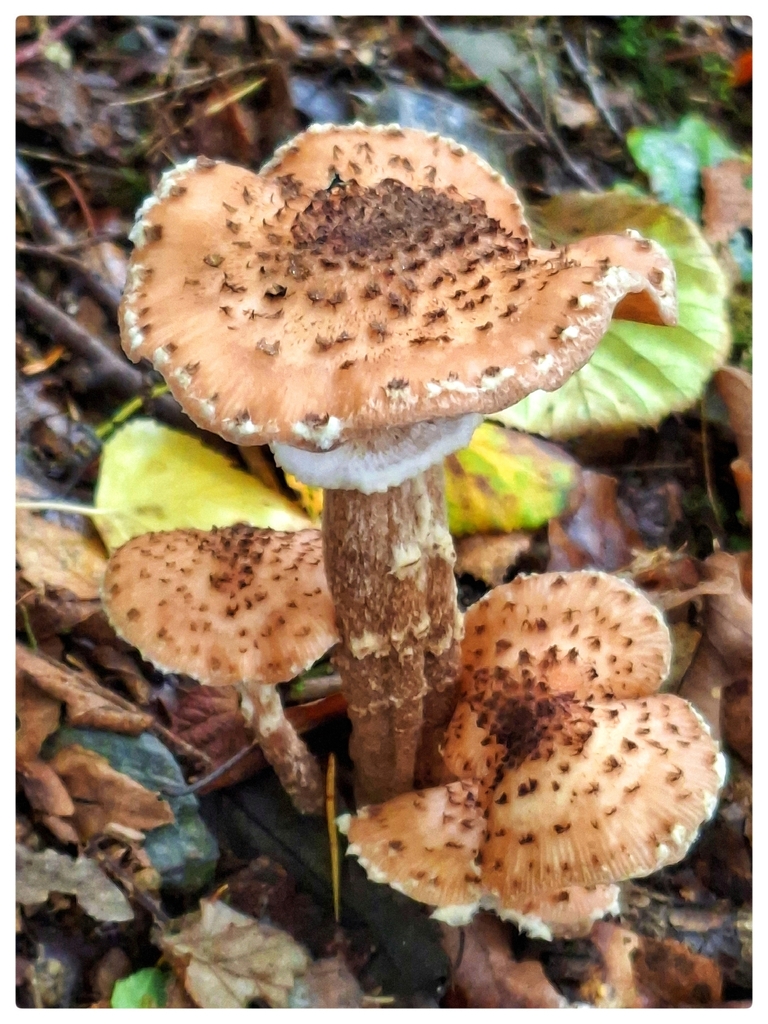
© Beth King · iNaturalist · CC BY-NC 4.0
Scientific Classification & Quick Facts
Classification
Known For
Detailed measurements for this species are still being verified.
Armillaria ostoyae, the Dark Honey Fungus, is a wood-decay fungus found across at least 22 countries on multiple continents. This basidiomycete colonises dead or dying trees, breaking down woody material and recycling nutrients back into forest ecosystems. Its dark-capped fruiting bodies emerge in clusters, typically in autumn, making it a familiar sight to foragers and naturalists in temperate regions.
The species belongs to the family Physalacriaceae and represents one of nature’s most efficient decomposers. Like other members of its genus, it plays a critical ecological role as a saprotroph, reducing fallen logs and stumps to soil. Its conservation status remains unknown, reflecting the widespread distribution and apparent abundance of this common fungus across its range.
What distinguishes Armillaria ostoyae is its economic and practical significance: it is edible and commercially harvested in several regions, while simultaneously capable of parasitising weakened trees. This dual character—simultaneously beneficial decomposer and occasional tree pathogen—makes it a species of genuine ecological and cultural interest.
Identification and Appearance
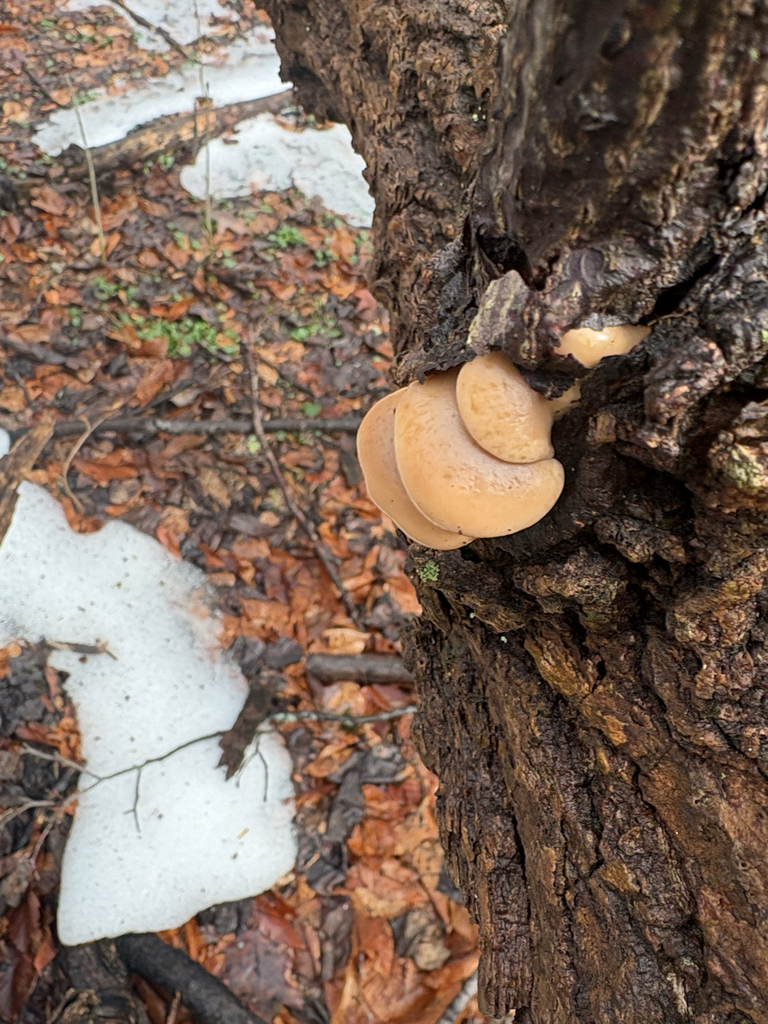
Armillaria ostoyae produces fruiting bodies that emerge as large, thick-stemmed mushrooms with a characteristic light brown colouration. The caps are convex and relatively substantial, making the fungus readily recognisable in the field. The gills beneath the cap are pale and closely spaced, a typical feature of the Armillaria genus. Specimens often fruit in dense clusters, particularly at the base of infected trees or on dead wood, where multiple mushrooms emerge in close proximity to one another.
As a parasitic fungus, A. ostoyae reproduces sexually through basidiospores released from the gill surfaces of mature fruiting bodies. The spores are dispersed by wind or carried by animals to suitable substrates. Successful colonisation requires that a spore encounters a compatible mating type of the same species; spores from different Armillaria species will not fuse and establish viable colonies together. This specificity ensures genetic isolation and prevents hybrid growth between closely related species.
The fungus typically fruits at average elevations around 510 metres, though it can occur across a broad altitudinal range depending on local climate and forest composition. Individual mushrooms persist for several weeks during their fruiting period, with new flushes appearing seasonally as moisture and temperature conditions favour sporulation. The combination of clustered growth habit, light brown caps, and thick stems makes this species distinctive among wood-decay fungi in temperate forests.
Distribution and Habitat
Armillaria ostoyae occurs across 22 countries, with a strong presence in central and northern Europe and North America. Germany hosts the highest concentration of observations (70 records), followed by Canada (40) and the Netherlands (39). The species has also been documented in the United States, Switzerland, Sweden, Great Britain, Austria, Poland, and Italy, indicating a temperate distribution pattern across both continents.
Elevations range from 84 metres to 1,110 metres above sea level, with an average of approximately 510 metres. The species tolerates a broad vertical range, appearing in lowland forests as well as upland regions, though it shows no strong preference for extreme elevations in either direction.
Fruiting activity concentrates sharply in autumn. Peak occurrence happens in October, when 145 records were logged, with significant activity also in September (129 records). Sporadic fruiting occurs as early as July and extends into August. The fungus produces fruiting bodies almost exclusively between late summer and autumn, with no documented records from November through June, indicating a pronounced seasonal phenology aligned with typical mushroom fruiting patterns in temperate regions.
Biology
Lifecycle
Armillaria ostoyae begins its lifecycle as microscopic spores that germinate in suitable substrate, typically dead or weakened wood. The fungus then develops an extensive network of thread-like hyphae—the mycelium—that colonizes decaying timber and organic matter over months or years. This vegetative stage can persist for extended periods, sometimes spreading across vast areas of forest floor and wood.
Fruiting bodies emerge when environmental conditions align, particularly after periods of moisture and mild temperatures in autumn. The fungus produces characteristic honey-colored mushrooms with a ring on the stalk, which release millions of spores into the air. These spores disperse on wind currents and can travel considerable distances before settling on fresh substrates where the cycle renews.
Ecological Role
Armillaria ostoyae functions primarily as a wood decomposer, breaking down dead trees and fallen logs that would otherwise accumulate on the forest floor. By fragmenting woody tissue and releasing nutrients back into the soil, this fungus accelerates nutrient cycling and creates habitat for countless invertebrates, microorganisms, and other decomposers that depend on decaying wood.
The species occasionally acts as a weak parasite on living conifers and hardwoods, particularly those already stressed by drought, injury, or disease. Infection typically causes root rot or butt rot, weakening the tree over time. However, such parasitism occurs opportunistically and does not represent the fungus’s primary ecological strategy.
Uses
In some regions, Armillaria ostoyae is harvested and consumed as an edible mushroom, though culinary use varies by locale and cultural practice. The fungus has garnered research interest for potential medicinal applications, though evidence from human trials remains limited. Conversely, the species is sometimes managed as a forest pest when its wood-rotting activity damages timber resources or when its parasitic phase threatens commercially valuable trees.
Conservation and Threats
Armillaria ostoyae does not currently hold an IUCN Red List classification. The species has not undergone formal assessment by the International Union for Conservation of Nature, meaning its conservation status remains undesignated. Despite this lack of formal evaluation, the species exhibits an increasing population trend, suggesting it maintains stable or expanding populations across its range.
Threats
No specific threats to Armillaria ostoyae have been documented in current conservation records. The species’ role as a wood-decay fungus means its populations are naturally tied to the availability of dead or dying wood in forests and other habitats. Habitat loss affecting dead wood availability could indirectly impact populations, though this has not been formally assessed as a conservation concern for this species.
Conservation Efforts
No dedicated conservation programmes or legal protections specifically target Armillaria ostoyae at present. The species’ increasing population trend suggests it does not require urgent intervention. Its ecological role in nutrient cycling and wood decomposition benefits forest health, and protecting mature forests with adequate dead wood reserves would indirectly support its populations. Standard forest management practices that maintain structural diversity, including standing dead trees and fallen logs, create favourable conditions for this fungus to persist and spread.
Fun Facts
- Armillaria ostoyae holds the record for the largest living organism on Earth by area. A single clone in Oregon’s Malheur National Forest spans 2,384 acres—roughly the size of 1,815 American football fields—and is estimated to be between 2,400 and 8,650 years old.
- Despite their fruiting bodies being relatively small mushrooms, the mycelial network of Armillaria ostoyae can weigh hundreds of tons. The Oregon specimen is thought to weigh approximately 600 tons, equivalent to a large blue whale.
- Dark honey fungus is a facultative parasite, meaning it can live as either a decomposer or an aggressive pathogen. It causes root rot in conifers and other trees, sometimes killing mature forests, yet also recycles dead wood and returns nutrients to soil.
- The fruiting bodies produce honey-colored caps with a distinctive ring (annulus) on the stem, which gives the genus Armillaria its common name “honey fungus.” These mushrooms are edible when cooked and are harvested commercially in some regions.
- Mycelial colonies of Armillaria ostoyae spread through soil at a measured pace of about 1 meter per year. This slow but relentless advance allows the fungus to colonize vast territories over centuries.
- Armillaria ostoyae produces dark rhizomorphs—root-like structures that look like black shoestrings—which penetrate soil and wood. These thick strands protect the mycelium as it spreads and help concentrate nutrients for reproduction.
Sources and References
Data Sources
This article draws on information from the following open-access databases and collaborative platforms:
- GBIF — Global Biodiversity Information Facility (gbif.org)
- iNaturalist (inaturalist.org)
- Wikidata (wikidata.org)
- Wikipedia (wikipedia.org)
- Encyclopedia of Life — EOL (eol.org)
These sources provide occurrence records, habitat data, taxonomic classifications, and community observations that inform the species profile.
Ecology
Edibility
Conservation Status
LC · NT · VU · EN · CR · EW · EX
Photo Gallery
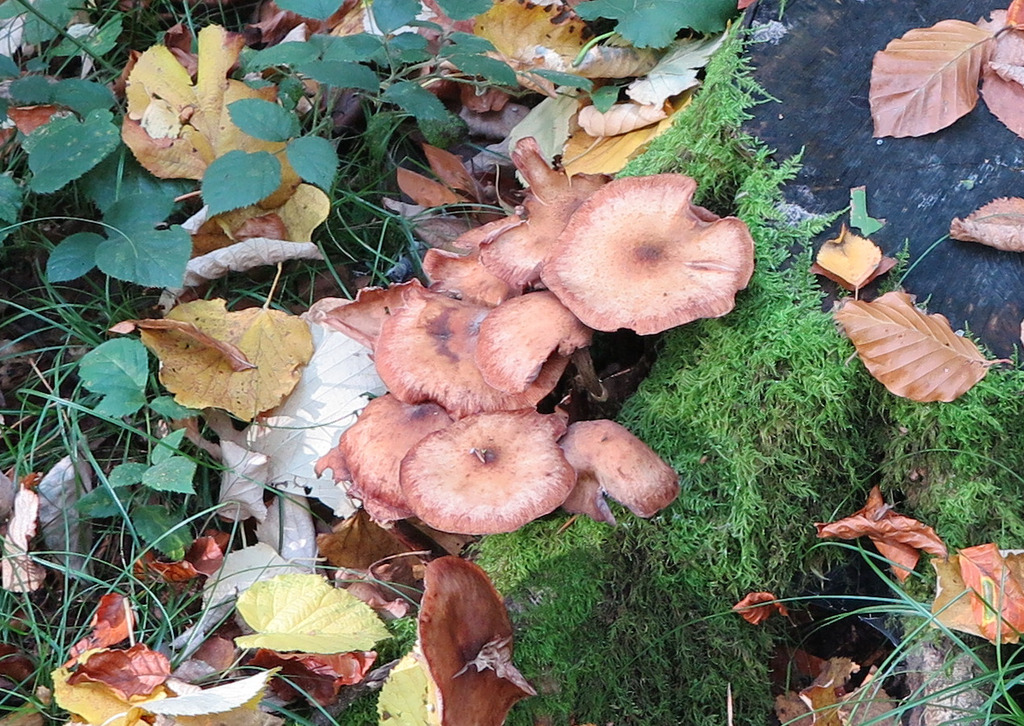
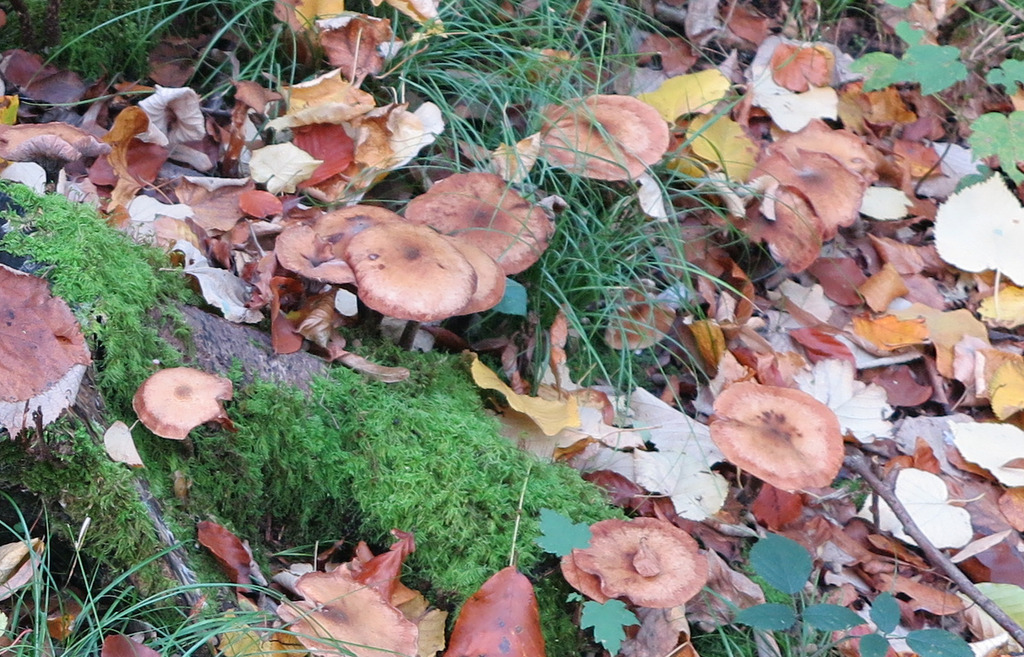
Beth King · CC BY-NC 4.0
Related Species
Was this profile helpful?