
Sordariomycetes · Xylariales
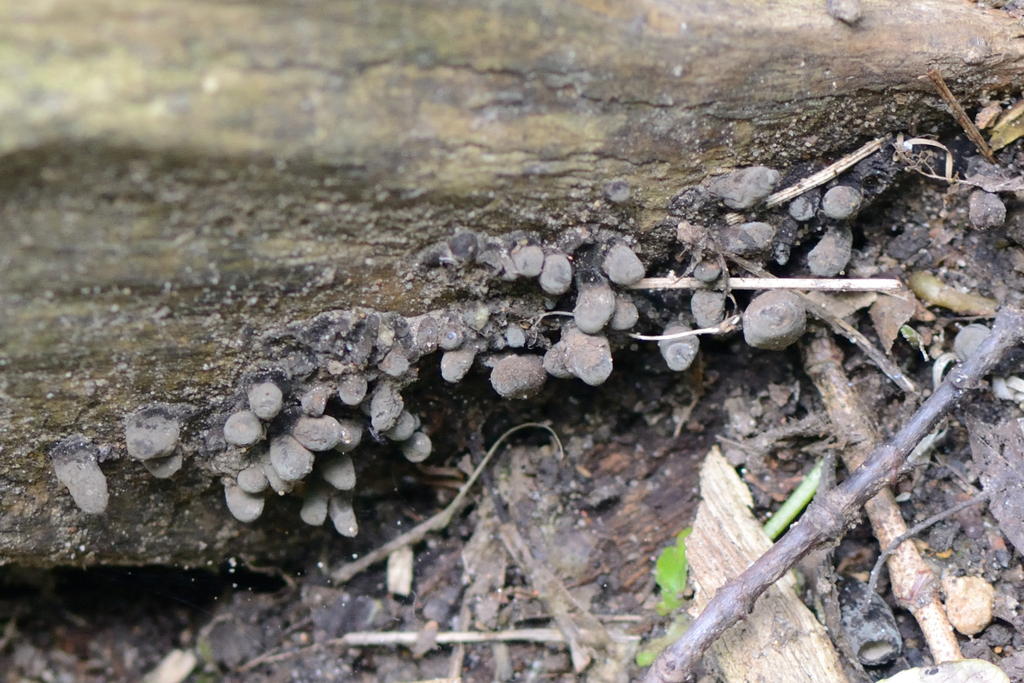
Dead Man’s Fingers
Xylaria polymorpha
© Fyodor Pudovikov · iNaturalist · CC BY 4.0
Scientific Classification & Quick Facts
Classification
Known For
Detailed measurements for this species are still being verified.
At first glance, Xylaria polymorpha looks exactly like what its common name suggests: blackened, skeletal fingers poking through the soil or protruding from rotting wood. This ascomycete fungus, a member of the family Xylariaceae, appears across at least 27 countries worldwide, yet it remains one of the most visually striking and easily recognisable fungi in temperate woodlands. Its distinctive fruiting bodies—club-shaped and deep black—have captured human imagination for centuries, inspiring not only its macabre English name but also regional folk names in cultures from Europe to East Asia.
Despite its widespread presence and conspicuous fruiting bodies, Xylaria polymorpha remains poorly studied compared to many fungi. Its conservation status is currently unknown, and the full extent of its ecological role in decomposing wood and returning nutrients to forest soils has yet to be comprehensively documented. What makes this species truly remarkable is not what we know, but what we still have to discover about this humble fungus that has haunted the forest floor for millennia.
Identification and Appearance
Xylaria polymorpha is a fungus belonging to the Ascomycetes, the sac fungi characterized by saclike structures called asci. Each ascus contains four to eight ascospores during the sexual reproductive stage. The fungus is instantly recognizable by its distinctive finger-like fruiting bodies, which emerge in clusters from decaying wood and give the species its evocative common name.
Fruiting Body Characteristics
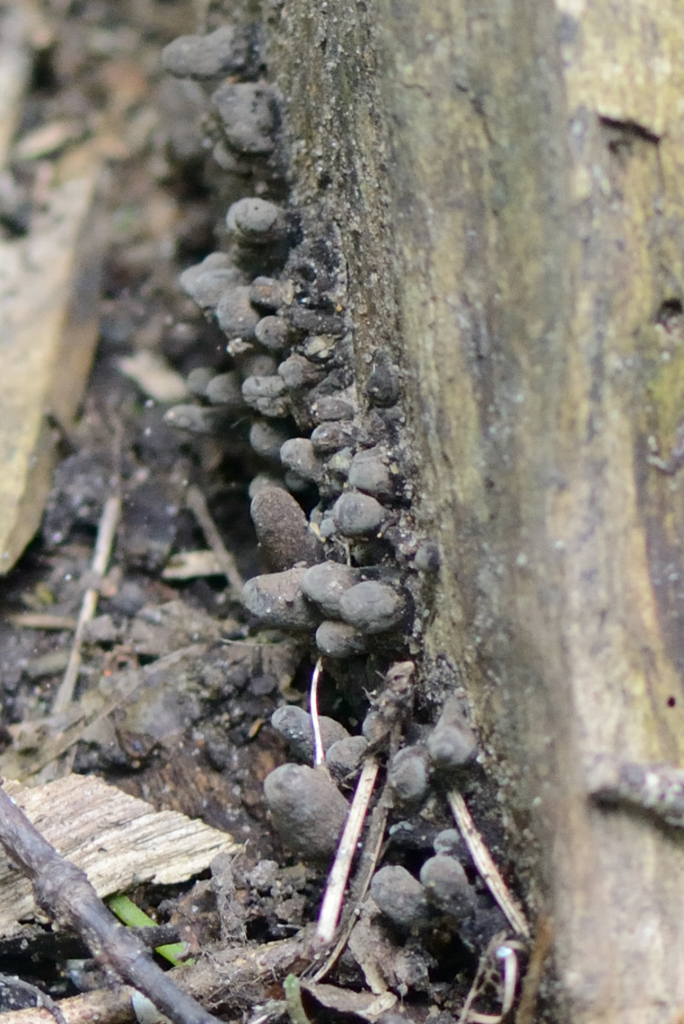
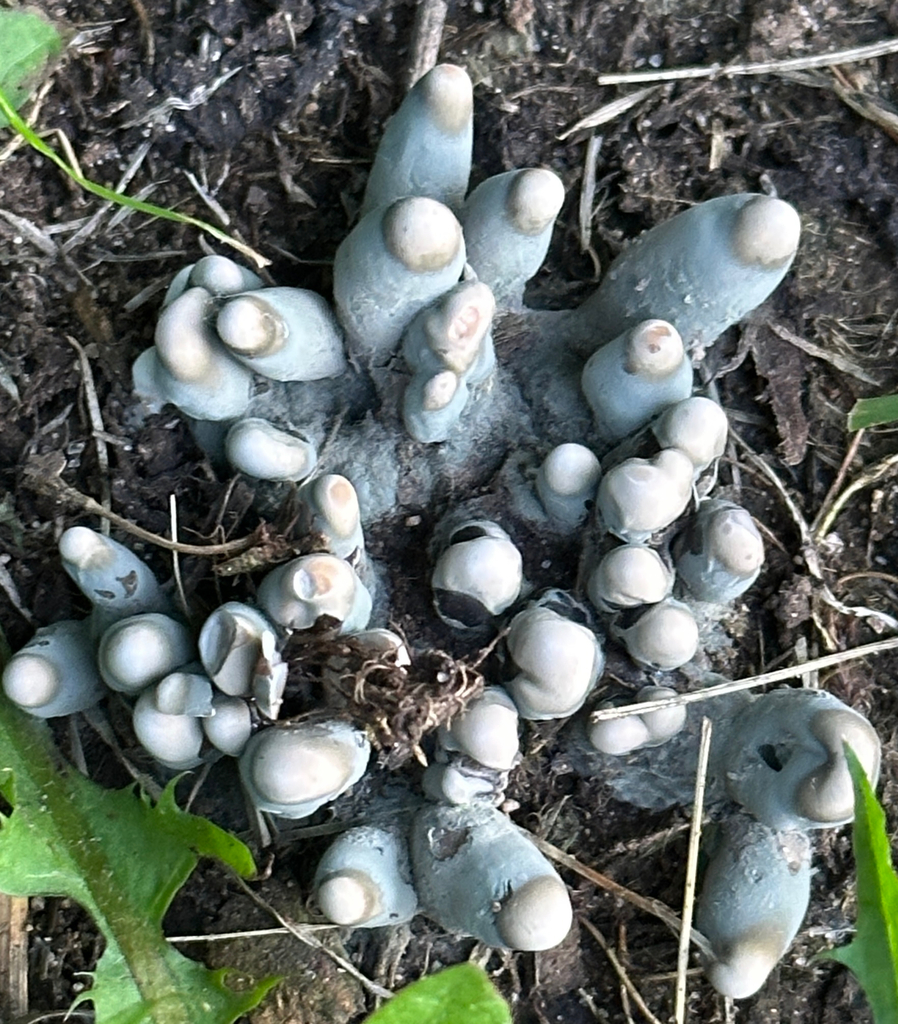
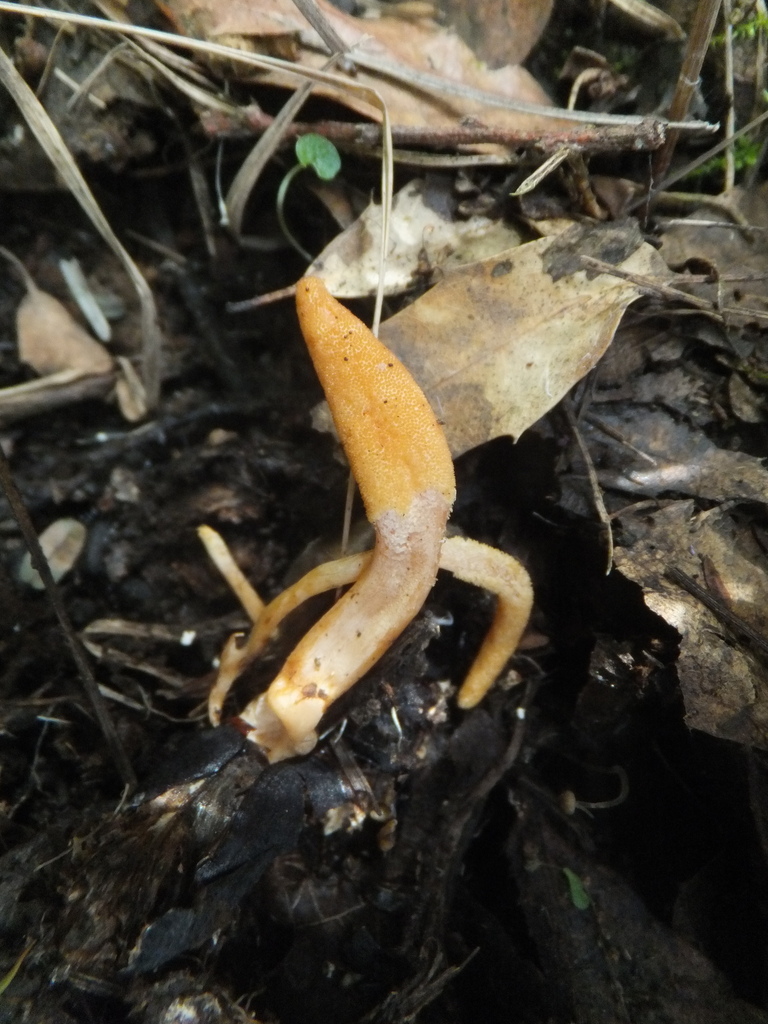
The fruit bodies of X. polymorpha are elongated, club-shaped or digit-like projections that rise vertically from hardwood substrates. They are typically dark brown to black in color, with a somewhat rough or granular texture on the surface. The fingers are solid and firm, varying in length and thickness depending on environmental conditions and available nutrients. When young, the tips may appear lighter in color or slightly rounded; as they mature, they often become more angular and pronounced, resembling blackened digits protruding from the soil or rotting wood.
The fungus produces its spores within the ascus structures embedded in the perithecia, which are flask-shaped cavities distributed across the fruiting body surface. This reproductive architecture is typical of the Ascomycetes class. X. polymorpha is inedible and should not be consumed under any circumstances.
Distribution and Habitat
Xylaria polymorpha has been recorded across 27 countries, with the strongest concentration in North America. The United States dominates the known distribution, with 198 documented observations, followed by Canada with 22 records. This fungus is also established throughout much of Europe, with confirmed presences in the Netherlands, Germany, Poland, Sweden, Romania, and the United Kingdom, though observation numbers are considerably lower in these regions.
Outside its core range, the species has been found in Indonesia and Mexico, indicating a broader ecological tolerance than its primary distribution might suggest. All recorded elevations fall within a narrow band around 480 metres, reflecting the fungus’s preference for lowland to foothill environments rather than high-altitude or montane zones.
Seasonal activity is pronounced and highly predictable. Xylaria polymorpha exhibits a marked fruiting peak in May, when the vast majority of observations occur—163 records were documented during that month alone. Activity builds steadily from January through April, peaks sharply in May, and then drops dramatically, with virtually no sightings recorded from June onwards. This concentrated spring fruiting window aligns with warm, moist conditions typical of temperate forests during late spring.
Ecology and Lifecycle
Lifecycle
Xylaria polymorpha begins its lifecycle as mycelium colonising dead wood, particularly hardwood logs and stumps. The fungus spreads through the substrate as fine filaments, breaking down cellulose and lignin over weeks to months. Environmental conditions—adequate moisture, moderate temperatures, and low light—trigger fruiting body formation.
The distinctive black, finger-like stromata emerge in clusters from infected wood, typically between autumn and spring in temperate regions. These hardened, charcoal-coloured structures are not the fruiting bodies themselves but rather the matrix containing thousands of perithecia (flask-shaped reproductive chambers) embedded in their surface. At maturity, each perithecium releases ascospores through a small opening; spore dispersal occurs passively when rain or humidity changes trigger discharge. The entire fruiting cycle from emergence to spore release spans several weeks to months, with mature stromata persisting on wood even after spore release.
Ecological Role
Xylaria polymorpha fills a critical ecological niche as a primary decomposer of dead hardwood in temperate forests. Its enzymatic capacity to break down complex wood polymers accelerates nutrient cycling, converting dense timber into soil-enriching organic matter. The fungus colonises logs across multiple decay stages, from freshly fallen wood to well-advanced decomposition, making it one of the earliest colonisers on newly felled trees.
The species supports a broader forest community through its fruiting bodies, which provide food and habitat for insects, mites, and other decomposer organisms. Additionally, the mycelium serves as a food source for wood-feeding beetles and other invertebrates. Its presence indicates healthy woodland ecosystems with sufficient dead wood—a conservation indicator of old-growth and mature forest conditions.
Uses
Xylaria polymorpha has no established culinary or medicinal applications in Western herbalism. The stromata are not eaten in traditional cuisines, and no validated pharmacological compounds have led to commercial extraction or therapeutic use.
The species holds value in ecological and mycological research as a model organism for wood decomposition studies and as a conspicuous indicator of old-growth forest health. Naturalists and educators often use its distinctive appearance to teach fungal ecology and decomposition processes in field guides and educational programmes.
Conservation and Threats
Xylaria polymorpha, commonly known as Dead Man’s Fingers, has not been formally assessed by the IUCN Red List. This absence of a formal assessment reflects the fungus’s widespread distribution and lack of documented population decline in regions where it occurs. Its conservation status remains undesignated, meaning it is not currently classified as threatened, vulnerable, or endangered.
The population trend for this species is increasing, indicating that Dead Man’s Fingers continues to thrive and expand in suitable habitats. This positive trajectory suggests that the species faces no immediate or severe pressures that would warrant urgent conservation intervention. The fungus’s ability to colonize dead wood across a range of climatic conditions and geographical regions contributes to its resilience in the wild.
Threats and Conservation Efforts
No documented major threats to Xylaria polymorpha have been identified. The species is not subject to direct harvesting for trade or human use, and it does not depend on rare or heavily threatened habitats. Its saprotrophic lifestyle—feeding on dead wood—means it benefits from the natural cycling of organic matter in forests and woodlands. The broader loss of deadwood habitat through intensive woodland management could theoretically reduce suitable microhabitats, but this has not emerged as a measurable conservation concern for this adaptable fungus.
At present, no formal conservation programmes or legal protections specifically target Dead Man’s Fingers. The species requires no active management. Its conservation is best supported indirectly by maintaining healthy forest ecosystems with adequate deadwood retention, a practice increasingly recognized as beneficial for biodiversity and fungal diversity more broadly.
Fun Facts
- The fungus gets its macabre common name because its dark, elongated stromata push up through soil and leaf litter, looking remarkably like skeletal fingers clawing out of the ground.
- Despite its spooky appearance, Xylaria polymorpha is completely harmless to humans and plays a vital ecological role by breaking down dead wood and returning nutrients to the forest floor.
- The stromata are actually reproductive structures packed with millions of microscopic spores; a single fruiting body can release spores over several weeks as it matures.
- This fungus has a truly cosmopolitan distribution—it is found on every continent except Antarctica, making it one of the most geographically widespread fungi on Earth.
- The stromata begin as pale, club-shaped protrusions but gradually darken to black or near-black as they mature, a process that can take several weeks to months depending on moisture and temperature.
- When fully ripe, the stromata develop a distinctive wrinkled or brain-like surface texture as the spore-bearing tissue beneath ruptures, enhancing their eerie resemblance to decomposing fingers.
- Xylaria polymorpha prefers moist, shaded environments rich in decaying wood, which is why it frequently appears on the forest floor after heavy rain or in damp, undisturbed patches of woodland.
Ecology
Edibility
Photo Gallery
Fyodor Pudovikov · CC BY 4.0
Related Species
Was this profile helpful?