
Testudines
European Pond Terrapin
Emys orbicularis
Near ThreatenedAlso known as: European Pond Turtle, European pond turtle
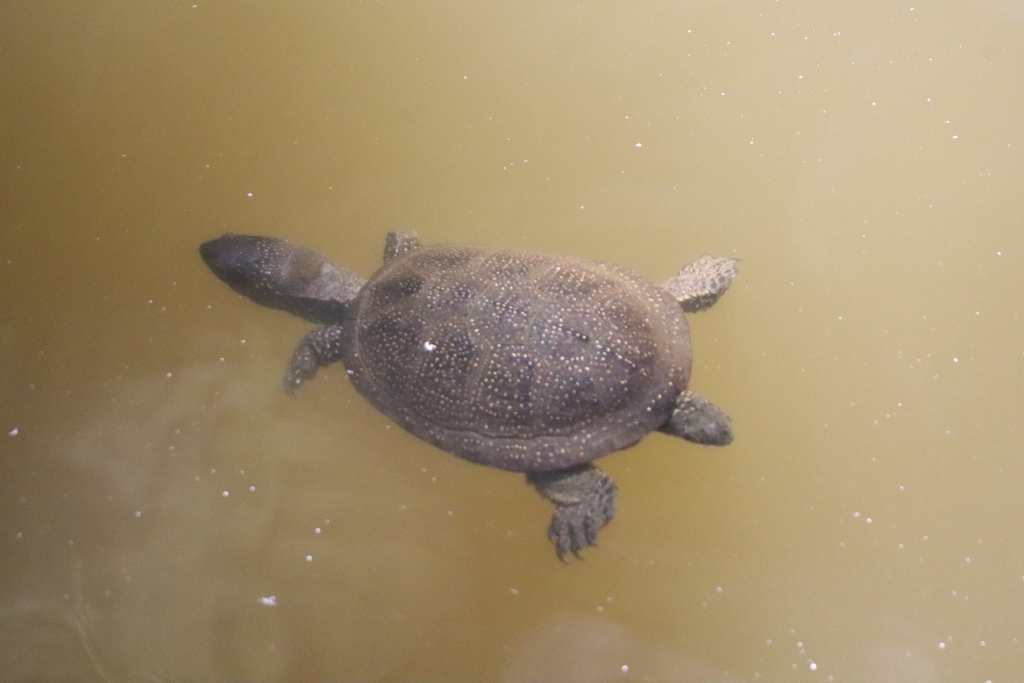
© Radu Teodoreanu · iNaturalist · CC BY 4.0
Scientific Classification & Quick Facts
Classification
At a Glance
The European Pond Terrapin is a small, freshwater turtle with a dark, domed shell that slices silently through ponds and marshes across much of temperate and southern Europe. Its scientific name, Emys orbicularis, refers to the distinctive circular patterns that often mark its shell and skin—a feature that helps distinguish it from other European turtle species. This is the continent’s most widespread native turtle, distributed across approximately 25 countries, yet it remains largely unseen by the public, spending much of its time submerged or hidden in dense aquatic vegetation.
Currently classified as Near Threatened by the IUCN, the European Pond Terrapin faces mounting pressure from habitat loss, pollution, and fragmentation of waterways that isolate populations. Despite its conservation challenges, this species remains a living window into Europe’s natural heritage, playing a quiet but vital role as a predator of aquatic invertebrates and a prey species for larger carnivores. Its presence in a wetland ecosystem signals ecological health and the persistence of intact freshwater systems.
Identification and Appearance
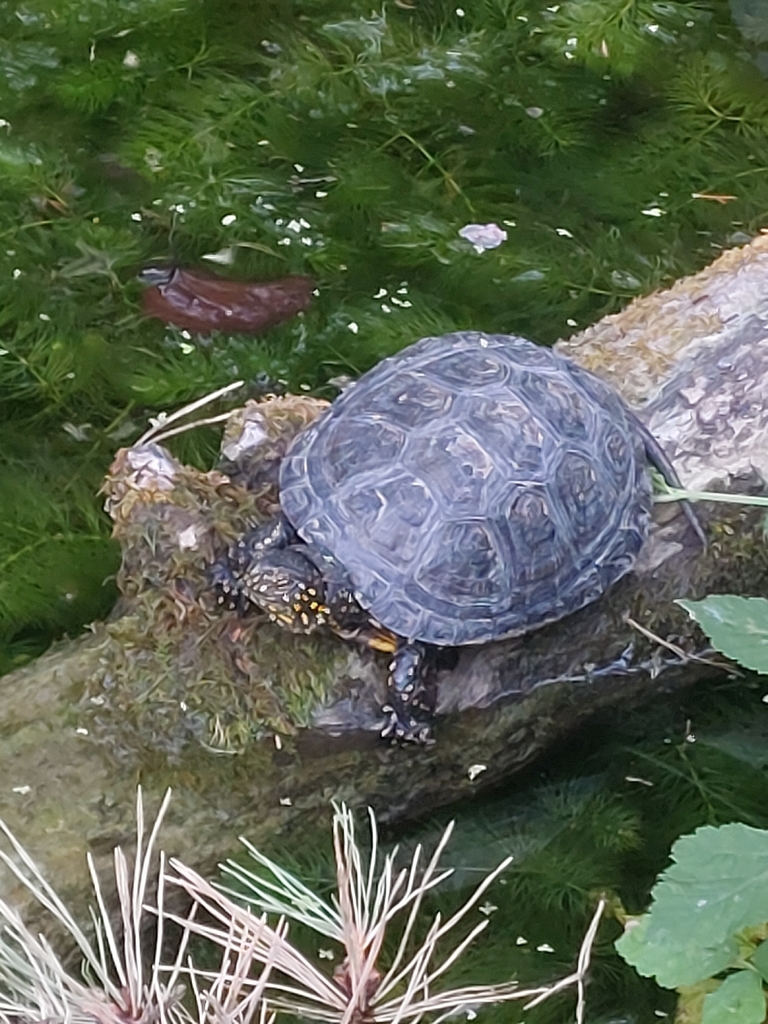
Emys orbicularis, the European Pond Terrapin, is a small freshwater turtle with a dark, flattened carapace and distinctive yellow markings. Adults range from 12 to 38 centimetres in shell length, making them one of Europe’s tiniest turtles. Their rounded, slightly domed carapace typically appears black or dark brown, often with irregular yellow lines or spots radiating from the centre of each scute—a pattern that becomes more pronounced with age.
Colour and Markings
The carapace colour varies geographically across their range. Specimens from central and eastern Europe tend toward darker, almost black shells, while populations in southern regions may display olive or brownish tones. The plastron (ventral surface) is typically yellow or cream-coloured with dark blotches or seams. Yellow lines also mark the head, neck, and limbs, creating a striking contrast against dark skin. These yellow markings serve to identify individuals—no two terrapins have identical pattern variations.
Sexual Dimorphism
Males and females show subtle but consistent differences in morphology. Males possess longer, thicker tails with the cloaca positioned further from the body’s midpoint than in females. Female carapaces are generally slightly more rounded and broader, allowing space for egg production. Males tend toward darker colouration overall, while females may appear somewhat lighter. Size differences between sexes are minimal in this species; both reach similar maximum lengths.
Distribution and Habitat
Emys orbicularis is distributed across 25 countries throughout Europe, with a range extending from western Atlantic regions to eastern continental areas. The species shows highest concentration in France, where GBIF records document 83 observations, followed by Ukraine (28), Italy (22), Hungary (20), and Austria and Russia (15 each). Additional populations occur in Spain, Romania, Greece, Croatia, and numerous other European nations, reflecting the terrapin’s adaptability across diverse temperate and Mediterranean climates.
The species occupies freshwater environments across its range, inhabiting ponds, lakes, marshes, and slow-moving waterbodies where aquatic vegetation provides shelter and foraging opportunities. While specific elevation data are not available for this species, European populations typically occur in lowland and mid-elevation zones rather than mountain regions, allowing the terrapin to thrive in agricultural landscapes, nature reserves, and wetland complexes from sea level to moderate elevations.
Seasonal activity patterns show marked periodicity across the year. Peak observations occur during April (145 records), with elevated activity continuing through March (129 records) and February (22 records), reflecting the species’ emergence from winter dormancy as water temperatures rise. The absence of records from May through December suggests either reduced detectability during summer months or a shift in terrapin behavior that makes individuals less observable during the warmer season, possibly due to increased submersion or reduced basking activity.
Biology and Behavior
Behavior
European Pond Terrapins are primarily aquatic reptiles that spend most of their time in freshwater environments, though they do bask on land to thermoregulate. They are diurnal and crepuscular, meaning they are active during daylight hours and at dawn and dusk. On warm days, individuals frequently emerge onto rocks, logs, or muddy banks to absorb solar radiation, which is essential for maintaining body temperature and digestion. During winter months, they enter a torpid state, often buried in mud at the bottom of ponds or in sheltered terrestrial sites.
These terrapins are generally solitary outside the breeding season, though multiple individuals may occupy the same water body without significant conflict. They are capable swimmers and move with surprising agility both underwater and on land. Hatchlings and juveniles tend to be more terrestrial than adults, spending more time on land during their early years before becoming increasingly aquatic as they mature.
Diet
European Pond Terrapins are omnivorous foragers with a varied diet that changes with age and season. Young individuals are primarily carnivorous, feeding on small aquatic invertebrates such as insects, crustaceans, and tadpoles. As they mature, adults consume a broader range of prey including small fish, aquatic snails, aquatic plants, and algae. They hunt by sight and are opportunistic feeders, taking advantage of whatever food sources are abundant in their habitat at any given time.
Feeding is typically concentrated in spring and summer when water temperatures rise and prey availability increases. During autumn, feeding intensity declines as the terrapins prepare for winter dormancy, and feeding largely ceases during the cold months when they are inactive.
Reproduction
Breeding occurs in spring, typically from April through June depending on geographic location and water temperature. Males court females through a series of swimming displays and tactile interactions. After mating, females undergo vitellogenesis and develop eggs internally over several weeks.
Gravid females leave the water in late spring or early summer to search for suitable nesting sites, often traveling considerable distances overland. They deposit clutches of 5 to 20 elongated, leathery eggs in sandy or loose soil, typically in sunny, well-drained locations. Incubation lasts approximately 8 to 10 weeks, and hatchlings emerge in late summer or early autumn. Females do not provide parental care after egg deposition. Hatchlings immediately make their way to water bodies, where they begin independent life. The species is exceptionally long-lived, with individuals regularly reaching 60 to 120 years of age, allowing for multiple reproductive cycles over a lifetime.
Conservation and Threats
Emys orbicularis, the European pond terrapin, holds a Near Threatened status on the IUCN Red List. This classification indicates that the species does not yet qualify as Vulnerable, but faces enough pressure from habitat loss, human activity, and environmental change that its populations warrant close monitoring. The species’ vulnerability stems partly from its dependence on freshwater wetlands across a broad geographic range spanning Europe and western Asia, making it susceptible to multiple, concurrent pressures across its distribution.
Threats
Wetland destruction and degradation represent the primary threat to European pond terrapins. Drainage of ponds, marshes, and shallow water bodies for agriculture, urban development, and industrial use eliminates critical breeding and foraging habitat. Water pollution—from fertiliser runoff, pesticides, and industrial discharge—degrades water quality and reduces food availability, while also accumulating toxic compounds in terrapin tissues. Road mortality claims significant numbers of individuals, particularly females moving overland to find suitable nesting sites. Collection for the pet trade, though now regulated in many countries, continues to impact wild populations in some regions. Predation by invasive species and native generalist predators poses additional pressure, especially on eggs and hatchlings in vulnerable nesting areas.
Conservation Efforts and Legal Protections
Emys orbicularis benefits from legal protection across much of its range. The species is listed in Appendix III of the Convention on International Trade in Endangered Species (CITES), restricting commercial trade. Within the European Union, the species is protected under the Habitats Directive, and many member states impose strict legal bans on capture and trade. Wetland conservation initiatives, including the protection of Ramsar sites and EU Water Framework Directive implementation, indirectly benefit terrapin populations by safeguarding their habitats. Several European countries operate head-starting and reintroduction programmes, raising hatchlings in captivity to boost survival rates before releasing juveniles into protected wetland reserves.
Fun Facts
- The European pond terrapin can hold its breath underwater for up to seven hours, allowing it to remain submerged during winter hibernation without surfacing for air.
- These terrapins are highly responsive to temperature changes and will emerge from hibernation only when water temperature reliably exceeds 10°C, sometimes remaining dormant for six months or longer.
- Males and females exhibit striking differences in appearance: males develop notably longer tails and lighter coloration, while females grow significantly larger and maintain darker shell patterns.
- The species is primarily nocturnal, spending daylight hours basking on logs or buried in mud to thermoregulate, then becoming active hunters at night when they consume insects, crustaceans, and plant matter.
- European pond terrapins have a remarkable homing instinct and will consistently return to the same hibernation sites, sometimes traveling considerable distances across unfamiliar terrain to reach their preferred overwintering locations.
- Females can store sperm for multiple years, allowing them to produce fertile eggs long after mating, a reproductive strategy that increases breeding success in environments where males are scarce or difficult to locate.
- The species produces audible hisses and grunts as a defensive warning when threatened, inflating their neck to appear larger to potential predators.
Ecology
Habitats
Diet
Behavior
Conservation Status
LC · NT (Near Threatened) · VU · EN · CR · EW · EX
Photo Gallery
Radu Teodoreanu · CC BY 4.0
Related Species

Was this profile helpful?