
Magnoliopsida · Nymphaeales
White Water Lily
Nymphaea alba
Also known as: European Water-lily, European White Waterlily, European white water-lily, European white waterlily
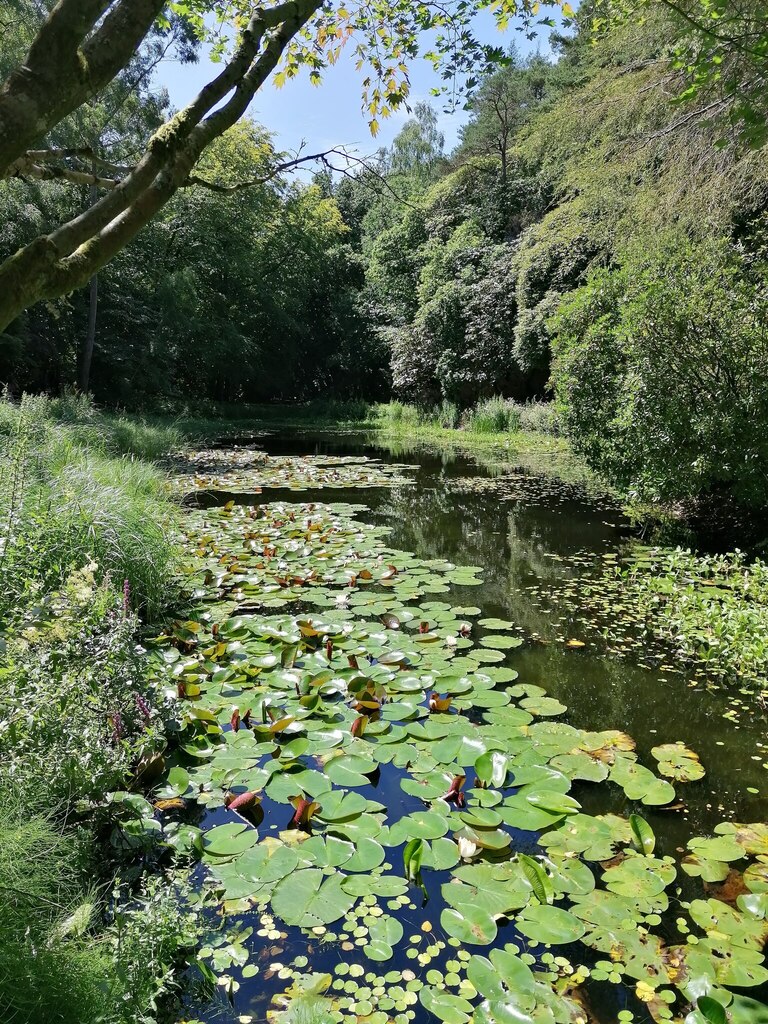
© Barry Stewart · iNaturalist · CC BY 4.0
Scientific Classification & Quick Facts
Classification
Known For
Detailed measurements for this species are still being verified.
The white water lily floats serenely on the surface of lakes, ponds, and slow-moving rivers across temperate Europe and beyond, its pristine white petals opening each morning to reveal a golden centre. Nymphaea alba, belonging to the family Nymphaeaceae, is a freshwater aquatic plant that has captivated human societies for millennia—celebrated in art, literature, and gardens. Despite centuries of cultivation and widespread distribution across 26 countries, this iconic species remains classified as Least Concern by the IUCN, with healthy populations sustained across much of its native range.
What makes Nymphaea alba particularly remarkable is not merely its beauty, but its ecological role and remarkable adaptations. The plant thrives entirely rooted to the substrate below, yet its leaves and flowers reach the water surface through a combination of buoyancy and stem growth. Its presence enriches aquatic ecosystems, providing shelter and food for insects, amphibians, and fish while filtering nutrients from the water. Understanding this species offers insights into both freshwater ecosystem function and the horticultural heritage of temperate regions.
Identification and Appearance
Nymphaea alba is instantly recognizable by its pure white flowers and large floating leaves. The plant is rooted in submerged sediment, but its vegetative and reproductive structures spread across the water surface, making it a characteristic feature of calm freshwater habitats.
Flowers
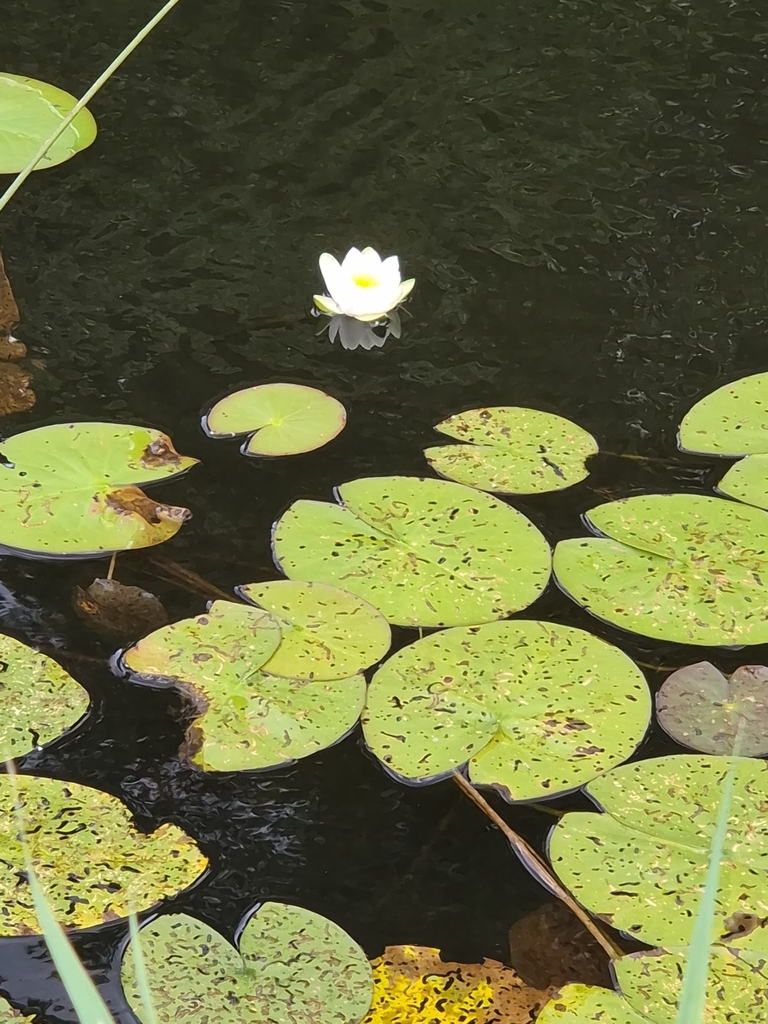
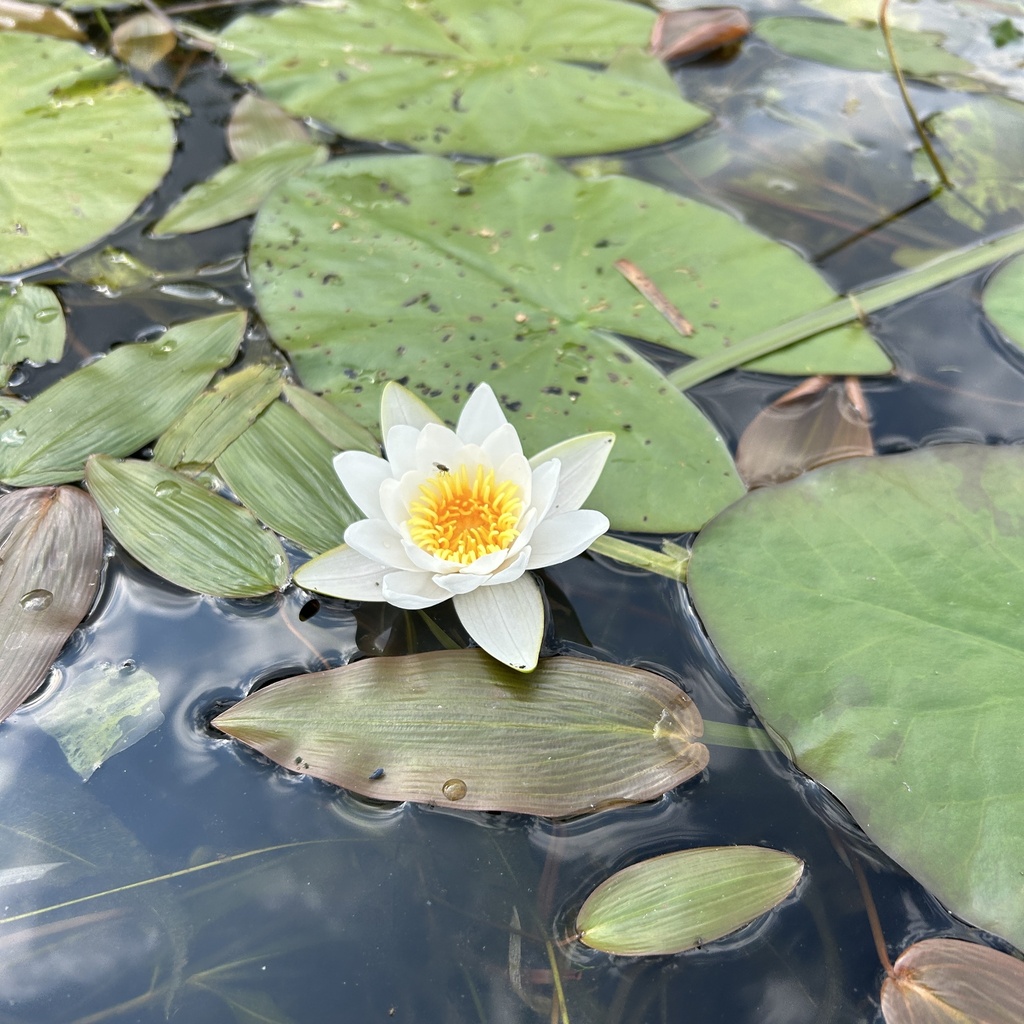
The flowers are the most striking part of the plant. They emerge white and cup-shaped, initially measuring around 8 centimetres across. As the flower matures over successive days, it expands to roughly 20 centimetres in diameter and transforms into a star-shaped bloom with multiple petals arranged radially upward. The petals surround a dense cluster of bright yellow stamens at the flower’s centre. The blooms typically open during daylight hours and close at night, with peak flowering occurring throughout the summer months.
Leaves and General Structure
The leaves are equally distinctive, being large and rounded with a smooth upper surface. Each leaf grows up to 30 centimetres in diameter and floats flat against the water surface. A distinctive radial slit extends from the leaf margin to the centre, allowing the leaf to expand without tearing as the plant grows. The undersides of the leaves are often reddish or purplish. The entire plant remains anchored beneath the water by a thick rhizome buried in the substrate, while petioles—the leaf stalks—extend upward to support the floating foliage and flowers at the surface.
Distribution and Habitat
Nymphaea alba is distributed across Europe and has naturalized in New Zealand. The species has been recorded in 26 countries, with the Netherlands accounting for the vast majority of documented observations (190 records), followed by the United Kingdom (17), France (11), Germany (10), and Montenegro (9). Smaller populations exist in Romania, Portugal, Spain, and Sweden, reflecting its presence across temperate and boreal regions of the continent.
The white water lily inhabits still and slow-flowing freshwater bodies including ponds, lakes, ditches, and canals. It thrives in water bodies with muddy or silty substrates where its rhizomes can establish firmly. The species shows no strict elevation preference, occurring from lowland wetlands to moderate elevations across its range.
Seasonal patterns reveal a pronounced peak in May, when 237 observations were recorded—the single most active month in the annual cycle. Spring observations begin in March (11 records) and increase sharply through April (45 records). After May, documented sightings drop to zero from June through December, likely reflecting the combination of flowering cessation and reduced survey activity rather than complete winter dormancy, as the species persists year-round in aquatic refugia beneath the water surface.
Growth and Cultivation
Growth
Nymphaea alba is a rhizomatous aquatic perennial that spreads across water surfaces via horizontal underground stems. The plant develops large, floating leaves that can reach 20–30 centimetres in diameter, with a distinctive waxy coating that repels water. Growth is vigorous in suitable conditions, with new leaves emerging throughout the growing season from the central rhizome.
The root system anchors deep in substrate, typically 30–60 centimetres below the water surface. Plants establish themselves quickly once rooted and can form substantial colonies over time. Mature specimens occupy significant space, making them suitable only for larger ponds and lakes rather than confined water gardens.
Flowering
White water lilies produce fragrant, pristine white flowers that float on or just above the water surface. Blooms typically measure 7–12 centimetres across and open in the morning before closing by late afternoon. Flowers appear throughout summer months when water temperature remains warm, with individual blooms lasting two to three days.
After flowering, fruits develop beneath the water surface as berry-like capsules containing numerous seeds. These seeds are buoyant and can disperse to new locations naturally. The plant also reproduces vegetatively through rhizome division, which is the more reliable method for establishing new plants in cultivation.
Cultivation
White water lilies thrive in still or slow-moving freshwater with full sunlight—minimum six hours daily for reliable flowering. They prefer neutral to slightly alkaline water and perform best in depths of 30–90 centimetres, allowing roots to establish firmly in the substrate. Rich, loamy bottom soil or dedicated aquatic planting media supports vigorous growth.
Planting occurs in spring or early summer when water temperatures exceed 15°C. Position the rhizome horizontally in a submerged planting basket, leaving the growing tip exposed just above the substrate surface. Regular removal of dead leaves maintains water quality and encourages continued flowering. In colder climates, rhizomes can be lifted and stored indoors over winter, or plants can be allowed to overwinter in situ if water does not freeze solid.
Conservation and Threats
Nymphaea alba, the White Water Lily, is classified as Least Concern on the IUCN Red List. This designation reflects that the species is not currently at immediate risk of extinction across its range, though local populations in some regions face pressures from habitat degradation and water quality decline.
Threats
The primary threats to White Water Lily populations stem from human modification of freshwater ecosystems. Water extraction for agriculture and urban supply reduces water levels in lakes, ponds, and slow-moving rivers where the species thrives. Eutrophication—nutrient enrichment from agricultural runoff and sewage discharge—promotes algal blooms that shade submerged and floating-leaved plants, limiting photosynthesis and growth. Drainage of wetlands for development and agricultural expansion destroys breeding habitat and reduces the extent of suitable shallow waters. Invasive aquatic plants and aggressive management practices, including herbicide application, also contribute to local declines.
Water pollution from industrial discharge and pesticide runoff degrades water quality, while climate change alters water temperature and seasonal hydrology patterns on which the species depends for reproduction and seasonal dormancy. In some European regions, overcollection for horticulture has historically impacted wild populations, though this pressure has diminished with widespread cultivation in ornamental nurseries.
Conservation Efforts and Legal Protections
In many European countries, Nymphaea alba benefits from legal protection through inclusion in national biodiversity legislation and the EU Habitats Directive, which safeguards the freshwater and wetland habitats on which it depends. Protected area designation for lakes, ponds, and river systems indirectly supports White Water Lily populations by limiting drainage and pollution. Several European nations include the species in regional red lists and conduct monitoring within Natura 2000 sites and other protected wetland networks.
Cultural Significance
The white water lily has occupied a significant place in European artistic and symbolic traditions for centuries. Its pristine white flowers and floating leaves have made it a favored subject in painting and literature, particularly during the Romantic and Impressionist periods. The species’ association with purity, tranquility, and the boundary between water and air has secured its role as a cultural icon across temperate regions where it occurs naturally.
Beyond the visual arts, Nymphaea alba appears in historical herbalism and folk medicine traditions across its native range. Local communities have employed various parts of the plant for remedial purposes, though these practices vary considerably by region and have not been systematically documented in modern scientific literature. The plant’s presence in ornamental garden ponds and water features also reflects its deep integration into European horticultural culture, where it remains a popular choice for both aesthetic and ecological reasons.
Fun Facts
- White water lilies can live for over 1,000 years in ideal conditions, making individual plants older than many human civilizations. Their rhizomes—underground stems anchored to lake and pond floors—continue to grow and regenerate throughout their exceptionally long lifespan.
- The flowers open and close on a precise daily cycle, typically opening in early morning and closing by afternoon. This rhythmic behavior allows the plant to manage pollinator access and protect its pollen during cooler, wetter hours when insects are less active.
- White water lilies produce their own internal heating system through thermogenesis, raising the temperature of their flowers by up to 10°C above the surrounding water. This warmth attracts pollinators such as beetles and bees, which are drawn to the elevated temperature like a beacon.
- The leaves, or lily pads, can reach up to 30 centimetres in diameter and feature a waxy, water-repellent coating that causes rainwater to bead up and roll off. This hydrophobic surface was so effective at shedding water that it inspired the development of self-cleaning industrial coatings.
- Water lilies are entirely carnivorous in reverse: their leaves actively capture and digest small aquatic insects and debris that accumulate on their surface, recycling nutrients back into the plant. This adaptation helps them thrive in nutrient-poor waters where other plants would struggle.
- The plant’s roots absorb oxygen directly from water and store it in specialized air-filled tissue called aerenchyma, allowing survival in oxygen-depleted sediment and muddy bottoms. This adaptation enables white water lilies to colonize waters that would suffocate most rooted plants.
- White water lilies produce seeds that are enclosed in berry-like fruits that ripen underwater and eventually split open, releasing seeds coated in a buoyant, spongy tissue. These seeds can float for weeks, dispersing across water bodies and establishing new populations far from their parent plant.
Ecology
Growing Conditions
Photo Gallery
Barry Stewart · CC BY 4.0
Related Species
Was this profile helpful?