
Pezizomycetes · Pezizales
False Morel
Gyromitra esculenta
© Crystal Butler · iNaturalist · CC BY-SA 4.0
Scientific Classification & Quick Facts
Classification
Known For
Detailed measurements for this species are still being verified.
Gyromitra esculenta, commonly known as the False Morel, is a fungus that presents one of nature’s most deceptive traps for foragers. Resembling the prized true morel mushroom at first glance, this ascomycete bears a wrinkled, brain-like cap perched on a hollow stem—features that have led countless gatherers to mistake it for an edible delicacy with potentially serious consequences. Found across at least 16 countries worldwide, the False Morel occupies a peculiar ecological niche, fruiting in spring and early summer in forests and disturbed ground where its dangerous mimicry goes largely unappreciated.
The species belongs to the family Discinaceae within the ascomycete lineage, and its conservation status remains unknown—a reflection of how little studied this fungus truly is despite its notoriety in foraging circles. What makes Gyromitra esculenta especially notable is not ecological dominance or rarity, but rather its role as a cautionary lesson in the dangers of mushroom identification and the razor-thin line between culinary treasure and poisonous impostor.
Identification and Appearance
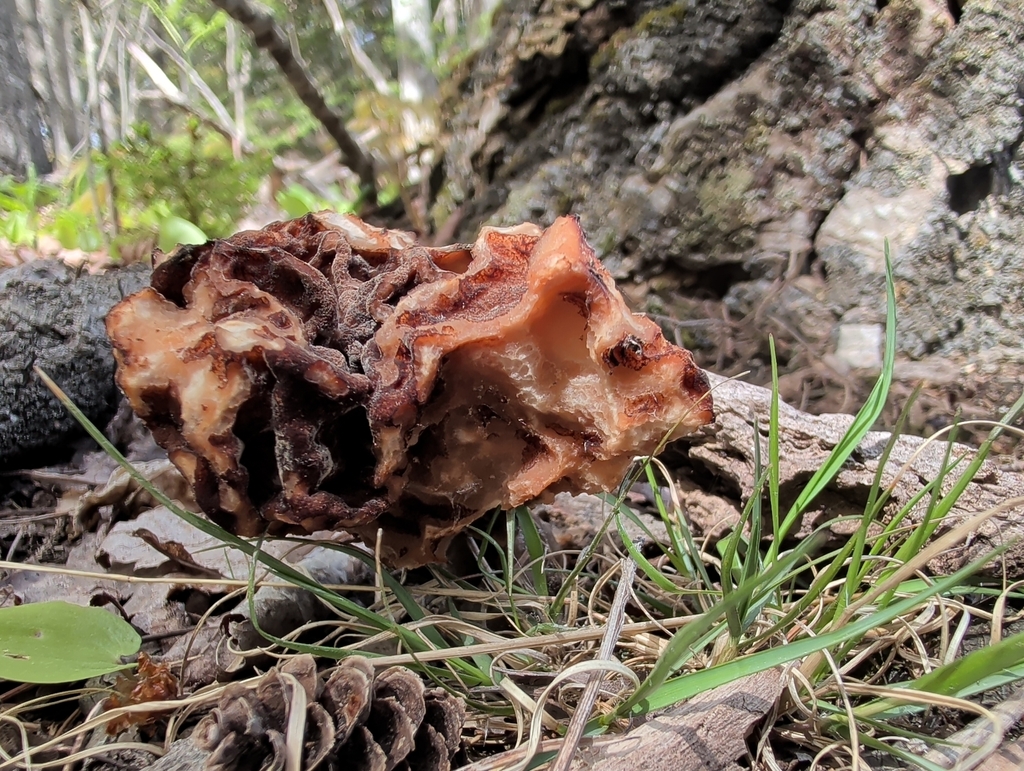
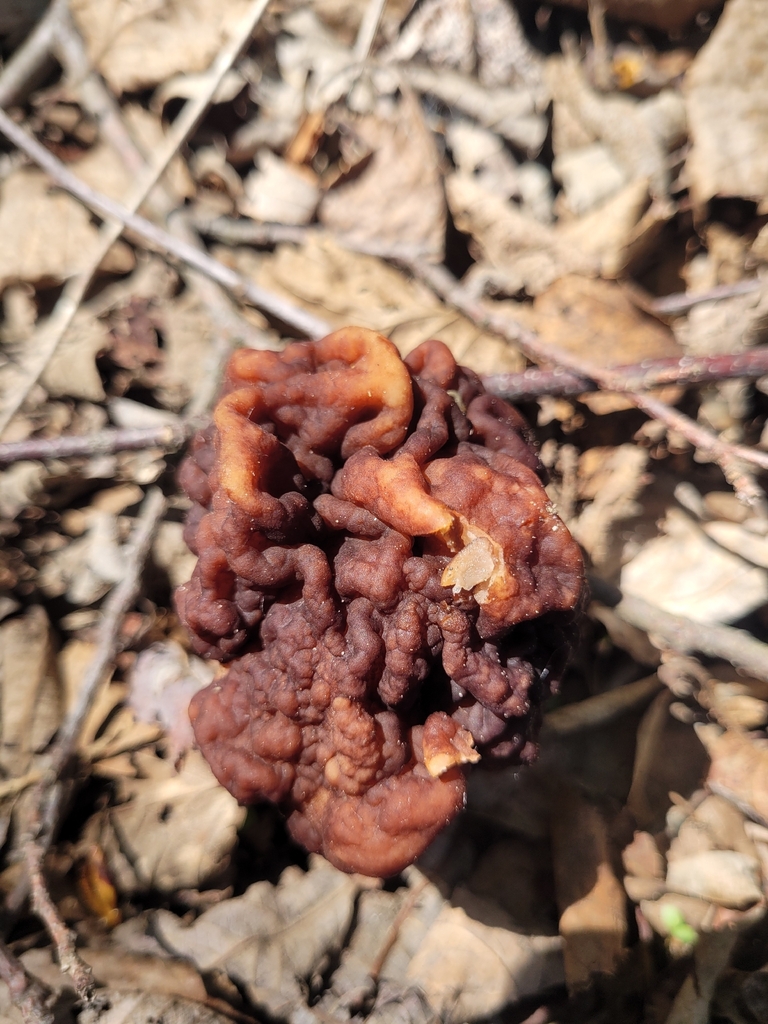
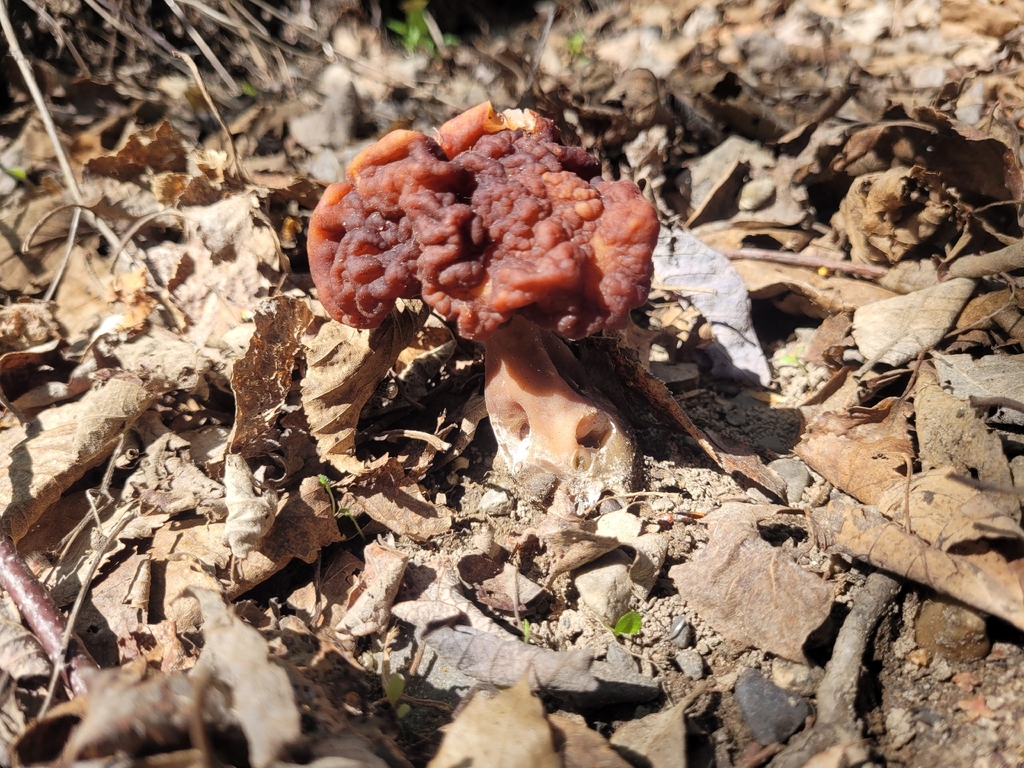
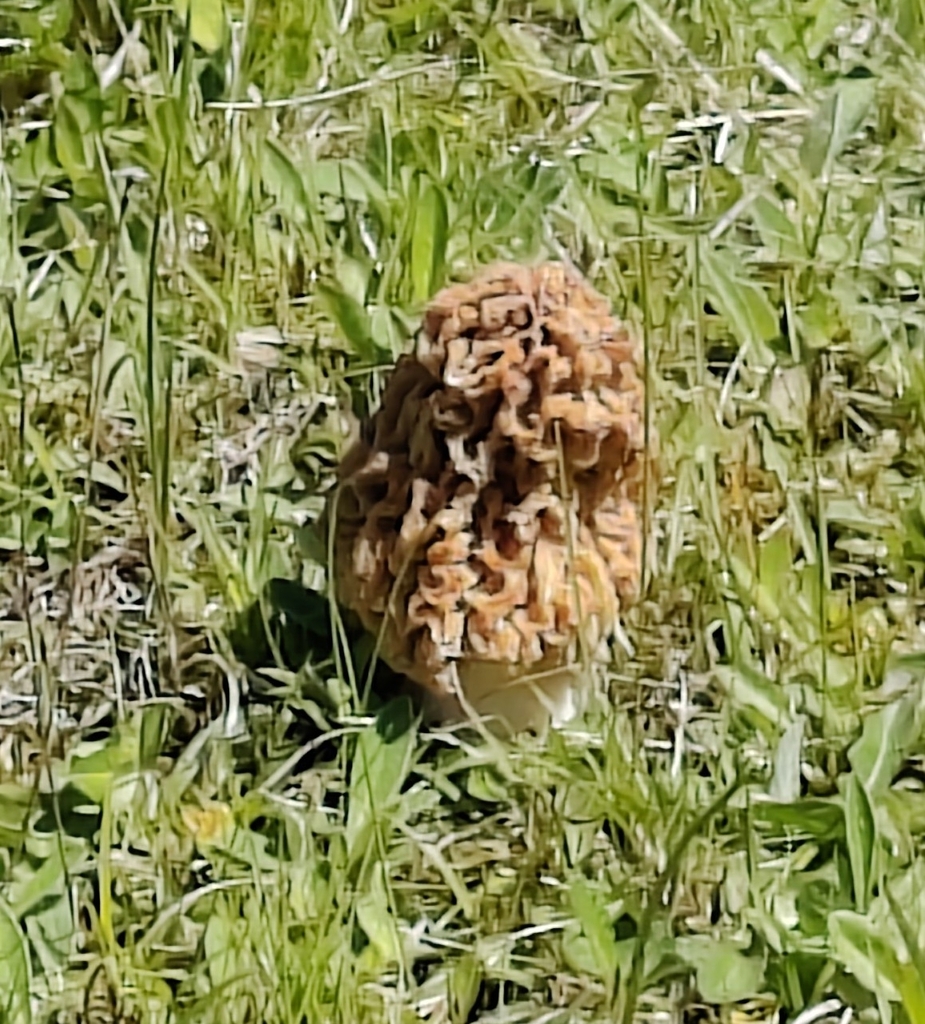
Gyromitra esculenta, the False Morel, is a distinctive fungus readily identified by its brain-like, irregularly wrinkled cap. The fruiting body can reach 12 centimetres or more in both height and width, making it a substantial presence on the forest floor. The cap begins relatively smooth when young but develops increasingly prominent wrinkles and folds as the fungus matures, creating a convoluted, cerebral appearance that gives the species its common name.
The cap displays a range of warm brown tones, often shaded with reddish, chestnut, purplish, or golden hues depending on age and growing conditions. As the fungus ages, the cap darkens considerably, eventually becoming nearly black. Unlike true morels, the False Morel’s underside lacks the characteristic honeycomb-like pits; instead, the hymenium is smooth or only slightly wrinkled. The stem is typically pale and solid, contrasting with the darker cap above.
Distribution and Habitat
Gyromitra esculenta, the False Morel, has a primarily European distribution with recorded presence across 16 countries. The Netherlands and Germany dominate occurrence records, with 152 and 96 documented observations respectively. Significant populations also appear in Sweden (13 records), the United Kingdom (11), and Norway (7). Smaller numbers of observations extend into Belgium, Spain, Poland, and Russia, indicating a temperate European range with occasional occurrence in North America, where the species has been recorded in the United States.
The fungus exhibits a highly restricted seasonal window, with all documented fruiting concentrated in early spring. March and April account for nearly all records, with April representing the peak fruiting month (170 observations). This pronounced seasonality suggests the species fruits rapidly in response to spring warming and moisture conditions before disappearing entirely through the remainder of the year. The absence of records from May onward indicates no documented summer or autumn fruiting.
Specific elevation and detailed habitat preference data are not available from current occurrence records. However, Gyromitra esculenta typically associates with mixed and coniferous woodlands in northern temperate regions, appearing in disturbed forest soils and along woodland edges where spring conditions create suitable moisture and temperature regimes. The concentration of records in Western and Central Europe reflects both the species’ natural range and intensive mycological documentation in these regions.
Ecology and Lifecycle
Lifecycle
Gyromitra esculenta completes its lifecycle as a saprobic fungus, deriving nutrients from dead organic matter in soil and leaf litter. The mycelium grows through decomposing wood, humus, and plant debris, spreading underground throughout seasons. When soil moisture and temperature conditions align—typically in spring and early summer in temperate forests—the fungus initiates fruiting body formation.
The fruiting body emerges as the characteristic brain-like or wrinkled cap atop a hollow stipe. Once mature, the fungus releases spores from the hymenium (the fertile surface beneath the cap) into the air. Spore dispersal depends on wind currents and air circulation within the forest canopy and understory, allowing the species to colonize new substrates across suitable habitat.
Ecological Role
Gyromitra esculenta functions as a decomposer in forest ecosystems, breaking down dead plant material and returning nutrients to the soil. This process enriches forest soil structure and nutrient cycling, supporting plant growth and the broader food web. The fungus thrives in acidic soils rich in organic matter, particularly in oak, pine, and mixed deciduous forests.
The fruiting bodies attract foragers, insects, and small animals. While some invertebrates feed on the fruiting body itself, the fungus’s primary ecological contribution remains nutrient mineralization—converting complex organic compounds into forms available to plant roots and microbial communities.
Uses
Gyromitra esculenta has been foraged in parts of Europe and North America for centuries, particularly in Scandinavian and Eastern European cuisines where it is sometimes prepared after boiling or drying. Practitioners claim that cooking methods reduce or eliminate toxic compounds. However, the safety and efficacy of these preparation techniques remain inconsistent and unpredictable.
The toxins present in this species—particularly gyromitrin—target the liver, kidneys, and central nervous system. Consumption can cause nausea, vomiting, diarrhea, tremors, seizures, and death. Because toxin content varies between individual fruiting bodies and is not reliably reduced by standard cooking methods, Gyromitra esculenta is considered inedible or dangerous in most regions and should never be consumed.
Conservation and Threats
Gyromitra esculenta, the False Morel, has not been formally assessed by the International Union for Conservation of Nature (IUCN), meaning its global conservation status remains unclassified. Without a formal Red List designation, the species lacks systematic monitoring of population trends, distribution changes, or long-term demographic data. This absence of formal assessment does not indicate the species is thriving—rather, it reflects the difficulty in tracking fungal populations across their range.
Threats and Population Pressures
False Morals face indirect threats primarily through habitat disturbance and land-use change. As a mycorrhizal fungus that forms associations with tree roots, particularly in coniferous and mixed forests, the species depends on intact woodland ecosystems. Logging, forest fragmentation, and urbanisation reduce suitable habitat and disrupt the mycorrhizal networks upon which Gyromitra esculenta relies. Additionally, heavy-handed or indiscriminate foraging can deplete fruiting bodies in localized areas, though the impact of commercial harvesting on wild populations remains poorly understood.
Climate change poses an emerging long-term threat to many fungal species through altered precipitation patterns, shifting temperature regimes, and changes in host tree phenology. While specific climate vulnerability assessments for False Morals have not been published, related fungi show sensitivity to seasonal moisture and temperature fluctuations that influence fruiting phenology and geographic distribution.
Conservation Efforts and Legal Protections
No dedicated conservation programmes currently exist specifically for False Morals. The species is not protected by international trade regulations or listed under the Convention on International Trade in Endangered Species (CITES). Some regional and national laws restrict the commercial harvesting or sale of wild fungi, and a handful of countries have set collection limits or require permits for gathering wild mushrooms, but these measures are not tailored to Gyromitra esculenta and reflect broader fungal resource management rather than species-specific conservation strategy.
The primary conservation need is baseline research: standardized monitoring of fruiting phenology and distribution across its range would clarify whether populations are stable or in decline. Until such data exist, meaningful conservation action remains difficult to target.
Cultural Significance
Gyromitra esculenta derives both its common and scientific names from a persistent source of human confusion and danger. Called “false morels” because they resemble the prized true morels of the genus Morchella, these fungi have a troubled history in human cuisine. The scientific epithet esculenta literally means “good to eat”—a name that reflects its traditional use in Eastern European foraging cultures, where it has long been treated as an edible fungus despite its toxicity.
In Finland, Gyromitra esculenta may still be sold commercially, but only when accompanied by explicit warnings and detailed instructions for preparation. However, the safety of even these traditional methods is questionable. Although many foragers have practiced parboiling before cooking, evidence indicates this common precaution may not render the fungus entirely safe for consumption. The misleading epithet remains a particular concern, as it encourages consumption among people unfamiliar with the serious risks involved. As foraging communities become more connected through online resources, awareness of the fungus’s true dangers is gradually increasing in regions where it was once casually harvested.
Fun Facts
- Brain-shaped caps distinguish it from true morels. The false morel’s cap is irregularly wrinkled and brain-like, reaching up to 10 cm high and 15 cm wide, quite different from the honeycomb-pitted caps of genuine Morchella species.
- It belongs to an entirely different fungal group. Gyromitra esculenta is an ascomycete—a type that produces spores in sac-like structures—whereas most large mushrooms people recognize are basidiomycetes that release spores from gills or pores.
- Its stout white stem is a key identifying feature. The false morel’s stipe is thick and pale, sometimes reaching 6 cm tall, and it sits hollow or chambered inside—quite unlike the solid stems of true morels.
- It fruits only in specific sandy soils under conifers. This fungus has a narrow ecological preference, fruiting exclusively in sandy ground beneath pine, fir, and spruce trees, making it predictable to find in the right habitat.
- Spring and early summer mark its fruiting season. Unlike many autumn mushrooms, false morels appear in the cooler months of spring and early summer across both Europe and North America.
- Its name is a culinary trap. The word “esculenta” means edible in Latin, yet this species contains gyromitrin—a toxin that causes serious illness or death—making the scientific name deeply misleading to foragers.
- It ranges across two continents with remarkable consistency. The false morel’s presence in both Europe and North America suggests ancient dispersal or adaptation to similar temperate forest conditions on both sides of the Atlantic.
Ecology
Edibility
Photo Gallery
Crystal Butler · CC BY-SA 4.0
Related Species
Was this profile helpful?