
Pezizomycetes · Pezizales
Common Morel
Morchella esculenta
Also known as: Morel, Yellow Morel
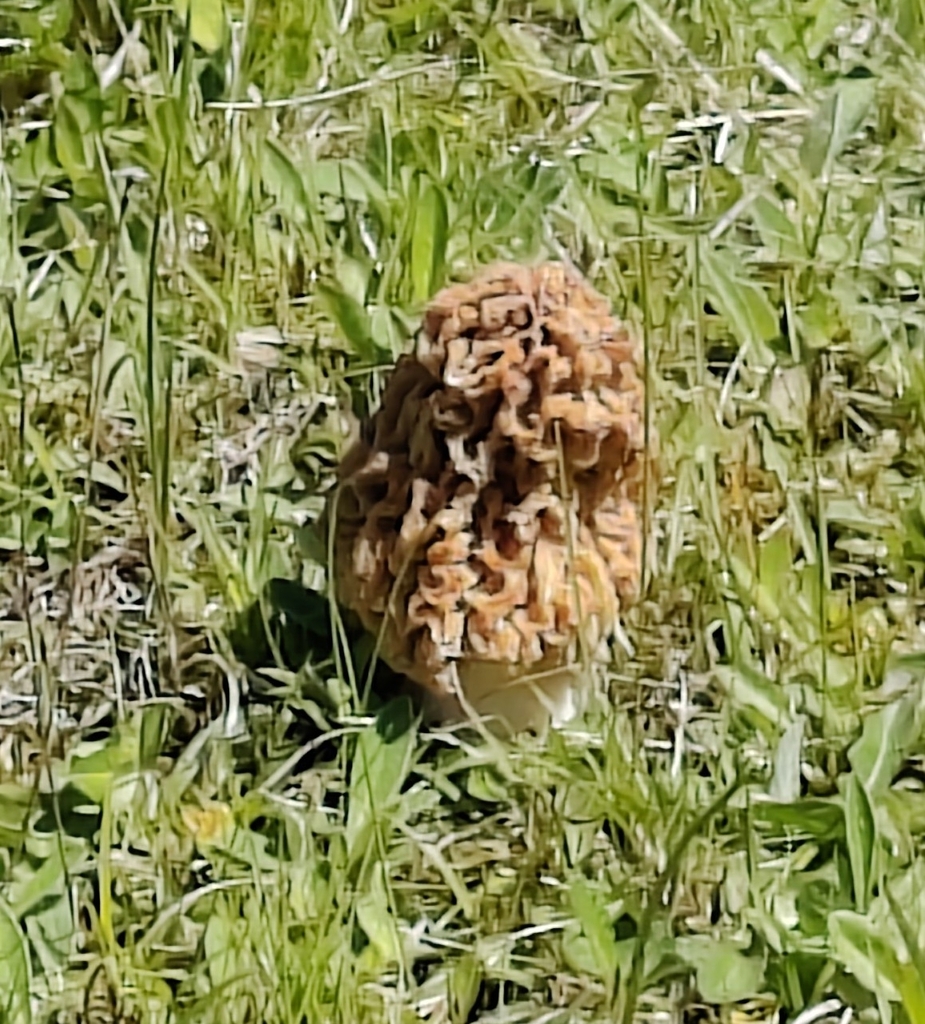
© Georg H. Niedrist · iNaturalist · CC BY-NC 4.0
Scientific Classification & Quick Facts
Classification
Known For
Detailed measurements for this species are still being verified.
The common morel is among the most prized fungi in the world, instantly recognisable by its honeycomb-like cap and hollow stem. Appearing in spring across temperate forests from North America to Europe and Asia, this ascomycete has captivated foragers, chefs, and mycologists for centuries. Its range spans at least 24 countries, though its exact distribution remains incompletely mapped due to the difficulty of distinguishing between closely related species in the Morchella genus.
Conservation status assessments for Morchella esculenta remain uncertain, reflecting broader gaps in fungal monitoring worldwide. Unlike plants and animals, fungi receive relatively little scientific attention in biodiversity surveys, leaving critical questions about population trends and habitat requirements largely unanswered. What is certain is that this species represents a rare intersection of ecological intrigue and culinary value—a fungus worth understanding not only for its gastronomic appeal but for the ecological relationships it illuminates.
Identification and Appearance
Morchella esculenta, the Common Morel, is a medium-sized fungus with a distinctive honeycomb-like cap that makes it instantly recognizable to foragers and mycologists. The fruiting body is hollow throughout, from the cap down through the stem, and grows upright with a well-defined structure.
Cap and Overall Structure
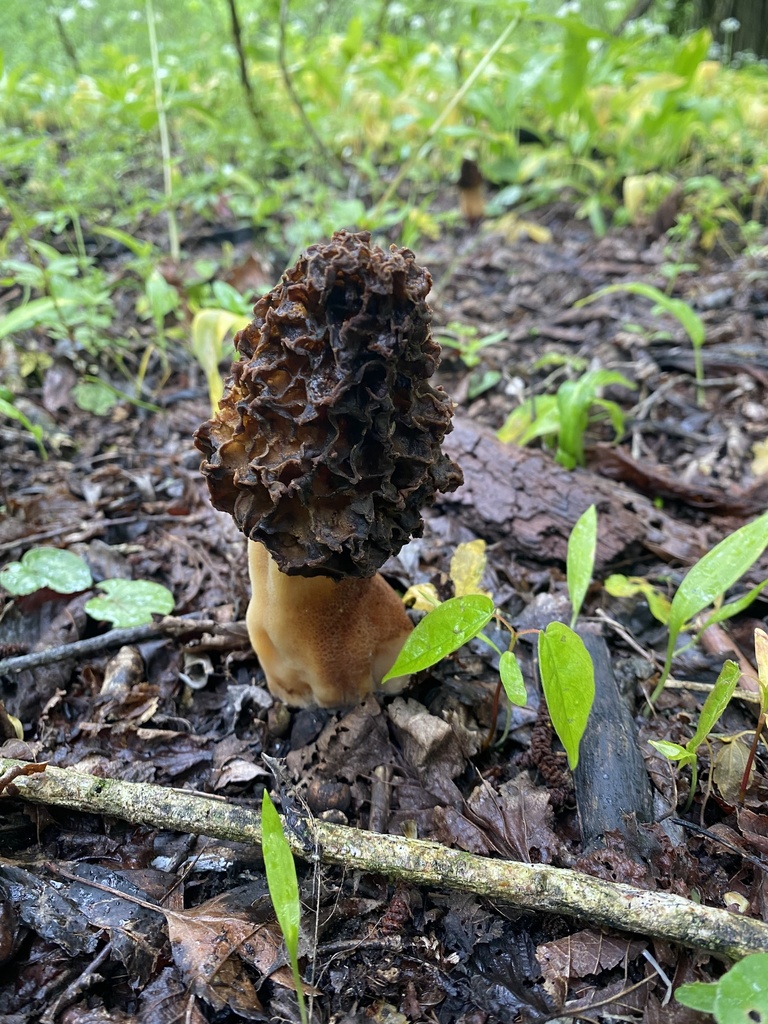
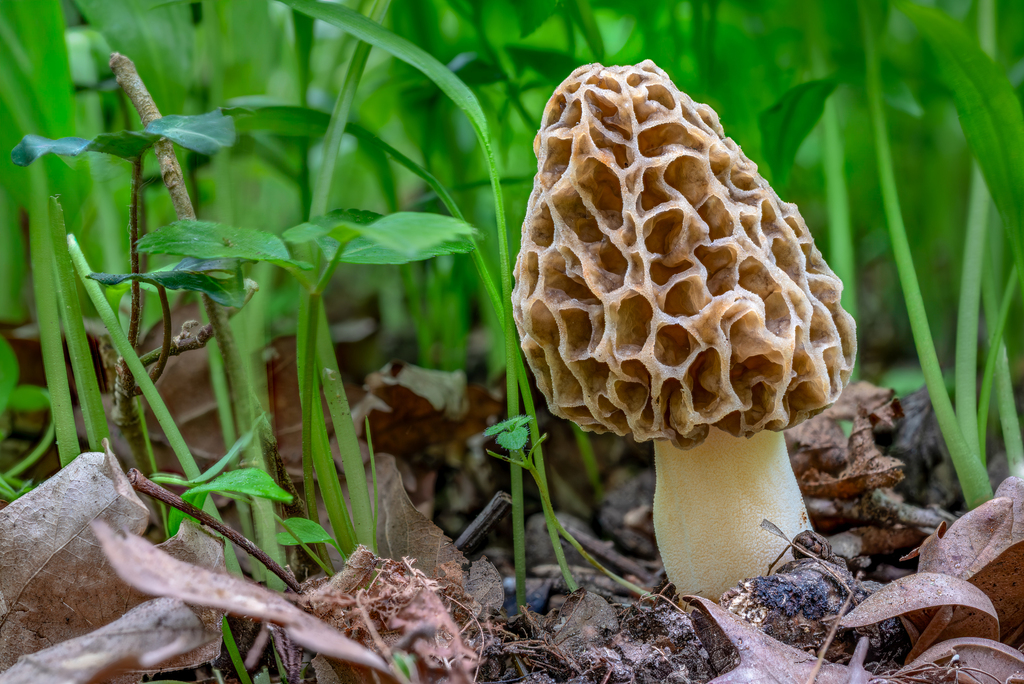
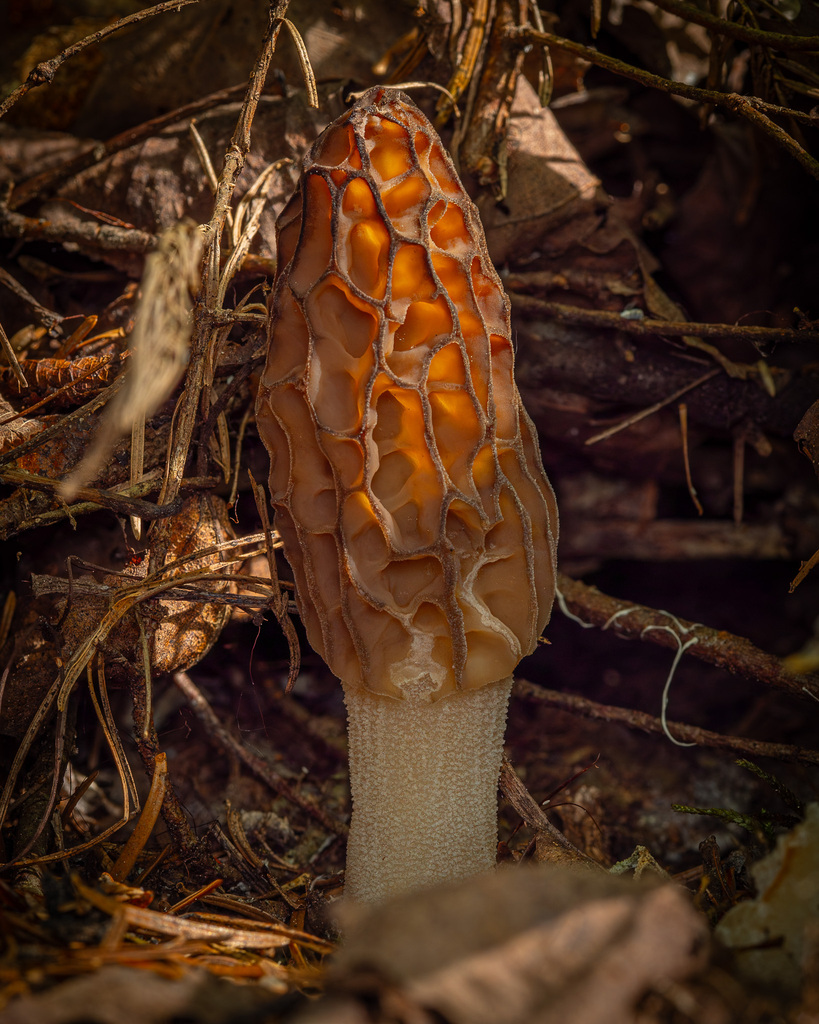
The cap is the most striking feature, ranging from 2 to 7 centimetres broad and 2 to 10 centimetres tall. Its color varies considerably—pale brownish cream, yellow, tan, pale brown, or grayish brown—depending on age and environmental conditions. The surface is deeply pitted and ridged in a characteristic honeycomb or brain-like pattern. The edges of the ridges are typically lighter in color than the pits, creating strong visual contrast. The cap outline is usually somewhat oval, though it may be bluntly cone-shaped with a rounded top or more elongate. Importantly, the cap is attached to the stem only at its lower edge, leaving the interior completely hollow and accessible—a feature crucial for inspection when foraging.
Stem and Flesh
The stem (or stipe) is white, pallid, or pale yellow, running 2 to 9 centimetres in length and 2 to 5 centimetres in thickness. It is hollow, finely granular in texture, and somewhat ridged. The stem may be straight or develop a club-shaped or bulbous base. Like the cap, the flesh throughout the morel is brittle and fragile. With age, the stem often develops brownish stains near the base, a natural discoloration that does not indicate decay or toxicity.
Distribution and Habitat
Morchella esculenta is primarily distributed across temperate regions of Europe and Asia, with the highest concentration of records in western and central Europe. GBIF records show that the Netherlands dominates global documentation, with 198 observations, followed by Germany (18), Spain (12), and the United Kingdom (12). France, Austria, Italy, and Hungary also represent significant populations. The species has been recorded across 24 countries total, indicating a wide but patchy distribution tied to specific ecological conditions rather than continuous presence across its potential range.
The fungus fruitsabove ground during a narrow and predictable window: peak occurrence happens in April, with significant activity continuing through March. GBIF data reveals that 227 observations fall in April alone, while March records total 72. Activity drops to near zero by May, making spring the exclusive fruiting season for this species in its known range. This sharp temporal concentration reflects the morel’s dependence on specific soil conditions and temperature regimes that occur only during the cool, moist period of early spring.
Elevation data for M. esculenta remain undocumented in current records, and specific habitat classifications are similarly absent from available datasets. However, field reports consistently associate common morels with riparian zones, ash and elm woodlands, and disturbed soils in orchards and gardens. The species appears most reliable in areas with recent disturbance—burned woodlands, cultivated ground, and abandoned sites—where competition from other fungi and plants is reduced. Soil moisture, ground temperature, and the presence of dead wood likely shape occurrence more than geographic latitude.
Ecology and Lifecycle
Lifecycle
Morchella esculenta begins its lifecycle as mycelium—thread-like filaments—that colonize soil and decaying organic matter in forests and woodlands. This mycelial network can persist for years, building reserves and spreading through the substrate. When conditions align—typically in spring when soil moisture increases and temperatures warm—the fungus channels energy into fruiting body formation.
The fruiting bodies emerge rapidly over a few weeks, reaching maturity when the distinctive honeycomb-patterned cap fully expands. Spore production occurs within the pits of the cap surface; these spores are released into the air and dispersed by wind and, to some extent, by insects and other animals. Once conditions become unfavorable—excessive heat or dryness—the fruiting body collapses and the mycelium retreats underground, awaiting the next favorable season.
Ecological Role
Morchella esculenta functions primarily as a saprotroph, decomposing dead wood, leaf litter, and other organic debris on the forest floor. This recycling activity enriches soil nutrient availability, benefiting surrounding plant communities. The fungus may also form facultative mycorrhizal relationships with trees and shrubs, facilitating nutrient exchange in exchange for carbohydrates from the plant.
The fruiting bodies support a small but notable fauna. Centipedes sometimes inhabit the hollow cavities within morels, creating visible entry holes in the cap. Small insects and other arthropods also feed on or shelter within the fruit bodies, making morels a minor food source within woodland food webs.
Uses
Morchella esculenta is highly valued as an edible and gourmet mushroom across Europe, North America, and Asia. Cooks prize it for its distinctive nutty, earthy flavor and firm texture. The fungus can be eaten fresh, dried, or processed into culinary products, and commands premium prices in markets due to wild scarcity and difficulty in commercial cultivation.
Traditional medicine systems have used morel extracts to support immune function and digestive health, though scientific validation of these claims remains limited. Culinary enthusiasts continue to forage for wild specimens, making the species economically and culturally significant in regions where it fruits abundantly. Proper identification and sourcing from clean environments remain essential for safe consumption.
Conservation and Threats
Morchella esculenta, the Common Morel, has not been formally assessed by the IUCN Red List. This absence of formal conservation status reflects both the fungus’s widespread distribution across temperate regions of Europe and North America and the practical difficulty of systematically monitoring wild fungal populations. Without a designated threat category, the species remains outside formal international conservation frameworks, though local and regional management practices vary significantly by jurisdiction.
Threats
The Common Morel faces several pressure points, though data on their relative severity remains sparse. Habitat loss through forest management practices—particularly the removal of dead wood, intensive logging, and monoculture plantations—reduces the decaying organic matter on which M. esculenta depends. Forest fires can destroy established fruiting sites, though some morel populations respond positively to burned areas in the years following a fire, a phenomenon documented in western North America. Climate variability affects fruiting patterns; unusually dry or wet springs disrupt the temperature and moisture conditions required for fruiting bodies to emerge.
Overharvesting presents a localized but significant threat. Commercial and recreational mushroom foraging has intensified in regions with established morel markets, particularly across Europe and parts of North America. In some areas, traditional morel foraging grounds have been stripped by large-scale collectors using unsustainable harvesting methods. Additionally, the global fungal trade and potential introduction of competing mold species or pathogens in cultivated settings could pose long-term risks if commercial cultivation expands.
Conservation Efforts
Most conservation action for the Common Morel occurs at the regional level rather than through international programs. Several European countries and US states have implemented seasonal harvesting restrictions, permitting requirements, or quantity limits on commercial collection to prevent overexploitation. In some regions, morel habitat is protected as part of broader forest conservation initiatives. Research into morel cultivation techniques continues in multiple countries, which could eventually reduce pressure on wild populations if a reliable commercial growing method is developed.
Cultural Significance
Morchella esculenta, the common morel, holds significant economic and social importance across its global distribution. The species is prized as an edible mushroom, driving commercial harvesting and amateur foraging traditions in regions where it fruits. Its value extends beyond subsistence—morel hunting represents a cultural practice that connects communities to seasonal cycles and forest management practices, particularly in temperate regions where the fungus naturally occurs.
The relationship between morels and fire ecology has become culturally and economically relevant in recent decades. Research shows that morel productivity increases following prescribed burns and natural wildfires, a phenomenon that has influenced forest management strategies and created distinctive post-fire foraging opportunities. This fire-morel association has become embedded in regional harvesting practices, with trained foragers timing their searches to burned areas. The spatial clustering of morel fruiting bodies at small scales—concentrated in microsites separated by meters—has reinforced traditional knowledge about productive harvesting zones, blending ecological understanding with local expertise.
Long-term studies in Switzerland and North America have documented that mushroom picking does not diminish future harvests, a finding that has validated the sustainability of morel foraging traditions and supported continued recreational and commercial collection. This scientific confirmation has preserved the cultural practice of morel hunting as both an economic activity and a form of seasonal engagement with forest ecosystems, maintaining its role in food traditions and outdoor recreation across multiple continents.
Fun Facts
- Common morels are actually the fruiting bodies of an underground fungal network that can persist in the soil for years without producing visible mushrooms, making them unpredictable to find even in the same location season after season.
- The distinctive honeycomb-like pits covering a morel’s cap are not random—each pit is a distinct chamber that helps maximize spore dispersal by creating airflow patterns that efficiently release spores into the wind.
- Morels have a mutualistic relationship with specific trees, particularly ash and elm, and are often found fruiting near dead or dying specimens of these species, though the exact nature of this association remains poorly understood by mycologists.
- A single morel fruiting body can produce millions of spores in just a few days, yet recruitment of new mushrooms from these spores is remarkably rare in nature, suggesting that most spores fail to establish viable fungal colonies.
- The culinary value of morels has made them a target for commercial harvesting in forests across North America and Europe, with premium specimens commanding prices exceeding $20 per pound in gourmet markets.
- Morels fruit in spring—typically March through May in temperate regions—and their appearance is so eagerly anticipated by foragers that entire communities organize expeditions to hunt them, treating the season almost like a cultural event.
- Attempts to cultivate morels commercially have met with limited success despite decades of research, making wild-foraged morels remain largely unavailable from farm production, unlike most other edible fungi.
Ecology
Edibility
Photo Gallery
Georg H. Niedrist · CC BY-NC 4.0
Related Species
Was this profile helpful?