
Hydrozoa · Siphonophorae
Portuguese Man O’ War
Physalia physalis
Also known as: Atlantic Man o' War, Bluebottle, Man o' War, Portuguese Man Ou2019 War, Portuguese Man'O War
© Samuel Paul Galick · iNaturalist · CC BY 4.0
Scientific Classification & Quick Facts
Classification
Known For
Detailed measurements for this species are still being verified.
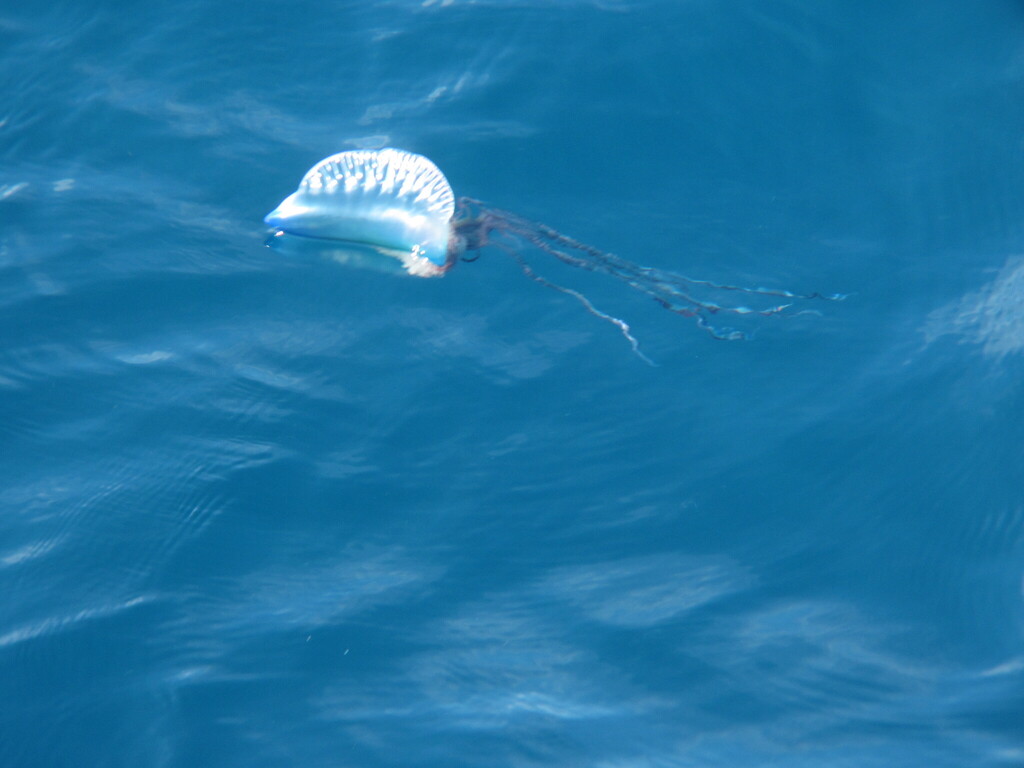
Drifting across tropical and subtropical oceans, the Portuguese Man O’ War is one of the ocean’s most deceptive creatures. Its brilliant blue, purple, and pink float—a gas-filled bladder that sits above the waterline—makes it instantly recognizable, yet this striking appearance masks a far more complex and alien form of life. Unlike true jellyfish, Physalia physalis is a siphonophore, a colonial organism composed of specialized polyps working in concert to feed, defend, and reproduce as a single unit.
Found across 25 countries in warm ocean waters worldwide, Physalia physalis has no formal conservation status listed by the IUCN, reflecting both its abundance and our limited understanding of population trends in open-ocean species. Carried by currents and wind, these colonial animals can drift thousands of kilometres, sometimes washing ashore in massive numbers during storms. What elevates the Portuguese Man O’ War from merely another planktonic curiosity is the potency of its sting—a weapon of such sophistication that it remains a genuine hazard to swimmers despite its delicate, almost ethereal appearance.
Identification and Appearance
Physalia physalis is not a single organism but a colonial animal composed of many specialized units called zooids. Each zooid is evolutionarily derived from either polyps or medusae—the two fundamental body plans of cnidarians. This colonial structure distinguishes the Portuguese Man O’ War from typical jellyfish and makes it one of the ocean’s most unusual creatures.
Overall Structure and the Pneumatophore
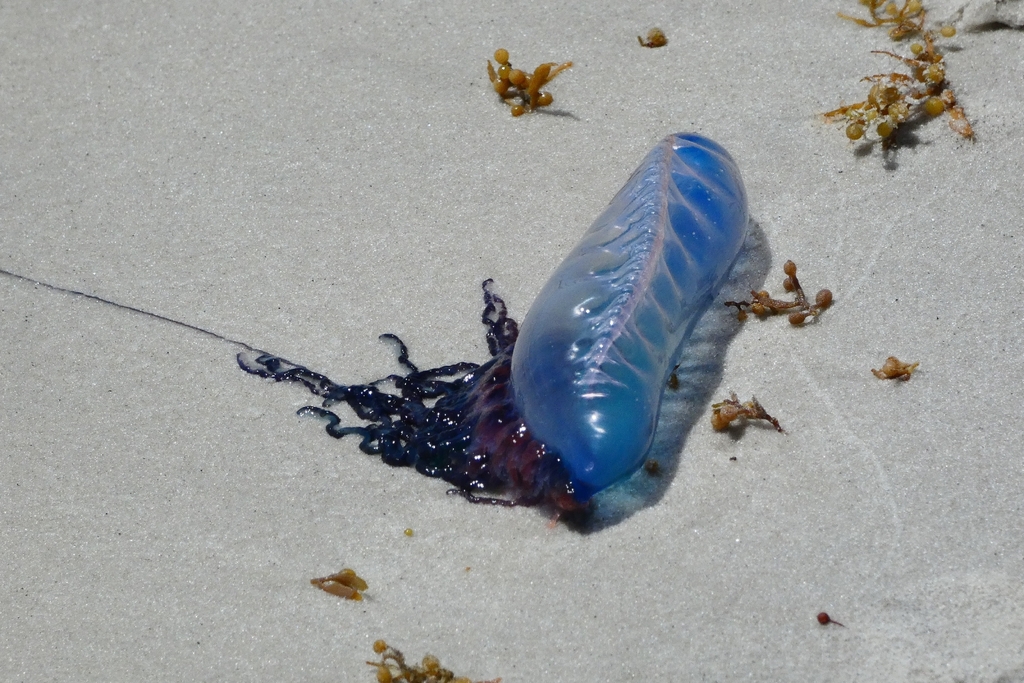
The most striking feature of the Portuguese Man O’ War is its gas-filled pneumatophore, a large bladder-like structure that floats at the water’s surface. This pneumatophore serves as the colony’s primary float, allowing the entire organism to drift with ocean currents and winds. Suspended beneath this gas sac hangs a cluster of specialized zooids arranged in branching tentacles and feeding structures that extend downward into the water column.
Zooid Specialization
The colony is a division of labor made visible. Some zooids function as feeding polyps, capturing and digesting prey. Others are specialized for reproduction, taking the form of medusae or medusa-like structures. Defensive and stinging zooids armed with nematocysts (stinging cells) form the tentacles that can extend far from the main body to subdue prey and deter predators. This functional specialization allows the Portuguese Man O’ War to perform complex ecological roles despite being a composite of microscopic units, each contributing a distinct role to the survival of the whole colony.
Distribution and Habitat
Physalia physalis, the Portuguese Man O’ War, occurs across at least 25 countries, with records concentrated in subtropical and temperate ocean regions worldwide. The highest observation counts come from the United States (88 records), South Africa (50), Brazil (43), and Australia (39), reflecting its presence in both Atlantic and Indo-Pacific waters. New Zealand (20), Chile (16), and Mexico (15) also show significant sightings, indicating that this pelagic species ranges across major ocean currents at both hemispheres.
Physalia physalis inhabits open ocean environments and coastal surface waters where it drifts with currents. This species has no elevation constraints, as it is strictly marine and pelagic. While it can be found from tropical to temperate latitudes, it shows no preference for specific depth zones—instead, it remains at or near the surface, suspended by its gas-filled float.
The January peak in observations suggests that stranding events or increased detection coincide with seasonal oceanographic conditions, likely driven by wind patterns and current shifts that push populations toward coastlines. Outside this peak month, records are virtually absent from the dataset, indicating either a genuine reduction in coastal presence or a decline in beaching frequency during other seasons. This temporal pattern is consistent across all major regions of occurrence.
Biology and Behaviour
Behavior
The Portuguese Man O’ War is a colonial organism composed of specialized polyps working together as a single unit. Despite its jellyfish-like appearance, Physalia physalis is not a true jellyfish but a siphonophore—a complex colony where individual animals perform distinct functions. The colony drifts passively with ocean currents and the wind, propelled primarily by a gas-filled bladder called the pneumatophore that floats above the water’s surface. This float can reach up to 30 centimetres in length and is often brilliantly colored in shades of blue, purple, or pink.
The organism is found in tropical and subtropical oceans worldwide, typically in surface waters where it feeds on drifting prey. Its long tentacles, which can extend several metres below the float, trail through the water column to capture food. The Man O’ War exhibits little active behavior beyond passive drift, though the arrangement of its tentacles and feeding polyps responds to environmental conditions and the presence of prey.
Diet
Portuguese Men O’ War are carnivorous feeders that capture small fish, fish eggs, and crustaceans using their venomous tentacles. The tentacles contain specialized cells called nematocysts that fire harpoon-like structures loaded with venom, paralyzing prey on contact. Once immobilized, the prey is drawn toward the colony’s feeding polyps, which secrete digestive enzymes to break down the meal externally before absorption. The colony can feed on organisms ranging from tiny planktonic copepods to small fish up to several centimetres in length.
The feeding apparatus of Physalia physalis is highly efficient for a drift predator, allowing it to capitalize on encounters with prey in the open ocean. Because the organism is entirely dependent on passive drift and chance encounters, it has evolved to maximize feeding whenever prey comes within reach of its extensive tentacle network.
Reproduction
The Portuguese Man O’ War reproduces sexually, with specialized reproductive polyps within the colony producing eggs and sperm. Fertilized eggs develop into free-swimming larvae called planulae, which eventually settle and form new colonies. The reproductive cycle is synchronized across the colony, and breeding occurs year-round in tropical waters, with seasonal peaks in some temperate populations.
Little is known about the precise timing and frequency of reproduction in wild populations. The larvae are extremely small and drift with currents, eventually developing the characteristic float and tentacle system as they mature into juvenile colonies. Sexual maturity appears to be reached within the first year of life, enabling rapid population growth in favorable conditions.
Conservation and Threats
Physalia physalis, the Portuguese Man O’ War, has not been formally assessed by the IUCN Red List. This absence of a formal conservation status reflects the species’ wide distribution across tropical and subtropical ocean systems and its apparent ability to persist across its range. However, the lack of assessment does not indicate that the species faces no environmental pressures. Ocean-going organisms with planktonic or drifting life stages face mounting challenges from climate change, pollution, and shifts in ocean chemistry and currents.
Threats
The primary threats to Physalia physalis stem from large-scale changes to marine environments rather than direct harvesting or habitat destruction. Rising sea surface temperatures alter ocean circulation patterns and may shift the geographic distribution and seasonal timing of Man O’ War populations. Ocean acidification, driven by increased atmospheric carbon dioxide, affects the calcifying organisms that form the base of food webs and the delicate physiological balance of gelatinous marine fauna. Plastic pollution poses an ongoing risk, as the species can become entangled in marine debris or confuse floating plastics with natural prey items.
Coastal pollution, including nutrient runoff and chemical contaminants, degrades water quality in nearshore areas where the species sometimes congregates. Changes in prey availability—particularly shifts in small fish and crustacean populations due to overfishing or environmental change—can affect the abundance of Man O’ War populations that depend on these food sources. Beach strandings, while natural events, may increase in frequency or severity as ocean conditions change, potentially reducing overall reproductive success and population connectivity.
Conservation Efforts
No species-specific international conservation programmes or legal protections currently target Physalia physalis. The species is not listed under international wildlife trade agreements or most regional marine protection frameworks. However, broader marine conservation efforts—including the establishment of marine protected areas, reduction of plastic pollution, and climate change mitigation—indirectly benefit this and other pelagic species. Some coastal regions issue public health advisories when Man O’ War strandings occur, which protects human bathers rather than the species itself.
The absence of targeted conservation action underscores a wider gap in the protection of planktonic and gelatinous marine species, which are often overlooked in conservation planning despite their ecological importance. Increased monitoring of population trends and broader assessment of ocean health indicators would help track whether Physalia physalis populations remain stable or face decline in the coming decades.
Cultural Significance
The Portuguese Man O’ War occupies a curious position in human culture: widely recognized and frequently encountered in coastal regions, yet not subject to the intensive mythological or symbolic elaboration afforded to many charismatic marine creatures. Its distinctive appearance—the inflated gas bladder and trailing tentacles—has made it recognizable in popular imagination, but detailed cultural traditions specific to Physalia physalis remain sparse in accessible records. The creature’s primary cultural significance derives from its role as a hazard in recreational ocean use rather than as a subject of folklore, art, or spiritual tradition.
Recent taxonomic developments have complicated the cultural narrative. A 2025 study identified five distinct lineages within what was previously considered a single species, revealing that the “Portuguese Man O’ War” is actually a complex of closely related species. Physalia physalis proper is now recognized as primarily Atlantic in distribution, while Physalia minuta occurs in the Southwest Pacific with a distinctive green-tinted pneumatophore, Physalia megalista ranges across the South Pacific, South Atlantic, and Indian Ocean, and Physalia utriculus is found worldwide. A fifth species, Physalia mikazuki, was formally described in 2025 from Sendai Bay, Japan, supported by morphological and genetic evidence. This taxonomic revision suggests that regional populations may have carried distinct local names and cultural associations before their lumping into a single species, potentially obscuring historical human interactions with specific lineages.
From a conservation perspective, Physalia physalis has received minimal attention. The species is not listed by the IUCN and is not considered rare, therefore it is not classified as requiring special conservation effort. The lack of detailed morphological and developmental studies—noted in earlier research—reflects broader trends in siphonophore research, where the group’s ecological importance has often been underestimated relative to more visible marine fauna. Its cultural profile remains anchored to beachgoers’ practical concerns rather than to deeper traditions of meaning or use.
Fun Facts
Physalia physalis is one of the ocean’s most misunderstood creatures, harbouring secrets that challenge everything we thought we knew about its identity and biology.
- Despite being traditionally classified as a single species, genetic evidence suggests the genus Physalia may contain more than one distinct species, overturning decades of taxonomic certainty and raising questions about how many “man o’ wars” actually drift through the world’s oceans.
- The iconic gas-filled float that gives the man o’ war its sail-like appearance is filled with carbon monoxide and nitrogen—gases that allow it to regulate buoyancy and stay afloat indefinitely without expending energy.
- It is found across the Atlantic, Indian, and Pacific oceans, making it one of the few marine organisms to inhabit all three of the world’s largest ocean basins.
- The creature goes by multiple aliases: Portuguese man o’ war, man-of-war, and bluebottle—each name reflecting different regional traditions and the confusion surrounding its true nature.
- Its tentacles can extend up to 50 metres below the surface, turning the small float at the water’s surface into the tip of an enormous hunting apparatus that drifts passively through the ocean waiting for prey to make contact.
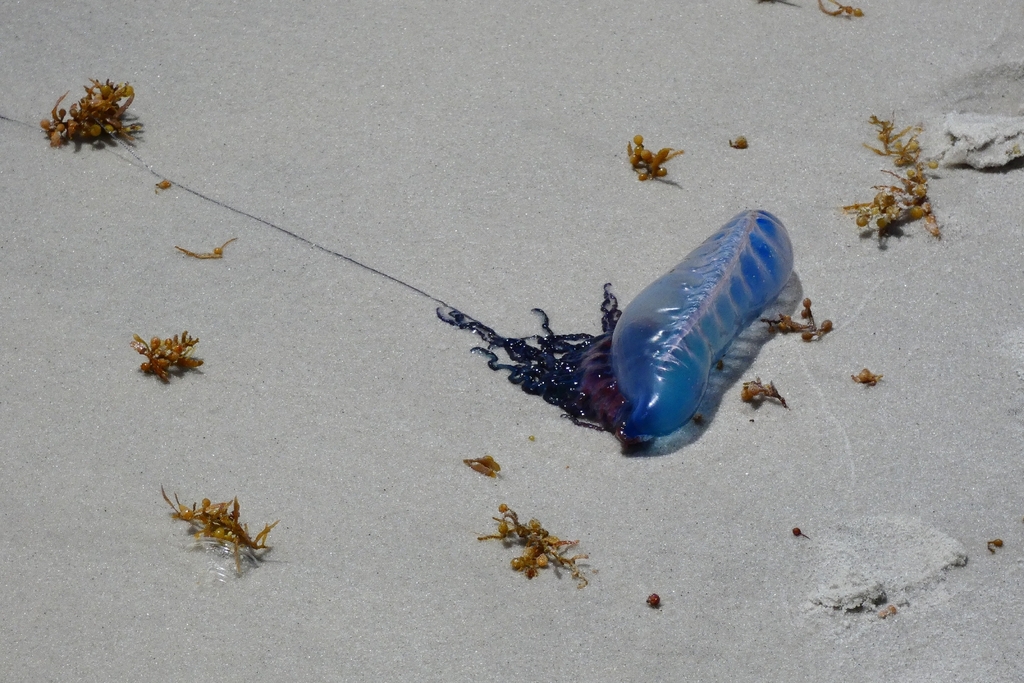
- The man o’ war cannot swim or steer; it is entirely at the mercy of ocean currents and wind, which push its sail-like float across vast distances—sometimes washing hundreds of specimens onto beaches after storms.
Photo Gallery
Samuel Paul Galick · CC BY 4.0
Related Species


Was this profile helpful?