
Mammalia · Carnivora
Bamboo Bear
Ailuropoda melanoleuca
VulnerableAlso known as: Da Xiong Mao, Da Xiong Mao (meaning large bear cat), Giant Panda, Great Panda
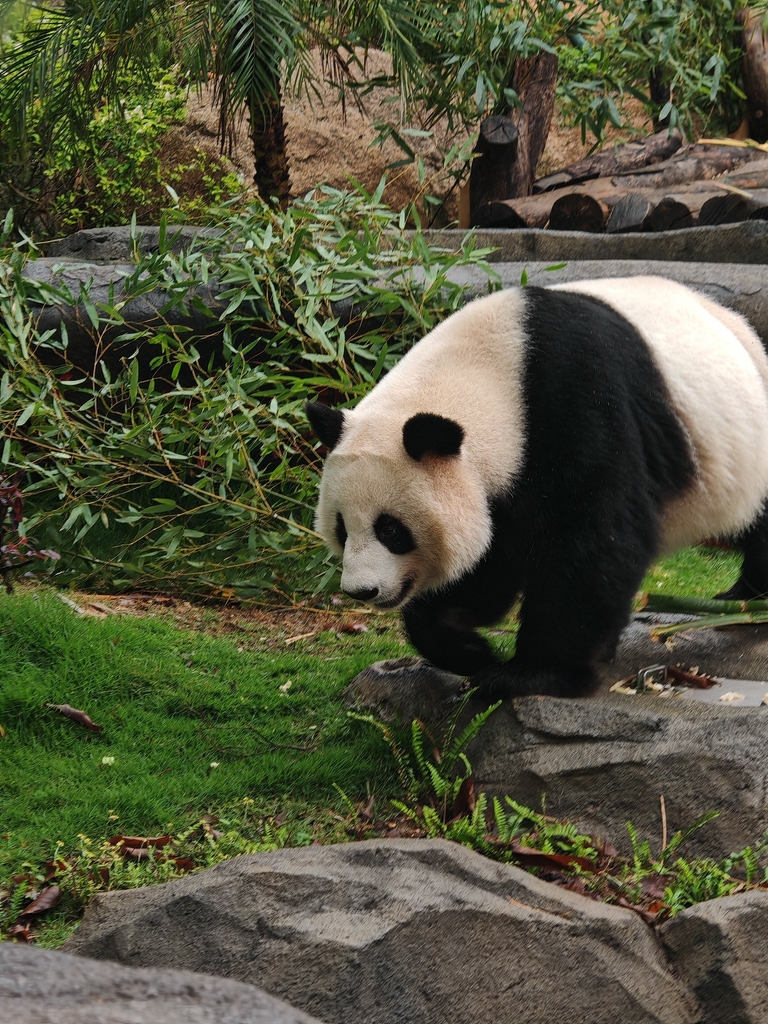
© angryphyco · iNaturalist · CC BY 4.0
The giant panda, known colloquially as the Bamboo Bear, is one of the world’s most recognizable mammals—a stocky, black-and-white carnivore with an unlikely dietary preference that defies its taxonomic classification. Despite belonging to the order Carnivora and the family Ursidae, this species has evolved to subsist almost entirely on bamboo, a plant-based diet that places extraordinary metabolic demands on its digestive system. Found across four countries in Asia, Ailuropoda melanoleuca represents a remarkable example of ecological specialization, having traded the broad hunting strategies of its carnivorous relatives for a niche diet available in the mountain forests of its range.
Conservation efforts have shaped the modern history of this species, though its current status remains classified as Unknown by the IUCN. The species has captured global imagination as a symbol of wildlife protection, and its survival depends critically on the preservation of the bamboo-dominated forest ecosystems it inhabits. Understanding the biology, behavior, and ecological requirements of the Bamboo Bear remains essential to ensuring the future of this distinctive member of the bear family.
Identification and Appearance
Size and Weight
The giant panda is a robust bear with a maximum recorded weight of 104 kilograms. The species exhibits a heavy, compact body plan typical of ursids, built for movement through dense vegetation and capable of supporting its substantial frame across varied terrain.
Distinctive Coloration and Markings
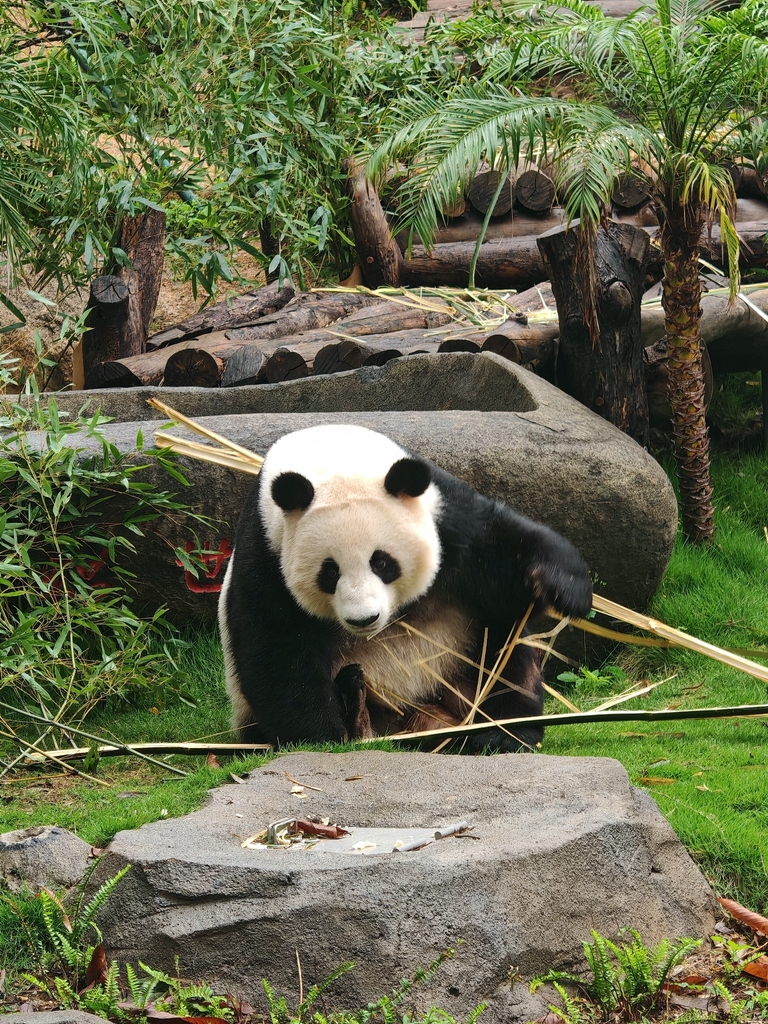
The giant panda displays one of nature’s most recognizable color patterns. Its coat consists of white fur across the majority of the body, with striking black fur covering the ears, limbs, shoulders, and distinctive patches around the eyes. This bicolored pattern is permanent and consistent throughout the animal’s life.
The distinctive black-and-white coloration serves as camouflage in both winter and summer environments. Unlike many bear species, giant pandas do not hibernate, relying instead on this coloring to blend with snow-covered landscapes in winter months and with shadows and vegetation during warmer seasons. The high contrast pattern also remains visually effective year-round as the animal moves through its forest habitat.
Distribution and Habitat
Ailuropoda melanoleuca occurs across four countries, with its primary range in China where the vast majority of records concentrate. GBIF records show 61 occurrences from China, followed by 3 from Vietnam, 2 from Germany, and 1 from the United States. The species’ presence outside China reflects captive populations in zoos rather than wild distribution. In its native range, the Bamboo Bear inhabits montane forests where bamboo grows abundantly.
Seasonal activity peaks during April, when observations reach their highest frequency across the year. Records cluster between March and May, with secondary activity in early spring and autumn months. Summer months show notably sparse documentation, while September records no observations at all. This pattern suggests seasonal movements or variation in detection rates across the year’s cycle.
Biology
Diet
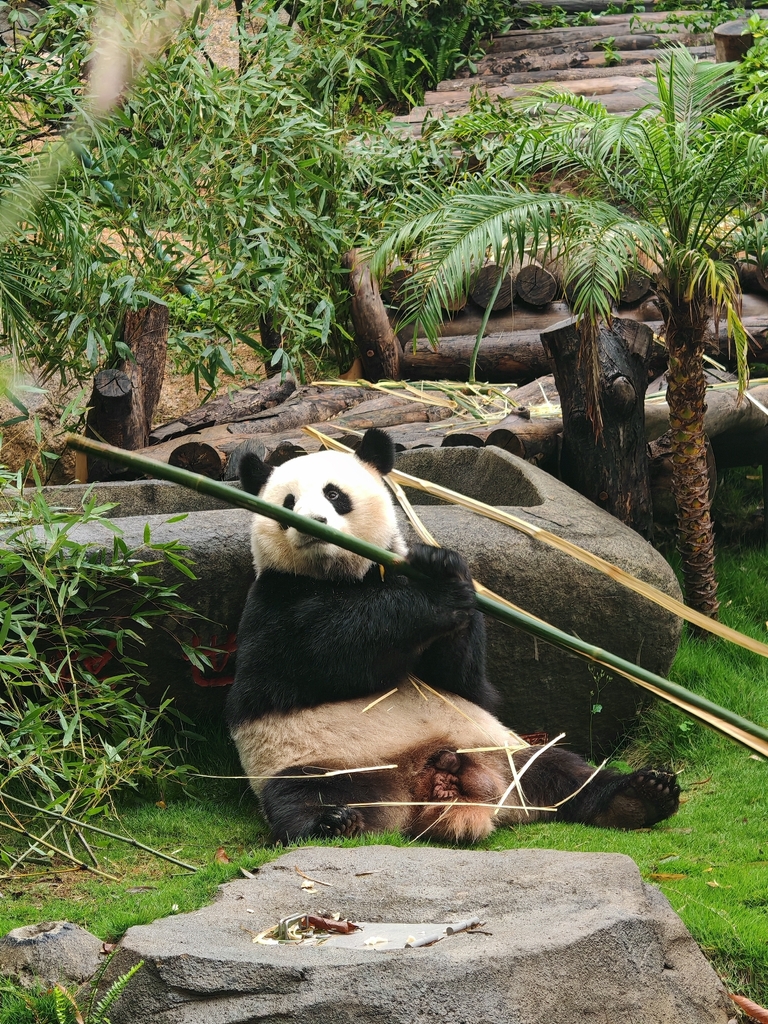
Ailuropoda melanoleuca is an obligate bamboo specialist, deriving up to 99 percent of its diet from bamboo shoots, leaves, and culms. Despite possessing carnivoran dentition and a carnivore’s digestive system, this species has adapted to process plant material through prolonged feeding sessions lasting 12 to 16 hours daily. The giant panda selects different bamboo parts seasonally—shoots in spring when protein content peaks, and leaves during other months when shoots become scarce.
Occasional dietary deviations occur when bamboo availability drops sharply. Captive and wild individuals have been documented consuming small mammals, birds, insects, and carrion, though these foods comprise a negligible fraction of total caloric intake. The species requires approximately 26 kilograms of fresh bamboo daily to meet its energy needs, reflecting the low digestibility and caloric density of its primary food source.
Behavior
Giant pandas are largely solitary animals outside the breeding season, occupying individual home ranges within mountain forest habitats. They spend the majority of their waking hours feeding, moving deliberately through dense bamboo stands at ground level. Adult males maintain territorial boundaries marked by scent, and encounters between individuals typically result in avoidance rather than conflict.
Daily activity patterns are crepuscular to diurnal, with major feeding bouts occurring in early morning and late afternoon. Despite their terrestrial lifestyle, giant pandas are competent climbers, particularly juveniles, and ascend trees to rest or escape disturbance. Vocalizations include bleats, chirps, and honking sounds used primarily during the mating season to establish contact over distance.
Reproduction
Giant pandas breed once annually during spring, typically between March and May. Females enter estrus for only 2 to 3 days per year, making conception difficult in wild populations. Males detect females in estrus through scent marking and pheromones, traveling considerable distances to locate potential mates.
Gestation lasts approximately 95 to 160 days, with considerable variation likely attributable to delayed implantation. Females give birth to one or occasionally two cubs in a sheltered den. A single cub weighs approximately 100 grams at birth. Mothers provide exclusive parental care for up to three years, and cubs remain with their mothers for 18 to 24 months before becoming independent. Cubs are weaned onto bamboo at 6 to 8 months of age while still nursing.
Conservation and Threats
The giant panda occupies a precarious position in global conservation. While specific IUCN Red List classification data is not currently available, the species faces a documented declining population trend that reflects ongoing pressures across its range. The threats to this iconic bear are both immediate and long-term, requiring sustained intervention to prevent further deterioration.
Threats
Climate change represents the most severe long-term threat to giant panda survival. Projections indicate that by 2100, the species’ distribution may shrink by up to 100%, driven primarily by shifts in temperature and precipitation patterns that will render suitable habitat unsuitable. This loss of distribution would eliminate the bamboo forests that form the ecological foundation of the species’ survival.
Poaching has persisted as a persistent pressure throughout recorded history. Local hunting of giant pandas occurred in ancient times, while international demand intensified following the species’ introduction to Western audiences. The period following economic reform saw a surge in illegal poaching driven by demand for panda skins in Hong Kong and Japan, with local officials often failing to enforce protections during this era of unregulated black-market trade.
Disease transmission from domesticated animals compounds these threats. Diseases originating from livestock and pets that interact with wild panda populations can introduce pathogens to which the bears have limited immunity, weakening individuals and potentially affecting reproductive success across populations.
Conservation Efforts
Recognition of the giant panda’s conservation status has prompted international protective measures and habitat restoration programmes. Protected areas and legal prohibitions on hunting have been established across the species’ range to limit poaching and preserve critical bamboo forest ecosystems. Ongoing monitoring and research continue to inform management strategies as climate impacts accelerate.
Cultural Significance
Ancient China and Imperial Status
In Ancient China, pandas held a position of rarity and nobility. The Empress Dowager Bo was buried with a panda skull in her vault, reflecting the animal’s elevated cultural standing. During the Tang Dynasty, the grandson of Emperor Taizong presented two pandas and a panda skin to Japan as a formal gesture of goodwill, demonstrating the species’ value in diplomatic exchange.
Early Names and Medical Uses
Ancient Chinese texts referred to the giant panda by the name mo (貘), though interpretations varied across different sources. The dictionary Shuowen Jiezi from the Eastern Han Dynasty described the mo from Shu (Sichuan) as bear-like with yellow-and-black coloring, while the older Erya simply called it a “white leopard.” Unlike many other animals in Ancient China, pandas were rarely attributed medicinal properties. The few documented uses included Sichuan tribal peoples’ application of panda urine to dissolve accidentally swallowed needles, and the use of panda pelts to regulate menstruation, as recorded in the Qin dynasty encyclopedia Erya.
Fun Facts
- Giant pandas spend 12–16 hours each day eating bamboo, consuming up to 38 kilograms in a single day. Despite their classification as carnivores, they have evolved to survive almost entirely on this single plant.
- A panda’s “thumb” is not a true digit but an enlarged bone called the radial sesamoid, which evolved specifically to grip bamboo stalks during feeding.
- Giant pandas have relatively poor digestion and absorb only 17 percent of the bamboo they consume, making their enormous daily intake a biological necessity rather than choice.
- Male pandas mark their territory using anal gland secretions, leaving scent marks on trees and rocks across their home range—a panda’s way of claiming up to 4 square kilometres of forest.
- Newborn giant pandas weigh only 100–150 grams at birth, making them among the smallest newborns relative to adult body size in the animal kingdom; a cub weighs less than its mother’s thumb.
- Giant pandas possess a specialized throat structure that allows them to identify different bamboo species by taste, helping them select the most nutritious parts of the plant.
- Despite their massive size and strength, giant pandas are remarkably vocal, producing bleats, chirps, and honks to communicate with other pandas across forested terrain.
Sources and References
Primary Data Sources
This article draws on information from the following databases and open-access resources:
- GBIF — Global Biodiversity Information Facility (gbif.org) — distribution records and occurrence data
- iNaturalist (inaturalist.org) — community observations and field documentation
- Wikidata (wikidata.org) — structured taxonomic and conservation data
- Encyclopedia of Life — EOL (eol.org) — habitat, diet, and behavioral information
- Wikipedia (wikipedia.org) — general biology and conservation context
All contributors to these platforms, including researchers, naturalists, and citizen scientists, have made this comprehensive overview of Ailuropoda melanoleuca possible.
Conservation Status
LC · NT · VU (Vulnerable) · EN · CR · EW · EX
Photo Gallery
angryphyco · CC BY 4.0
Related Species

Was this profile helpful?