
Mammalia · Carnivora
African Lion
Panthera leo
Vulnerable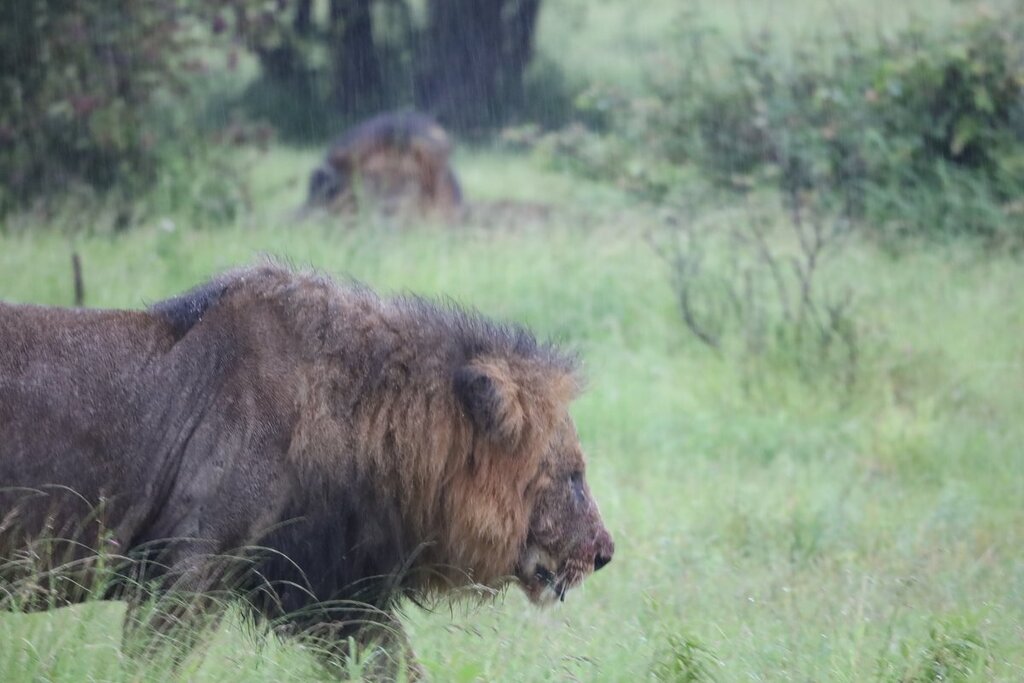
© Paul Hoekman · iNaturalist · CC BY 4.0
The African lion is one of Africa’s most formidable carnivores, instantly recognizable by its tawny coat and the male’s distinctive maned head. These powerful felids dominate their ecosystems across 14 countries, yet their populations face an uncertain future—their conservation status remains poorly documented, reflecting the gaps in our understanding of this iconic species in the wild. Despite their fearsome reputation, lions are highly social animals, living in family groups called prides in ways that few other big cats do.
Belonging to the family Felidae within the order Carnivora, Panthera leo represents a unique evolutionary lineage among the great cats. Their presence across such a wide geographic range underscores their historical importance as apex predators throughout sub-Saharan Africa. The interplay between their ecological role, cultural significance to human communities, and conservation challenges makes the African lion a species worthy of sustained scientific attention and conservation effort.
Identification and Appearance
The African lion is the largest felid in Africa and the second-largest cat species globally. Adult males can weigh up to 188 kilograms, significantly heavier than females. Their body is muscular and compact, built for power rather than speed, with a broad chest and strong limbs. The head is large and rounded, with a distinctive muzzle and powerful jaws capable of delivering fatal bites.
Coat and Colouration
Lions display a tawny to golden-yellow coat that varies in shade across populations and individuals. Darker individuals occur in some regions, while lighter, almost cream-coloured lions appear in others. The mane, present only in males, is one of nature’s most recognisable features—a thick collar of longer hair surrounding the head, neck, and shoulders. Mane darkness and size correlate with age, testosterone levels, and genetic factors; older males typically display darker, fuller manes. Females lack manes entirely, though they may have sparse hair on the neck.
Sexual Dimorphism
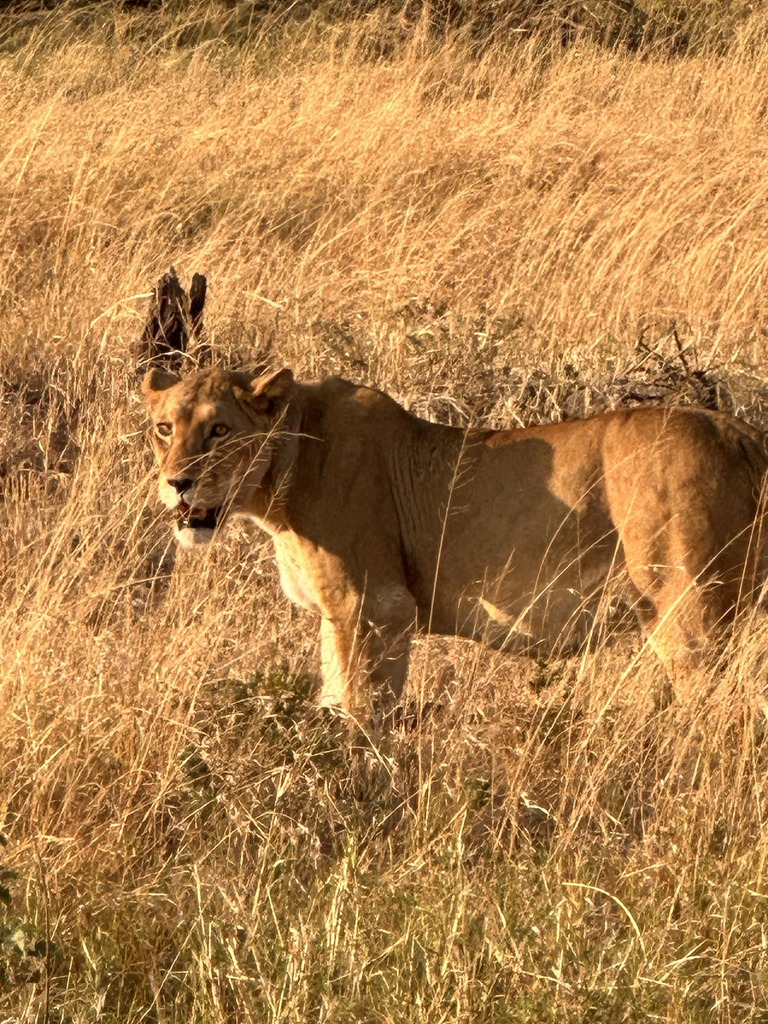
Male and female lions differ dramatically in appearance. Males are substantially larger and heavier than females, with the signature mane being the most obvious distinguishing feature. The mane serves multiple functions: signalling fitness and dominance to rivals, protecting the neck during fights, and playing a role in mate attraction. Female lions retain a sleeker profile without the mane, appearing more streamlined. Both sexes have black ear tips, black nose pads, and a black tuft at the tail tip. Their eyes are amber to golden-brown, adapted for excellent night vision essential to their nocturnal hunting lifestyle.
Distribution and Habitat
Panthera leo occurs across 14 African countries, with populations concentrated in East and Southern Africa. Kenya and Tanzania support the highest record counts, with 89 and 88 observations respectively. South Africa follows with 82 records, reflecting significant lion populations in protected areas such as Kruger National Park. Botswana, Uganda, Namibia, Rwanda, Senegal, Zimbabwe, and Chad complete the species’ range, though with lower documented sightings. The lion’s distribution has contracted substantially from its historical range, now confined to scattered populations across the continent.
Lions inhabit savanna grasslands, open woodlands, and semi-arid regions where prey populations are sufficient to support prides. They favour areas with adequate water sources and vegetation that provides both hunting cover and shade. The species shows no strict elevation preference, occurring from lowland savannas to elevated plateau regions across its range.
Seasonal patterns in observation data reveal a marked concentration in the early months of the year. January records the peak at 144 sightings, with February showing 130 observations, while March drops sharply to 26 sightings. No records appear from April through December, suggesting strong observer bias toward dry-season surveys when lions congregate near water sources and are more visible in sparse vegetation. This pattern reflects research and tourism activity rather than actual lion absence during other months.
Biology
Behavior
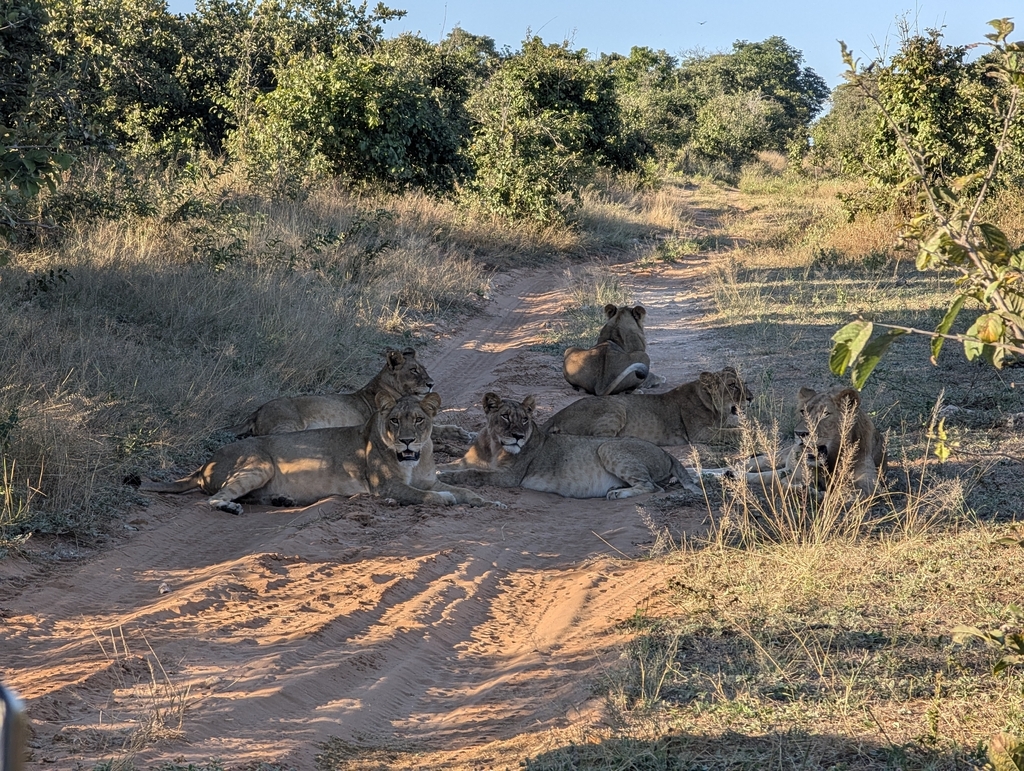
Lions are highly social felids with complex group hierarchies. Males live solitarily or in coalitions of up to three individuals, where pairs rest, hunt, and feed together while engaging in territorial marking at shared sites. Females form stronger social bonds, grouping with up to 12 other females and their cubs. These female groups share large carcasses among themselves, though they seldom distribute meat to males. In protected areas like Pendjari National Park, lion groups range from 1 to 8 individuals, while populations outside protected reserves typically consist of smaller groups dominated by a single male.
Male and female lions maintain minimal association outside the breeding season. They spend only a few days together during mating periods and rarely travel or feed as a unit. This social separation reflects their distinct roles: males focus on territorial defense and coalition maintenance, while females invest energy in raising offspring and cooperative hunting within their matriarchal groups.
Diet
Lions are carnivorous apex predators that hunt large ungulates and other vertebrates across African savannas and woodlands. Their hunting success depends on cooperative strategies within female groups, which work together to pursue and kill prey. The social structure of female prides enables them to share kills efficiently, distributing nutrition among themselves and their dependent young.
Reproduction
Lions breed throughout the year with no strict seasonal restriction. Females and males associate briefly during fertile periods, with mating occurring over a span of days. After mating, the pair separates, and the female carries her cubs for approximately 110 days before giving birth to a litter typically ranging from 1 to 4 cubs. Females provide exclusive parental care, nursing and protecting young within the pride until they reach independence at around 2 years of age. Cooperative females in a pride often synchronize reproductive cycles, enabling communal nursing and collective defense of young against infanticidal males or external threats.
Conservation and Threats
The African lion population is experiencing a sustained decline across its range. This downward trend reflects mounting pressure from human activities and habitat loss, making ongoing conservation attention critical for the species’ long-term survival.
Threats
Poaching remains the most immediate threat to lion populations. Armed groups and organized poachers target lions for their body parts, which command high prices in illegal wildlife trade markets. Paramilitary forces operating in protected areas such as Ethiopia’s Gambella National Park have been documented hunting lions alongside their pursuit of large herbivores and bushmeat. Armed merchants accompanying these operations also trade lion skins, creating an additional economic incentive for killing.
Beyond direct poaching, habitat loss and fragmentation have reduced available territories and prey populations. As human settlements expand into lion range, conflicts intensify between predators and livestock herders, leading to retaliatory killings. Declining numbers of wild prey force lions to hunt domestic animals, perpetuating cycles of human-wildlife conflict that threaten individual animals and isolate populations from one another.
Conservation Efforts
Protected areas across Africa provide legal refuge for lions, though enforcement varies considerably by region and available resources. International trade in lion parts is regulated through CITES (Convention on International Trade in Endangered Species), which restricts the commercial movement of skins, bones, and other derivatives. Community-based conservation programmes in southern and East Africa work to reduce human-wildlife conflict through compensation schemes and alternative livelihoods for herding communities.
Cross-border conservation initiatives recognize that lion populations do not respect political boundaries. Collaborative management between neighboring countries aims to maintain genetic diversity and allow natural migration. Despite these efforts, lions remain vulnerable to escalating poaching in regions with weak governance and limited anti-poaching capacity.
Fun Facts
- Male lions sleep up to 20 hours per day, spending most of their waking time resting in shade or patrolling territory. Females hunt more actively and rest less, often securing food for the entire pride.
- A lion’s roar can travel up to 9 kilometres across the savanna, low enough in frequency that it vibrates through the chest of other lions and serves to claim territory without a direct encounter.
- Female lions do nearly all the hunting, working together in coordinated groups to bring down prey as large as buffalo or giraffes, while males defend the pride’s territory and cubs from rivals.
- Lions are the only truly social cats, living in groups called prides that can number 15 or more individuals across multiple related females and their offspring, creating a family structure unique among wild felids.
- A male lion’s mane darkens and thickens with age and testosterone levels; darker, fuller manes signal health and dominance, making them more attractive to females and more intimidating to rival males.
- Lions can go up to four days without water in the African heat, but they must drink regularly when prey is abundant; they obtain much of their water from the body fluids of freshly killed animals.
- Cubs remain dependent on their mother for nearly three years, during which time she teaches them hunting techniques through play and practice; brothers often stay together as adults and form coalitions to take over new territories.
Sources and References
Data Sources
This article synthesizes information from the following primary biodiversity databases and reference resources:
- GBIF — Global Biodiversity Information Facility (gbif.org) — species occurrence records and geographic distribution data
- iNaturalist (inaturalist.org) — community-contributed observations and photographic documentation
- Wikidata (wikidata.org) — structured conservation status and taxonomic information
- Wikipedia (wikipedia.org) — general biology and conservation context
- Encyclopedia of Life — EOL (eol.org) — habitat, diet, and behavioral trait summaries
All facts presented reflect information available within these public databases as of the time of publication. Users seeking detailed occurrence records, range maps, or image galleries are encouraged to visit the source databases directly.
Ecology
Habitats
Diet
Behavior
Conservation Status
LC · NT · VU (Vulnerable) · EN · CR · EW · EX
Photo Gallery
Paul Hoekman · CC BY 4.0
Related Species
Was this profile helpful?