
Mammalia · Proboscidea
African Bush Elephant
Loxodonta africana
VulnerableAlso known as: African Savanna Elephant, African savannah elephant, Atlas Elephant, Bush Elephant, Carthaginian Elephant
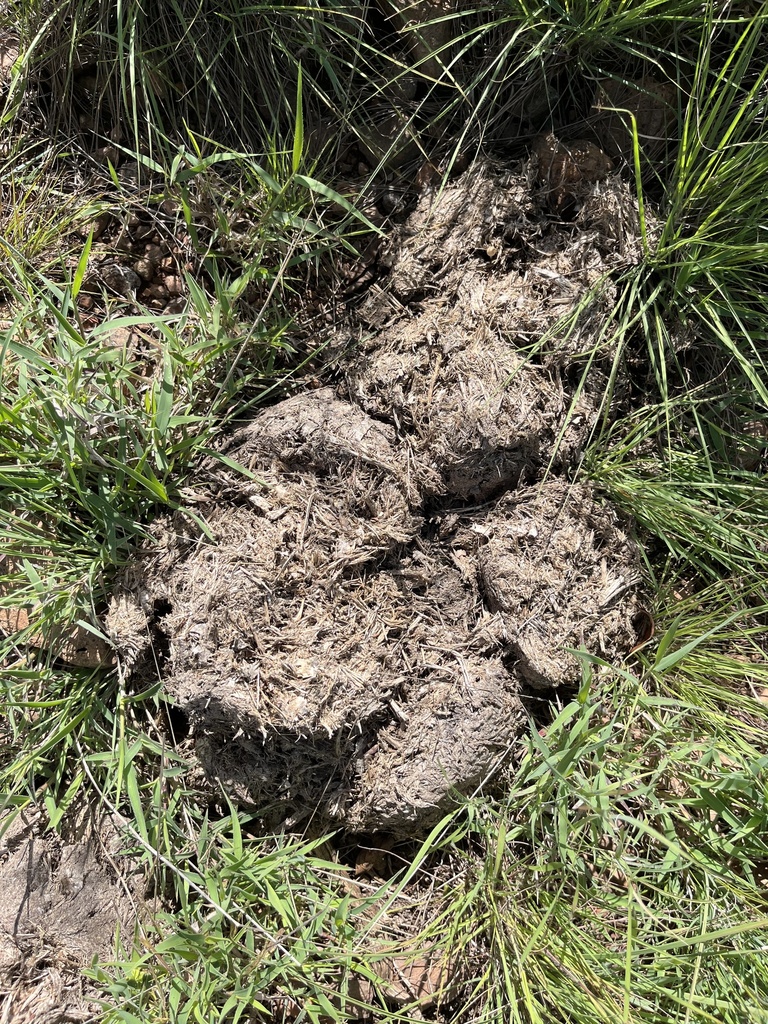
© no rights reserved · iNaturalist · CC0 1.0
Scientific Classification & Quick Facts
Classification
At a Glance
The African bush elephant is the largest land mammal on Earth, a colossal herbivore whose presence transforms landscapes across the African continent. Weighing up to 6,000 kilograms and standing 3 to 4 metres tall, Loxodonta africana commands attention wherever it roams. This member of the family Elephantidae possesses distinctive large ears and a prominent trunk containing over 40,000 muscles—a biological marvel that enables extraordinary dexterity and sensory perception.
Found across fourteen countries in sub-Saharan Africa, the African bush elephant inhabits open woodlands, savannas, and grasslands where it plays a crucial ecological role by shaping vegetation patterns and creating water holes that benefit countless other species. Its conservation status remains classified as Unknown, reflecting the complexity of monitoring populations across such vast and varied ranges. The species’ intelligence, social structure, and long lifespan make it one of Africa’s most studied megafauna and a focal point for conservation efforts across the continent.
Identification and Appearance
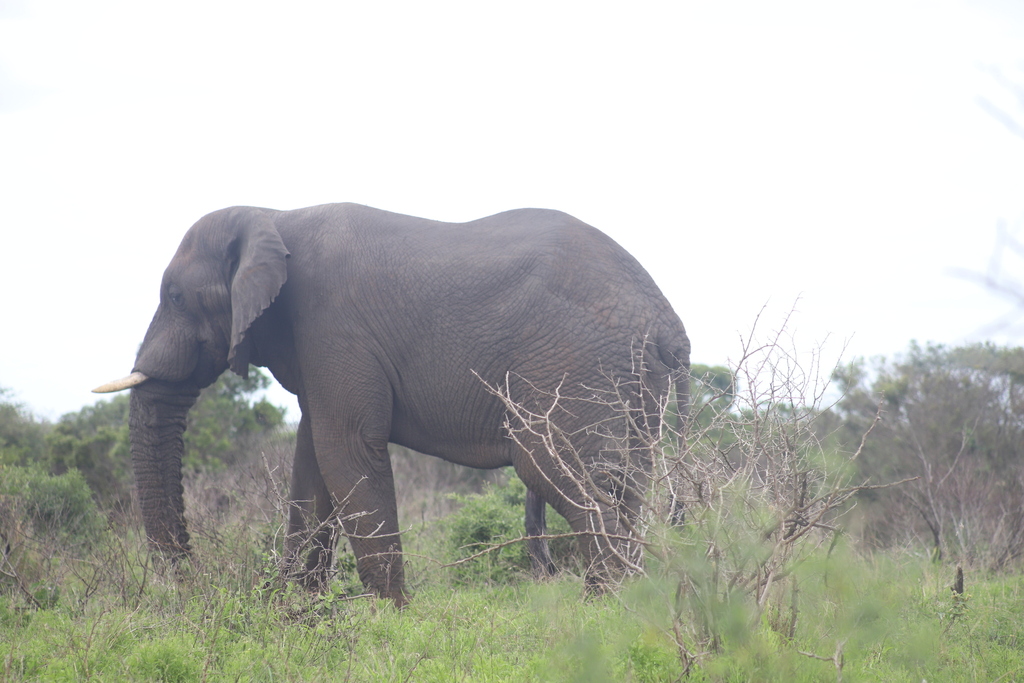
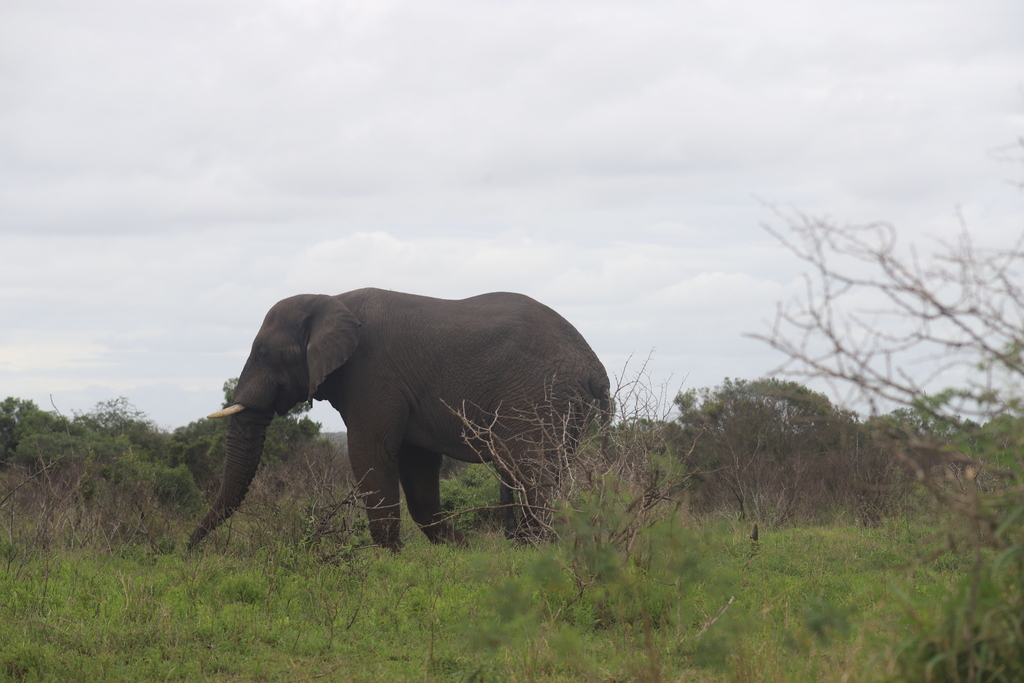
The African bush elephant is the largest living terrestrial animal, recognizable by its massive grey skin sparsely covered with hair. The most distinctive feature is its enormous ears, which extend across the entire shoulder and can reach 2 by 1.5 metres. These ears serve multiple functions: they increase surface area for heat dissipation in hot savanna environments and enhance hearing acuity. The head is broad and rounded, and a prominent forehead distinguishes this species from its forest-dwelling relative, Loxodonta cyclotis.
The trunk contains over 40,000 muscles and is highly sensitive, used for feeding, drinking, social interaction, and dust bathing. African bush elephants possess thick, pillar-like legs that support their immense weight, and their feet are padded underneath, allowing them to move across varied terrain with surprising silence despite their size. Sexual dimorphism is pronounced: males are noticeably larger and heavier than females, and adult bulls typically bear long tusks that curve slightly downward and can exceed a metre in length, though not all individuals develop tusks of equal size.
The skin texture is wrinkled and thick, often caked with mud or dust that helps protect against sun exposure and parasites. Coloration varies from dark grey to lighter dusty grey depending on habitat conditions and bathing habits. The tail is relatively short, tipped with a tuft of coarse black hair that elephants use as a fly whisk. Visible tusks, large rounded ears, and overall massive build make this species immediately identifiable in the field.
Distribution and Habitat
Loxodonta africana, the African bush elephant, inhabits 14 countries across sub-Saharan Africa. The species shows the highest observation frequency in South Africa, with 127 records, followed by Kenya (57 records) and Tanzania (45 records). These three nations form the core of the species’ documented range. Additional populations occur in Malawi, Uganda, Namibia, Botswana, Zimbabwe, Ghana, and Rwanda, with smaller numbers of records from other regions within the continent.
Observations peak strongly in January, with 233 records during that month, while all other months show minimal or zero recorded sightings. This seasonal pattern likely reflects observation bias rather than the species’ true presence, as African bush elephants maintain year-round populations across their range. No specific elevation constraints are documented for the species within the available data.
The African bush elephant occupies diverse landscapes across eastern and southern Africa, from savanna woodlands to semi-arid environments. The species’ presence in countries spanning different ecological zones—from the savannas of Kenya and Tanzania to the wetlands and woodlands of Botswana and Malawi—demonstrates its adaptability to varied vegetation and climate regimes across the continent.
Biology
Behavior
African bush elephants live in a matriarchal social system centered on the family unit. This core group typically includes several adult females, their daughters, and their young sons. The matriarch—the oldest female—leads the family and makes critical decisions about movement and resource use. Related family units form kinship groups with strong social bonds. Young bulls leave the family at puberty to join bachelor groups or live solitarily, while females remain with their birth family throughout their lives.
These elephants are highly intelligent and communicate through infrasound—calls below human hearing range—which allows coordination across vast distances. They spend most of their time foraging, moving between feeding grounds and water sources. Daily activity is driven by resource availability and temperature; in hot seasons, they seek shade and water during midday hours. Elephants display complex emotional behaviors including grief, play, and cooperation. They dig waterholes with their tusks and feet, creating water sources that other species depend on during droughts.
Diet
African bush elephants are herbivores consuming a diverse plant diet. They feed on grasses, leaves, bark, roots, and fruits depending on seasonal availability. An adult elephant consumes up to 200 kilograms of vegetation daily to meet its enormous energy needs. In woodlands and savannas, they strip bark from trees—a behavior that can damage or kill large trees—and pull down branches to access foliage. During wet seasons when grass is abundant, they graze heavily; in dry seasons, they shift to browsing on shrubs, trees, and stored plant parts like roots.
Reproduction
Female African bush elephants reach sexual maturity around 12 to 14 years of age and can breed year-round, though peaks occur during the wet season when food is plentiful. Mating is preceded by a period called musth in males, when testosterone levels surge dramatically and males become more aggressive and territorial. After a gestation period of approximately 22 months—the longest of any terrestrial mammal—a single calf is born. Females nurse their calves for up to three years, and offspring remain dependent on their mothers for several more years, learning essential survival skills within the family unit. Birth intervals typically span 4 to 6 years, allowing adequate time for maternal investment in each calf.
Conservation and Threats
Loxodonta africana populations are currently increasing across much of Africa, a recovery that reflects decades of intensive conservation effort following near-catastrophic decline. During the 1970s and 1980s, poaching decimated bush elephant numbers across the continent. The species now faces a complex conservation landscape where regional populations vary considerably in status and trajectory.
Threats
Habitat loss and fragmentation represent the primary long-term threat to African bush elephants. Conversion of natural areas for livestock farming, non-timber crop plantations, and urban and industrial development eliminates and isolates elephant populations. This fragmentation reduces genetic diversity and prevents natural migration between populations.
Poaching remains a persistent threat despite significant improvements. Illegal hunters target bulls selectively for their tusks, creating severe sex ratio imbalances that undermine population viability and reproduction rates. The worst poaching crisis occurred in the 1970s and 1980s, when killing reached historically unprecedented levels. More recent incidents demonstrate ongoing vulnerability: in Samburu National Reserve, 41 bulls were killed illegally between 2008 and 2012, representing 31 percent of the reserve’s elephant population. Inadequate ranger patrols and outdated weapons in protected areas have historically enabled poachers to operate with relative impunity.
Conservation Efforts
Legal protections and enforcement improvements have proven effective at slowing poaching. International restrictions on ivory sales, combined with increased penalties for poaching and strengthened law enforcement operations, curtailed the worst killing spree of the late 20th century. These measures have allowed populations to recover in many regions, though effectiveness depends heavily on consistent funding and political commitment at national and local levels.
Sustaining this recovery requires continued investment in ranger training, anti-poaching technology, and habitat protection. Success in reducing elephant mortality must now be paired with landscape-scale management that reconnects fragmented populations and ensures coexistence with human communities in shared lands.
Fun Facts
- African bush elephants can consume up to 200 kilograms of vegetation in a single day, spending roughly 16 hours per day foraging to meet their enormous energy demands.
- Their ears contain a complex network of blood vessels that function as a cooling system; by flapping their ears, elephants can shed excess heat and regulate body temperature in hot savanna environments.
- Elephants are among the few animals that recognize themselves in mirrors, demonstrating self-awareness comparable to great apes and dolphins.
- The infrasonic calls elephants produce—frequencies below 20 hertz that humans cannot hear—travel up to 10 kilometres across open savanna, allowing family groups to communicate over vast distances.
- Female elephants undergo menopause around age 50 and can live well into their 60s, making them one of the few mammal species with a post-reproductive lifespan.
- Tusks are actually elongated incisor teeth with nerve endings throughout their length; they are used to strip bark, dig for minerals, and manipulate objects with surprising dexterity.
- Newborn elephants weigh approximately 100 kilograms at birth and can stand and nurse within hours, allowing calves to keep pace with the herd’s migrations.
Sources and References
Data Sources
This article draws on information from the following open-access databases and reference platforms:
- GBIF — Global Biodiversity Information Facility (gbif.org)
- iNaturalist (inaturalist.org)
- Wikidata (wikidata.org)
- Wikipedia (wikipedia.org)
- Encyclopedia of Life — EOL (eol.org)
These sources provide distribution records, occurrence data, conservation assessments, habitat information, and behavioral observations contributed by researchers, naturalists, and citizen scientists worldwide.
Conservation Status
LC · NT · VU (Vulnerable) · EN · CR · EW · EX
Photo Gallery
no rights reserved · CC0 1.0
Related Species
Was this profile helpful?