
Mammalia · Cetacea
Blue Rorqual
Balaenoptera musculus
EndangeredAlso known as: Blue Whale, Northern Indian Ocean Blue Whale, Northern Indian Ocean population, Pygmy Blue Whale (brevicauda); Antarctic Blue Whale, Sibbald's rorqual
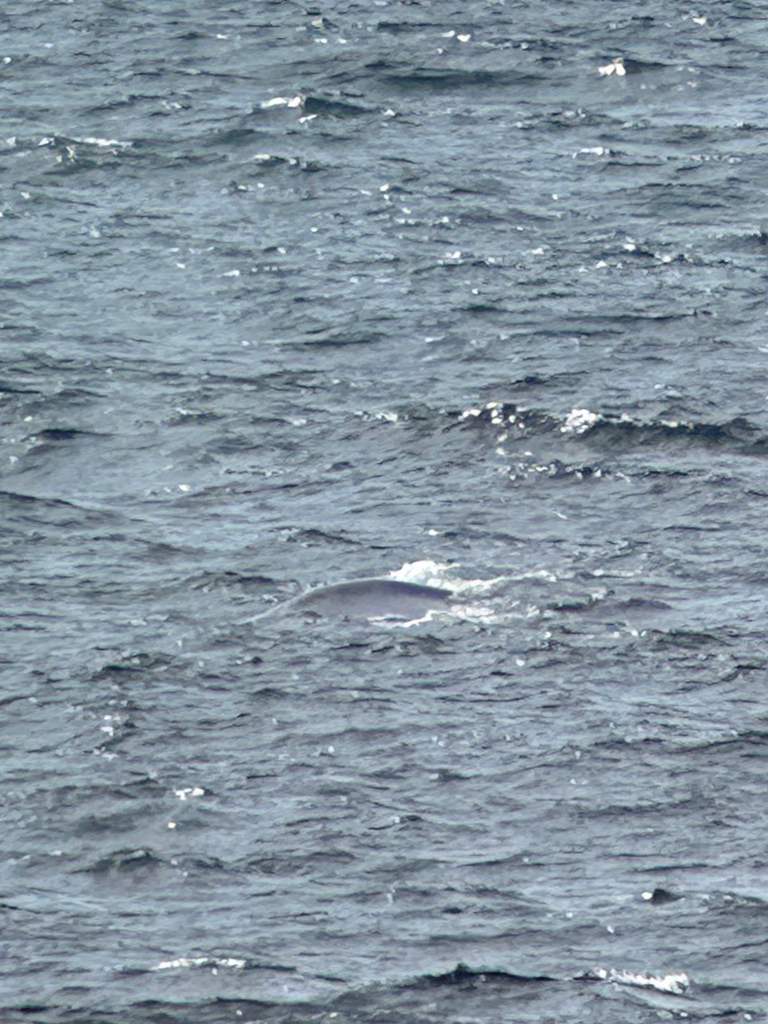
© Ingvild Riska · iNaturalist · CC BY 4.0
Scientific Classification & Quick Facts
Classification
At a Glance
Balaenoptera musculus, known as the Blue Rorqual, is the largest animal ever to inhabit Earth. This cetacean dwarfs even the greatest land mammals—a single individual can stretch over 30 metres in length and weigh as much as 200 tonnes. Despite their oceanic dominance and widespread presence across 18 countries’ waters, these marine giants remain profoundly vulnerable.
The species is classified as Endangered by the IUCN, a status reflecting centuries of industrial whaling that reduced populations from hundreds of thousands to just a fraction of their original numbers. Today, Blue Rorquals inhabit oceans worldwide, yet their recovery remains slow and dependent on continued international protection. Their sheer size and deep-diving capacity make them elusive subjects for study, leaving many aspects of their biology incompletely understood.
What distinguishes this species is not merely its scale but its ecological role as a filter-feeder of unparalleled efficiency—consuming tonnes of krill daily through baleen plates and fundamentally shaping the structure of marine food webs wherever they migrate.
Identification and Appearance
The blue whale is a slender-bodied cetacean with a broad U-shaped head that distinguishes it from other baleen whales. Its body is streamlined and tapered, built for efficient movement through open ocean waters. The flippers are notably thin and elongated, extending proportionally further than in related species. A small sickle-shaped dorsal fin sits positioned close to the tail, and the tail stock—the muscular region at the base of the flukes—is exceptionally large and powerful, supporting the wide, thin flukes used for propulsion.
Reaching lengths up to 27.1 metres, the blue whale is the largest animal known to have existed. The head comprises a relatively small proportion of total body length. The upper jaw is lined with 70–400 black baleen plates, each less than 1 metre in length, which filter small prey from seawater during feeding. The throat region features 60–88 longitudinal grooves that run along the ventral surface, allowing the skin and underlying tissues to expand dramatically during feeding lunges when the whale takes in vast quantities of water and prey.
Distribution and Habitat
Balaenoptera musculus, the blue rorqual, occurs across 18 countries with a pronounced concentration in specific regions. Mexico hosts the largest number of records (106), followed by Antarctic waters (50) and Portugal (37). Additional significant populations appear in the United States (28), Chile (28), and New Zealand (14). South Georgia, Iceland, Australia, and Argentina contribute smaller but noteworthy presence records, indicating this species inhabits both hemispheres and spans tropical to polar waters.
The blue rorqual shows a strong seasonal pattern, with February marking its peak activity month (92 records). Sightings concentrate heavily between January and May, with January recording 45 observations and March through May declining to 64, 59, and 35 respectively. From June onward, records drop dramatically to near zero, suggesting pronounced seasonal migration. This pattern reflects the species’ movement between feeding grounds in polar and subpolar regions during austral and boreal summers and migration toward equatorial waters during winter months.
As a marine cetacean, elevation data does not apply to this species. The blue rorqual inhabits open ocean and deep coastal waters across temperate, subtropical, and polar seas, favoring regions with cold-water currents that support abundant krill populations.
Biology
Behavior
Blue whales are predominantly solitary animals, though they frequently occur in pairs. During periods of high food productivity, they gather in groups exceeding 50 individuals. These whales undertake extensive migrations, traveling to polar feeding grounds in summer before returning to equatorial breeding waters in winter. They rely on memory to locate and navigate to their most productive feeding areas, demonstrating sophisticated spatial recall across ocean basins.
The species exhibits a characteristic blow—a distinctive columnar spout visible from considerable distances—that aids identification at sea. Blue whales surface regularly to breathe, their behavior closely tied to prey availability and water temperature conditions.
Diet
Blue whales are filter feeders that consume vast quantities of small crustaceans, primarily krill species. They employ baleen plates—specialized keratinous structures in their mouths—to strain seawater and capture prey. A single blue whale consumes up to 4 metric tonnes of krill daily during peak feeding seasons, representing one of the largest food intakes of any animal on Earth. This extraordinary feeding efficiency relies on the extreme abundance of krill in polar and subpolar waters.
Reproduction
Blue whales breed during winter months in warm, equatorial waters. Females typically give birth to a single calf after a gestation period of approximately 10–11 months. Calves nurse for about 7 months, during which the mother provides rich, nutrient-dense milk to support rapid growth. A newborn calf weighs roughly 2.7 metric tonnes and gains weight steadily throughout the nursing period.
Sexual maturity is reached around 5–15 years of age, though females generally do not reproduce until reaching larger body sizes. Breeding intervals between successive calves typically span 2–3 years, allowing females time to rebuild energy reserves depleted during gestation and lactation.
Conservation and Threats
Balaenoptera musculus, the Blue Rorqual, holds Endangered status on the IUCN Red List. This classification reflects the severe depletion the species experienced during the twentieth century, when industrial whaling reduced global populations from approximately 350,000 individuals to fewer than 5,000. Though populations show signs of recovery in certain regions, the species remains vulnerable and far below historical abundance levels.
The population trend is currently increasing, marking a gradual recovery following international protections. This improvement demonstrates the positive effects of the International Whaling Commission’s commercial whaling moratorium, established in 1986. Blue Rorquals in some ocean basins—particularly the North Atlantic and parts of the Southern Ocean—have shown measurable population growth over recent decades.
Threats
Ship strikes pose a significant ongoing threat to Blue Rorquals. These massive baleen whales spend extended periods near the surface during feeding, bringing them into direct contact with high-speed vessel traffic in major shipping lanes. Collisions can cause fatal injuries or render individuals unable to feed effectively. Climate change also threatens food availability by altering the distribution and abundance of krill, the species’ primary prey, particularly in polar and subpolar regions where Blue Rorquals concentrate their feeding efforts.
Entanglement in fishing gear, pollution including microplastics and chemical contaminants, and noise from maritime and industrial activities create additional pressures. Ocean acidification may further degrade krill populations by affecting the development of larval krill and disrupting the base of the food web.
Conservation Efforts
International legal protections form the backbone of Blue Rorqual conservation. The commercial whaling moratorium enforced by the International Whaling Commission provides the fundamental safeguard allowing population recovery. Several nations maintain voluntary shipping lane recommendations and speed restrictions in areas where Blue Rorquales aggregate, designed to reduce collision risk. Research programmes continue to monitor population health and distribution across ocean basins, providing essential data for adaptive management strategies.
Fun Facts
- The blue whale’s heart weighs as much as an elephant—approximately 400 kilograms—making it the largest heart of any animal on Earth.
- Despite their massive size, blue whales feed almost exclusively on krill, consuming up to 4 tonnes of these tiny shrimp-like crustaceans daily during feeding season.
- A blue whale calf gains roughly 90 kilograms per day during its first year of life, the fastest growth rate of any mammal, fueled entirely by its mother’s milk.
- Blue whales produce the loudest calls of any animal, with vocalizations reaching 188 decibels underwater—loud enough to be heard by other whales thousands of kilometres away.
- These whales migrate annually between polar feeding grounds and tropical breeding grounds, covering distances up to 25,000 kilometres in a single year.
- The blue whale’s tongue can weigh as much as 27 tonnes and contains taste buds, though it rarely uses taste when filter feeding—it simply opens its mouth and lets water wash through baleen plates.
- Blue whales were hunted so intensively that their population crashed from roughly 350,000 to around 5,000 individuals by the 1960s, a decline from which they have only partially recovered.
Sources and References
Data Sources
This article draws on information from the following open-access databases and platforms:
- GBIF — Global Biodiversity Information Facility (gbif.org)
- iNaturalist (inaturalist.org)
- Wikidata (wikidata.org)
- Wikipedia (wikipedia.org)
- Encyclopedia of Life — EOL (eol.org)
These sources provide occurrence records, distribution maps, conservation assessments, and biological trait data contributed by researchers, citizen scientists, and biodiversity networks worldwide.
Conservation Status
LC · NT · VU · EN (Endangered) · CR · EW · EX
Photo Gallery

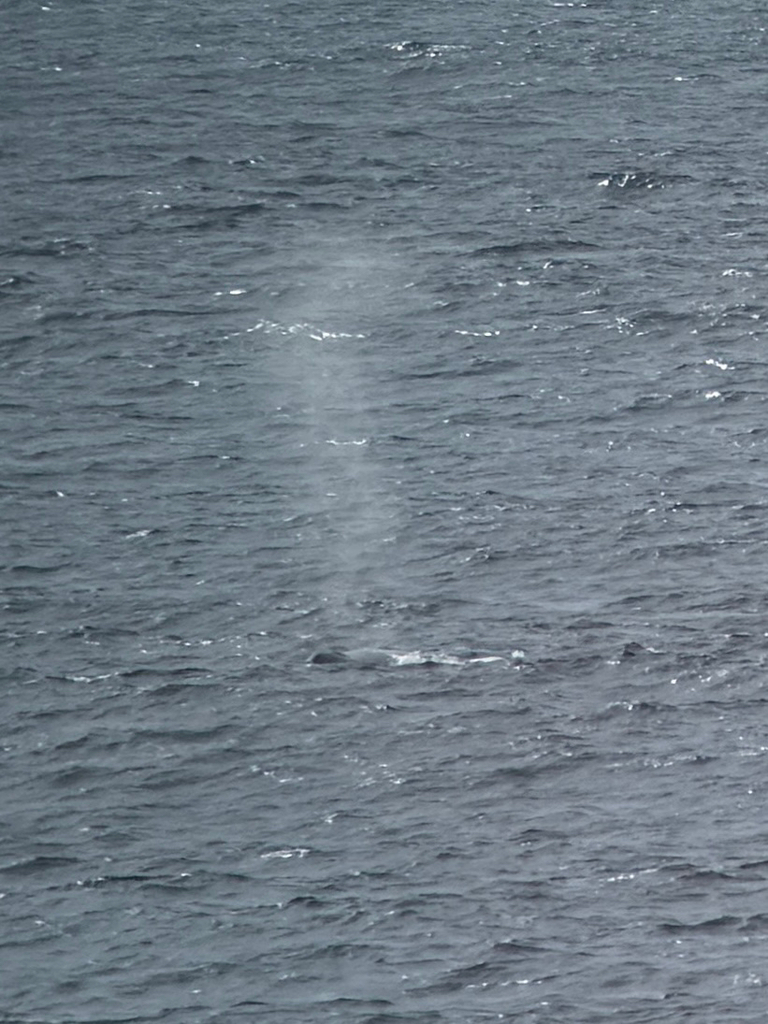
Ingvild Riska · CC BY 4.0
Related Species

Was this profile helpful?