
Magnoliopsida · Rosales
Dog Rose
Rosa canina
Also known as: Common-briar, Dog-rose, Dogbrier
© no rights reserved · iNaturalist · CC0 1.0
Scientific Classification & Quick Facts
Classification
Known For
Detailed measurements for this species are still being verified.
The dog rose is a wild ancestor of cultivated roses and one of Europe’s most recognisable shrubs, prized equally by herbalists, foragers, and garden designers. Its delicate pink flowers bloom throughout summer, followed by vibrant orange-red hips that persist into winter, providing critical nutrition for birds and small mammals when little else remains. Found across 27 countries spanning temperate Europe and western Asia, Rosa canina thrives in hedgerows, woodland edges, and disturbed ground—places where it has been a fixture of the landscape for millennia.
Despite its ubiquity and ecological value, Rosa canina has an IUCN conservation status currently listed as Unknown, reflecting gaps in systematic monitoring of this widespread species. Yet its absence from formal conservation concern belies its profound importance—the plant sustains wildlife through harsh seasons, yields medicinal compounds used across traditional and modern medicine, and represents a living reservoir of genetic diversity within the Rosa genus. This combination of ecological significance, cultural heritage, and practical utility makes the dog rose a species worthy of closer examination.
Identification and Appearance
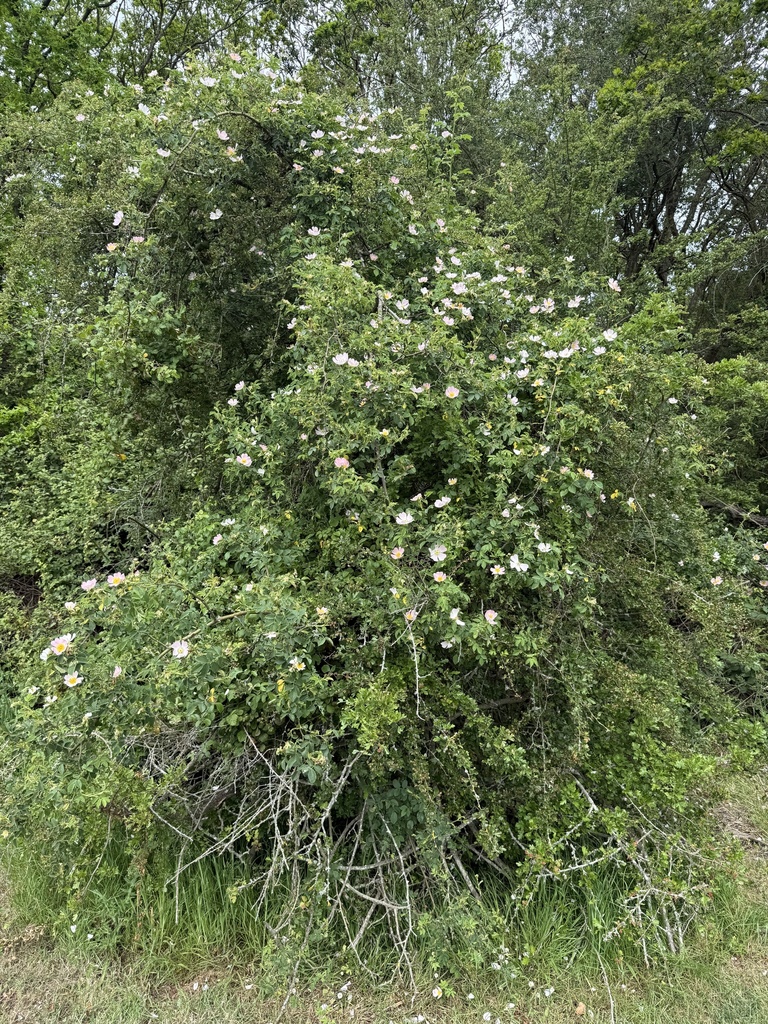
Rosa canina, the dog rose, is a deciduous shrub that typically reaches 1–5 metres in height, though its arching, flexible stems can scramble higher into the canopies of neighbouring trees. The plant is armed with numerous small, hooked prickles distributed across its stems, which serve a dual purpose: defence and assistance in climbing through dense vegetation. These sharp projections are one of the plant’s most immediately recognizable features.
Leaves and Foliage
The leaves are pinnate, composed of 5–7 leaflets arranged along a central axis. They emit a distinctive, pleasant fragrance when bruised or crushed—a characteristic that distinguishes this species from many other wild roses. The foliage is bright green during the growing season, providing the plant with sufficient photosynthetic capacity to support its sprawling habit across open woodlands and scrubland edges.
Flowers and Fruits
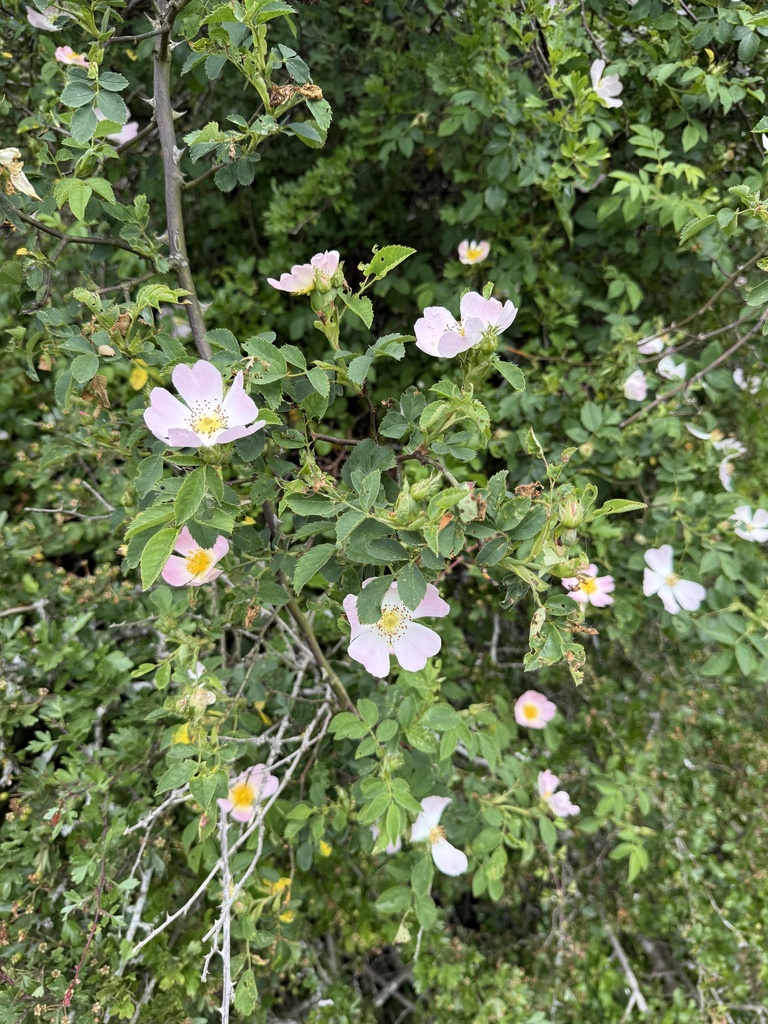
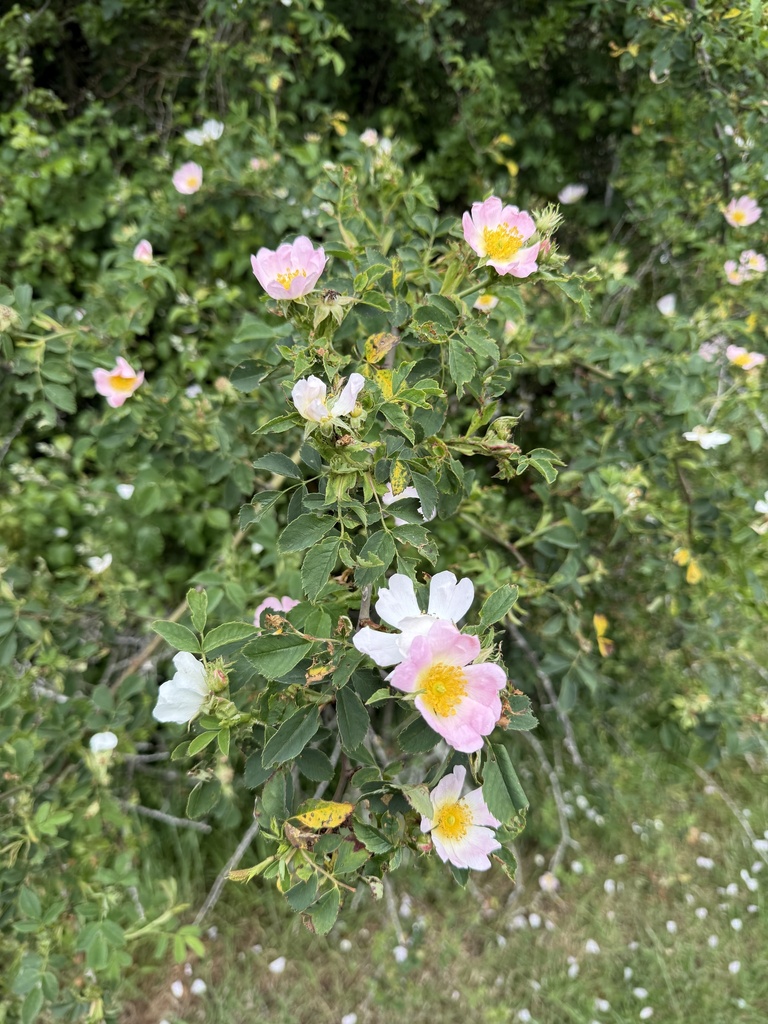
Dog roses produce five-petaled flowers that range from white to pale pink, appearing in late spring and early summer. The blooms give way to oval or flask-shaped fruits called hips, which ripen to a brilliant red or orange-red colour by autumn. These hips are distinctive for their size and persistence on the plant well into winter, and they contain numerous small, hairy seeds enclosed in a central chamber. The contrast between the dark green foliage and the vivid red hips makes the fruiting plant highly visible in the landscape.
Distribution and Habitat
Rosa canina, the dog rose, is native to Europe and western Asia but now occurs across 27 countries globally. GBIF records show the highest concentrations in the United Kingdom (51 records), Germany (45), and France (40), with significant populations also documented in the Czech Republic (33) and the United States (30). The species has also established itself in Spain, Australia, Romania, Italy, and Mexico, indicating its capacity to adapt to diverse climates beyond its native range.
The species occurs at an average elevation of 677 metres, suggesting a preference for mid-altitude zones rather than lowland or alpine extremes. Within Europe, dog rose is most abundant in temperate regions where cool winters and moderate summers support its growth. Its presence in Mediterranean countries such as Spain and Italy indicates tolerance for warmer conditions, while its extensive range across northern Europe demonstrates cold hardiness.
Observations peak sharply in April, with 164 records during that month, reflecting the species’ flowering period in spring. Activity drops to zero from May through December in the available dataset, likely reflecting both the completion of flowering and limitations in seasonal observation effort rather than true absence. The concentration of sightings in early spring aligns with the plant’s phenological cycle, when blooms are most visible and conspicuous to recorders.
Growth and Cultivation
Growth
Rosa canina is a vigorous deciduous shrub that typically grows 2–3 metres tall and spreads up to 4 metres wide, though it can occasionally exceed these dimensions in ideal conditions. The plant develops a dense, arching framework of thorny stems that branch widely, creating an open yet full canopy. Growth is steady and self-sustaining once established, with the shrub capable of spreading via underground runners and self-sown seed to form extensive colonies in suitable habitats.
The stems bear curved thorns and pinnate leaves composed of five to seven leaflets with serrated margins. New growth emerges in spring and continues through the growing season, with the plant developing a woody framework that persists through winter.
Flowering and Fruiting
Dog rose produces single or clustered flowers ranging from white to pale pink, appearing on the current season’s shoots from late spring through early summer. Individual blooms measure 4–5 centimetres across and are followed by abundant fruit development in late summer and autumn. The hips—fleshy, scarlet to orange-red in colour—persist on the plant well into winter and serve as a critical food source for wildlife.
Seed dispersal occurs primarily through fruit consumption by birds and mammals, with viable seeds contained within the fleshy hip. The plant’s reproductive strategy relies heavily on this animal-mediated distribution, allowing it to colonise new areas readily.
Cultivation
Dog rose thrives in full sun to partial shade and adapts readily to most well-drained soils, though it shows no marked preference for specific pH ranges. The shrub displays good drought tolerance once established and requires minimal supplemental watering except in extremely arid conditions. It is hardy across temperate and boreal regions, surviving prolonged winter cold without special protection.
Planting is best undertaken in autumn or early spring, in well-prepared ground enriched with organic matter. The shrub responds well to light annual pruning to maintain shape and encourage new flowering stems. While it tolerates poor soil and neglect, regular feeding in spring promotes vigorous growth and abundant fruiting. Dog rose rarely requires pest or disease control in temperate climates and naturalises readily in hedgerows, field margins, and disturbed ground.
Conservation and Threats
Rosa canina, the Dog Rose, has not been formally assessed by the International Union for Conservation of Nature (IUCN). This absence of a formal Red List classification reflects the species’ widespread distribution and general abundance across much of Europe, western Asia, and North Africa. The Dog Rose remains common in hedgerows, woodland margins, and disturbed habitats throughout its native range, with populations showing stable trends where they have been monitored.
Threats and Conservation Efforts
Dog Rose faces limited direct conservation threats at the species level. Its hardy nature, capacity for vegetative reproduction, and ability to establish in disturbed habitats buffer it against many pressures that affect more specialised plants. However, local populations can decline where intensive agricultural management removes hedgerows and field margins—particularly in regions where herbicide application eliminates wild shrubs to create streamlined monocultures. Urban development and habitat fragmentation affect populations in some areas, though the species readily colonises new sites including roadsides and abandoned land.
The species benefits indirectly from growing interest in native plant restoration, hedgerow conservation, and wildlife-friendly farming practices across Europe. Many conservation organisations and government bodies now actively promote hedgerow retention and creation, which benefits Dog Rose alongside hundreds of other species. In some regions, the plant is specifically selected for habitat restoration projects because of its value to pollinators, seed-dispersing birds, and herbivorous insects.
Cultural Significance
The dog rose holds deep roots in European cultural tradition, particularly within heraldry and regional identity. It served as the stylised rose of medieval European heraldry and remains the county flower of Hampshire in England. In Ireland, County Leitrim earned the nickname “The Wild Rose County” due to the abundance of dog roses in its landscape. The most legendary example of the species’ cultural significance is the Thousand-year Rose (Hildesheim Rose) in Hildesheim, Germany, which legend claims has climbed the cathedral wall since the diocese was established in 815.
The flower gained literary prominence through its association with poetic excellence. The Academy of Floral Games, founded in 1323, awarded sprigs of dog rose to poets as recognition for outstanding literary work—a tradition that elevated the flower’s status and led to its frequent mention in celebrated poems. William Shakespeare referenced the species in A Midsummer Night’s Dream, calling it eglantine in his era. In Act II, Scene I, Oberon declares: “With sweet musk-roses and with eglantine,” embedding the flower within one of English literature’s most enduring works.
Symbolically, the dog rose embodies dual meanings centred on pain and pleasure. This duality has made it a rich subject for artistic and literary interpretation across centuries, reflecting the complex emotional landscape it represents. Its cultural legacy extends beyond decoration or symbolism—the species remains woven into the identity of regions where it thrives and continues to appear in contemporary cultural discourse as a symbol of natural heritage and literary tradition.
Fun Facts
- Dog rose hips contain 20 times more vitamin C than oranges by weight, making them one of nature’s most concentrated sources of this essential nutrient and a traditional remedy for boosting immunity.
- The species produces thousands of tiny hairs inside its hips that cause intense itching—historically, these were used to make “itching powder” pranks, earning the plant its mischievous reputation in folk culture.
- Rosa canina is hexaploid, meaning it carries six sets of chromosomes instead of the usual two, which contributes to its genetic complexity and ability to hybridize with other rose species.
- During World War II, British schoolchildren were organized into “rosehip squads” to harvest wild hips for jam and syrup when citrus imports were cut off, securing vital vitamin C for the population.
- Dog rose flowers are pollinated almost exclusively by bees and hoverflies, but the plant’s seeds require a period of cold dormancy lasting several months before they can germinate in spring.
- The species spreads through both seeds and vegetative reproduction via root fragments, allowing a single plant to colonize large areas of hedgerow and create genetically identical clones.
- Its thorns vary dramatically in shape and density depending on growing conditions—plants in open, sunny sites develop dense, sharp thorns for protection, while shaded specimens produce fewer and softer ones.
Photo Gallery
no rights reserved · CC0 1.0
Related Species
Was this profile helpful?