
Magnoliopsida · Fagales
European Beech
Fagus sylvatica
Least ConcernAlso known as: Beech, European Beech, Common Beech
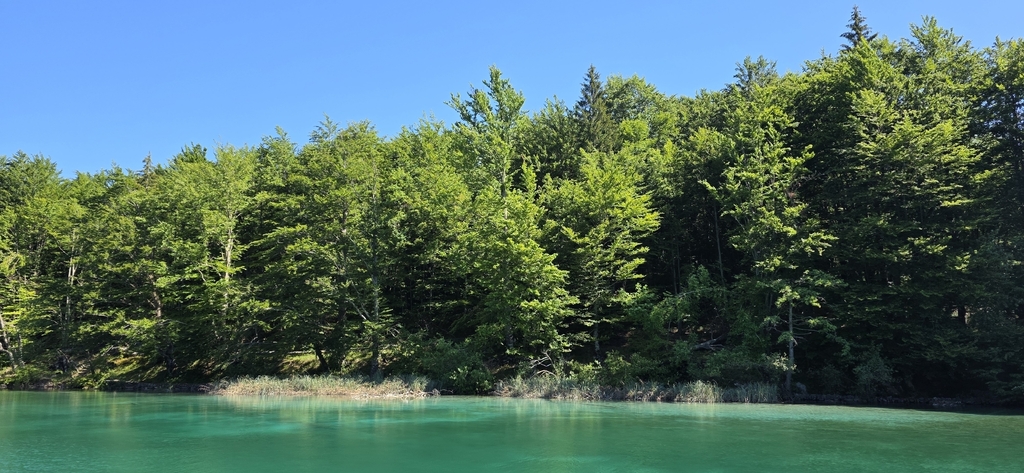
© Barry Stewart · iNaturalist · CC BY 4.0
Scientific Classification & Quick Facts
Classification
At a Glance
European Beech is one of Europe’s most dominant and ecologically influential tree species, dominating vast swathes of temperate forest from the Atlantic coast to the Carpathians. Its smooth grey bark, distinctive triangular nuts, and brilliant golden autumn foliage make it instantly recognizable across its natural range. This deciduous hardwood has shaped human civilization for millennia—from shipbuilding to charcoal production to woodland management—yet it remains widespread and abundant across 19 countries, with a conservation status of Least Concern.
What makes Fagus sylvatica especially notable is its dual identity: a keystone species that supports entire forest ecosystems while simultaneously serving as a barometer of forest health and climate stress. Its decline in drought-prone regions is already forcing foresters across Europe to reconsider long-standing management practices and tree-planting strategies.
Identification and Appearance
Fagus sylvatica, the European beech, is a large deciduous tree capable of reaching heights of up to 50 metres with trunk diameters reaching 3 metres. More typically, mature specimens stand 25–35 metres tall with trunk diameters up to 1.5 metres. A 10-year-old sapling will reach approximately 4 metres in height. The tree develops a broad, dense crown with smooth, thin grey bark that remains remarkably pale throughout its life, even on mature specimens.
Foliage and Seasonal Appearance
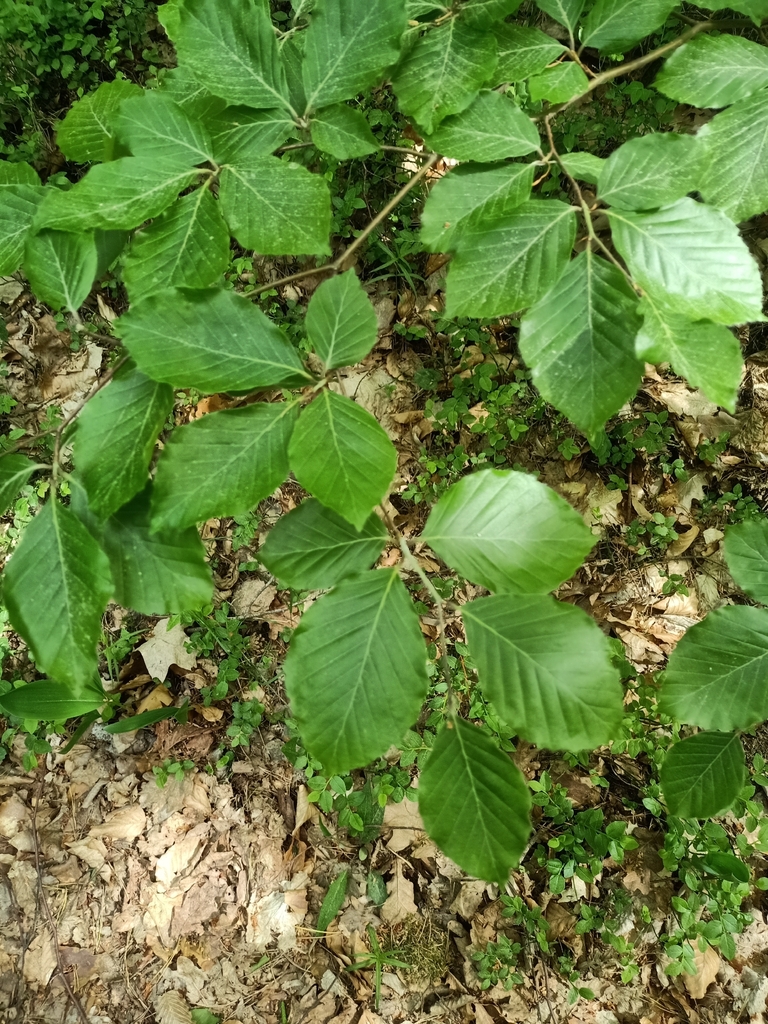
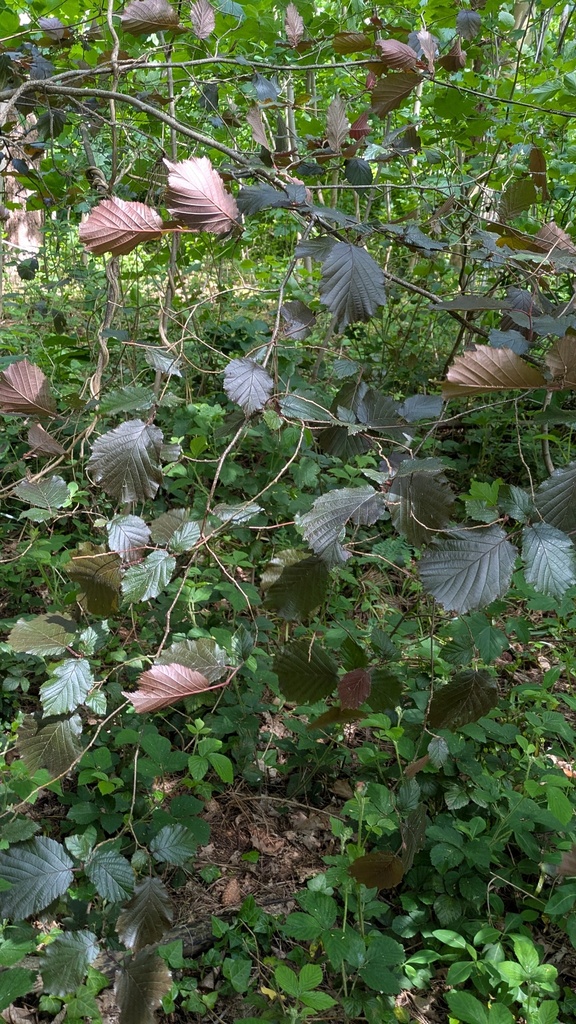
The leaves are oval to elliptical, 4–9 centimetres long, with a distinctive wavy or slightly toothed margin. They emerge pale green in spring, deepen to dark glossy green during summer, and transform to golden or copper-brown in autumn before dropping. The leaf undersides are lighter and slightly hairy, particularly along the veins. In winter, the bare branches reveal the characteristically smooth, grey bark and create an elegant, sculptural silhouette.
Reproductive structures appear as paired or three-lobed spiky cupules (husks) containing triangular nuts or beechnuts, approximately 15 millimetres long. These develop in autumn and are enclosed in the characteristic spiny involucre. European beech exhibits no pronounced sexual dimorphism; male and female flowers appear on the same tree, with males in drooping catkins and females in small clusters higher on the same branches.
Distribution and Habitat
Fagus sylvatica, the European Beech, is native to central and western Europe, with its range spanning 19 countries across the continent. The species shows strongest representation in the United Kingdom (89 records), Germany (44 records), and Austria (34 records), followed by France, Sweden, Denmark, and Switzerland. GBIF records indicate a secondary presence in Poland, Italy, and Norway, reflecting the tree’s broad but patchy distribution across temperate European woodlands.
Elevationally, European Beech thrives between 402 and 997 metres, with an average elevation of 638 metres. This range reflects the species’ preference for cool, moist upland and mid-elevation forests typical of the Carpathian, Alpine, and Central European regions. The tree occupies mesic deciduous and mixed woodland habitats, where deep, well-drained soils and moderate precipitation support vigorous growth.
Seasonally, iNaturalist observations and collection records show a marked peak in January, suggesting that winter activity—likely related to dormancy assessment, forestry surveys, and herbarium specimen preparation—dominates the observational record rather than phenological variation. The absence of records in other months reflects data collection bias rather than true seasonal absence, as European Beech is a year-round resident throughout its range.
Growth and Cultivation
Growth
Fagus sylvatica is a large deciduous tree that typically reaches 20–30 metres in height, with some specimens exceeding 40 metres in optimal conditions. The crown develops a dense, broadly columnar to ovoid shape, particularly in younger trees, becoming more spreading and rounded with age. Mature trees display smooth grey bark that remains relatively thin even on old specimens, and develop a complex branching architecture that provides substantial shading beneath the canopy.
European beech establishes itself as a slow to moderate grower, developing a deep root system that anchors the tree firmly in place. Young trees gain height gradually but steadily, with growth rates varying based on site conditions and competition. The longevity of this species is remarkable; individual beeches commonly live 200–300 years, and some ancient specimens have exceeded 500 years, making them among Europe’s longest-lived hardwood trees.
Flowering and Fruiting
Flowering occurs in spring as new leaves emerge, typically between April and May across much of its range. Male and female flowers develop on the same tree; male catkins are pendulous and yellowish, while female flowers are smaller and less conspicuous, developing in paired clusters. The pollination mechanism relies entirely on wind dispersal, which explains the copious pollen production and the species’ ability to hybridize with other beech species when ranges overlap.
Fruit development culminates in autumn, when three-angled nuts enclosed within a woody, spiky involucre (beechnut husk) mature and fall. The nuts are brown, roughly triangular, and approximately 1.5 centimetres long. Seed production is highly irregular, with some years yielding abundant crops while others are nearly barren—a pattern known as mast seeding. Heavy seed years occur unpredictably, sometimes separated by intervals of five to ten years.
Cultivation
European beech thrives in well-drained soils ranging from slightly acidic to neutral, though it tolerates a broader pH spectrum than many hardwoods. The species performs best in continental and temperate maritime climates across Europe, where it is extremely hardy. It requires full sun to light shade during establishment and benefits from protection from strong winds when young, though mature trees are wind-firm once properly rooted.
Moisture requirements are moderate; the species prefers consistent soil moisture during the growing season but is sensitive to waterlogging. While tolerant of temporary dry periods once established, sustained drought stress reduces growth and vitality. In cultivation, young beeches benefit from mulching and regular watering during the first few years. Mature trees require minimal management beyond natural canopy tending. The species responds well to coppicing and has been extensively used in traditional forestry for timber and beech mast production across Europe.
Conservation and Threats
Fagus sylvatica, the European Beech, holds a conservation status of Least Concern on the IUCN Red List. This designation reflects the species’ wide distribution across Europe, substantial population size, and continued presence in protected forest systems throughout its range. However, “Least Concern” does not mean the species faces no pressures—it indicates that current threats have not yet pushed populations toward vulnerability at a global scale.
Threats
European Beech faces mounting pressures from climate change, which alters precipitation patterns and increases the frequency of droughts across central and southern Europe. Warmer summers stress beech trees, particularly at the southern edge of their range, where water availability becomes a limiting factor. Pests and diseases, including the beech scale insect (Cryptococcus fagisuga) and associated fungal pathogens, cause dieback in stressed populations. Forest fragmentation from land-use change reduces habitat connectivity and genetic flow between isolated beech stands.
Pollution, particularly atmospheric nitrogen deposition in industrial regions, alters soil chemistry and weakens tree vigor over time. Unsustainable logging and conversion of mixed beech forests to monoculture plantations diminish both the ecological integrity and genetic diversity of remaining populations. Game overabundance in some regions—particularly deer—suppresses natural regeneration by consuming seedlings and saplings before they establish.
Conservation Efforts
European Beech benefits from protection within the Natura 2000 network across the European Union, which designates critical beech forest habitats as protected areas. Many European nations have implemented forestry regulations favoring continuous-cover management and mixed-species stands over clear-cutting. Genetic resource programs preserve beech seed sources and maintain seed banks to ensure long-term genetic diversity.
Restoration initiatives focus on expanding beech forests in suitable regions and establishing wildlife corridors to reconnect fragmented populations. Research into climate-adaptive beech provenances helps foresters select seed sources better suited to future conditions. Protected old-growth beech forests, such as those in Germany’s Hainich National Park and Slovakia’s Carpathian beech reserves, serve as reference ecosystems and genetic repositories.
Cultural Significance
European beech carries deep roots in ancient religious and cultural tradition. In Gallo-Roman religion, Fagus—the Latin name for beech—was venerated as a god, known from four inscriptions discovered in the Hautes-Pyrénées. The genus name itself hints at the tree’s historical importance: it may derive from the Greek verb phagein, meaning “to eat,” reflecting a time when beech mast (nuts) served as emergency food during famines, though their consumption often caused illness due to their tannin and alkaloid content.
In folklore and symbolism, the European beech is associated with wisdom, prosperity, and protection. Beyond its spiritual significance, the tree has provided tangible resources for millennia. The nuts, though slightly toxic, have been consumed by both humans and animals and are used in cooking and traditional medicine for their astringent and anti-inflammatory properties. The timber itself became invaluable to human craftspeople, particularly in furniture making and other woodwork, making the beech an economically important species across much of its native range in Eurasia and southern England.
The beech’s cultural footprint extends into art and literature, though folklore associated with the tree remains surprisingly limited compared to other European trees. Its prominence in the landscape—capable of reaching heights up to 50 metres—made it a fixture in both practical life and the cultural imagination of the regions where it flourished.
Fun Facts
Fagus sylvatica, the European beech, is one of Europe’s most architecturally distinctive trees, and its structure defies typical expectations of how large trees grow.
- European beech develops smooth, silvery-grey bark that persists throughout its life—an unusual trait for a deciduous tree of its size. This polished appearance makes mature beech trees instantly recognizable in forests and parks across temperate Europe.
- Despite reaching heights of up to 40 metres, beech trees typically have short trunks with branches that begin low on the trunk. This low-branching habit contrasts sharply with the tall, columnar forms of oak or ash trees, giving beech forests a distinctly spreading, open character.
- The tree produces an exceptionally large leaf area relative to its size, enabling efficient photosynthesis in the humid climates of its native range. This dense canopy creates deep shade beneath beech woodlands, where few other plants can establish themselves.
- Beech seeds, called beechnuts, are enclosed in distinctive four-lobed husks that split open when ripe. These nutrient-rich seeds are edible to humans and were historically harvested and pressed for beech oil.
- European beech exhibits strong dominance in mixed forests across much of central and western Europe. Once established, it can suppress competing species through its capacity to form dense, light-excluding canopies.
- The tree is remarkably long-lived, with some individuals reaching 300 years of age or more in undisturbed forests. Ancient beech trees become ecological strongholds, supporting specialized insects, lichens, and fungi that depend on old-growth wood.
Conservation Status
LC (Least Concern) · NT · VU · EN · CR · EW · EX
Photo Gallery
Barry Stewart · CC BY 4.0
Related Species
Was this profile helpful?