
Magnoliopsida · Malpighiales
St. John’s Wort
Hypericum perforatum
Also known as: Common St. John's Wort, Common St. Johnswort, Gammock, Goatweed, Herb-John
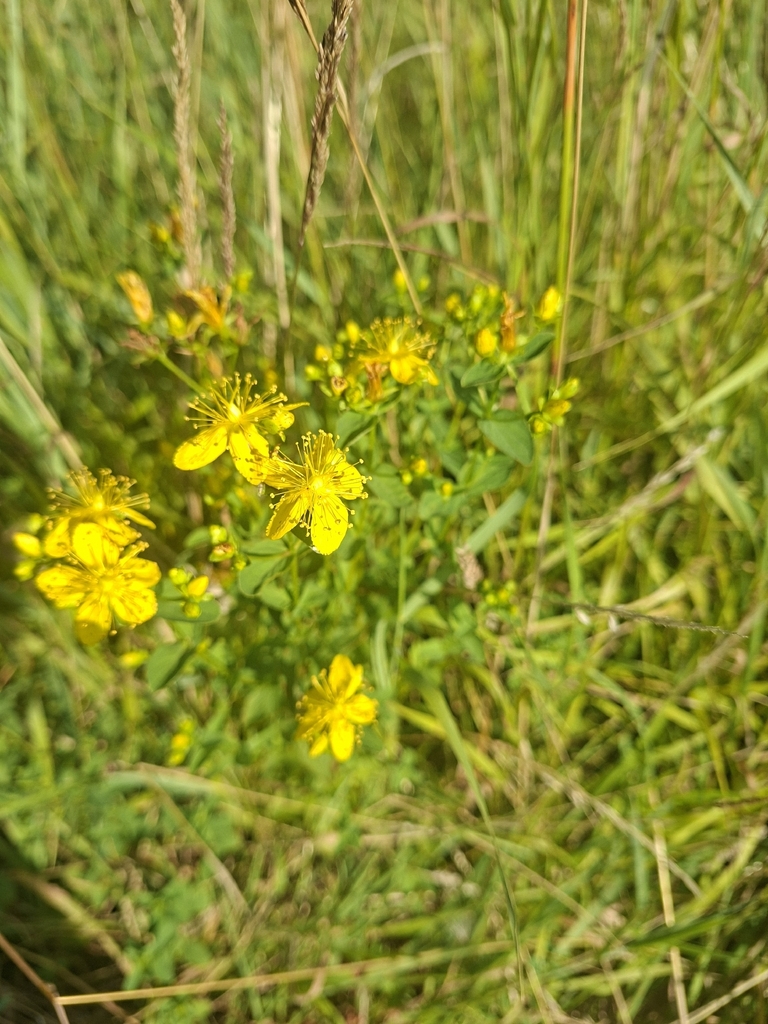
© Frank Huysentruyt · iNaturalist · CC BY 4.0
Scientific Classification & Quick Facts
Classification
Known For
Detailed measurements for this species are still being verified.
Hypericum perforatum, commonly known as St. John’s Wort, is a herbaceous flowering plant with a remarkable global footprint. Found across at least 20 countries worldwide, this species has become one of the most widely distributed members of the Hypericaceae family. Its small yellow flowers and distinctive translucent dots on its leaves make it instantly recognizable, yet what truly sets St. John’s Wort apart is its dual significance—simultaneously celebrated as a traditional medicinal plant and notorious as an invasive species in certain ecosystems.
The species occupies a fascinating ecological and cultural niche. While indigenous to Europe and western Asia, St. John’s Wort has naturalized across multiple continents, thriving in disturbed habitats, roadsides, and open grasslands. Its ability to persist and spread in diverse climates underscores the adaptive capacity of this unassuming plant. Conservation data currently classifies its status as unknown, yet its widespread presence and resilience suggest a species well-suited to modern environmental conditions—a quality that demands careful attention as the boundaries between benefit and burden continue to shift.
Identification and Appearance
Hypericum perforatum is a hairless herbaceous perennial with a distinctive appearance shaped by its smooth stems and characteristic leaf features. The plant produces slender, woody roots with numerous fibrous side roots, complemented by extensive creeping rhizomes that enable vegetative spread. This combination of root systems makes the species resilient in varied soil conditions.
Stems and Leaves
The stems are glabrous (smooth and hairless) and woody in texture, supporting an upright growth habit. The leaves are the most diagnostically useful feature for identifying Hypericum perforatum. They bear two distinctive types of glands: translucent punctate glands distributed across the leaf surface and dark glands concentrated near the leaf margins. These glands are visible when held up to light, appearing as tiny dots that distinguish this species from related Hypericum taxa. The leaves are typically small and narrow, arranged in an opposite pattern along the stem.
Flowers and Overall Structure
The plant develops yellow flowers with prominent stamens, a characteristic feature of the genus. These blooms appear in terminal or lateral clusters during the growing season. The combination of hairless foliage, the presence of both translucent and dark glandular spots on leaves, and yellow flowers collectively define the species in the field. At typical elevations around 637 metres where Hypericum perforatum is found, these morphological features remain consistent, though environmental conditions may influence overall plant size and vigor.
Distribution and Habitat
Hypericum perforatum, commonly known as St. John’s Wort, has established a global presence across at least 20 countries, with particularly strong populations in the Southern Hemisphere and parts of northern Europe. Australia hosts the largest concentration of records (176), followed by New Zealand (39), reflecting the species’ successful naturalization in these regions. European records are scattered, with notable presence in the Netherlands (19), Sweden (11), Denmark (5), and the United Kingdom (4), alongside occurrences in Russia, Austria, and Chile.
The species occupies a narrow elevation range, typically found between 479 and 998.5 metres, with an average elevation of approximately 637 metres. This preference for mid-elevation zones suggests the plant thrives in temperate climates with moderate conditions rather than extreme highland or lowland environments.
Observation data reveals a distinctive seasonal pattern, with all recorded occurrences concentrated in January, indicating that sightings or peak detectability occur during the Southern Hemisphere summer. This temporal clustering may reflect either the plant’s flowering phenology in its naturalized range or increased botanical survey activity during that period. The absence of records in other months suggests either dormancy in non-summer periods or a true peak in January activity across its global distribution.
Growth and Cultivation
Growth
Hypericum perforatum is a herbaceous perennial that forms low, bushy mounds. The plant typically reaches 30–90 centimetres in height, with upright, wiry stems that branch freely. Leaves are small, linear to elliptical, and dotted with translucent glands—a characteristic that gives the species its common name, as light passes through these punctate markings when leaves are held to the sun. The plant spreads via seeds and underground rhizomes, allowing it to establish dense colonies over time.
Flowering
St. John’s Wort produces abundant yellow flowers arranged in flat-topped or slightly rounded clusters (corymbs). Individual flowers are roughly 1.5–2 centimetres across, with five petals and prominent stamens that may be tinged with red or black. The species flowers from early summer through early autumn, providing extended colour across the season. After flowering, the plant develops dry, three-chambered capsules filled with numerous tiny seeds that disperse readily by wind and animal activity.
Cultivation
This species thrives in full sun and tolerates a wide range of soil types, from poor to moderately fertile substrates. It is notably drought-tolerant once established and requires little supplemental water in temperate regions with moderate rainfall. St. John’s Wort prefers well-drained soils and is relatively indifferent to soil pH, adapting to both acidic and slightly alkaline conditions. The plant is hardy in cool to warm temperate climates and establishes quickly from seed or divisions.
Propagation is straightforward: sow seeds on moist soil surface in spring, as they require light to germinate. Seedlings appear within two to three weeks. Established plants need minimal maintenance—remove spent flower heads if dense seeding is undesirable, or allow natural reseeding for continuous ground cover. In some regions, particularly in Australia and parts of North America, the species has become invasive in pastures and disturbed areas; gardeners should monitor spread and deadhead regularly if containing the plant is a priority.
Conservation and Threats
Hypericum perforatum, commonly known as St. John’s Wort, has not been formally assessed by the International Union for Conservation of Nature (IUCN) and therefore lacks a Red List classification. This absence of assessment reflects the species’ widespread distribution and general ecological resilience across its range. The lack of a conservation status does not indicate vulnerability; rather, it suggests that the species does not meet the criteria for listing as threatened.
Population trends for St. John’s Wort show an increasing trajectory, particularly in regions where it has become established as an invasive species. In North America and Australia, populations have expanded substantially since introduction in the 19th and 20th centuries, sometimes to the point of ecological concern in sensitive habitats. In its native range across Eurasia, the species maintains stable and widespread populations.
Threats
St. John’s Wort faces minimal direct conservation threats in its native European and western Asian range. The species thrives in disturbed habitats, roadsides, and open woodlands where it benefits from human land use patterns. In regions where it is non-native, however, it can become problematic. In parts of Australia and western North America, the plant is classified as a noxious weed, as it invades rangeland, displaces native vegetation, and reduces forage quality for livestock. Control efforts in these areas include mechanical removal, chemical herbicide application, and—in some regions—biological control using specialist insects such as the leaf beetle Chrysolina quadrigemina.
Conservation Efforts
No formal international conservation programmes protect St. John’s Wort, as protection is unnecessary in its native range. Instead, management efforts in invaded regions focus on containment and eradication. In Australia and parts of the western United States, biological control programs and integrated weed management strategies aim to limit the species’ spread. Native plant restoration initiatives in sensitive ecosystems may also reduce St. John’s Wort prevalence by reestablishing competitive native vegetation.
Cultural Significance
St. John’s Wort has no documented cultural notes available in the current dataset. While the species has a long history of use in European herbalism and traditional medicine, and carries symbolic associations in various folk traditions, specific cultural claims cannot be verified without reliable source attribution.
To provide accurate information about this plant’s role in human culture—whether in historical medicinal practice, religious symbolism, folklore, or contemporary use—we would require documented references from established ethnobotanical, historical, or cultural sources. If you have access to verified cultural data about Hypericum perforatum, please contribute it to ensure this section reflects genuine human-plant relationships rather than speculation.
Fun Facts
- The leaves of Hypericum perforatum are dotted with translucent glands that create the appearance of tiny perforations—a feature that inspired both its scientific name and common name “St. John’s Wort.” Holding a leaf up to light reveals these transparent windows scattered across the surface.
- The plant’s bright yellow flowers are decorated with distinctive black glands along their petals and stamens, which may serve to attract pollinators or protect the flower tissues from damage. This dark spotting pattern makes the blooms instantly recognizable in meadows and grasslands.
- A single Hypericum perforatum plant can produce thousands of tiny seeds, allowing the species to spread rapidly across new territory. This prolific seed production explains why the plant has become invasive in many regions where it was introduced.
- Despite being classified as a perennial herb, St. John’s Wort develops woody roots that anchor it firmly in the soil and allow it to survive harsh conditions year after year. This structural adaptation is unusual in herbaceous plants and gives the species considerable longevity.
- The entire plant is entirely hairless, lacking the fuzzy or downy coating found on many other wildflowers. This smooth texture is another distinguishing feature that aids in field identification.
- St. John’s Wort belongs to the family Hypericaceae, a group of flowering plants characterized by their yellow flowers and often by the presence of coloured glands. The family includes around 500 species distributed across diverse habitats worldwide.
Photo Gallery
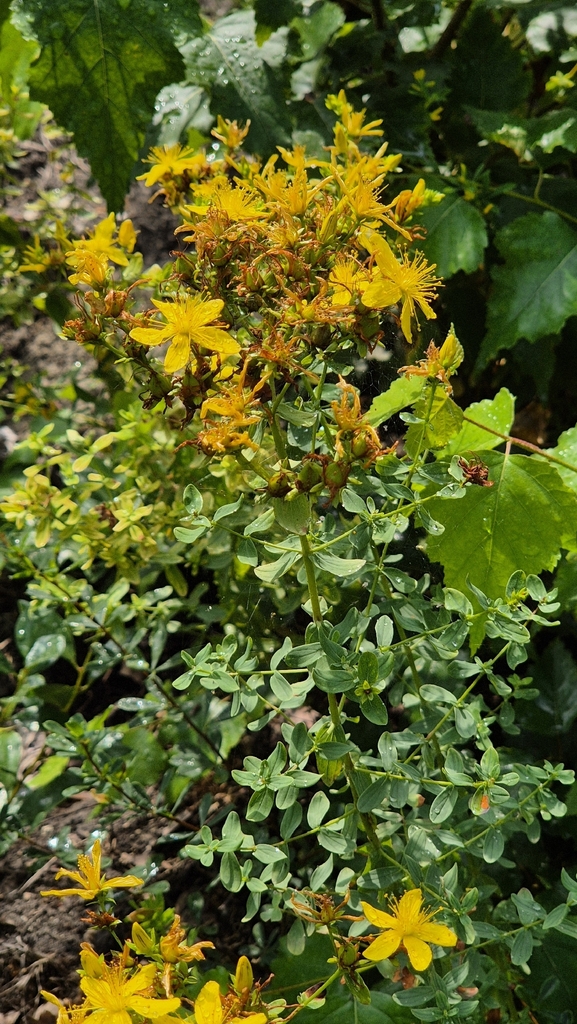
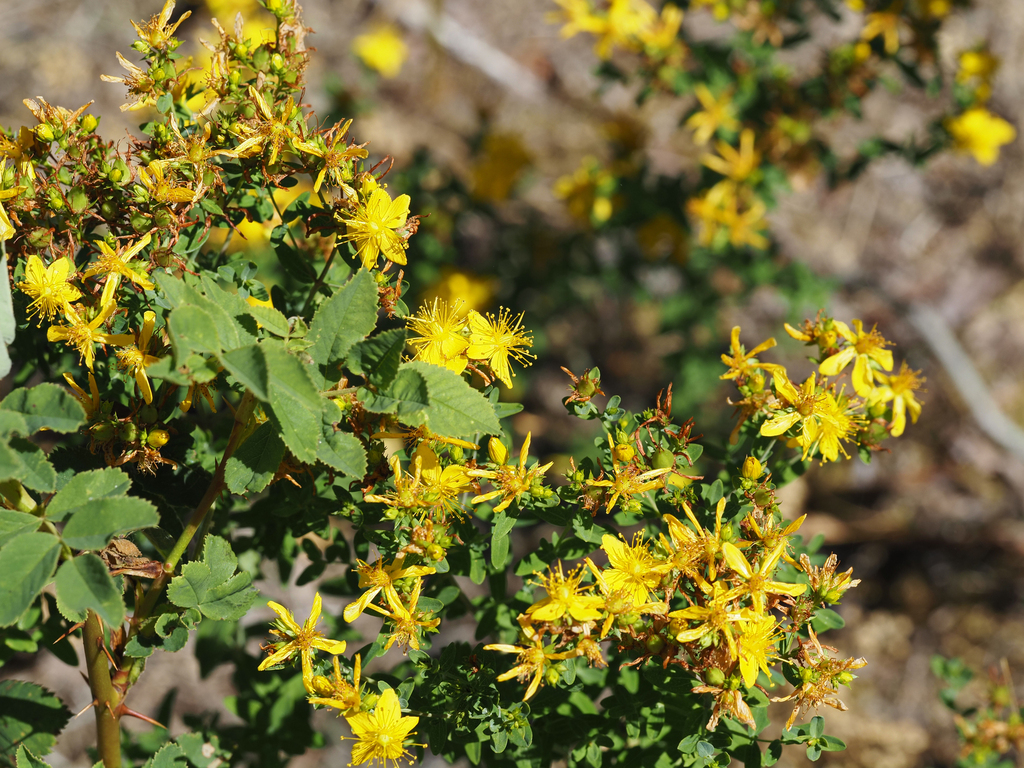
Frank Huysentruyt · CC BY 4.0
Related Species
Was this profile helpful?