
Aves · Passeriformes
Barn Swallow
Hirundo rustica
Least Concern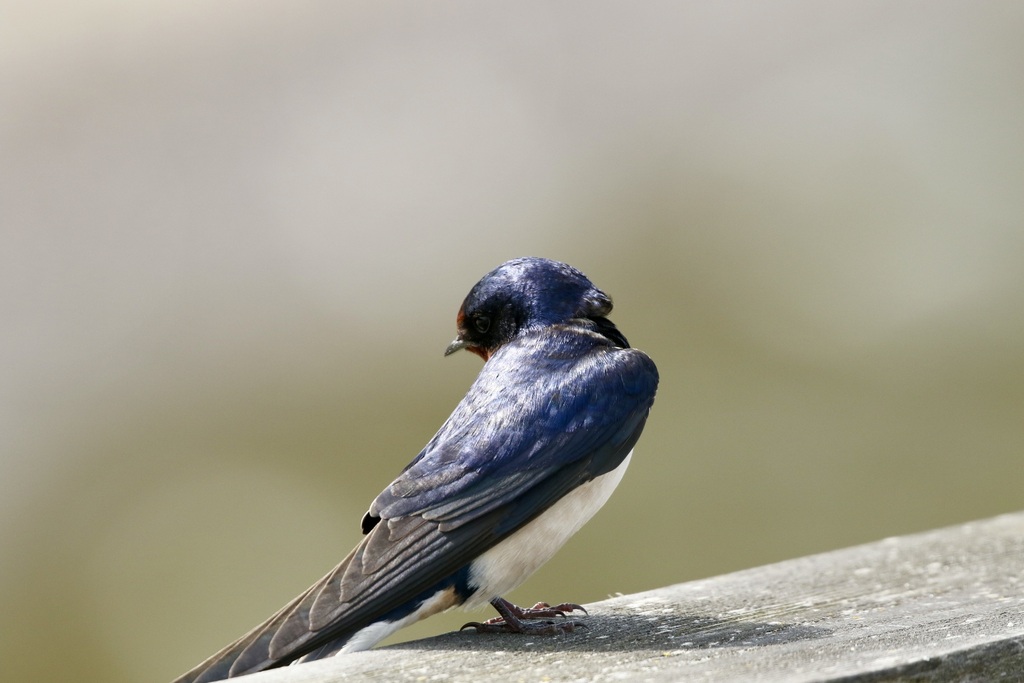
© Thorhold Souilljee · iNaturalist
Scientific Classification & Quick Facts
Classification
At a Glance
The barn swallow is a small but tireless flier that has earned its place in human settlements across the Northern Hemisphere and beyond. With its distinctive forked tail, iridescent blue-black upperparts, and rust-coloured throat patch, Hirundo rustica cuts an elegant silhouette as it hunts insects in mid-air, often skimming just centimetres above the ground or water. Found across 17 countries and rated Least Concern by the IUCN, this species remains one of the most familiar birds to rural and agricultural communities worldwide.
What makes the barn swallow especially noteworthy is its intimate relationship with human infrastructure. Unlike many birds displaced by agricultural development, this species has adapted to breed almost exclusively in and on man-made structures—barns, sheds, bridges, and culverts—transforming it into a cultural icon across farming regions. Its aerial acrobatics, collaborative nesting behaviour, and predictable seasonal appearance have made it a subject of folklore, scientific study, and conservation interest for centuries.
Identification and Appearance
The Barn Swallow is a small, streamlined bird with distinctive colouration and elongated tail feathers. The nominate subspecies H. r. rustica measures 17–19 cm in total length, with a wingspan of 32–34.5 cm. The elongated outer tail feathers account for 2–7 cm of this length, giving the bird its characteristic forked-tail silhouette. Weight ranges from 16–22 g, making it a lightweight, agile flyer adapted to sustained aerial hunting.
Plumage and Colouration
Adult males display steel-blue upperparts that appear iridescent in good light. The forehead, chin, and throat are distinctly rufous—a warm reddish-brown tone that contrasts sharply with the off-white underparts. A broad dark blue breast band separates this rufous throat patch from the pale belly. The tail is deeply forked, with the outer feathers elongated into thin streamers that are particularly pronounced in breeding males.
Females and juveniles show similar patterning but generally display duller and less extensive rufous colouration on the throat and forehead compared to males. The blue of the upperparts is similarly steely but may appear slightly less vibrant. Young birds are particularly pale on the underparts and show only faint traces of the adult’s bold throat patch until their first moult.
Distribution and Habitat
Hirundo rustica has been recorded across 17 countries, with the strongest concentration in southern Africa. GBIF records show South Africa dominates observations with 186 documented sightings, followed by Kenya with 73 records. The species also appears regularly in Sweden (10 records), and has been documented in India, Argentina, Zimbabwe, Eswatini, Taiwan, Israel, and China, indicating a highly migratory and geographically dispersed population that tracks seasonal food availability across continents.
The barn swallow is a passage migrant and winter visitor to much of its range, particularly in sub-Saharan Africa where it concentrates during the austral summer and autumn. GBIF data reveal a pronounced peak in January with 300 records, reflecting the species’ preference for the Southern Hemisphere during the boreal winter months. The sharp drop to zero observations from February onward suggests rapid northward migration as conditions shift, typical of long-distance migrants that exploit seasonal insect abundance in different hemispheres.
This species frequents open and semi-open habitats where aerial insects are abundant: farmland, grasslands, reed beds, and areas near human settlements including barns, bridges, and coastal zones. The barn swallow shows remarkable flexibility in exploiting both natural and artificial structures for nesting and roosting, making it a cosmopolitan breeder in temperate regions and a predictable winter visitor across Africa and Asia.
Biology and Behavior
Behavior
Barn Swallows are highly social birds that spend much of their day in flight, hawking insects from the air with remarkable agility. They are migratory, traveling between temperate breeding grounds and African wintering sites twice yearly. Their name derives from their traditional nesting habit in barns and other human structures, where they build mud nests under eaves and rafters. These birds often perch on wires and branches in loose flocks, particularly during migration, and perform coordinated maneuvers that demonstrate their exceptional flight control.
Within breeding colonies, Barn Swallows exhibit complex social behaviors. Males arrive at breeding sites first and defend nest territories vigorously, performing dive displays and emitting loud calls to warn rivals. Pairs form strong bonds and often reunite with the same partner across breeding seasons. The species is primarily monogamous, though extra-pair copulations occasionally occur. Daily activity centers on feeding flights, which can last several hours as birds pursue insects over open fields, water bodies, and along hedgerows.
Diet
Barn Swallows are strictly insectivorous, capturing flying insects exclusively in mid-air. Their diet consists primarily of flies, including house flies and horse flies, along with small beetles, mosquitoes, and other small aerial arthropods. They forage opportunistically throughout the day, adjusting their feeding location and intensity based on insect availability and weather conditions. Bad weather reduces flying insect populations, forcing these birds to travel greater distances or shift to lower-flying insects near vegetation and water.
Feeding birds often congregate where insects are abundant—over meadows, water surfaces, and pastures—creating feeding flocks that may number in the dozens. Parent birds during the breeding season make frequent feeding trips to provision nestlings, with single broods receiving hundreds of insects per day. The aerial foraging technique demands constant vigilance and rapid direction changes; their streamlined body shape and long, forked tail enable the swift maneuvers necessary to intercept erratic prey.
Reproduction
Barn Swallows breed once or twice per year depending on latitude and weather. In temperate regions, breeding typically occurs from April through August, with pairs constructing gourd-shaped nests from mud pellets cemented with saliva. Clutches contain three to five eggs, which are incubated for 14–19 days by the female. Both parents participate in feeding chicks, a period lasting roughly 18–26 days from hatching to fledging.
Parental investment is substantial: feeding nestlings demands continuous effort, with parents making dozens of feeding trips daily. Pairs often attempt second broods if the first fledges successfully, using either the original nest or constructing a new one nearby. Young birds remain dependent on their parents for several weeks after leaving the nest, gradually developing the hunting skills necessary for independent survival. The species’ 16-year lifespan allows individuals to breed repeatedly over many seasons, with older birds typically showing higher breeding success than first-time breeders.
Conservation and Threats
Hirundo rustica, the Barn Swallow, is listed as Least Concern on the IUCN Red List. This classification indicates that the species does not currently face an imminent risk of extinction and maintains stable populations across much of its range. However, this status does not mean the species is without challenges—regional declines have been documented in parts of Europe and North America, warranting attention to emerging threats.
Threats
The primary threat to Barn Swallows is the loss and degradation of breeding habitat. Intensified agricultural practices, including the removal of old farm buildings and the loss of traditional barns where these birds nest, have reduced available nesting sites in many regions. The widespread use of pesticides has also diminished insect populations, the primary food source for swallows, indirectly affecting breeding success and survival rates.
Climate change poses a growing concern. Shifts in weather patterns and seasonal timing can disrupt the synchronisation between swallow arrival on breeding grounds and peak insect availability, potentially reducing chick survival. Additionally, changes in wintering grounds in sub-Saharan Africa—where the species spends half the year—may alter food availability and habitat quality for non-breeding populations.
Conservation Efforts
Barn Swallows benefit from legal protections in many countries, particularly across Europe and North America, where they are safeguarded under wildlife legislation. Conservation initiatives focus on habitat preservation, including the protection of traditional agricultural landscapes and the promotion of barn and building maintenance that preserves nesting opportunities. Some programmes encourage landowners to provide artificial nest cups to offset the loss of natural nesting sites.
Community science initiatives, including citizen-led monitoring of Barn Swallow populations through platforms such as iNaturalist, contribute valuable data on population trends and distribution changes. These records help conservationists identify regions where targeted interventions may be most needed.
Cultural Significance
The barn swallow has held a prominent place in human observation and symbolism for centuries. Gilbert White, the pioneering 18th-century naturalist, devoted considerable attention to the species in his landmark work The Natural History of Selborne, though even his meticulous observations left him uncertain whether barn swallows migrated or hibernated during winter. The bird’s remarkable long-distance journeys became well documented across seafaring cultures, leading to one of maritime tradition’s most enduring customs: sailors tattooed a swallow after completing their first major voyage of 5,000 nautical miles, and added a second swallow after reaching 10,000 nautical miles at sea. These tattoos represented the swallow as a fellow traveller and a symbol of safe return from distant waters.
Superstition reinforced widespread tolerance for barn swallows in agrarian communities, where the species was valued for its insectivorous diet. Folklore held that damaging a barn swallow’s nest could bring dire consequences—cows might produce bloody milk or cease producing milk entirely, and hens would stop laying eggs. Whether rooted in these supernatural beliefs or simply in appreciation for the swallow’s beneficial role, this cultural reverence for the species had tangible ecological results. Barn swallow nests, when left undisturbed and properly maintained each year, regularly survive for 10 to 15 years, with at least one nest documented as occupied for 48 consecutive years. This longevity reflects a practical partnership between humans and swallows that stretches across generations.
Fun Facts
Hirundo rustica, the barn swallow, is one of nature’s most successful birds—a master of the air that has conquered nearly every corner of the globe. Below are some of the most intriguing facts about this sleek, fork-tailed flier.
- The barn swallow is the most widespread swallow species in the world, occurring on all continents and demonstrating a remarkable capacity to adapt to diverse climates and human landscapes.
- Even Antarctica has witnessed vagrant barn swallows, making accidental arrivals to one of Earth’s most hostile environments—a testament to their wandering nature during migration.
- In northern Europe, the barn swallow holds a unique linguistic distinction: it is the only member of the family Hirundinidae referred to as a “swallow” rather than a “martin,” while most other regions simply call it the swallow.
- Their deeply forked tail, combined with iridescent blue upperparts, serves as an aerodynamic marvel that allows them to execute sharp, precise turns while hunting insects mid-flight at speeds exceeding 60 kilometres per hour.
- Barn swallows are prolific insect hunters, consuming up to 60 insects per hour during peak feeding periods—meaning a single bird can catch and eat hundreds of insects in a single day.
- They build their mud nests by collecting thousands of individual pellets of moistened soil, working cooperatively and returning to the same nesting sites year after year, sometimes for decades.
- Male barn swallows with longer tail feathers are significantly more successful at attracting mates, and females actively prefer partners with asymmetrical, exaggerated tail length as a sign of health and genetic quality.
Conservation Status
LC (Least Concern) · NT · VU · EN · CR · EW · EX
Photo Gallery
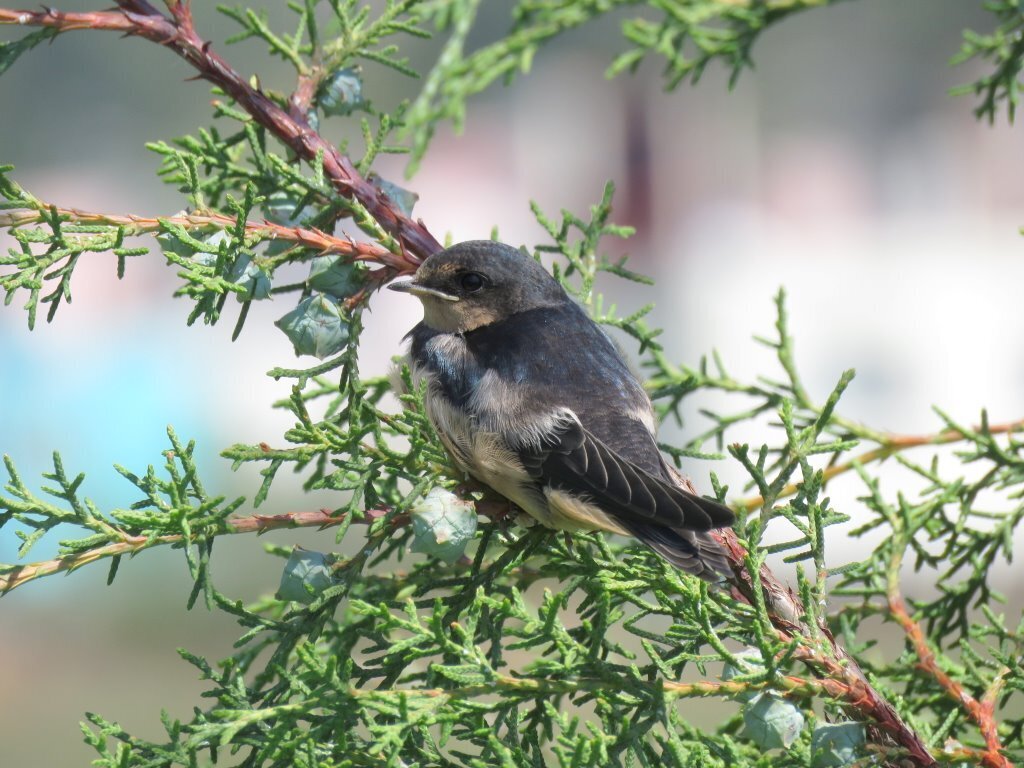
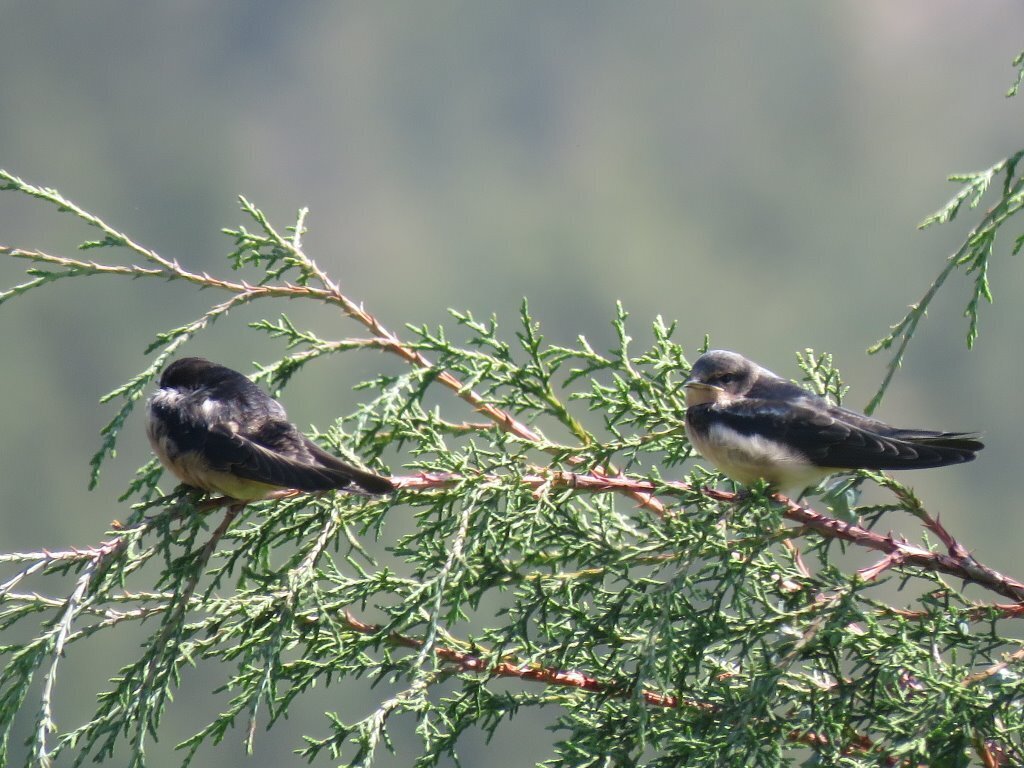
Thorhold Souilljee ·
Related Species
Was this profile helpful?