
Aves · Phoenicopteriformes
Greater Flamingo
Phoenicopterus roseus
Least ConcernAlso known as: European Flamingo, GRFL, Mediterranean Flamingo, Old World Greater Flamingo
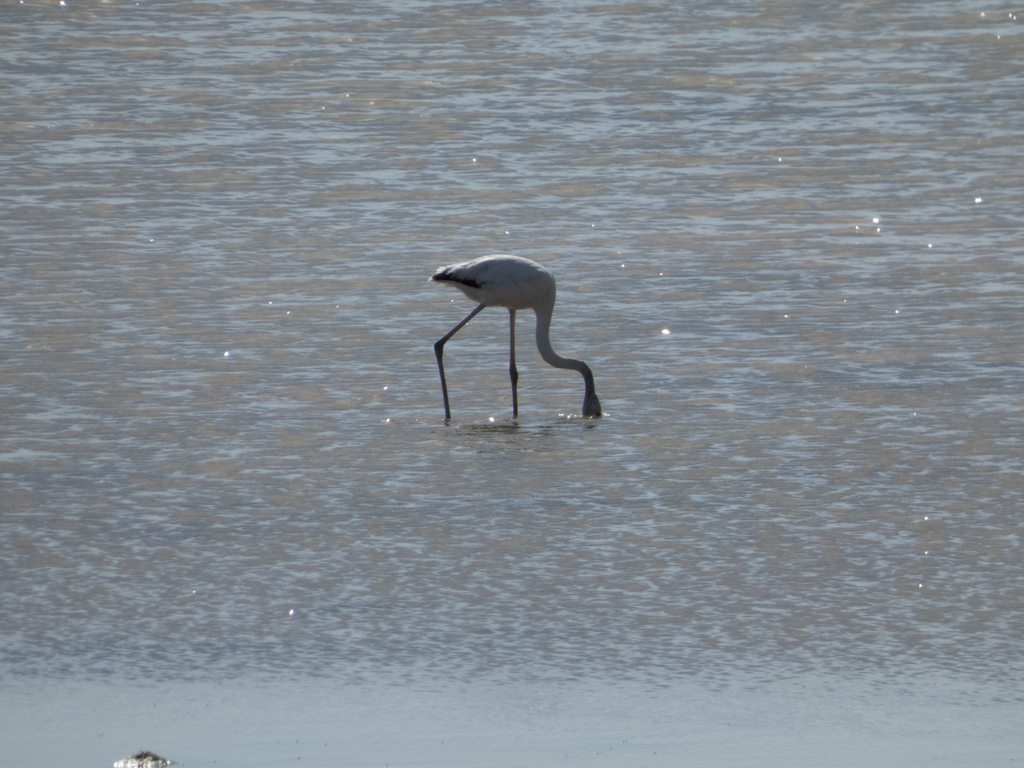
© Juan Rodríguez · iNaturalist · CC BY 4.0
Scientific Classification & Quick Facts
Classification
At a Glance
The Greater Flamingo is perhaps the most widely distributed flamingo species on Earth, instantly recognizable by its salmon-pink plumage and elegant curved bill. Found across 23 countries spanning Africa, Asia, and Europe, this wading bird has adapted to thrive in some of the planet’s most extreme aquatic environments—from shallow salt lakes and coastal lagoons to alkaline waterways where few other animals can survive. Its status as Least Concern reflects a species that, despite historical pressures, has maintained stable populations across its vast range.
What makes the Greater Flamingo truly remarkable is not merely its beauty or range, but the intricate ecological relationship it maintains with its harsh habitats. The intense pink coloration of its feathers comes from carotenoid pigments in the food it consumes, meaning the bird’s appearance is a direct reflection of its environment and diet. This interplay between physiology and habitat has made the species an excellent indicator of wetland health and a linchpin species for understanding how birds adapt to environments that would be uninhabitable for most vertebrates.
Identification and Appearance
Phoenicopterus roseus, the greater flamingo, is the largest living flamingo species. Adults typically stand 110–150 centimetres tall and weigh 2–4 kilograms. The most robust males reach up to 187 centimetres in height and 4.5 kilograms in weight, making them substantially larger than other flamingo species and their female counterparts.
Plumage and Coloration
The greater flamingo’s striking appearance centres on its pink and white plumage, with intensity varying by age and diet. Adults display predominantly white and pale pink feathering on the body, with deeper rose or coral-pink colouration concentrated on the wings and back. The most vivid pink tones appear on the flight feathers, rump, and tail coverts. This colouration derives from carotenoid pigments in their food—primarily algae and small crustaceans—which flamingos filter from water using their specialized beaks. Younger birds appear much paler, gradually developing richer pink hues as they mature and accumulate carotenoid pigments in their feathers.
Distinctive Features
The greater flamingo’s bill is unmistakable: long, thick, and distinctly bent downward at a sharp angle, with the lower mandible larger than the upper. The bill is pale at the base, shifting to bright yellow or orange-yellow in the middle section, then black at the tip. Long, thin legs in shades of red, orange, or pink elevate the body high above the water—an adaptation for wading in shallow lagoons and salt lakes. Dark eyes and a relatively small head complete the distinctive profile. Both sexes exhibit similar plumage patterns, though males are notably larger and may show slightly more vivid coloration at peak breeding condition.
Distribution and Habitat
The Greater Flamingo is distributed across southern Europe, North Africa, and parts of western Asia, with records from 23 countries worldwide. The species is most abundant in the Mediterranean region, where Spain, Greece, and France support the largest populations. Spanish and Greek wetlands account for the majority of documented observations (60 and 51 records respectively), followed by France (43), Italy (37), and Portugal (21). The species also maintains presence in Africa, with significant records from South Africa, Tanzania, and Algeria, and extends eastward into Turkey and the United Arab Emirates.
Greater Flamingos favour shallow saline and brackish wetlands, including lagoons, salt marshes, and alkaline lakes where they can wade and filter-feed. The species shows strong seasonal movement patterns, with a pronounced concentration in January—the peak month for sightings—suggesting migratory behaviour linked to wintering grounds and food availability. During other months, observation frequency drops dramatically, indicating the species vacates many European sites outside the winter season. This temporal pattern reflects the nomadic nature of flamingo populations, which follow water levels and prey distributions across their Mediterranean and African range.
Biology and Behaviour
Behavior
Greater flamingos are highly social birds that live in colonies ranging from dozens to thousands of individuals. These colonies gather in shallow lagoons and salt lakes across Mediterranean, African, and Asian regions, where they spend much of their day feeding, resting, and interacting with one another. The birds are most active during early morning and late afternoon, feeding intensively during these cooler hours before retreating to deeper water to roost at night.
Communication within colonies is vocal and visual. Flamingos produce loud calls to maintain contact with flock members and engage in synchronized group displays—coordinated head flagging, wing salutes, and marching—that strengthen social bonds and stimulate breeding readiness. These displays are performed by multiple birds in unison and are particularly intense during the breeding season. The species is primarily diurnal but may feed at night under moonlight when water conditions are favorable.
Diet
Greater flamingos are filter feeders that consume algae, diatoms, small crustaceans, and other microscopic organisms suspended in water. They use their specialized beaks, which are bent sharply downward, to filter food from water and mud. The beak contains lamellae—comb-like structures—that trap food particles while allowing water to pass through. Flamingos feed by holding their heads upside down in shallow water, moving side to side to maximize particle capture.
The birds’ diet varies by location and season depending on available food sources. In some regions, they consume more plant matter such as blue-green algae, while in others crustaceans and other animal matter dominate. The carotenoid pigments in their food—particularly from algae and shrimp-like organisms—are responsible for their distinctive pink plumage; birds in areas with limited carotenoid access may appear pale white or cream-colored.
Reproduction
Greater flamingos breed in synchronized colonies during spring and early summer, typically between March and June depending on location. They form monogamous pairs within the larger colony, and both male and female participate in courtship displays and nest construction. A single egg is laid in a mud mound or scraped depression on the ground, often clustered near other nests. Incubation lasts approximately 26 to 31 days, with both parents sharing responsibility for warming the egg.
Chicks hatch downy and helpless, remaining in or near the nest for several days before joining crèches—large groups of juveniles tended by a subset of adult birds. Parents recognize and feed only their own chick, using vocalizations to locate it within the crèche. Fledging occurs at around 65 to 90 days of age. The extended parental care and long adult lifespan of up to 58.8 years make greater flamingos a long-lived species with relatively low reproductive rates compared to smaller birds.
Conservation and Threats
The Greater Flamingo is classified as Least Concern on the IUCN Red List, indicating that the species faces no immediate threat of extinction at a global scale. This status reflects stable populations across much of its range, though regional pressures and localized declines warrant continued monitoring and targeted conservation efforts.
Threats
Water quality degradation represents the most pressing threat to Greater Flamingo populations. Bacteria, toxins, and chemical pollution in water supplies—often derived from industrial run-off and manufacturing discharge—contaminate the shallow lakes and lagoons where flamingos feed and breed. These waterborne hazards can cause disease outbreaks, mass mortality events, and reproductive failure within colonies.
Habitat encroachment and loss constitute the second major threat. Wetland conversion for agriculture, urban development, and salt extraction removes or fragments the specialized breeding and feeding grounds that flamingos require. Climate-driven changes to water availability and salinity also alter the suitability of traditional habitats, forcing birds to relocate or face population bottlenecks in remaining strongholds.
Conservation Efforts
Greater Flamingos benefit from protection under various national and international frameworks. The species is listed under the Convention on the Conservation of Migratory Species of Wild Animals (CMS), which encourages range states to cooperate on management and habitat preservation. Zoos and breeding institutions maintain captive populations as genetic insurance; the first successful zoo breeding occurred at Zoo Basel in 1959, establishing a foundation for future reintroduction work if needed.
Several protected wetland areas across the Mediterranean, Middle East, and Central Asia provide crucial refugia for breeding colonies and wintering flocks. Wetland restoration projects and pollution control initiatives in key regions help reduce chemical and bacterial contamination.
Cultural Significance
The greater flamingo holds significant place in human societies across its range, particularly in Mediterranean and Middle Eastern regions where it has long been part of local ecosystems and human activities. Its presence in freshwater habitats has historically drawn human attention—flamingos began visiting drinking and bathing sites following the establishment of breeding colonies, with the highest concentrations occurring during chick-rearing periods when adult feeding behavior brought the birds into closer contact with human settlements. This visibility has made the species both culturally prominent and economically valuable to local communities.
However, the relationship between humans and greater flamingos has not always been benign. At sites like Al-Jabboul Lake in Syria, the species faced severe persecution: hunters shot adults while trappers captured both chicks and adults using staked-noose lines to sell them as pets. This exploitation reflects a darker aspect of human engagement with the species, one driven by demand for captive birds in the pet trade. Such practices highlight the tension between cultural interest in flamingos and the conservation challenges they face across their Mediterranean and Asian range.
Today, the greater flamingo serves as a flagship species for wetland conservation efforts, particularly through organizations like BirdLife International, which recognize birds as early warning indicators of environmental degradation. The species’ iconic status and widespread distribution make it a symbol of both the beauty of natural wetlands and the urgent need to protect them from destruction and overexploitation.
Fun Facts
Greater flamingos are among the most extraordinary wading birds on Earth, and they harbour a wealth of surprising behaviours and adaptations that make them stand out even among their flamingo relatives.
- The greater flamingo is the largest of all flamingo species, standing up to 1.5 metres tall with a wingspan exceeding 1.4 metres, making it a genuinely imposing presence in wetland ecosystems.
- Despite their size, they are the most widespread flamingo species globally, occurring across the Old World from Mediterranean Europe and North Africa through the Middle East, Persian Gulf, and Indian subcontinent—a range spanning three continents.
- Their beaks are perfectly inverted while feeding, with the upper mandible hanging downward into the water to filter out tiny organisms and algae in a process called suspension feeding.
- Greater flamingos are intensely social birds that nest in colonies numbering tens of thousands of individuals, creating some of the largest bird congregations on the planet.
- They produce a nutrient-rich red milk-like secretion in their digestive tract to feed their chicks—one of the few bird species to nourish offspring this way, more commonly seen in mammals and pigeons.
- Migration routes between salt lakes and coastal lagoons can span hundreds of kilometres; some populations undertake seasonal journeys across multiple countries to access optimal feeding and breeding grounds.
- A greater flamingo’s distinctively curved bill contains around 200 lamellae (comb-like filter structures) per side that work to trap food particles while seawater flows out, allowing them to filter-feed even in turbid conditions.
Conservation Status
LC (Least Concern) · NT · VU · EN · CR · EW · EX
Photo Gallery
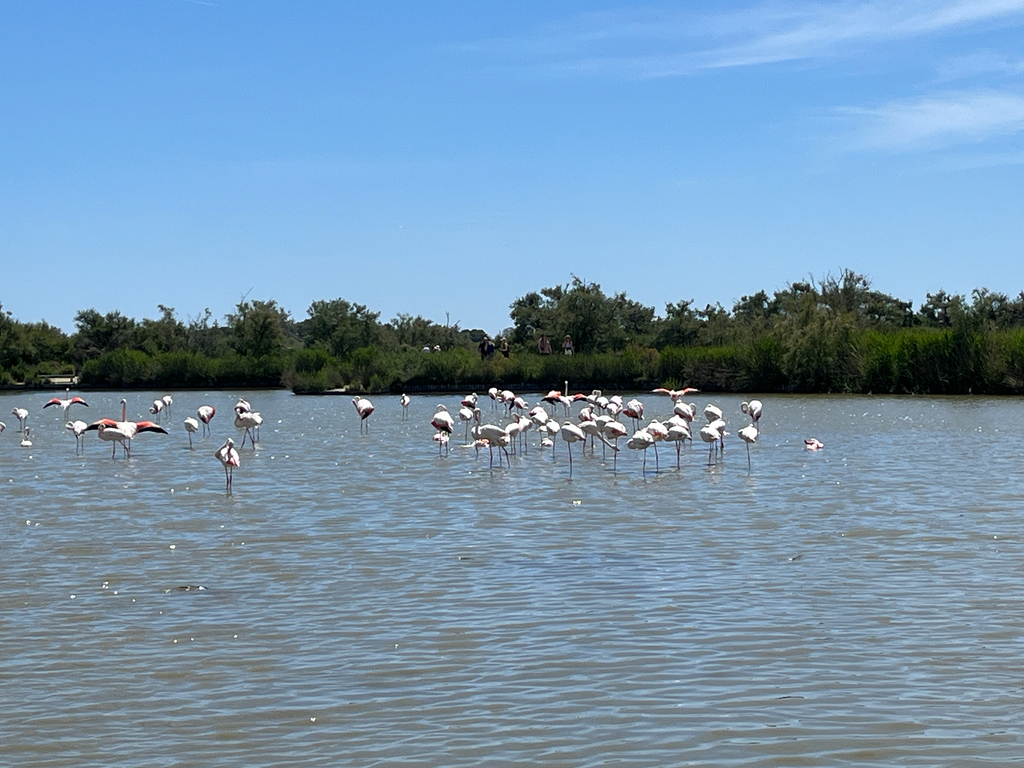
Juan Rodríguez · CC BY 4.0
Related Species
Was this profile helpful?