
Amphibia · Anura
Common Toad
Bufo bufo
Least ConcernAlso known as: Common European Toad, European Toad, Giant Toad, Granulated Toad
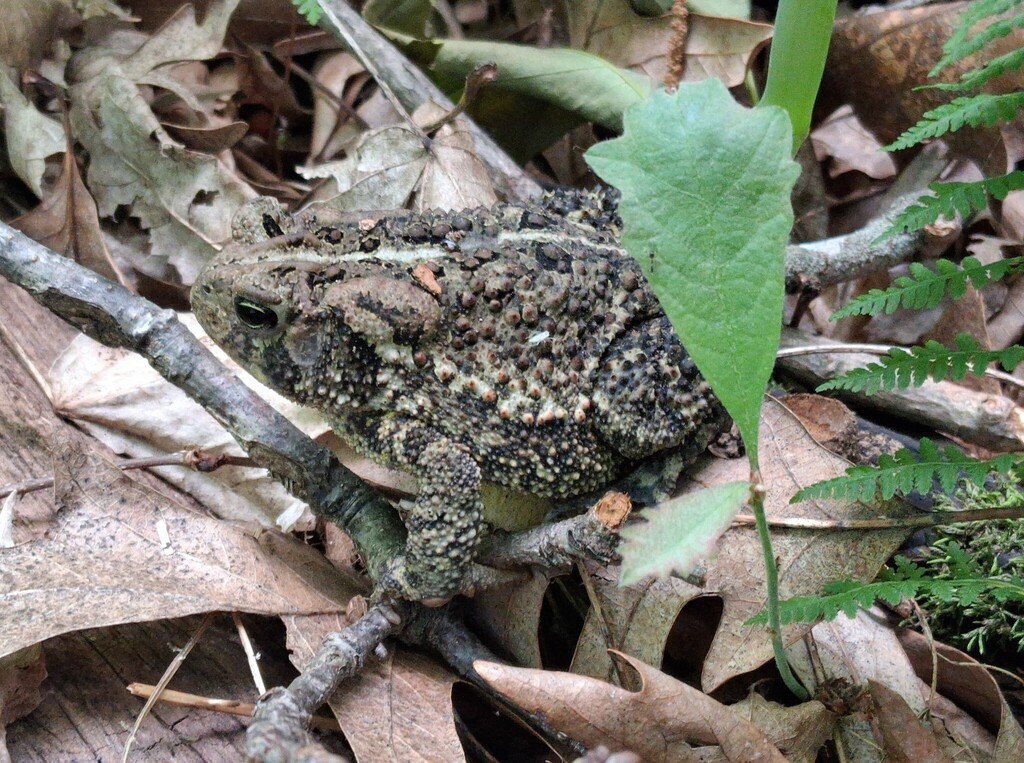
© eeyipes · iNaturalist · CC BY 4.0
The common toad is one of Europe’s most abundant and recognizable amphibians, found shuffling through gardens, woodlands, and wetlands across a vast range spanning 16 countries. With its squat body, warty skin, and slow deliberate gait, Bufo bufo has earned a place in human folklore and natural history for centuries. Despite its unassuming appearance, this member of the family Bufonidae is a formidable hunter and survivor, equipped with remarkable defenses and an appetite for invertebrate pests.
Listed as Least Concern by conservation authorities, the common toad remains stable across much of its range, though local populations face threats from habitat loss, road mortality, and pesticide use. Its ability to thrive in human-modified landscapes—from suburban gardens to agricultural land—has secured its position as one of Europe’s most successful amphibians. Understanding the biology and ecology of this widespread species reveals much about amphibian adaptation and the delicate balance between urban development and wildlife survival.
Identification and Appearance
The common toad is a robust, warty amphibian that typically reaches around 15 centimetres in length. Its squat body sits low to the ground, with a broad head featuring a wide mouth positioned terminally below a blunt snout. The most striking features are the bulbous, protruding eyes with yellow or copper-coloured irises and distinctive horizontal, slit-shaped pupils. Immediately behind each eye sits a pair of bulging paratoid glands, positioned obliquely across the head—these prominent structures are a defining characteristic of the species.
The skin is warty and bumpy across the entire body, ranging in colour from grey-brown to olive or reddish-brown, often with a lighter belly. The toad has no teeth, and its head joins the body without a noticeable neck, giving it a characteristically compressed appearance. The forelimbs are short and stout, well-adapted for walking rather than jumping. Notably, there is no external vocal sac, distinguishing it from many frogs.
Sexual dimorphism
Females are noticeably stockier and bulkier than males, and are generally larger overall. Geographic variation is also pronounced: southern populations tend to be significantly larger than their northern counterparts, with body size varying across the species’ range.
Distribution and Habitat
Bufo bufo is found across 16 countries in Europe, with a strongly concentrated distribution in western and central regions. The species is most abundant in the United Kingdom, where observation records are highest, followed by the Netherlands, Italy, France, and Germany. Smaller populations are documented in Sweden, Austria, Denmark, Greece, and Norway, indicating a range that extends from Atlantic coasts to Mediterranean and temperate eastern margins.
The common toad occupies a wide variety of terrestrial and semi-aquatic habitats across its range. Adults are highly adaptable, living in gardens, parks, woodlands, grasslands, and agricultural areas where they shelter under logs, stones, and dense vegetation. They return to breeding sites—ponds, ditches, lakes, and slow-moving streams—during the breeding season. The species tolerates both urban and rural environments, making it a familiar amphibian across much of its European range.
Seasonal activity is sharply concentrated in the winter months, with January recording the highest observation numbers (155 records), followed by February (145 records). This pattern reflects the intense migration and breeding activity that occurs during the coldest months of the year in temperate Europe, when toads move toward water bodies to spawn. Records drop to zero from March onwards in the available dataset, suggesting either a shift in survey effort or a true decline in observed activity during warmer months.
Biology and Behavior
Behavior
Common toads are largely solitary creatures, active primarily at dusk and throughout the night. They spend daylight hours sheltered in burrows, under logs, or in dense vegetation, emerging to forage when light levels drop. Movement is typically slow and deliberate, with a characteristic crawl punctuated by short hops when alarmed. During winter, they enter a dormant state, remaining inactive in frost-free refuges such as deep soil or the bases of trees.
When threatened, common toads adopt a distinctive defensive posture: they inflate their bodies to appear larger and may butt aggressively at a predator. Their skin secretes toxic compounds as a further deterrent to potential attackers. These secretions are potent enough to irritate the mouths and eyes of predators, and can cause mild skin irritation in humans who handle the toads carelessly.
Diet
Common toads are carnivorous hunters that feed primarily on invertebrates. Beetles, slugs, snails, worms, and spiders comprise the bulk of their diet. They hunt using a sit-and-wait strategy, remaining motionless until prey passes within striking distance, then rapidly extending their tongue to capture the victim. Larger toads may also consume small vertebrates such as newts and lizards.
Reproduction
Breeding occurs in spring, typically between March and June depending on temperature and latitude. Males congregate at breeding ponds and ditches, where they vocalize to attract females with a low, growling call. Amplexus—the male’s clasping embrace of the female—can last several days as females lay long strands of spawn. A single female produces between 4,000 and 12,000 eggs arranged in double strings of gelatinous spawn.
Eggs hatch within 3 to 12 days, releasing tadpoles that metamorphose over 2 to 3 months. Juvenile toads emerge from the water in mid-summer, typically measuring only 6 to 9 millimetres in length. Sexual maturity is reached between 2 and 3 years of age. Adults can live for up to 40 years in the wild, making them among the longest-lived toads in Europe.
Conservation and Threats
The Common Toad is classified as Least Concern on the IUCN Red List, indicating that the species faces no immediate risk of extinction at a global scale. This favourable status reflects the toad’s exceptional adaptability across diverse landscapes—it thrives in deciduous and coniferous forests, scrubland, meadows, parks, and gardens, allowing it to persist even in human-modified environments where other amphibians decline.
Threats
Despite its secure global status, the Common Toad faces localized pressures that can significantly impact regional populations. Road mortality remains one of the most severe and immediate threats, particularly during breeding migrations when toads cross highways to reach spawning ponds. Drainage of wetlands—the essential breeding habitat—removes critical reproductive sites and isolates populations. Agricultural intensification, including pesticide use and removal of hedgerows and field margins, destroys shelter and reduces invertebrate prey availability. Pollution of water bodies compounds breeding habitat loss.
Chytridiomycosis, a fungal disease caused by Batrachochytrium dendrobatidis, has been documented in Common Toad populations in Spain and the United Kingdom. While the species often tolerates this pathogen better than many amphibians, the disease may still suppress numbers in affected areas. In Spain specifically, increased aridity linked to climate change has combined with habitat loss to reduce populations significantly; the species is considered Near Threatened in that region despite its Least Concern global ranking.
Conservation Efforts
Legal protections vary across the species’ range. In much of Europe, the Common Toad benefits from general amphibian protection laws and habitat directives. Breeding ponds in parks and gardens receive informal protection through public awareness campaigns. Creating and maintaining breeding ponds—even small ones in domestic gardens—has proven effective at supporting local populations and allowing safe passage during migration.
Cultural Significance
The common toad occupies a complex place in human culture, appearing across mythology, folklore, and historical medicine. In European tradition, toads have long featured in both witchcraft narratives and folk remedies, their warty skin and secretions inspiring both fear and therapeutic interest. The species’ presence in gardens and natural spaces made it a familiar figure in rural life, lending itself to superstition and symbolic meaning. Yet beyond folklore, the common toad has served practical purposes: its skin secretions contain bioactive compounds that have attracted scientific attention for potential medicinal applications, though such uses remain limited and largely historical.
In modern times, the common toad has become emblematic of broader conservation concerns. The decline of closely related species—such as the extinction of the golden toad (Bufo periglenes) in Costa Rica, attributed to climate change and disease—has elevated toads in public consciousness as indicators of environmental health. The natterjack toad (Bufo calamita), a related endangered species, has galvanized conservation efforts across Europe. These narratives have transformed the common toad from a creature of folklore into a symbol of the fragility of amphibian populations worldwide, making it a focal point for habitat protection and climate awareness campaigns.
Fun Facts
The common toad is far more than the bumpy garden dweller many assume. These ancient amphibians have survived hundreds of millions of years by developing remarkable adaptations and behaviors that make them uniquely suited to their environment.
- Common toads are nearly invisible hunters. During the day they remain completely hidden and inconspicuous, emerging only at dusk to feed exclusively on invertebrates under cover of darkness.
- Their warty skin serves as camouflage. The greyish-brown surface covered with wart-like lumps allows them to blend seamlessly into soil, leaf litter, and garden bark.
- They move with an ungainly, shuffling gait. Rather than hopping like frogs, common toads walk slowly or make short, clumsy jumps, an adaptation that conserves energy in low-speed hunting.
- Their range spans three continents. Common toads are found across most of Europe, western North Asia, and a small part of Northwest Africa, making them one of the most widely distributed toad species in the Northern Hemisphere.
- Their bumps are not just for show. The wart-like structures on their skin contain glands that secrete toxins as a defense against predators—many animals learn quickly to leave toads alone.
- They are solitary ambush predators. Unlike many amphibians, common toads do not form groups; instead, each toad stakes out a territory where it waits motionless for prey to pass within striking distance.
- They can live for decades. Common toads are among the longest-lived amphibians in temperate regions, with some individuals reaching 15 years or more in the wild.
Conservation Status
LC (Least Concern) · NT · VU · EN · CR · EW · EX
Photo Gallery
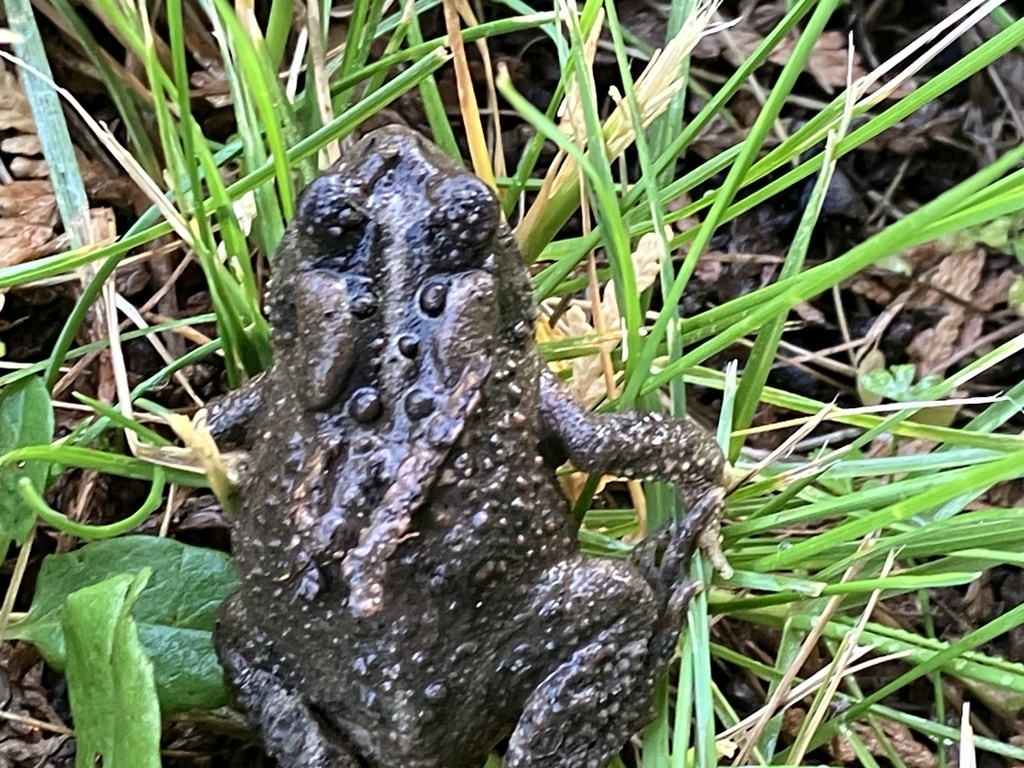
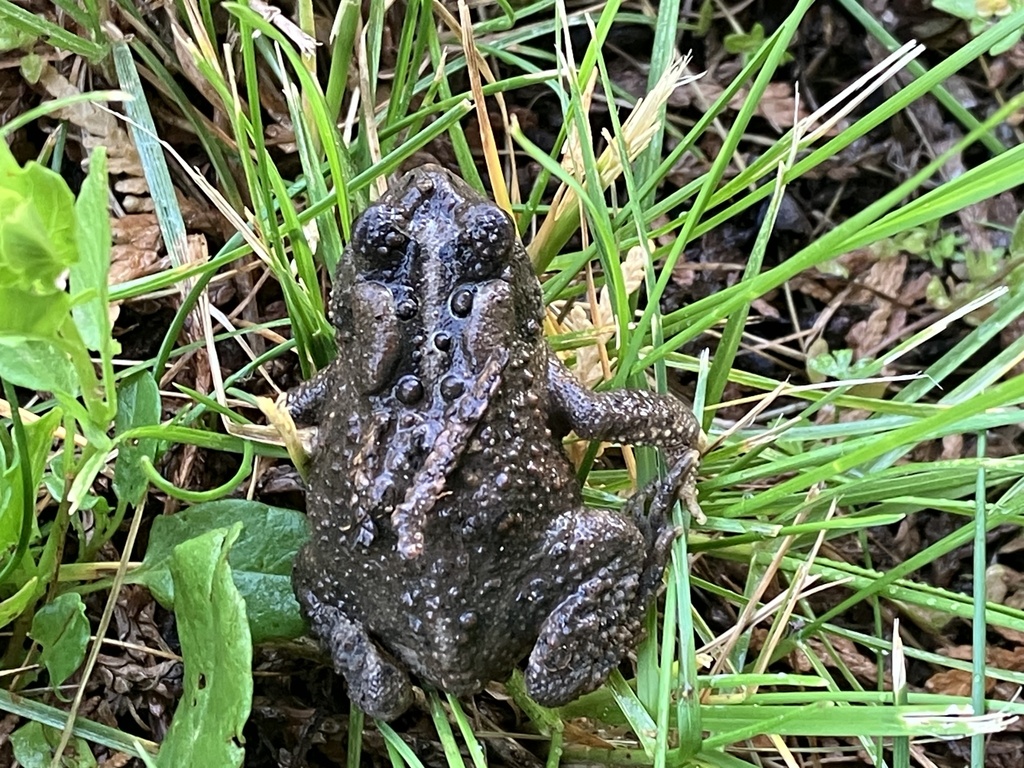
eeyipes · CC BY 4.0
Related Species
Was this profile helpful?