
Amphibia · Anura
Panamanian Golden Frog
Atelopus zeteki
Critically EndangeredAlso known as: Cerro Campana Stubfoot Toad, Golden Arrow Poison Frog, Golden Frog, Panama Golden Frog, Zetek's Golden Frog
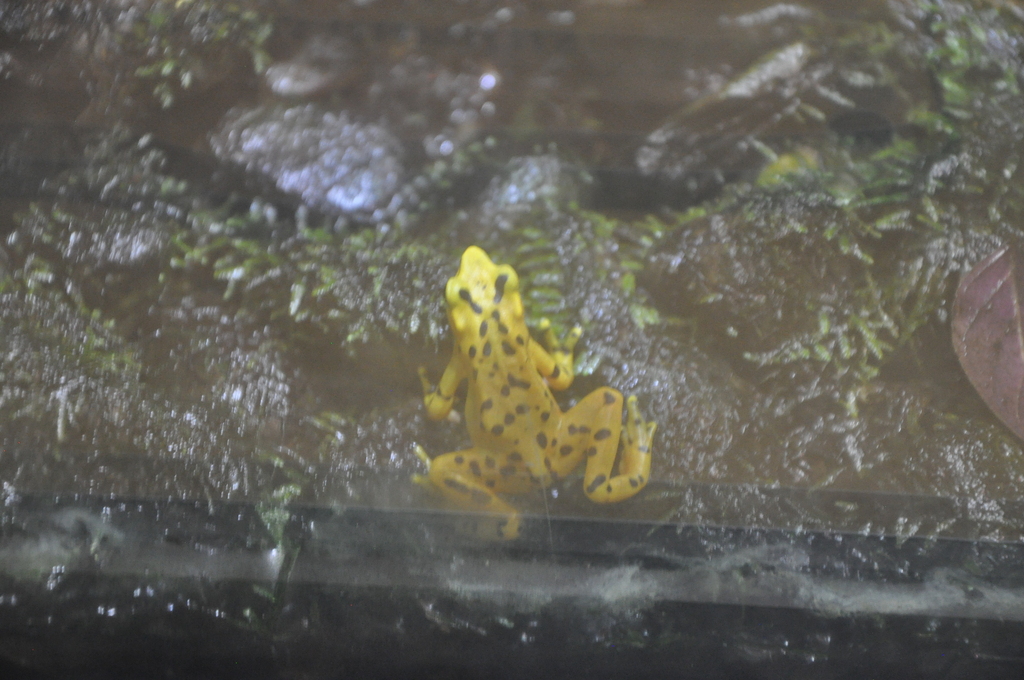
© Matthew Inabinett · iNaturalist · CC BY 4.0
Scientific Classification & Quick Facts
The Panamanian Golden Frog is one of the world’s most visually arresting amphibians—a small toad draped in brilliant yellow or golden skin, often marked with black spots or stripes that seem almost painted on. Native to Panama and possibly a handful of neighbouring regions, this jewel of Central America inhabits cloud forests and highland streams, where its luminous colouration stands out against the verdant backdrop like a living warning signal. Yet behind this striking appearance lies a tale of catastrophic decline: Atelopus zeteki is classified as Critically Endangered, its wild populations decimated by disease, habitat loss, and climate change over the past three decades.
What makes this species especially notable is not merely its rarity or beauty, but what it represents: a bellwether for the broader crisis facing tropical amphibians. Once common enough that it was adopted as Panama’s national frog, its near-disappearance within a human lifetime underscores the speed and severity of environmental change in the tropics. Understanding Atelopus zeteki is therefore essential for anyone concerned with amphibian conservation and the health of Central American ecosystems.
Identification and Appearance
The Panamanian golden frog is a member of the family Bufonidae, making it a true toad despite its common name. Originally described as a subspecies of Atelopus varius, it is now recognized as a distinct species with its own diagnostic characteristics.
Coloration and Markings
This species displays a striking golden-yellow coloration that gives it its vernacular name. The dorsal surface is predominantly bright yellow, with bold black markings distributed across the head, body, and limbs. These dark patches vary individually but typically form patterns along the back and on the upper portions of the legs. The ventral surface is lighter, often cream or pale yellow. The contrast between the vivid yellow and black creates one of the most distinctive appearances among Central American amphibians.
Size and Build
The Panamanian golden frog is a relatively compact toad, though exact measurements are variable within the population. It occupies montane cloud forests at an average elevation of approximately 605 metres, where it inhabits moist leaf litter and vegetation near streams. The body is robust and squat, typical of terrestrial toads, with relatively short limbs adapted to ground dwelling rather than climbing or jumping across open terrain.
Distribution and Habitat
Atelopus zeteki, the Panamanian Golden Frog, has an extremely restricted range confined almost entirely to Panama. GBIF records document 263 occurrences in Panama, with a single record from the United States likely representing a captive or introduced individual. This near-endemic distribution reflects the species’ dependence on specific environmental conditions found only within a narrow geographic corridor.
Elevational distribution ranges from 261 to 848 metres, with records clustering around an average of 605.5 metres. The species occupies mid-elevation forest habitats within this band, favouring streams and riparian zones typical of montane regions in western Panama. This vertical range encompasses tropical and subtropical humid forests where moisture and temperature stability support the specialized ecology required by this amphibian.
Seasonal occurrence data reveal a pronounced peak in January, with 92 records concentrated in that month. Activity drops sharply from February through October, with minimal sightings in June, September, and October. A secondary pulse occurs in November and December, suggesting breeding activity or increased visibility during specific seasonal conditions. This temporal pattern likely reflects rainfall cycles and reproductive behaviour rather than permanent absence from the region during other months.
Biology and Behavior
Behavior
Panamanian Golden Frogs are diurnal, ground-dwelling amphibians that remain active during daylight hours. They inhabit fast-flowing mountain streams and surrounding vegetation in humid lowland and montane rainforests, where they spend much of their time on rocks and leaf litter near water. Males are highly territorial and engage in aggressive displays toward rivals, including posturing and calling to establish dominance over preferred breeding sites. These frogs produce audible sounds—a series of clicks and calls—that serve communication functions during the breeding season.
The species exhibits limited dispersal ability, remaining in localized populations around their natal streams. They are relatively slow-moving compared to many frog species, relying on cryptic coloration to avoid detection despite their striking golden appearance. During dry periods, individuals may shelter under rocks, fallen logs, or dense vegetation, reducing activity to conserve moisture.
Diet
Panamanian Golden Frogs are insectivorous, feeding primarily on small arthropods encountered on the forest floor and near streams. They consume ants, termites, small beetles, and other invertebrates typical of their microhabitat. Like most anurans, they are ambush predators that remain still and strike quickly when prey approaches within striking distance.
Reproduction
Breeding occurs during the wet season when water levels rise in mountain streams, typically from May to November. Males gather at breeding sites and call to attract females, establishing territories around suitable stream sections with rocky outcrops and leaf litter accumulations. Males engage in amplexus (mating embrace), positioning themselves on the female’s back to fertilize eggs as they are laid.
Females deposit clutches of 30–50 eggs in moist leaf litter, moss-covered rocks, or vegetation adjacent to streams rather than directly in water. Males remain near or guard clutches, a behavior uncommon in many frog species. Tadpoles enter stream channels during heavy rainfall and undergo development in flowing water, taking several months to metamorphose into froglets. Generation time is estimated at 3–5 years, making population recovery slow following disturbance or disease outbreaks.
Conservation and Threats
Atelopus zeteki, the Panamanian Golden Frog, is listed as Critically Endangered on the IUCN Red List. This status reflects the species’ precarious position: only a handful of individuals remain in the wild, with the population trend currently increasing due to captive breeding efforts. The species teeters on the edge of extinction in its natural habitat, though dedicated conservation programs have prevented total loss.
Threats
The primary threat to the Panamanian Golden Frog is chytridiomycosis, a fungal disease caused by an invasive pathogen that arrived in El Valle de Antón—the frog’s native range—in 2006. This disease has devastated wild populations with no known cure or field control method. The fungus thrives in cooler, wetter conditions; research shows that temperature and humidity directly influence infection severity and survival rates. The species’ remaining few wild specimens were captured and relocated to secretive captive facilities to protect them from both the disease and potential poachers.
Secondary threats compound the fungal crisis. Habitat loss from agricultural encroachment, pollution, and aquaculture development have degraded the cloud forest streams where this species once thrived. The illegal pet trade has also targeted the frog’s striking golden coloration, further pressuring wild numbers. These cumulative stressors weakened populations before chytridiomycosis arrived, making them more vulnerable to disease.
Conservation Efforts
Captive breeding has emerged as the most viable lifeline. The Panama Amphibian Rescue and Conservation Project and partner organisations have successfully bred over 500 individuals in captivity since rescue efforts began. However, these frogs remain in zoos and research facilities rather than being released into the wild. Early attempts to protect the species using a beneficial bacterium (Janthinobacterium lividum) failed because the Panamanian Golden Frog’s skin chemistry was incompatible with the treatment. Researchers continue investigating methods to manage chytridiomycosis in the wild before reintroduction can proceed responsibly.
Cultural Significance
Atelopus zeteki holds deep cultural significance in Panama, functioning as a national symbol that bridges Indigenous heritage with contemporary identity. The species appears on state lottery tickets, cementing its place in everyday Panamanian life and collective consciousness.
The frog’s cultural importance is rooted in Pre-Columbian belief and craft. Local mythology holds that when the toad dies, it transforms into gold and brings good luck to those who witness it. This spiritual association emerged from golden and clay talismans—called huacas—carved by Indigenous peoples to resemble the golden frog. The symbolic transformation of the living creature into precious metal reflects ancient Panamanian values linking nature, fortune, and ancestral knowledge.
Fun Facts
The Panamanian golden frog is one of Panama’s most emblematic amphibians, yet it may already be lost to the wild. Once found in the misty cloud forests of west-central Panama, this small but striking species has become a symbol of the fragility of tropical biodiversity.
- It is a toad, not a frog. Despite its common name, Atelopus zeteki is a true toad belonging to the family Bufonidae, earning it the alternative name “Panamanian golden toad.”
- It has multiple aliases. The species is also known as Zetek’s golden frog and the Cerro Campana stubfoot toad, reflecting both the scientist who discovered it and its unique toe structure.
- It lived only in mountain streams. This frog inhabited fast-flowing streams along the steep slopes of Panama’s Cordilleran cloud forests, a specialized habitat found at significant elevation in just a small region of central Panama.
- Chytrid fungus may have driven it to extinction. The pathogenic fungus Batrachochytrium dendrobatidis, which causes chytrid fungal disease, has devastated amphibian populations across Central America and likely contributed to this species’ disappearance from the wild.
- Captive breeding offers its last hope. Individuals were collected for captive breeding programs before the species vanished from nature, making these managed populations the only remaining representatives of Atelopus zeteki.
- Golden coloration may serve as a warning. The frog’s bright yellow-orange body likely advertises toxicity to potential predators, a common defense strategy in poisonous amphibians.
Ecology
Behavior
Conservation Status
LC · NT · VU · EN · CR (Critically Endangered) · EW · EX
Photo Gallery
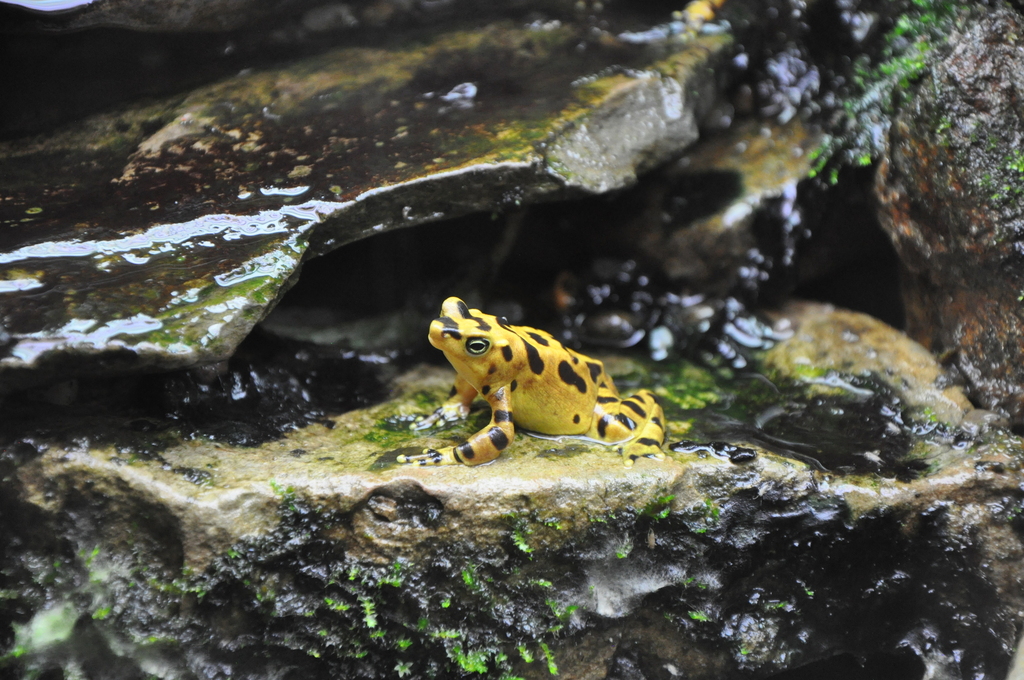
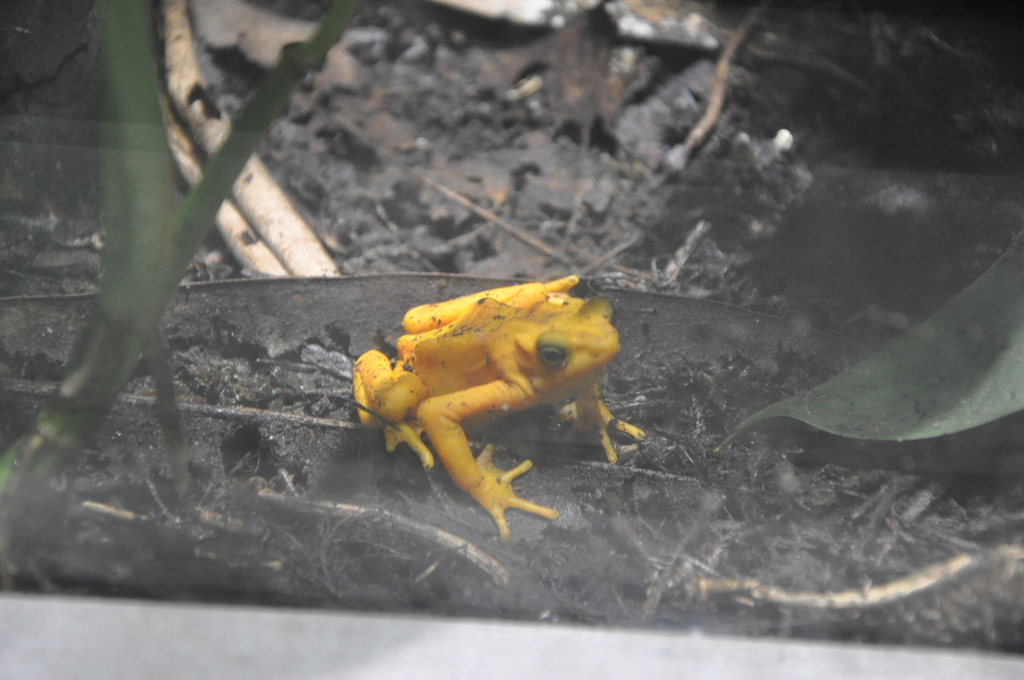
Matthew Inabinett · CC BY 4.0
Related Species
Was this profile helpful?