
Amphibia · Anura
European Tree Frog
Hyla arborea
Also known as: Common Tree Frog, Leaf Green Tree Frog, Ranita de San Antonio
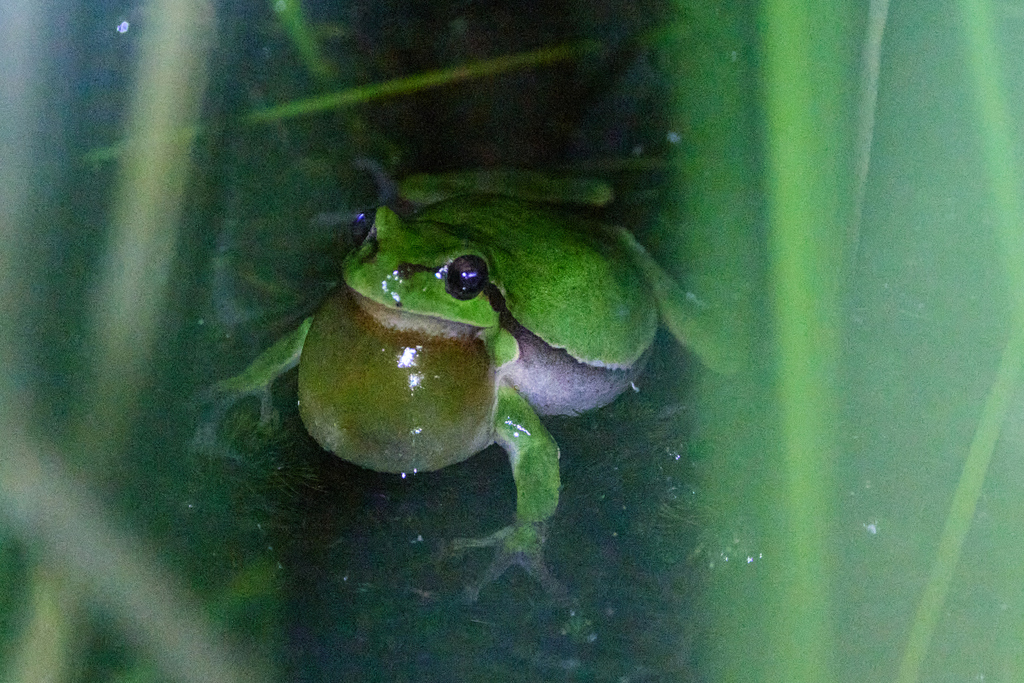
© Vincent W. · iNaturalist
On warm spring evenings across temperate Europe, a distinctive call rings out from wetland vegetation—the loud, repetitive croak of the Hyla arborea, the European Tree Frog. This small amphibian, barely larger than a thumbnail, belies its surprisingly vocal presence through forests, reed beds, and marshes. Despite centuries of habitat loss and fragmentation, the species maintains a foothold across 16 countries, earning it a Least Concern conservation status that reflects its current resilience rather than any shortage of threats.
The European Tree Frog represents a window into the complexity of amphibian ecology in Europe—a region where climate, land use, and water quality shape whether populations thrive or vanish within a generation. Its presence in an ecosystem often signals healthy wetland condition and sufficient breeding habitat, making it a valuable indicator species. Understanding this frog’s biology, distribution, and conservation needs illuminates broader patterns of amphibian decline and the specific management required to preserve Europe’s remaining populations.
Identification and Appearance
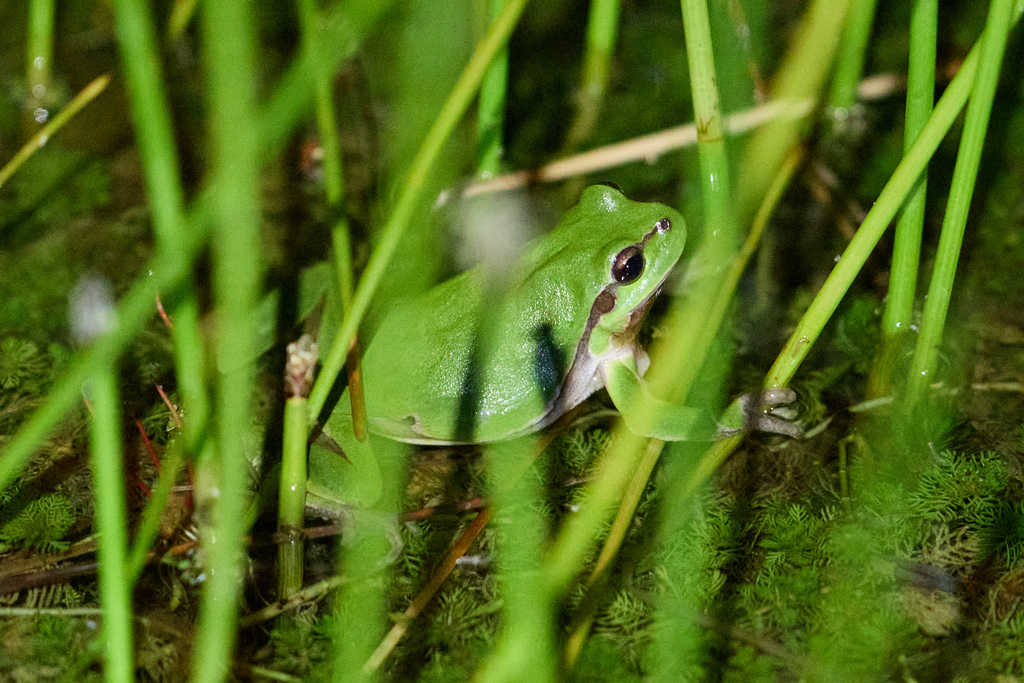
Hyla arborea is a small tree frog with a distinctly slender build and long legs adapted for climbing and perching on vegetation. The species exhibits considerable variation in dorsal coloration, ranging from bright green to gray or tan depending on temperature, humidity, and behavioral state. The ventral (belly) surface remains uniformly whitish or pale, creating a sharp contrast with the darker upper surfaces. A characteristic dark brown lateral stripe runs along each flank from the eye to the groin, serving as a reliable field identification feature.
Sexual Dimorphism
Males and females differ noticeably in size and throat coloration. Males measure 32–43 millimeters in length, while females are larger at 40–50 millimeters, making females approximately 15–25 percent longer than males on average. The throat provides an unmistakable visual distinction: females possess white or pale throats, whereas males display golden brown or bronze throats, particularly during breeding season when vocal sac inflation is pronounced.
Morphological Features
The dorsal skin is smooth to the touch, contrasting with the granular texture of the ventral surface. The frog’s slender proportions and elongated limbs are specializations for an arboreal lifestyle, allowing secure grip and movement through fine branches and herbaceous vegetation. Webbing between the toes provides supplementary adhesion, though tree frogs rely primarily on specialized toe pads for climbing. The lifespan extends to approximately 22 years in captive conditions, indicating a relatively long-lived amphibian despite its modest size.
Distribution and Habitat
Hyla arborea, the European Tree Frog, is found across much of temperate and southern Europe. Its range spans 16 countries, with the highest concentration of records in the Netherlands (133 observations), followed by Germany (42), Greece (34), Austria (23), and Hungary (20). The species also occurs in France, Slovenia, Slovakia, Albania, Croatia, and several other European nations, indicating a broadly distributed presence across the continent.
The frog occupies diverse habitats throughout its range, from lowland regions to areas with varied topography. While specific elevation limits are not well-documented for this species, it generally inhabits wetland margins, pond edges, reed beds, and areas with mixed vegetation where trees and shrubs provide shelter. It favors localities with standing or slow-moving water bodies interspersed with woody cover—ideal conditions for a semi-arboreal amphibian that depends on both aquatic breeding habitat and terrestrial vegetation.
Seasonal activity patterns are pronounced: observations peak dramatically in April, with significant presence recorded from February through April as populations engage in breeding activity and early post-breeding dispersal. The absence of records from May onwards in the provided dataset likely reflects reduced detection rates during summer months when frogs are less vocal and more dispersed, rather than true absence from their habitats. This spring concentration aligns with the species’ known breeding phenology across Europe.
Biology and Behavior
Behavior
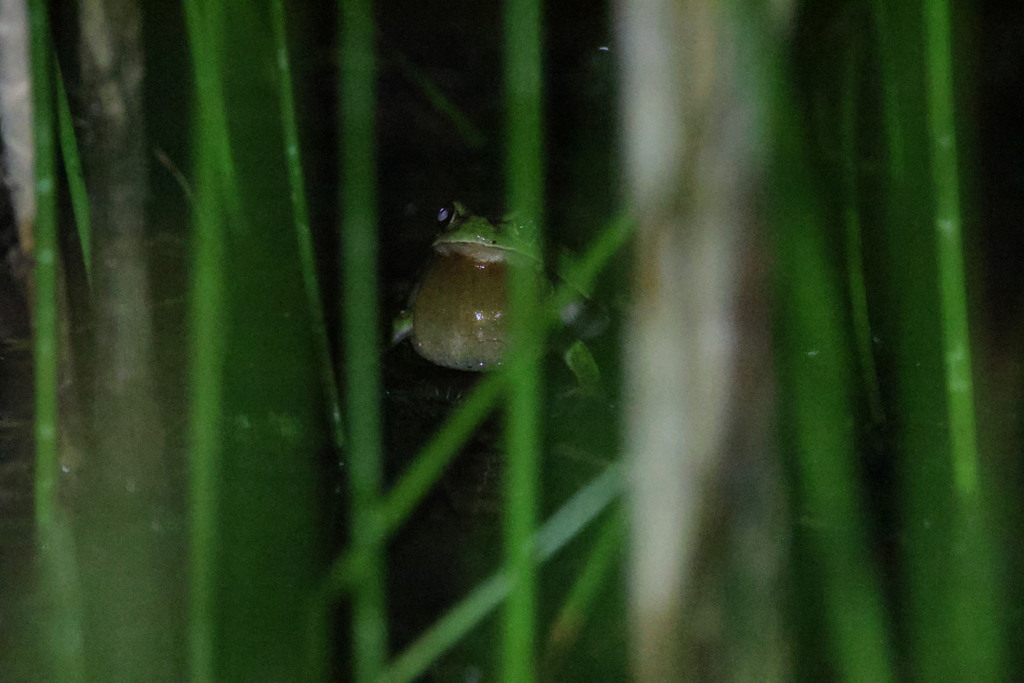
The European Tree Frog is primarily nocturnal and arboreal, spending most of its time in vegetation close to water or on trees and shrubs. During the day, individuals remain motionless on leaves or stems, where their bright green coloration provides effective camouflage. They are highly vocal, particularly during the breeding season, when males produce loud, repetitive calls to attract females and defend territories.
These frogs are solitary hunters by night, actively moving through branches and foliage in search of prey. They rely on their adhesive toe pads—a key adaptation for climbing—to navigate vertical surfaces with remarkable agility. When threatened, they may remain perfectly still or leap to safety. Hibernation occurs during winter months, when activity ceases entirely and individuals shelter in protected microhabitats such as crevices or beneath bark.
Diet
The European Tree Frog is strictly insectivorous, feeding on a variety of small arthropods captured during nocturnal foraging. Its diet consists primarily of flying insects such as mosquitoes, small flies, and gnats, supplemented by spiders and other small invertebrates encountered on vegetation. The frog’s relatively large, forward-facing eyes enable precise visual hunting in low light, and it strikes rapidly at prey items with its sticky tongue.
Reproduction
Breeding occurs in spring, typically from April to June, when males gather at shallow water bodies and emit loud, explosive calls to establish territories and attract mates. Males vocalize from vegetation at pond margins, and competition for breeding sites can be intense. Females lay eggs in clusters or long strings embedded in aquatic plants, with clutch sizes varying considerably but often numbering in the hundreds.
Tadpoles emerge and develop in the water, undergoing metamorphosis over several weeks or months depending on water temperature and food availability. Metamorphs leave the water as fully formed juvenile frogs and begin their arboreal life. The lifespan of this species can exceed 22 years in optimal conditions, allowing individuals to breed repeatedly across multiple seasons.
Conservation and Threats
Hyla arborea holds a Least Concern status on the IUCN Red List, indicating that the species is not currently facing immediate risk of extinction at the global level. However, this classification masks a troubling reality: populations across much of Europe are in decline. The decreasing population trend reflects localized pressures that, while not yet critical enough to trigger a higher threat category, demand urgent attention to prevent further deterioration.
Threats
Habitat fragmentation and destruction represent the primary threat to European tree frogs. Wetland drainage, urban expansion, and agricultural intensification have fractured once-continuous breeding and foraging grounds into isolated patches, preventing populations from interbreeding and recovering from local extinctions. Pollution of remaining wetlands compounds this problem—agricultural runoff, industrial discharge, and sewage contamination degrade water quality and reduce food availability.
Predation by introduced fish species in breeding ponds causes significant mortality of tadpoles and eggs. The pet trade, though not as destructive as in some amphibians, also removes wild individuals from natural populations. Beyond these direct threats, European tree frogs face cumulative stress from increased ultraviolet-B radiation, pesticide and fertilizer residues, and broader pollutants that affect immune function and development. Climate change introduces additional uncertainty, altering breeding phenology and water availability in critical habitats.
Conservation Efforts
Many European countries protect Hyla arborea under national legislation and the EU Habitats Directive, restricting collection and trade while designating protected breeding areas. Conservation programmes focus on wetland restoration, creation of new breeding ponds, and removal of introduced predatory fish from existing sites. These interventions have stabilized populations in some regions, though widespread recovery remains elusive.
Fun Facts
The European tree frog has a fascinating identity crisis that modern genetics finally resolved. For centuries, naturalists assumed a single species with a vast range spanning Europe, Asia, and northern Africa—but molecular genetic studies revealed the truth was far more complicated.
- The true Hyla arborea is now known to occur only in central and southeastern Europe, from France to Poland and Greece—a fraction of the range once attributed to it. This dramatic range restriction came after molecular genetic studies split the traditionally defined species into several separate taxa.
- For generations, scientists grouped populations across Europe, Asia, and northern Africa as a single species, only to discover each region harbored genetically distinct lineages that deserved their own scientific names.
- The revision of Hyla arborea demonstrates how molecular genetics can overturn long-held taxonomic assumptions, showing that earlier classifications based on morphology alone were too broad.
- Despite its misleading common name, the European tree frog does not occur across all of Europe; its actual range is restricted to the continent’s central and southeastern portions.
- The species’ small, bright green body and adhesive toe pads make it perfectly adapted for climbing—but this shared appearance masked significant genetic differences among populations once lumped together under a single name.
- Male European tree frogs produce loud, distinctive calls during breeding season, with vocalizations that vary slightly across their remaining range, a hint of the genetic diversity that molecular studies would later confirm.
- This taxonomic revision is a textbook example of how conservation efforts must keep pace with evolving science; protecting what we now know as true Hyla arborea requires understanding its actual, narrower range rather than the exaggerated historical one.
Ecology
Habitats
Diet
Behavior
Photo Gallery
Vincent W. ·
Related Species
Was this profile helpful?