
Pinopsida · Pinales
California Redwood
Sequoia sempervirens
EndangeredAlso known as: Coast Redwood, Coastal Redwood, Redwood, coast redwood
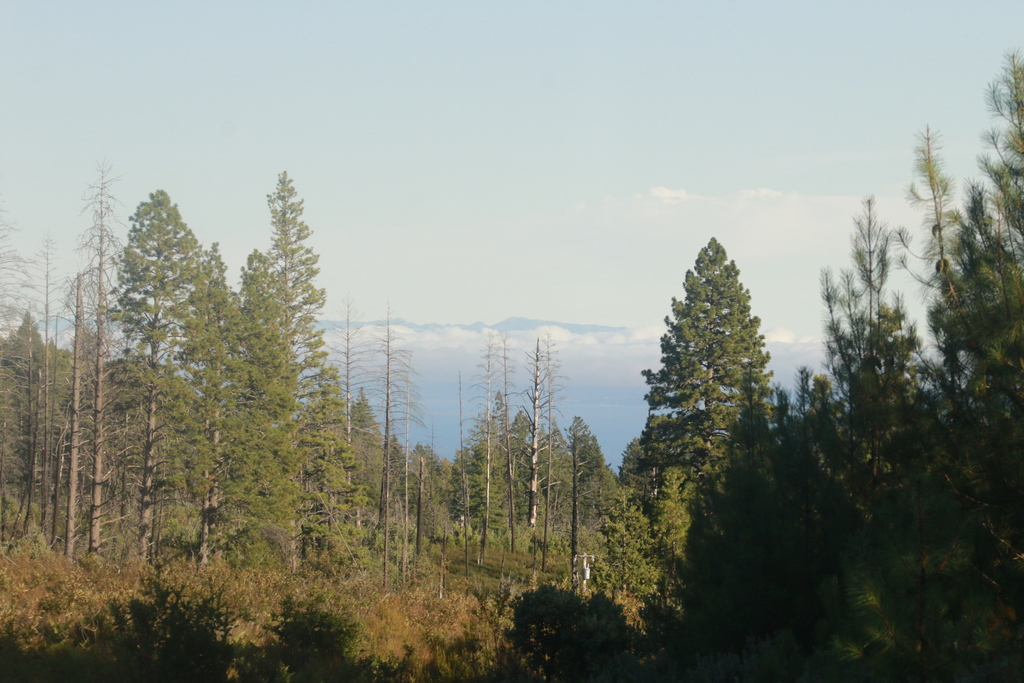
© Sequoia Janirella Wrens · iNaturalist · CC BY-NC 4.0
Scientific Classification & Quick Facts
Classification
At a Glance
Sequoia sempervirens, the California Redwood, is the tallest living tree on Earth. These giants rise from the coastal forests of northern California, their massive trunks reaching heights that rival some of the world’s most iconic skyscrapers. Yet despite their immense stature and longevity, these ancient conifers face an uncertain future, classified as Endangered on the IUCN Red List and found naturally in fewer than six countries worldwide.
Belonging to the family Cupressaceae within the class Pinopsida, coast redwoods are remarkably adapted to the fog-drenched climate of California’s narrow coastal strip. Their remarkable ability to capture moisture directly from air and fog, combined with their towering form, has made them subjects of intense scientific and ecological study. Understanding their ecology and threats is essential to securing their survival in an era of habitat loss and climate disruption.
Identification and Appearance
Sequoia sempervirens, the California Redwood, is the tallest living tree on Earth. These giants typically reach heights of 60 to 100 metres, though exceptional specimens exceed 110 metres. The trunk diameter averages around 9 metres at the base, creating a columnar silhouette that dominates the forest canopy where it grows.
The bark is fibrous, reddish-brown, and remarkably thick—a key adaptation that protects the wood from fire and pests. The foliage comprises small, flat, scale-like leaves arranged in two ranks along the branchlets, giving the canopy a fine, feathery texture. The overall form is narrowly conical, with branches extending nearly to the ground in younger trees before shedding lower limbs with age. There is no marked sexual dimorphism; male and female cones develop on the same tree, with the female cones being the woody, elongated structures characteristic of the species.
Distribution and Habitat
Sequoia sempervirens, the California Redwood, is native to the United States and has been introduced to a limited number of other regions worldwide. GBIF records show 290 occurrences in the US, representing the overwhelming majority of documented observations. The species has also been recorded in New Zealand (5 occurrences), Chile (2), Belgium (1), the United Kingdom (1), and Australia (1), indicating modest cultivation in temperate zones outside its native range.
Within the United States, the California Redwood occupies a narrow, specific range along the northern California coast. Its native distribution is confined to the coastal redwood forests of Humboldt and Del Norte Counties, where it grows in the coastal fog belt. This species thrives in areas with high atmospheric moisture, mild winters, and consistent summer fog, which moderates temperatures and supplements precipitation. The trees establish themselves primarily in alluvial valleys and near stream channels where soil moisture remains abundant year-round.
Observation data indicate a pronounced seasonal pattern in recording activity, with peak observations in January (127 records) and continued activity through February and March (115 and 58 records respectively). This winter concentration likely reflects enhanced accessibility and visibility during the cooler, wetter season when fog is heaviest and the forest landscape is most distinctive. From April onward, recorded observations drop to zero, suggesting minimal documentation activity during the warmer months, possibly due to reduced fieldwork or monitoring periods.
Beyond its native coastal range, cultivated specimens have been established in New Zealand and Chile, where similar cool, temperate, and often maritime climates provide suitable growing conditions. The extremely limited naturalization outside the United States underscores the species’ dependence on precise climatic and soil conditions found only in its native Californian habitat.
Biology
Growth
Sequoia sempervirens, the coast redwood, is the tallest tree species on Earth. Mature specimens reach heights of 70–80 metres, with some individuals exceeding 110 metres. The trunk diameter typically ranges from 4–7 metres at the base, creating a narrow, columnar crown that tapers toward the apex. Growth in these giants occurs over centuries; many individuals currently standing are over 2,000 years old.
The tree develops a shallow root system that spreads laterally rather than deeply—a characteristic adapted to the fog-drip ecosystems of coastal California. This morphology allows redwoods to interlock root systems with neighboring trees, providing mutual structural support against strong coastal winds. The bark is fibrous, reddish-brown, and can reach thicknesses of 30 centimetres, offering exceptional fire resistance and insulation.
Flowering and Fruiting
Coast redwoods are monoecious conifers bearing both male and female reproductive structures on the same tree. Male cones cluster at branch tips and release pollen in late winter to early spring. Female cones mature over two growing seasons and are relatively small—approximately 2 centimetres long—compared to the tree’s massive stature.
Seed production is prolific; a single female cone contains 15–20 seeds, and a large tree may produce hundreds of cones annually. Seeds are dispersed by wind and settle in moist soil where germination rates are highest. Seedlings establish best in areas with consistent moisture and shade from parent trees or competing vegetation.
Cultivation
Coast redwoods require specific environmental conditions to thrive outside their native range. They demand consistently moist, well-drained soil and respond poorly to drought or prolonged dry periods. Full sun exposure is essential for optimal growth, though younger trees tolerate dappled shade. Soil should be fertile and slightly acidic; compacted, waterlogged, or alkaline soils limit performance and increase susceptibility to root rot and fungal pathogens.
In cultivation, coast redwoods are challenging outside temperate oceanic climates with high atmospheric humidity and cool summers. Coastal regions of the Pacific Northwest, the British Isles, and similar maritime zones prove most suitable. Young trees establish more readily from nursery stock than from seed, and protection from cold winter winds is critical in marginal climates. Once established in favorable conditions, redwoods require minimal pruning and no fertilization beyond occasional mulching to retain soil moisture.
Conservation and Threats
Sequoia sempervirens, the California Redwood, holds Endangered status on the IUCN Red List. This designation reflects the species’ limited natural range and historical losses, though current population trends show signs of recovery. The classification underscores the need for continued protection and management of the remaining old-growth forests where these giants persist.
Threats
The primary historical threat to California Redwoods was large-scale logging, which reduced their range by over 95 percent by the early 20th century. Timber harvesting targeted these trees for their size, durability, and commercial value, fragmenting populations across northern California. While industrial logging has largely ceased in protected areas, illegal felling and encroachment remain localized concerns in some regions.
Climate change and altered fire regimes pose emerging threats. Redwood ecosystems depend on coastal fog for moisture and cool temperatures; shifting climate patterns could reduce fog frequency and alter precipitation. Additionally, fire suppression over decades has allowed fuel loads to accumulate, raising the risk of catastrophic wildfires that the species is not adapted to survive at landscape scales.
Conservation Efforts and Population Status
The population trend is currently increasing, driven by decades of habitat protection and restoration. The establishment of Redwood National and State Parks in 1968 created a crucial sanctuary for the species, protecting approximately 45 percent of remaining old-growth stands. Additional private land conservation easements and timber company agreements have expanded protected acreage, allowing some logged areas to regenerate naturally.
Legal protections include designation as California’s state tree and inclusion in multiple conservation plans that restrict development and commercial harvest in key populations. Active management, including selective thinning to reduce fire risk and assisted migration studies, represents an adaptive response to climate threats. Ongoing monitoring programmes track population health and genetic diversity across remaining groves.
Fun Facts
- 1.Coast redwoods are the tallest living trees on Earth, with the current record holder, Hyperion, reaching 380 metres (approximately 2,530 feet). This height was unknown to science until 2006, when researchers discovered trees taller than previously documented records.
- 2.Despite their massive above-ground size, coast redwoods have relatively shallow root systems that rarely extend deeper than 3.7 metres. Instead, their roots intertwine with neighbouring redwoods, creating a networked root system that provides mutual stability and allows them to withstand coastal winds and earthquakes.
- 3.Coast redwoods can absorb up to 30 percent of their water intake from coastal fog, drawing moisture directly through their foliage. This adaptation allows them to thrive in the temperate coastal climate of northern California where summer droughts are common.
- 4.These trees produce two types of leaves: juvenile needle-like foliage and mature scale-like leaves. The needle-like leaves appear on young trees and regrowth after damage, while mature trees develop the flattened, scale-like leaves found higher in the canopy.
- 5.Coast redwoods are nearly fireproof due to their bark composition, which contains tannins and lacks resin. The bark can be over 30 centimetres thick and chars rather than ignites, allowing mature trees to survive wildfires that would kill most other species.
- 6.A single coast redwood can live for over 2,200 years, making them among the longest-living organisms on the planet. Their longevity is linked to their resistance to disease, insects, and fire, combined with their ability to reproduce both sexually and through sprouting from their base.
- 7.Coast redwoods store more biomass per unit area than any other forest ecosystem on Earth. An old-growth redwood forest can contain over 3,000 tonnes of carbon per hectare, making these ecosystems critical for carbon sequestration and climate regulation.
Sources and References
- Global Biodiversity Information Facility (GBIF)View source
- iNaturalistView source
- WikidataView source
- WikipediaView source
- Encyclopedia of Life (EOL)View source
- Plants of the World Online (POWO)View source
Conservation Status
LC · NT · VU · EN (Endangered) · CR · EW · EX
Photo Gallery
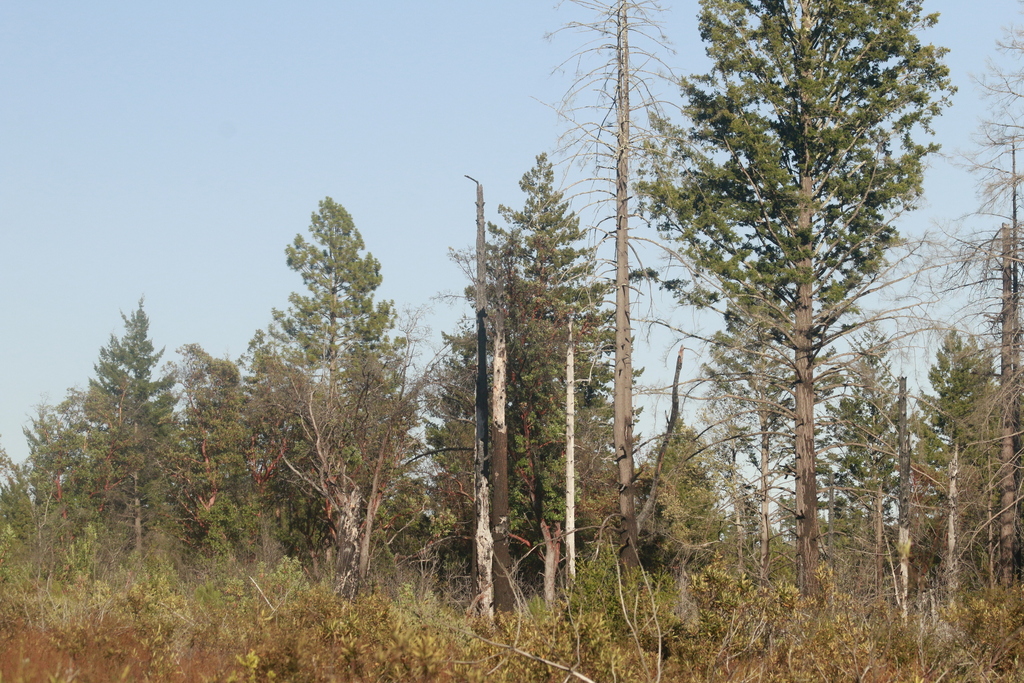
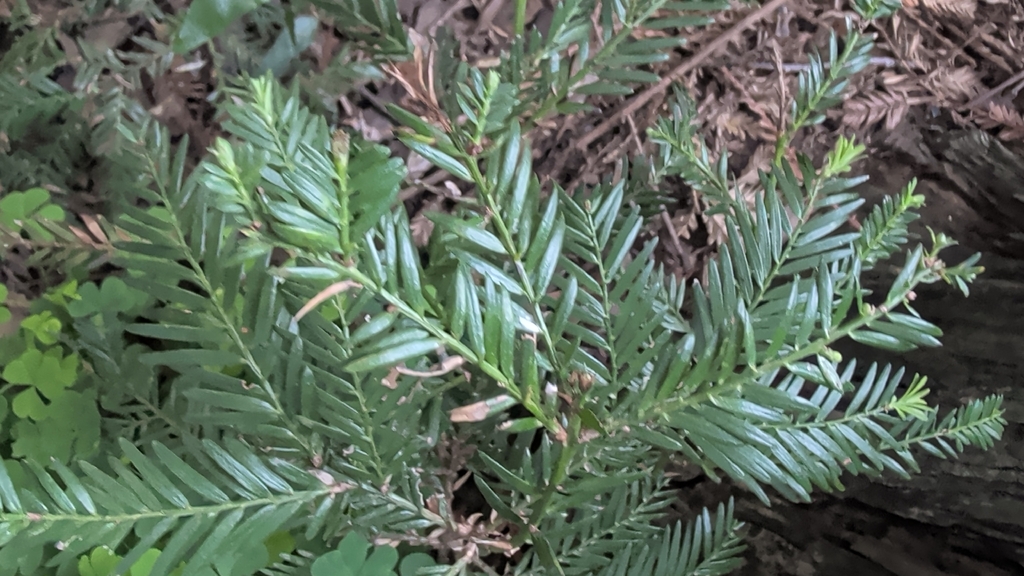
Sequoia Janirella Wrens · CC BY-NC 4.0
Related Species
Was this profile helpful?