
Pinopsida · Pinales
Silver Fir
Abies alba
Least ConcernAlso known as: Christmastree, European Silver Fir, European Silver fir, European Silver-Fir, European Silver-fir
© Jeff Clark · iNaturalist · CC BY 4.0
Abies alba, the Silver Fir, is a towering evergreen conifer that crowns the forests of central and southern Europe with its elegant, columnar form and distinctive silvery undersides of its needles. This imposing tree has shaped human settlement and forestry practice across 16 countries, from the Black Forest of Germany to the mountains of Turkey, and remains one of the continent’s most commercially and ecologically valuable conifers. With a conservation status of Least Concern, the species maintains healthy populations across its native range, though its role in European forests continues to evolve as climate and land use change.
The species thrives in cool, moist mountain environments where it forms mixed stands with beech and spruce, creating some of Europe’s most biodiverse temperate forests. What distinguishes Abies alba from its coniferous relatives is its remarkable longevity, shade tolerance, and ability to thrive on poor, acidic soils—adaptations that have made it both an ecological keystone and a forester’s prize. Understanding this species reveals much about European forest dynamics, timber production, and the complex interplay between human land management and natural regeneration.
Identification and Appearance
Abies alba, the Silver Fir, is a large evergreen coniferous tree that typically grows 40–50 metres tall with a trunk diameter reaching up to 1.5 metres. The largest known specimens exceed these averages: the tallest measured tree reached 60 metres in height with a trunk diameter of 3.8 metres. This tree can live for 475 years or more, making it one of Europe’s longest-lived conifers.
Foliage and Needles
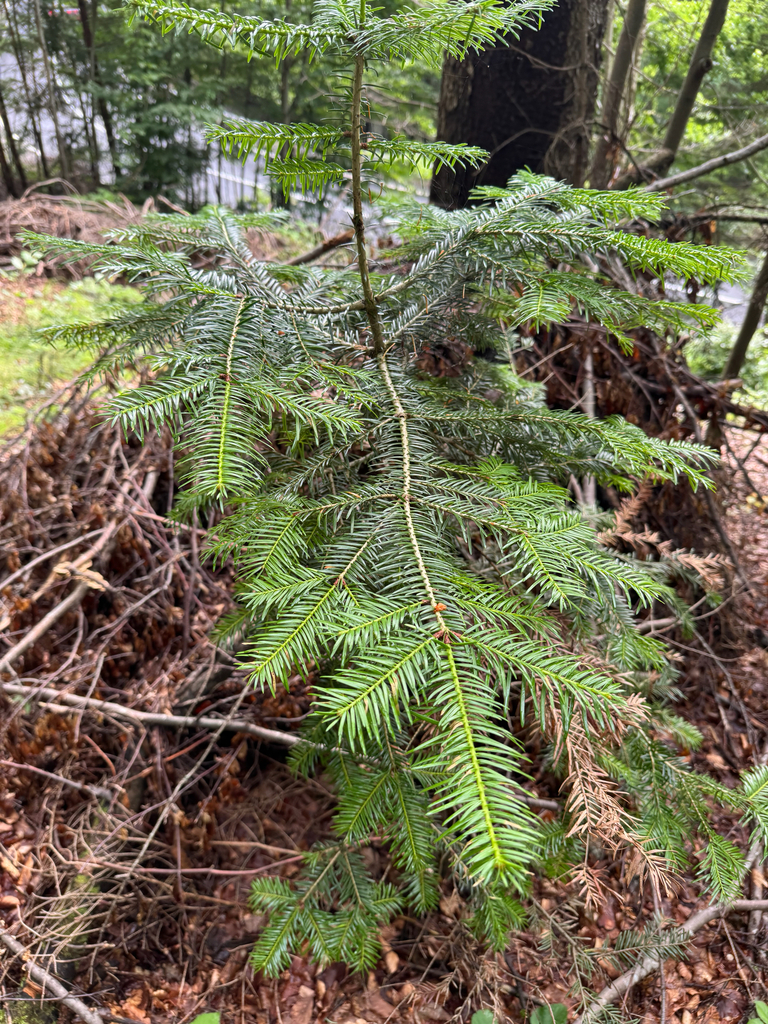
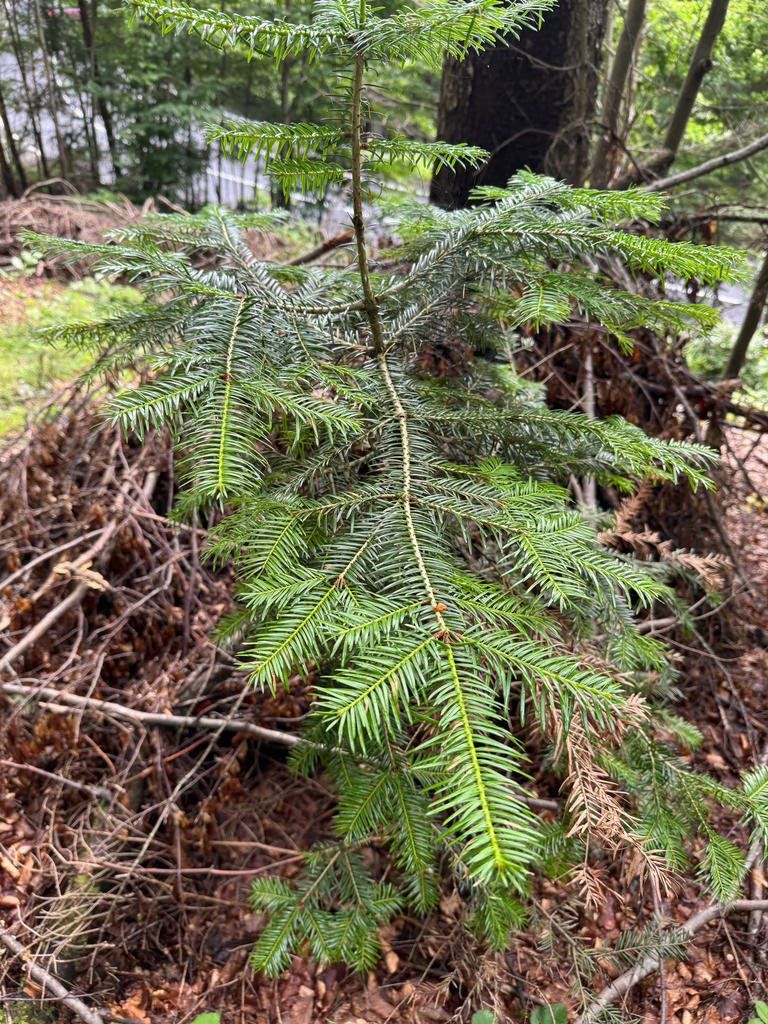
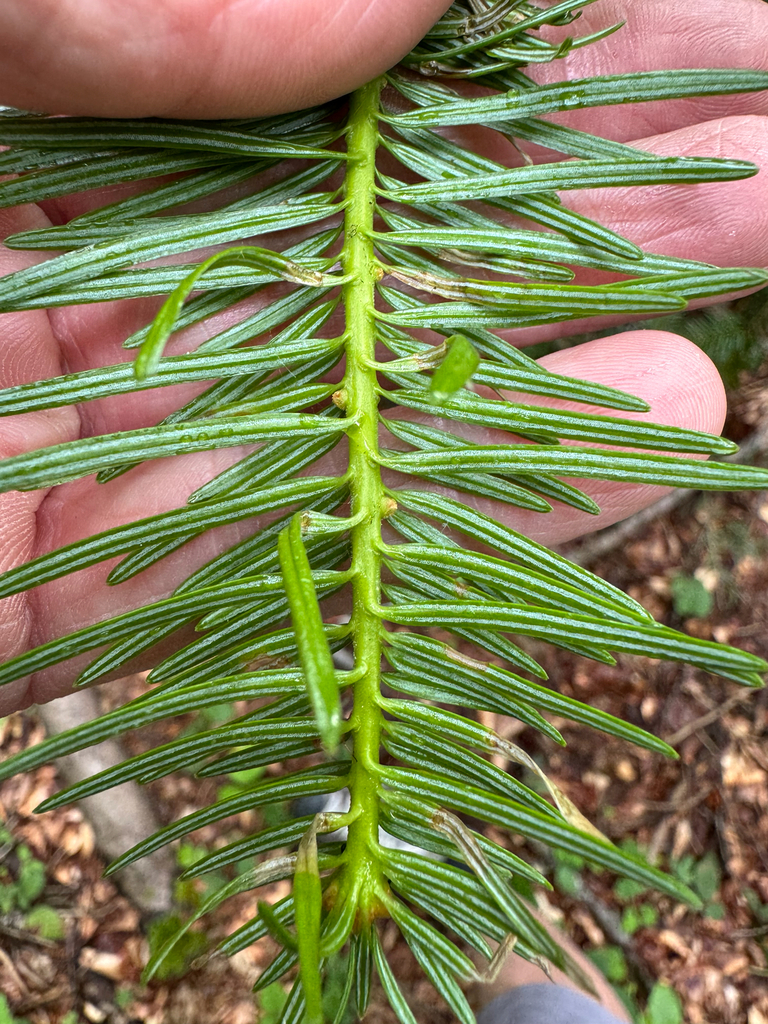
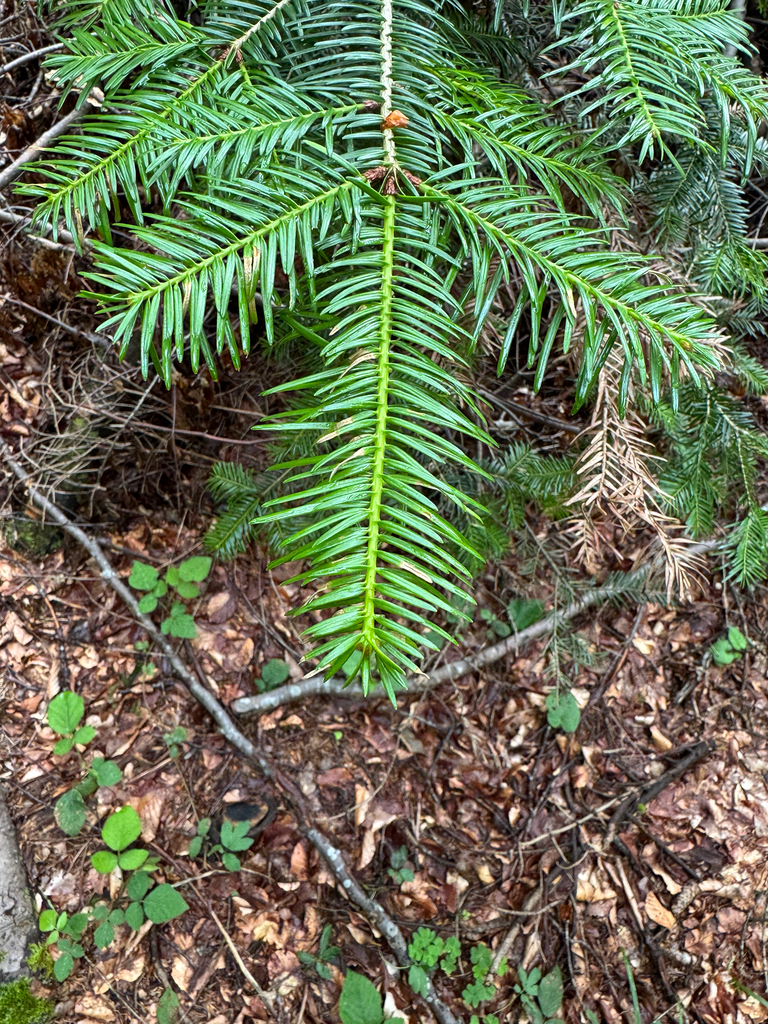
The leaves are needle-like and distinctly flattened, measuring 1.8–3.0 centimetres long and 2.0 millimetres wide by 0.5 millimetres thick. The upper surface is glossy dark green, while the underside bears two striking greenish-white bands of stomata (pores), which give the tree its common name when light reflects off them, creating a silvery appearance. These needles are arranged in flat sprays along the branches, creating the characteristic soft, feathery appearance of the species.
Habitat and Range
Silver Fir occurs at altitudes between 300 and 1,700 metres, though it thrives mainly above 500 metres. The species favours mountains receiving over 1,000 millimetres of annual rainfall, indicating its preference for cool, moist montane environments across central and southern Europe.
Distribution and Habitat
Abies alba is native to central and northern Europe, with its primary range concentrated in the Alps and adjacent mountain regions. Austria holds the largest documented population, followed by the Czech Republic, Germany, France, and Sweden. The species is also recorded across 16 countries in total, including Switzerland, Belgium, Denmark, and the Netherlands, reflecting both natural distribution and human cultivation.
Elevation preferences span from 398 to 996.5 metres, with an average occurrence around 670 metres. This range aligns with the species’ requirement for cool, moist mountain environments. Silver Fir thrives in mixed coniferous and broadleaf forests, particularly in areas with adequate precipitation and well-drained soils characteristic of temperate and subalpine zones.
The species occupies mature forest stands where it competes alongside spruce and fir species. Its northernmost occurrences in Scandinavia mark the edge of its natural climate tolerance, while southern populations in the Alps and Pyrenees persist at higher elevations. Contemporary distribution patterns reflect both historical glacial refugia and modern reforestation efforts across Europe.
Growth and Cultivation
Growth
Abies alba, commonly known as Silver Fir, is a large coniferous tree native to central and southern Europe. It develops a tall, columnar form with a dense, pyramidal crown when young, maturing into a more open structure with age. Mature specimens reach heights of 40–60 metres, occasionally exceeding 60 metres in optimal conditions, with a trunk diameter typically ranging from 1–2 metres. The bark is smooth and silvery-grey when young, gradually darkening and becoming fissured with age, which gives the tree one of its common names.
Silver Fir grows steadily in suitable climates, developing strong vertical growth that makes it valuable for timber production and ornamental forestry. The foliage is dark green above and marked with two white stomatal bands beneath, creating a distinctive appearance when boughs are turned upward. Branches are densely arranged and persist low on the trunk for many years in open-grown specimens, though they may be shed naturally in forest conditions where competition for light is intense.
Flowering and Fruiting
Silver Fir produces male and female cones on the same tree, following the typical conifer reproduction pattern. Male cones are small and inconspicuous, releasing pollen in spring. Female cones are upright, elongated structures that develop on upper branches and mature over two years. At maturity, these cones are 10–16 centimetres long, initially green or purple-tinged, becoming brown as they dry. The cones disintegrate on the tree to release winged seeds adapted for wind dispersal.
Seed production begins when trees reach approximately 40–50 years of age and increases with tree maturity. Good seed years occur irregularly, typically every 2–3 years, though production varies considerably depending on weather conditions during flowering and cone development.
Cultivation
Silver Fir thrives in cool, moist climates with well-distributed rainfall and prefers deep, slightly acidic to neutral soils rich in organic matter. It requires adequate moisture during the growing season and is sensitive to severe drought, particularly when young. The species performs best in areas with distinct seasons and moderate summer temperatures; it struggles in regions with hot, dry summers or in urban environments with air pollution.
For successful cultivation, provide a location with full sun to partial shade, though young trees benefit from some shelter in exposed sites. This species is generally hardy in temperate zones and tolerates cool mountain conditions well. Avoid waterlogged soils and areas prone to late spring frosts, which can damage new growth. Silver Fir is not suitable for cultivation in warm, dry climates or in regions with poor air quality, as it is notably sensitive to atmospheric pollution.
Conservation and Threats
Abies alba, the Silver Fir, holds a conservation status of Least Concern on the IUCN Red List. This designation reflects a species facing no immediate threat of extinction at a global scale. The population trend is increasing, suggesting that management practices and natural recovery in European forests are allowing this conifer to expand its range and numbers across suitable habitats.
Threats
Silver Fir populations currently face minimal documented threats at the global level. Historically, overexploitation through intensive logging and habitat conversion posed significant pressures, but modern forestry regulations in Europe have substantially reduced these risks. Climate variability and regional shifts in precipitation patterns may influence growth rates in some localities, yet the species has demonstrated resilience across its broad geographic distribution spanning from the Pyrenees to the Balkans.
Conservation Efforts
Legal protections and sustainable forest management across European Union member states underpin the species’ recovery. Many regions have implemented strict harvesting regulations and reforestation programmes that explicitly favour native conifers including Silver Fir. The species benefits from broader woodland conservation initiatives that prioritize old-growth forest structure and biodiversity within mixed temperate forests.
Cultural Significance
The Silver Fir has played a significant role in European forestry and timber traditions for centuries. Its straight grain, fine texture, and strength made it a preferred wood for construction, shipbuilding, and fine furniture across central and southern European regions where it naturally occurs. The species remains economically important in sustainable forestry management throughout the Alps and adjacent mountain ranges.
Beyond its commercial value, Abies alba holds symbolic importance in Alpine and Central European cultures, where it features prominently in winter traditions and seasonal celebrations. The species’ dense, symmetrical form and silvery-backed needles have made it a cultural icon in regions where it dominates the landscape, though specific mythological or folkloric associations are not well documented in contemporary records. Its presence in these mountain ecosystems has shaped local land management practices and forest identity for generations.
Fun Facts
- Abies alba spans an enormous geographic range across Europe, stretching from the Pyrenees in the west to the Carpathians in the east, and from Normandy in the north to the mountains of northern Greece in the south. This remarkable distribution makes it one of the most widespread fir species on the continent.
- Silver fir creates a natural bridge between western and eastern European mountain systems, occurring in both the Alps and the Balkan ranges. It is found in multiple Balkan countries—Slovenia, Croatia, Bosnia, Montenegro, Serbia, and Albania—linking geographically distant forest ecosystems.
- The species thrives across an unusually wide latitudinal range, from cool northern regions like Normandy to Mediterranean-influenced mountains in Italy, Bulgaria, Kosovo, and Albania. This adaptability to vastly different climates within Europe is uncommon among European conifers.
- Silver fir typically grows at elevations between 600 and 2,000 metres, occupying the montane forest zone where it often forms pure or mixed stands with other conifers. It prefers cool, moist slopes where it can outcompete spruce in certain conditions.
- The tree’s needles emit a distinctive fresh, citrus-like fragrance when crushed, earned it the nickname “fragrant fir” in some European regions. This scent comes from volatile oils in the needle tissue and has made the species popular in ornamental forestry.
- Despite its wide native range and ecological importance, Abies alba has experienced significant range contraction and decline in parts of western Europe due to air pollution, climate change, and pest pressures over the past century. Recovery efforts in countries like Germany and France now focus on restoring populations in their historical range.
Ecology
Growing Conditions
Conservation Status
LC (Least Concern) · NT · VU · EN · CR · EW · EX
Photo Gallery
Jeff Clark · CC BY 4.0
Related Species
Was this profile helpful?