
Pinopsida · Pinales
Torrey Pine
Pinus torreyana
Critically EndangeredAlso known as: Del Mar pine, Del Mare Pine, Soledad Pine
© no rights reserved · iNaturalist · CC0 1.0
Pinus torreyana, the Torrey Pine, is one of the rarest pine species on Earth. Native to a handful of coastal locations in North America, this tree clings to existence on the edge of extinction, with its stronghold restricted to just two countries. Its massive cones and thick needles represent adaptations honed over millennia to survive in isolated, windswept habitats where few competitors thrive.
What makes the Torrey Pine especially remarkable is not just its scarcity, but the precariousness of its existence. Human development, coastal erosion, disease, and climate change pose mounting threats to its survival. Yet this species has become a beacon for conservation efforts, drawing the attention of botanists, land managers, and restoration programs determined to prevent its extinction. Understanding the Torrey Pine offers insight into both the fragility of specialized species and the urgent work required to save Earth’s rarest plants.
Identification and Appearance
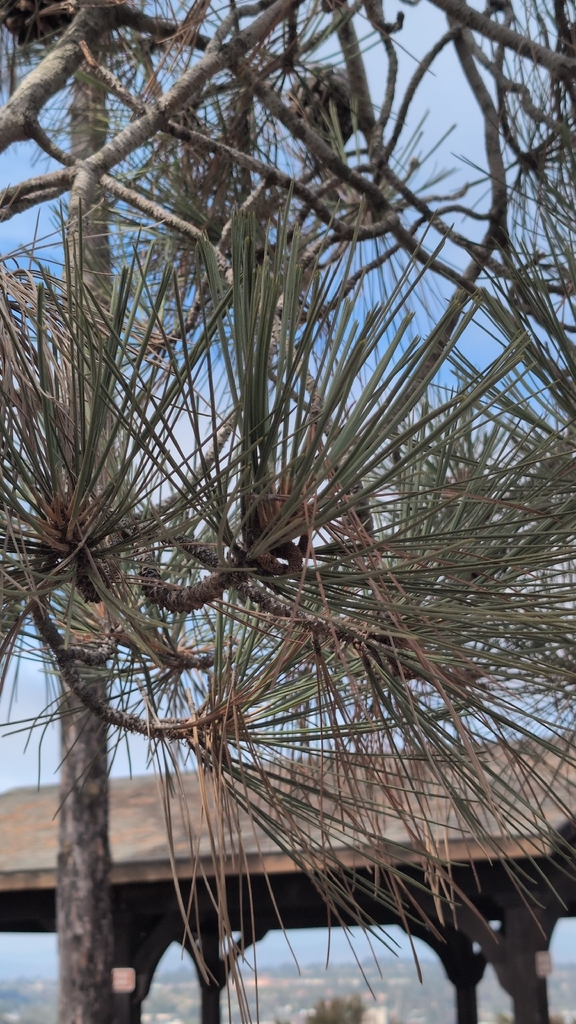
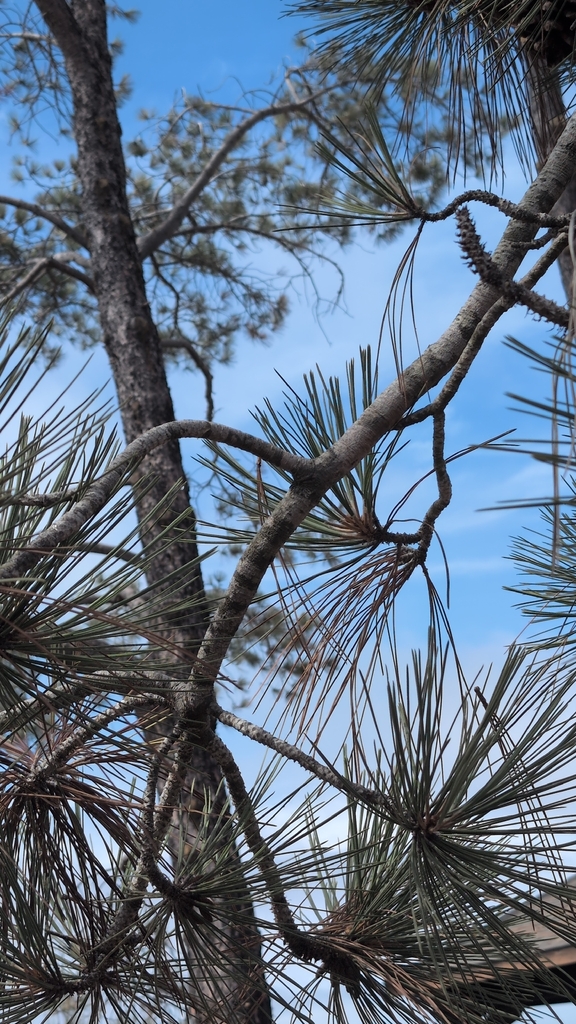
Pinus torreyana, the Torrey Pine, is a distinctive conifer characterized by its broad, open crown and moderate stature. In the wild, trees typically reach 8 to 17 metres in height, with an architectural form that widens considerably at the base. The needles are notably long for a pine, measuring 25 to 30 centimetres, and are arranged in fascicles of five—a defining trait of the species. This five-needle arrangement is consistent across individual trees and provides a reliable identification feature in the field.
Cones and Seeds
The cones of the Torrey Pine are stout and remarkably heavy, ranging from 8 to 15 centimetres in both length and breadth. These robust cones contain large, hard-shelled seeds that are notable among pine nuts for being edible, setting this species apart from many of its relatives. The substantial size and weight of the cones reflect significant energy investment in seed production and are an obvious field character when examining mature trees.
The bark, needles, and overall structure of Pinus torreyana lack marked sexual dimorphism; male and female organs occur on the same individual tree, as is standard in pines. Seasonal variation is minimal, with foliage remaining green year-round and cones maturing over two to three years before dispersal.
Distribution and Habitat
Pinus torreyana is found across two countries, with the vast majority of occurrence records concentrated in the United States. The species reaches its greatest abundance in North America, where documented observations dominate the biogeographic record. A single record exists from Germany, likely representing cultivation or historical collection rather than naturalized range expansion.
Observation activity follows a pronounced seasonal pattern in the species’ range. April marks the peak month for sightings, with 80 recorded observations, suggesting heightened visibility or survey effort during spring. Activity remains moderate through May (57 observations) and drops significantly through March (63 observations) and February (34 observations). From June through December, observations cease entirely, indicating either dormancy, reduced survey effort, or seasonal inaccessibility of populations during the latter half of the year.
The geographic concentration in the United States reflects the species’ native range, which is restricted to a small coastal region of California. This highly endemic distribution makes Pinus torreyana a species of particular conservation interest, as it occupies a limited area within a single state. The single German record does not extend the species’ natural range but reflects its horticultural or botanical collection history in Europe.
Growth and Cultivation
Growth
Pinus torreyana, the Torrey Pine, is a medium-sized evergreen conifer with a distinctive, often picturesque form. The species typically develops an irregular, spreading crown with dense foliage, reaching heights of 15–20 metres at maturity. Individual trees may occasionally exceed these dimensions, though growth rate data are not extensively documented in standard horticultural records. The trunk is thick and irregularly branched, giving mature specimens a characterful appearance valued in ornamental landscapes.
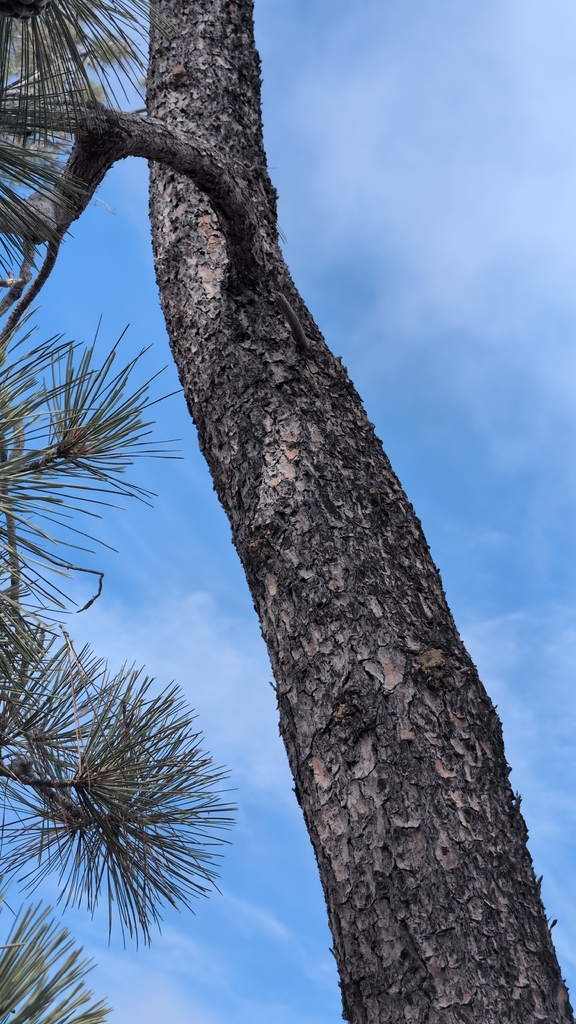
The needles are borne in bundles of five and are relatively long and bright green, contributing to the tree’s visual appeal year-round. Bark is thick and furrowed, providing protection in the harsh, exposed coastal habitats where this species naturally occurs.
Flowering and Fruiting
Like other pines, Pinus torreyana is monoecious, producing separate male and female cones on the same tree. Male cones are small and clustered; female cones develop over two to three years into large, heavy structures roughly 10–15 centimetres long. These cones are remarkably thick-walled and retain seeds for extended periods, sometimes remaining closed on the branch until heat or fire triggers their opening. The heavy cones occasionally drop from mature trees, which should be noted by those planting this species near structures or pathways.
Cultivation
Torrey Pine is best suited to full sun and well-draining soil. The species is extremely drought-tolerant once established, reflecting its evolution in the arid coastal scrublands of southern California. It performs well in sandy or rocky soils and adapts to poor, nutrient-limited substrates. Specific soil pH requirements are not extensively defined in standard cultivation literature, though the species tolerates mildly acidic to neutral conditions.
Hardiness zones and precise cold tolerance thresholds are not formally documented, but the species is generally limited to warmer climates with mild winters. Irrigation should be minimal once the tree is established; excessive water can promote disease and weaken structural integrity. Young trees benefit from consistent moisture during the first growing season, but supplemental watering should cease as soon as roots develop. This pine is exceptionally resistant to salt spray and wind, making it ideal for coastal gardens where other conifers struggle.
Conservation and Threats
Pinus torreyana, the Torrey Pine, holds the distinction of being one of the rarest pine species in North America. It is classified as Critically Endangered on the IUCN Red List, a status reserved for species facing an extremely high risk of extinction in the wild. Despite this precarious classification, the population shows an increasing trend, indicating that recent conservation efforts have begun to reverse decades of decline.
Threats
The Torrey Pine population has faced severe losses over recent decades. In the 1970s, populations in the Torrey Pines State Reserve (TPSR) and on Santa Rosa Island were estimated at approximately 9,000 individuals. Since then, the species has suffered catastrophic mortality from multiple, overlapping stressors. Wildfire has eliminated large stands of trees; prolonged drought has stressed remaining individuals; and infestations of bark beetles have killed many mature pines. Air pollution, particularly in the San Diego region where the species naturally occurs, compounds these pressures by weakening tree vigor and reducing reproductive capacity.
The combination of these threats has created a cascade effect: fire-damaged trees become more vulnerable to beetle attack; drought-weakened pines cannot mount effective defensive responses; and poor air quality further compromises overall health. The Torrey Pine’s restricted geographic range—found naturally only in San Diego County and on Santa Rosa Island off the coast of California—means that localized disturbances pose an outsized threat to the entire species.
Conservation Efforts
The establishment of the Torrey Pines State Reserve in 1921 provided crucial legal protection and has served as the anchor for long-term conservation. Botanical gardens and native plant nurseries across California now maintain seed collections and cultivated populations, reducing reliance on wild stocks. Restoration programs have focused on reducing fuel loads to mitigate catastrophic fire risk, managing bark beetle populations, and replanting seedlings in suitable habitat. The increasing population trend reflects the success of these coordinated efforts, though the species remains vulnerable due to its limited range and small absolute numbers.
Cultural Significance
Pinus torreyana holds deep cultural significance in San Diego County, where it functions as a local emblem of regional identity. The species has become so integral to the area’s character that it lends its name to major landmarks and institutions throughout the region, from Torrey Pines State Natural Reserve and Torrey Pines State Beach to Torrey Pines Golf Course and Torrey Pines High School. This naming pattern extends to the Torrey Pines Gliderport, a popular recreational site, as well as numerous local roads and parks that bear the species’ name.
Beyond natural areas and schools, the Torrey Pine has inspired a thriving commercial landscape in San Diego County. Businesses across multiple sectors—including Torrey Pines Bank, Torrey Pines Property Management Company, Torrey Pines Landscape Company, and Torrey Pines Law Group—have adopted the species’ name, reflecting how deeply embedded the tree is in the region’s commercial and civic consciousness. This pervasive use of the Torrey Pine name across residential, recreational, financial, and professional domains underscores its status as a defining symbol of San Diego County identity and local pride.
Fun Facts
The Torrey pine is one of the rarest pine species in North America, with a story shaped by extreme geographic isolation and habitat loss. These facts reveal why this coastal giant has captured the attention of conservation biologists and botanists worldwide.
- Only three populations remain in the wild. Torrey pines grow along the San Diego coast, on Santa Rosa Island off the Channel Islands, and in a small area of Monterey County, with no other populations known to exist anywhere on Earth.
- It is restricted to coastal environments despite being a pine. Unlike most pine species that dominate inland mountain forests, the Torrey pine evolved exclusively in coastal sage and chaparral habitat and cannot naturally survive in higher elevations or inland regions.
- Its habitat type is itself critically threatened. The California coastal sage and chaparral ecoregion where Torrey pines evolved is heavily fragmented by urban development, agriculture, and climate change, compounding the species’ vulnerability.
- It faces multiple extinction pressures simultaneously. The species contends with habitat loss, invasive plant species, fire risk, disease, and the genetic bottleneck that comes with such small population sizes.
- Disjunct populations hint at a different past. The separation of Torrey pine populations by hundreds of miles suggests they once occupied a continuous range along the California coast, shrinking dramatically over thousands of years to their current fragmented state.
- Conservation efforts include large-scale replanting. Botanists and land managers actively cultivate Torrey pines outside their native range as an insurance policy against extinction, with seedlings established in botanical gardens and protected reserves across California.
Conservation Status
LC · NT · VU · EN · CR (Critically Endangered) · EW · EX
Photo Gallery
no rights reserved · CC0 1.0
Related Species
Was this profile helpful?