
Pinopsida · Pinales
Silver Fir
Abies alba
Least ConcernAlso known as: Christmastree, European Silver Fir, European Silver fir, European Silver-Fir, European Silver-fir
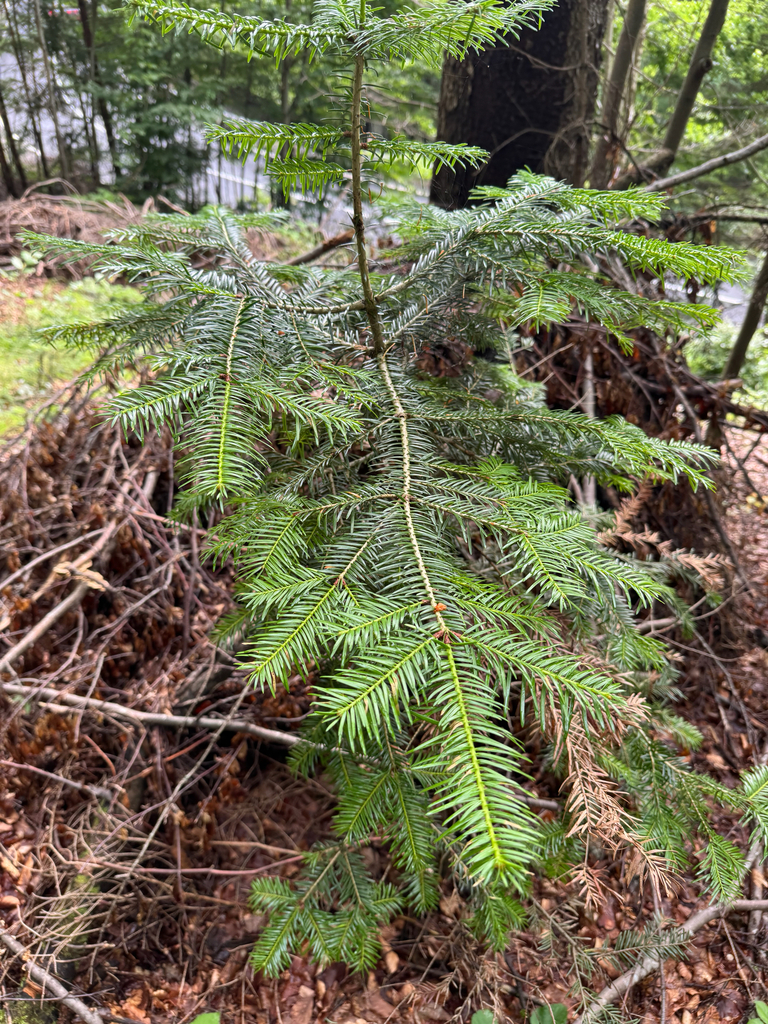
© Jeff Clark · iNaturalist · CC BY 4.0
The silver fir is a towering conifer that dominates the montane forests of central and southern Europe, reaching heights of 40 metres or more with a distinctive silvery-grey bark that inspired its common name. Found across 16 countries from the Pyrenees to the Carpathians, Abies alba represents one of Europe’s most ecologically important timber species and a keystone of alpine and subalpine forest ecosystems. Listed as Least Concern by the IUCN, this member of the Pinaceae family—alongside spruce and pine—shapes the structure and biodiversity of the mountain landscapes where it thrives.
What makes the silver fir particularly compelling is its ecological resilience and cultural significance across Europe. In regions where it has been overharvested or displaced by more vigorous spruce plantations, restoration efforts are now underway to recover its populations and restore the structural complexity of mixed-species forests. Its needles release aromatic oils used historically in medicine and forestry, while its wood remains prized for construction and musical instruments, blending practical utility with natural heritage value.
Identification and Appearance
Abies alba, the Silver Fir, is a large evergreen coniferous tree that typically grows 40–50 metres tall with a trunk diameter reaching up to 1.5 metres. The largest recorded specimen measured 60 metres in height with a trunk diameter of 3.8 metres, demonstrating the species’ potential for exceptional size under optimal conditions. Trees occur at altitudes between 300 and 1700 metres, though most populations are found above 500 metres in mountain regions receiving annual rainfall exceeding 1000 millimetres.
Foliage and Needles
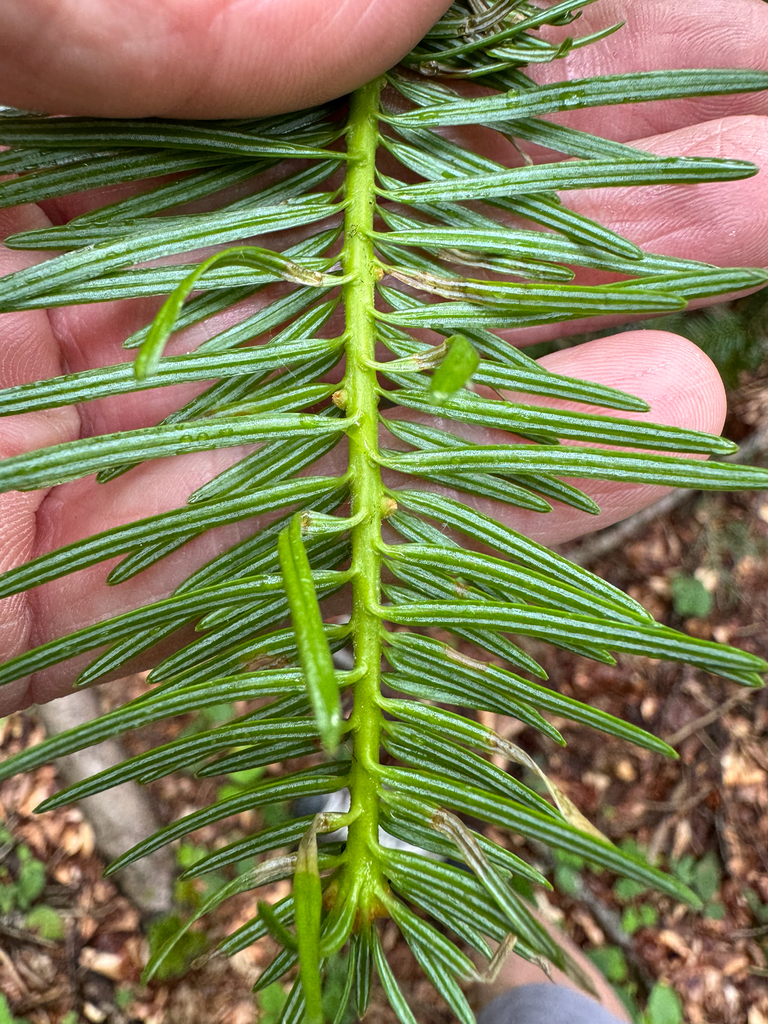
The leaves are needle-like and distinctly flattened, measuring 1.8–3.0 centimetres long and 2.0 millimetres wide by 0.5 millimetres thick. Each needle displays a glossy dark green upper surface, while the underside bears two characteristic greenish-white bands of stomata (pores for gas exchange). This arrangement of stomatal bands on the needle’s lower face is a key identifying feature of the species and contributes to the common name “Silver Fir,” referring to the silvery appearance visible when foliage is viewed from below.
Distribution and Habitat
Abies alba, the Silver Fir, occurs across central and northern Europe, with records from 16 countries. Austria dominates the recorded distribution with 110 observations, followed by the Czech Republic (62), Germany (23), and France (22). Additional populations extend into Scandinavia—Sweden and Norway contribute 19 and 12 records respectively—and scattered occurrences appear in the Netherlands, Belgium, and Denmark. This pattern reflects the species’ native range in the Alps and Central European highlands, extending northward into lower-elevation forests.
Silver Fir inhabits elevations between 398 and 996.5 metres, with an average preference around 669.5 metres. The species tolerates considerable altitudinal variation, thriving in cooler montane environments while also establishing itself at lower elevations in suitable microclimates. It favors mixed coniferous and broadleaf forests, particularly where moisture and cool temperatures persist year-round.
Seasonal observation patterns show a pronounced peak in February (139 records), with elevated activity through January and March before dropping sharply from April onward. This winter peak likely reflects the timing of botanical surveys, seed collection, or winter visibility of the species in landscapes where deciduous neighbors have shed their foliage. The near-complete absence of records from April through December suggests observation bias rather than genuine absence during warmer months.
Growth and Cultivation
Growth
Abies alba, the Silver Fir, is a large evergreen conifer native to the Alps and other mountain ranges of central and southern Europe. It develops a dense, pyramidal crown with a single straight trunk, reaching heights of 40–50 metres in ideal conditions. The bark is smooth and grey-green when young, becoming fissured and darker with age. Foliage is dark green above with distinctive silvery-white stomatal bands on the undersides of the needles—a characteristic that gives the species its common name.
The tree grows steadily in temperate forests, thriving at elevations between 600 and 2,000 metres. It is a long-lived species, with individuals capable of reaching 300 years or more. Young trees develop a compact, conical form that remains attractive throughout their lifespan, making the species valued both ecologically and ornamentally.
Flowering and Fruiting
Silver Fir is monoecious, bearing both male and female cones on the same tree. Male cones are yellow and appear in spring, shedding pollen in late spring to early summer. Female cones develop into upright, cylindrical structures that mature over two years, eventually reaching 10–16 centimetres in length. When ripe, these cones disintegrate to release winged seeds, which are dispersed by wind in autumn and winter.
Cultivation
Silver Fir prefers well-drained, slightly acidic to neutral soils and grows best in cool, moist mountain climates. It tolerates shade moderately well but achieves optimal form in full sun to partial shade. The tree requires consistent moisture, particularly during establishment; mature trees are relatively drought-tolerant once their root systems are developed.
For cultivation in gardens or forestry, Silver Fir performs well in regions with cool summers and adequate rainfall. It is susceptible to air pollution and prefers clean, unpolluted environments. The species is unsuitable for hot, dry lowlands and struggles in continental or arid climates. Planting in sheltered locations with protection from severe winds enhances growth and form.
Conservation and Threats
Abies alba, the Silver Fir, holds a Least Concern status on the IUCN Red List, meaning it does not currently face an immediate risk of extinction across its range. Its population is actively increasing, a positive indicator of recovery and resilience in many European forests where it is native or has been reintroduced. This improved trajectory reflects both the species’ capacity to recover when forest management practices shift in its favour and decades of conservation effort across central and southern Europe.
Threats
Though no major threats are currently documented as driving population decline, Abies alba remains vulnerable to habitat loss and fragmentation as mixed European forests are converted to other land uses or managed as monocultures. Climate variability, particularly drought stress during critical growth periods, poses an emerging challenge in warmer, drier regions of its range. Historical overexploitation for timber has largely subsided, yet selective logging pressure persists in some areas. Pest and disease pressures, including damage from ungulate browsing, can suppress regeneration in specific localities where forest management is less intensive.
Conservation Efforts and Legal Protection
Silver Fir benefits from protection under European forestry legislation and habitat directives in many countries where it occurs. Its inclusion in mixed-forest management zones and protected areas—particularly across the Alps and Central European highlands—has been instrumental in stabilizing and expanding its range. Many national forestry programmes now prioritize Abies alba regeneration as part of climate-adaptive forest diversification strategies, recognizing its ecological value and resilience relative to pure conifer plantations.
The species is also featured in several European seed conservation networks and reforestation initiatives. Botanical gardens and arboreta maintain living collections, ensuring genetic diversity is preserved. These multifaceted approaches have contributed directly to the species’ increasing population trend across much of its natural range.
Cultural Significance
The cultural significance of Abies alba in European societies is substantial, though specific records of mythology, folklore, or symbolic meaning tied directly to this species are limited in available documentation. Like other fir species across the continent, silver fir has been woven into the practical and aesthetic fabric of human life, particularly in the Alpine and Central European regions where it grows abundantly.
Historically, silver fir timber has held economic and social importance in forestry and woodworking traditions. The wood’s qualities—straight grain, moderate hardness, and pale color—made it valuable for construction, furniture, and pulp production. In regions where the species dominates forests, local traditions and naming conventions often reflect this prominence, though detailed ethnographic records of silver fir-specific cultural practices remain sparse in contemporary sources.
The absence of extensive documented cultural narratives specific to Abies alba reflects both the historical focus of ethnobotanical research on more exotic species and the fir’s integration into European daily life as a utilitarian rather than ceremonial plant. Its role in modern contexts—ornamental planting, Christmas tree cultivation, and forest management—continues to shape human perception of the species across its native range.
Fun Facts
- Mountainous heritage across Europe: Silver Fir’s native range stretches across three of Europe’s major mountain systems—the Pyrenees, Alps, and Carpathians—making it a defining species of high-elevation European forests. Its presence spans from southern regions including Italy, Bulgaria, and Greece all the way north to Normandy, France, an unusually broad distribution for a mountain conifer.
- Ancient forest architect: Silver Firs can live for 300 to 400 years, with some individuals exceeding 500 years old, creating multi-generational canopies that shape forest structure and stability across centuries.
- Distinctive silvery undersides: The species gets its common name from the striking white or silvery bands visible on the undersides of its needles—a feature that makes it instantly recognizable when branches are tilted to show their lower surfaces.
- Massive vertical giants: Silver Firs routinely exceed 40 metres in height and can reach over 60 metres, making them among Europe’s tallest trees and key structural elements in montane forest ecosystems.
- Allelopathic chemical defense: The species produces compounds that inhibit the growth of competing plants and fungi beneath its canopy, allowing it to dominate its niche in dense mountain forests where light and nutrients are scarce.
- Demands cool, humid conditions: Silver Fir thrives only in regions with cool summers, high precipitation, and well-drained soils—conditions that restrict it to mountainous terrain and make it highly sensitive to climate warming.
Ecology
Growing Conditions
Conservation Status
LC (Least Concern) · NT · VU · EN · CR · EW · EX
Photo Gallery
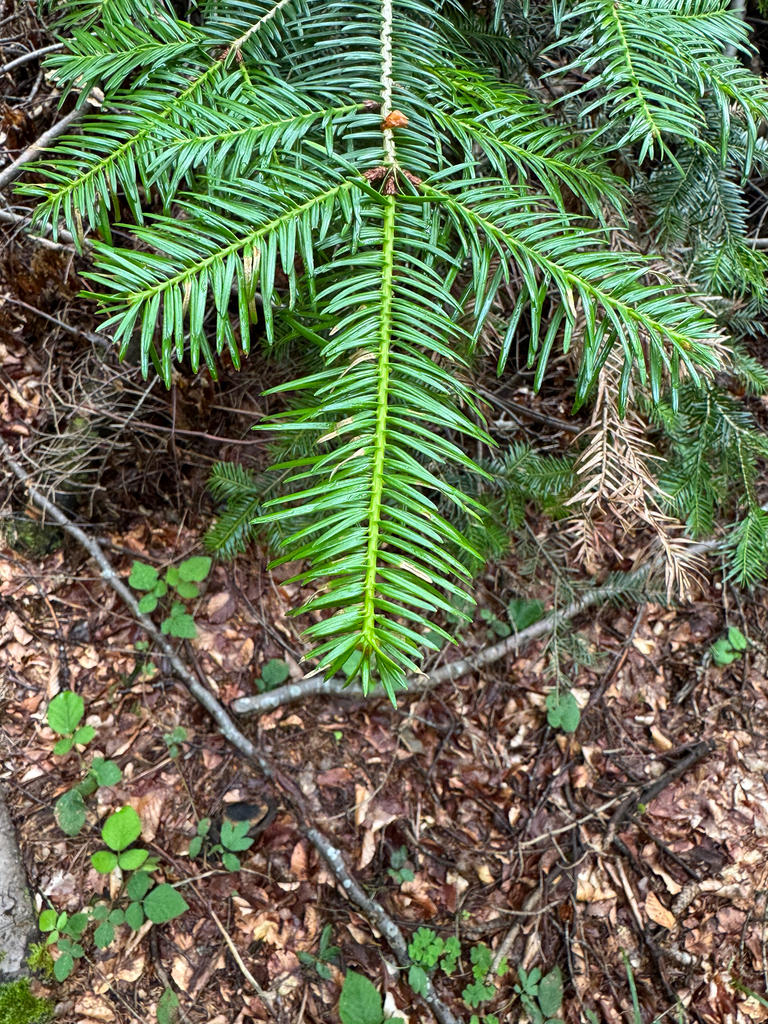
Jeff Clark · CC BY 4.0
Related Species
Was this profile helpful?