
Pinopsida · Pinales
Great Basin Bristlecone Pine
Pinus longaeva
Least ConcernAlso known as: Bristlecone Pine, Intermountain Bristlecone Pine, ancient bristlecone pine, ancient pine, intermountain bristlecone pine
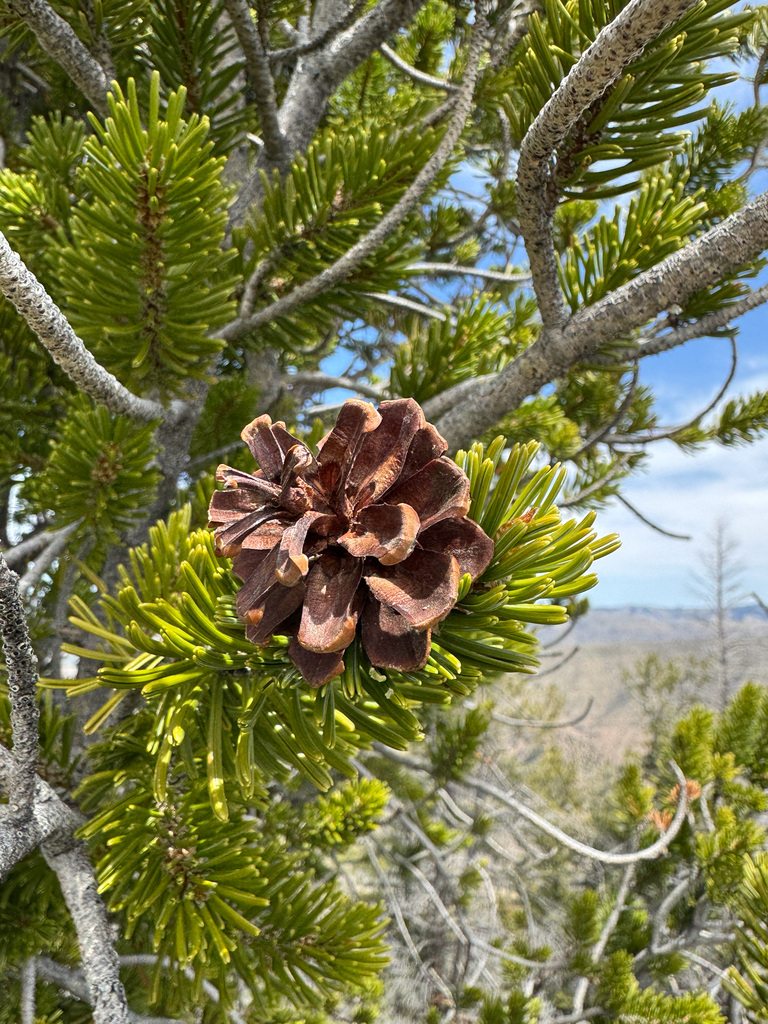
© Parker James Lloyd · iNaturalist · CC BY 4.0
The Great Basin Bristlecone Pine, Pinus longaeva, is a hardy conifer native to the high mountains of the American Great Basin, where it endures some of Earth’s most extreme growing conditions. Found across a single country but distributed across multiple high-elevation ranges, this species thrives where few others can survive—in arid, windswept terrain at elevations between 2,100 and 3,600 metres. Listed as Least Concern by conservation authorities, the species remains stable and widespread throughout its range, a testament to its remarkable resilience in an unforgiving environment.
What makes Pinus longaeva particularly compelling is how it has evolved to live longer than any other organism on the planet. Its gnarled, contorted form—often stunted and wind-shaped into dramatic sculptural forms—reflects a life strategy centred on extreme longevity rather than size. The wood itself is dense, resinous, and remarkably resistant to decay, allowing these ancient trees to persist long after death, standing as weathered monuments across high desert slopes.
Identification and Appearance
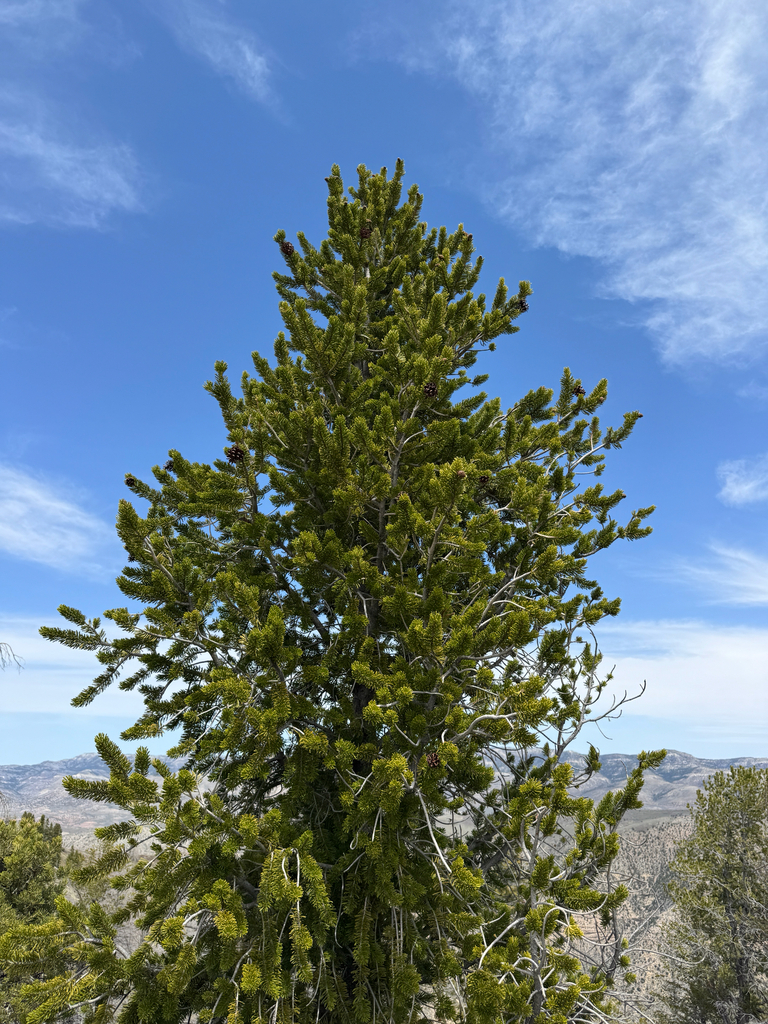
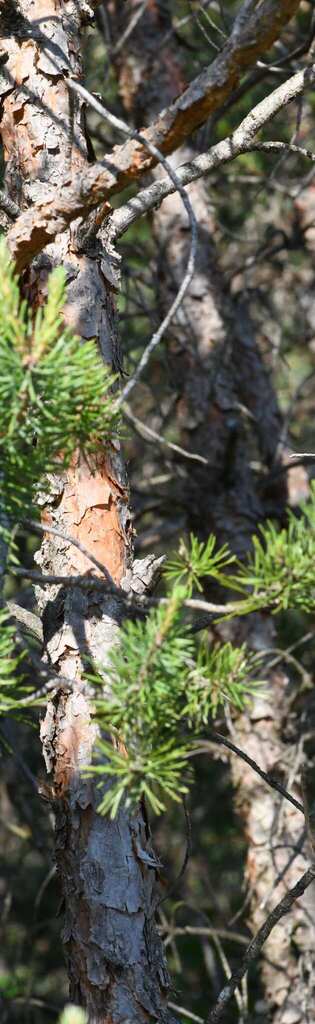
Pinus longaeva is a medium-sized conifer that reaches 5 to 15 metres in height, with trunk diameters of 2.5 to 3.6 metres at maturity. The bark is distinctive: bright orange-yellow in colour, thin and scaly, particularly at the base of the trunk. This striking bark colouration makes the species immediately recognisable in its high-elevation habitat.
Needles and Foliage
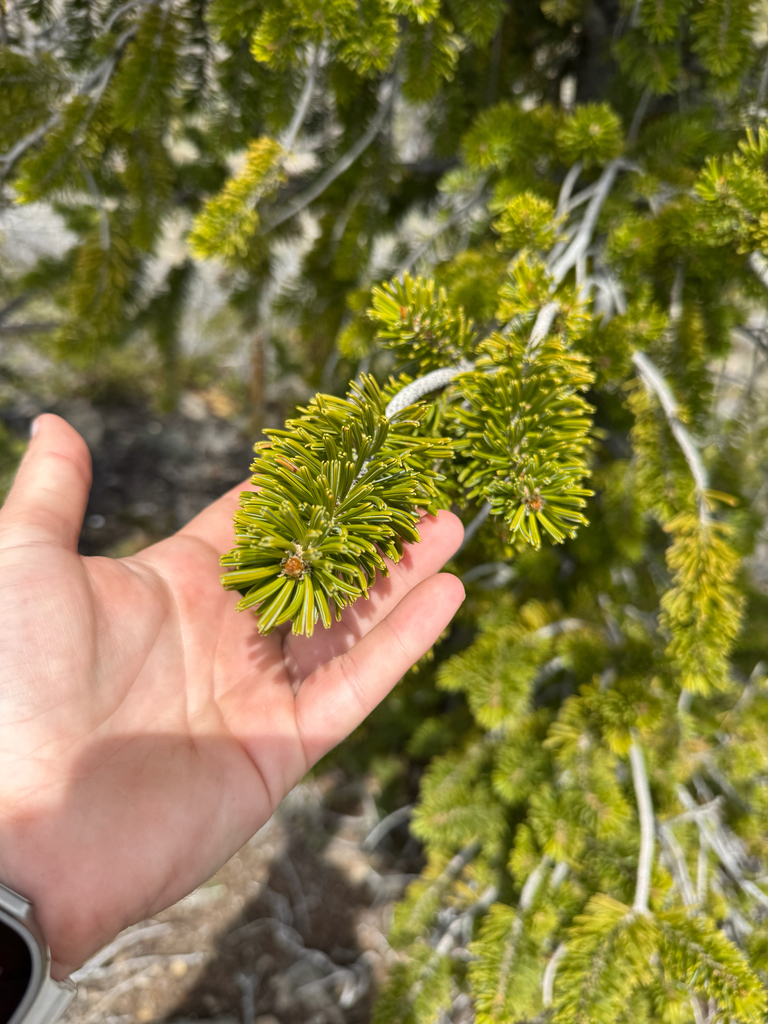
The needles are arranged in fascicles of five and are notably stout, measuring 2.5 to 4 centimetres in length. They display a deep green to blue-green colour on the outer face, while the inner surfaces bear white bands formed by concentrated stomata. A remarkable characteristic of this species is needle longevity: some needles remain photosynthetically active for up to 45 years, a persistence unmatched by nearly all other plants. This extreme needle retention is an adaptation to the harsh, arid montane environment where the species grows.
Overall Form
The overall morphology reflects adaptation to severe conditions: compact, dense branching and relatively modest height relative to trunk diameter create a sturdy, wind-resistant form. Young trees may display more typical coniferous proportions, but mature individuals in exposed alpine sites often develop gnarled, twisted growth patterns shaped by decades of environmental stress.
Distribution and Habitat
Pinus longaeva, the Great Basin Bristlecone Pine, occurs exclusively in the United States, where it is endemic to the high mountain ranges of the Great Basin and surrounding regions. This highly specialized conifer has an extremely limited geographic range confined to the western interior of North America.
The species shows a pronounced seasonal pattern in observation records, with activity peaking in May. GBIF records indicate a sharp rise in documented observations from February through May, with the highest concentration occurring in May, then dropping to zero records from June onwards. This pattern likely reflects the timing of spring growth and the accessibility of higher elevations as snow recedes, rather than any cessation of the species’ presence during summer and autumn months.
Bristlecone pines inhabit the harshest alpine and subalpine environments, growing on windswept ridges, rocky slopes, and exposed peaks where few other trees can survive. The species is typically found at extreme elevations in mountain ranges including the White Mountains, Inyo Mountains, and Snake Range, where it endures intense ultraviolet radiation, sparse precipitation, and severe winter conditions. Its stunted, gnarled growth form and extraordinarily dense wood are adaptations to these unforgiving high-altitude environments where it can persist for thousands of years.
Biology
Growth
Pinus longaeva is an extremely slow-growing conifer that develops a gnarled, twisted form characteristic of high-altitude mountain environments. Mature trees typically reach 5 to 10 metres in height, though some exceptional specimens exceed 15 metres. The wood is extremely dense and resinous, contributing to the species’ legendary longevity—some individuals have lived over 5,000 years, making them among the oldest living trees on Earth. This extreme longevity is possible only under harsh alpine conditions where slow growth and wood density create near-perfect preservation.
The trunk often becomes heavily twisted and contorted, with branches that may persist from the base upward. Bark is thin, smooth, and pale gray or whitish in young trees, becoming deeply furrowed and darker with age. The needles are distinctive: short, rigid, and densely packed in bundles of five, with a waxy coating that provides exceptional protection against desiccation in arid, windswept habitats.
Flowering and Fruiting
Pinus longaeva produces small cones that mature over two to three years—an unusually long period for pine development. The cones are compact and resinous, with bristle-like bracts projecting from beneath the cone scales, giving the species its common name. Seeds are small and winged, though their dispersal in extreme alpine environments is limited, and reproduction often occurs more reliably through vegetative layering when branches contact soil.
Cultivation
Great Basin Bristlecone Pine is rarely cultivated outside its native habitat due to its extreme ecological specialization and glacial growth rate. The species thrives only at high elevations (typically 2,400 to 3,600 metres) on exposed, rocky slopes with excellent drainage and significant winter snow. It tolerates intense cold, intense solar radiation, and severe drought with remarkable resilience. Outside its native Great Basin range, propagation and establishment are exceedingly difficult, and the species is not recommended for ornamental plantings or commercial forestry.
Seed germination requires cold stratification and is notoriously unpredictable. Seedlings develop at a rate measurable in millimetres per year under ideal conditions. Any cultivation attempt demands high-elevation, cold-climate locations with sparse, well-drained soil, intense sunlight, and acceptance that growth will be virtually imperceptible over a human lifetime. Conservation of native populations in protected areas remains the most practical approach to preserving this exceptional species.
Conservation and Threats
Pinus longaeva, the Great Basin Bristlecone Pine, holds a conservation status of Least Concern on the IUCN Red List, indicating that the species faces no immediate threat of extinction at the global scale. The population trend is increasing, a positive indicator for long-term viability. This status reflects the species’ secure position across its range in the high mountains of the Great Basin and surrounding regions of western North America.
Threats
While bristlecone pines are not currently classified as threatened, they face several environmental pressures. Climate change poses an emerging concern, as warmer temperatures and altered precipitation patterns in high-altitude ecosystems may affect recruitment and growth rates in some populations. Whitebark pine blister rust, a disease caused by the introduced pathogen Cronartium ribicola, affects some pine species in the region, though bristlecone pines show greater resistance than their relatives. Additionally, fire suppression and changes to natural fire regimes have altered ecosystem dynamics in their habitat, though the impacts remain localized.
Conservation Efforts and Legal Protections
Great Basin Bristlecone Pines benefit from protection through their occurrence in national parks and protected wilderness areas, including Great Basin National Park, where the species is actively monitored. Research programmes continue to study their longevity, growth responses to climate, and population dynamics. These ancient trees are not subject to commercial logging and are protected under U.S. federal land management policies that govern national forests and public lands across their range.
Fun Facts
- 1.The oldest living trees on Earth: Great Basin bristlecone pines include the oldest known individual tree, Methuselah, which exceeds 5,000 years old. Some specimens have been dated to over 5,060 years, making them older than the Egyptian pyramids.
- 2.Extreme longevity through slow growth: These trees grow so slowly—sometimes adding less than 1 millimetre of wood per year—that their extremely dense wood becomes nearly impervious to decay and insect damage.
- 3.Survival in harsh alpine conditions: Bristlecone pines thrive at elevations between 2,400 and 3,400 metres in the Great Basin, where temperatures plummet and growing seasons last only a few months, conditions that would kill most other tree species.
- 4.Living dead wood: A bristlecone pine can survive and continue growing even when 90% of its trunk is dead wood; the living tissue forms only a thin strip beneath the bark, allowing the tree to endure centuries of environmental stress.
- 5.Twisted, gnarled form: Their characteristic contorted wood grain and spiral growth patterns result from adapting to fierce, constant winds at high elevation, creating the iconic sculptural shapes visible in ancient specimens.
- 6.Genetic archives of climate history: Tree-ring patterns in bristlecone pines record thousands of years of climate variation, allowing scientists to reconstruct past temperature and precipitation patterns stretching back millennia.
- 7.Extreme drought tolerance: These trees can survive years with virtually no rainfall by entering a dormant state and dramatically reducing water loss, an adaptation that allows them to persist where few other plants can establish.
Sources and References
- Global Biodiversity Information Facility (GBIF)View source
- iNaturalistView source
- WikidataView source
- WikipediaView source
- Encyclopedia of Life (EOL)View source
- Plants of the World Online (POWO)View source
Ecology
Growing Conditions
Conservation Status
LC (Least Concern) · NT · VU · EN · CR · EW · EX
Photo Gallery
Parker James Lloyd · CC BY 4.0
Related Species
Was this profile helpful?