
Pinopsida · Pinales
European Larch
Larix decidua
Least ConcernAlso known as: Common Larch, Larch
© carnifex · iNaturalist · CC BY 4.0
The European larch is a conifer that defies the expectations of its evergreen relatives. Each autumn, Larix decidua sheds its needles in a blaze of golden-yellow color before standing bare through winter—a deciduous habit unusual among pines and firs. Native to the Alps and mountainous regions of central Europe, this species has expanded its range far beyond its origins, now established in 23 countries across multiple continents through cultivation and naturalization.
Classified as Least Concern by the IUCN, Larix decidua remains ecologically and commercially significant across its range. Its rapid growth, durable timber, and ability to stabilize mountain slopes have made it valuable for both forestry and ecological restoration. The species also plays an important role in alpine and subalpine ecosystems, where its presence shapes the structure and composition of forest communities at high elevations.
Identification and Appearance
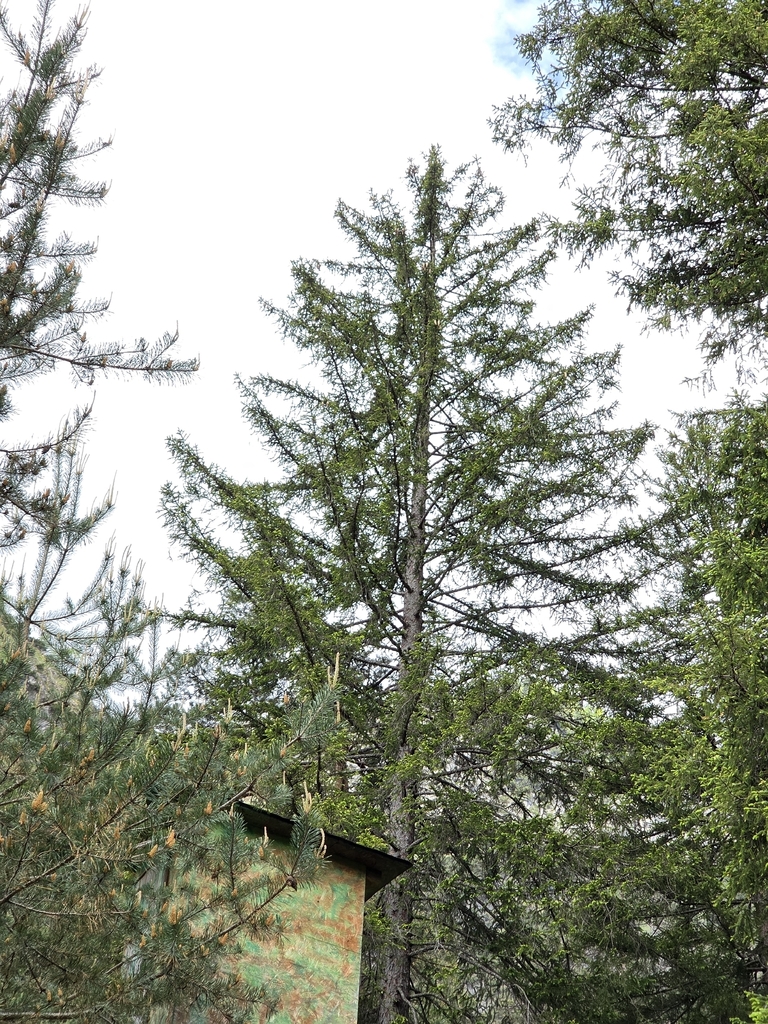
Larix decidua, the European Larch, is a medium to large deciduous coniferous tree that typically reaches 25–45 metres in height. The trunk grows stout and straight, normally attaining diameters up to 1.5 metres, though exceptional specimens have been recorded at nearly 54 metres tall with girths exceeding 11 metres. The crown is characteristically conic when the tree is young, gradually becoming broader and more irregular with age.
Foliage and Seasonal Appearance
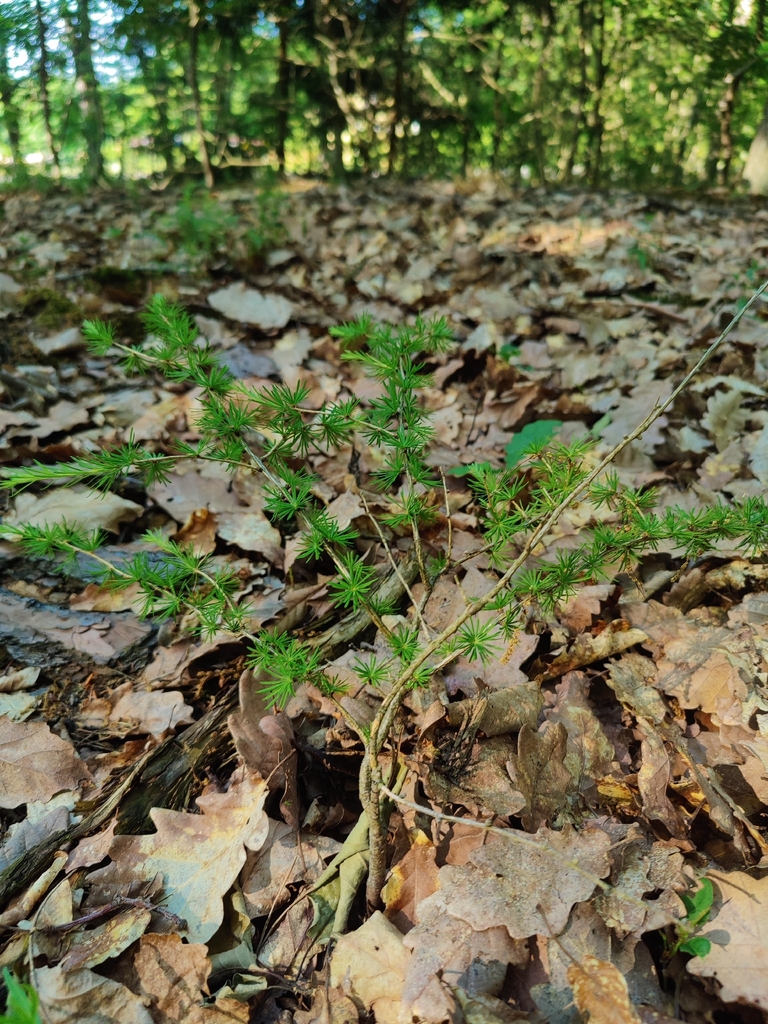
The needles are the defining feature of Larix decidua. Arranged in clusters on short spurs along the branches, they are soft and deciduous—unlike most conifers. The needles emerge bright green in spring and deepen to a rich mid-green throughout summer. In autumn, they undergo a striking transformation, turning golden yellow or orange-red before falling completely, leaving bare branches. This deciduous habit distinguishes larches from other conifers and allows them to thrive in harsh alpine and boreal environments where evergreen conifers might suffer winter drought stress.
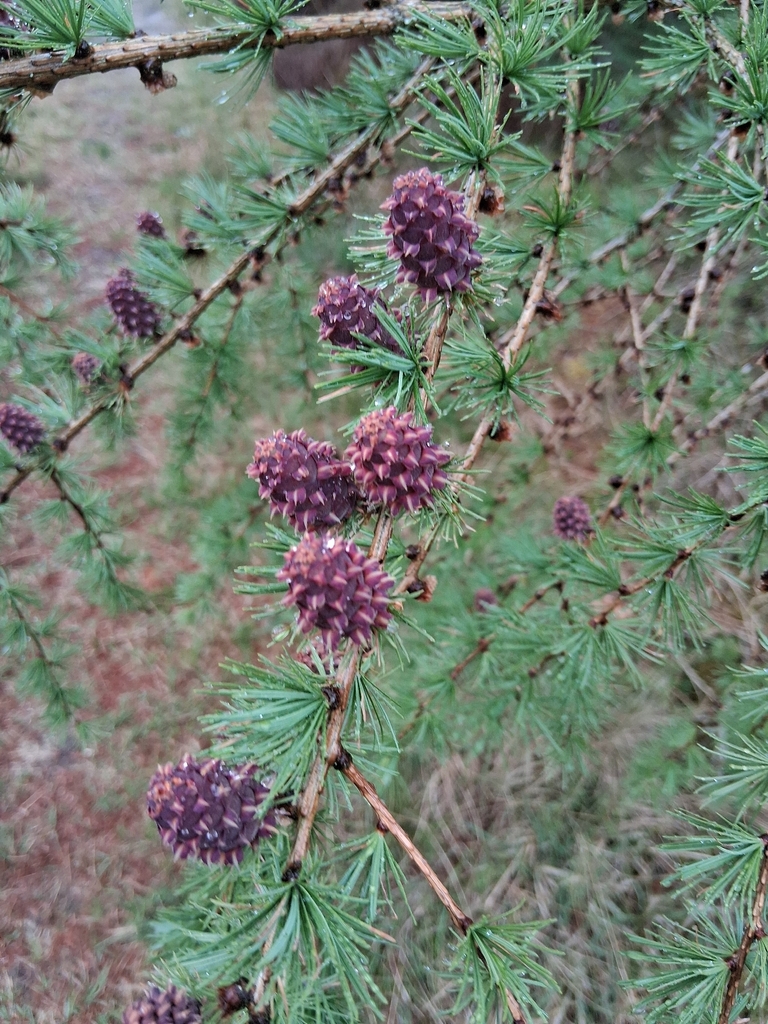
The bark is thin and smooth on young trees, becoming thicker, deeply furrowed, and greyish-brown with age. Cones are small and upright, maturing from purple-red to brown. The wood itself is dense and durable, with a distinctive reddish-brown heartwood that darkens over time.
Distribution and Habitat
Larix decidua occurs across 23 countries, with its stronghold in central and northern Europe. Austria leads in documented occurrences with 54 records, followed by Germany (38), Sweden (32), Finland (29), and Great Britain (25). The species also appears in Italy, Norway, France, Switzerland, and Canada, reflecting both its native Alpine range and introduced populations in temperate regions beyond Europe.
Elevation defines the species’ ecological niche. European Larch ranges from 17 metres in lowland areas to 1,867 metres in alpine and subalpine zones, with an average elevation of 925 metres across its range. This broad vertical distribution reflects its tolerance for both maritime climates at sea level and harsh high-altitude environments where it forms natural timberline communities.
Seasonal patterns show a pronounced peak in March observations, with 134 records in that month alone. January and February contribute 111 and 55 records respectively, while no observations cluster in the warmer months (April through December). This winter–early spring peak likely reflects the species’ deciduous phenology and the visibility of bare larch stands during dormancy, when the distinctive reddish twigs and branch architecture are most apparent to field observers.
Growth and Cultivation
Growth
Larix decidua, the European larch, is a deciduous conifer that reaches 20–40 metres in height at maturity, with a narrow, pyramidal crown and slender branching. The trunk develops a straight, columnar form and can exceed one metre in diameter in old-growth specimens. Needles emerge in spring in clustered tufts along the twigs and turn golden-yellow before dropping in autumn—a striking seasonal display unique among conifers in temperate zones.
The bark is smooth and greyish on young trees, becoming furrowed and deeply fissured with age. Branches are typically spreading to slightly ascending, creating an open framework that allows light penetration to the forest floor. This deciduous habit means the tree invests less energy in winter protection, enabling rapid growth during the brief growing season in Alpine and boreal regions where it naturally occurs.
Flowering and Fruiting
European larch produces separate male and female reproductive structures on the same tree. Male cones appear as small, yellow catkin-like structures that release pollen in spring; female cones develop as upright, rose-coloured or purple structures that mature into small, woody cones 1–4 centimetres long. Seeds ripen by autumn and are dispersed by wind, often falling considerable distances from the parent tree.
The cones persist on branches for several years after seed release, becoming brown and papery. In cultivation, flowering occurs reliably once trees reach 15–20 years of age, though earlier flowering can occur in favourable conditions or in trees grown from seed collected from vigorous provenances.
Cultivation
European larch thrives in full sun and requires well-drained soils to establish successfully. It tolerates a wide range of soil types including sandy loams and rocky substrates, though it performs best in moderately fertile conditions with slight acidity to neutral pH. The species is hardy in cool-temperate and boreal climates and is widely planted in northern Europe, Canada, and mountainous regions for timber production and ornamental appeal.
Young trees benefit from regular watering during establishment, particularly in drier growing seasons. Once established, the species shows resilience to cold winters and spring frosts—an advantage in regions with unpredictable weather. Mature trees require minimal maintenance in suitable sites and recover well from pruning, though the natural form is typically left unmodified in forestry and landscape applications. Wind exposure is generally tolerated, making the species suitable for exposed ridges and hillsides where many other conifers struggle.
Conservation and Threats
Larix decidua, the European Larch, holds a conservation status of Least Concern according to the IUCN Red List. This designation reflects the species’ wide distribution across temperate and boreal regions of Europe, its established presence in commercial forestry systems, and the absence of evidence indicating rapid population decline. The stable status does not indicate abundance everywhere, but rather that the species faces no immediate threat of extinction at a global scale.
Threats
European Larch populations encounter several environmental pressures, though none currently poses an existential risk. Climate change presents a growing concern, particularly for populations at lower elevations and southern range margins, where warmer temperatures and altered precipitation patterns may degrade suitable habitat. Forest pests, especially larch casebearer and larch sawfly, periodically damage foliage and reduce growth rates in affected stands. Logging for timber, while not threatening the species’ survival, reshapes age structure and genetic composition in managed forests. Local habitat loss through agricultural conversion and urban development affects populations in marginal areas, though core distribution remains intact across mountainous regions.
Conservation Efforts and Legal Protection
European Larch benefits from protection under forestry legislation across much of its range, particularly in Alpine countries where sustainable management practices are mandated. The species is widely cultivated in commercial plantations and botanical collections throughout Europe, which provides a buffer against wild population decline. National forestry agencies in countries including Austria, Switzerland, and France actively monitor larch health and implement pest management strategies. Genetic conservation programmes preserve regional seed sources and promote adapted provenances for future reforestation efforts.
Cultural Significance
European larch wood holds substantial practical and cultural importance across European building traditions. Its exceptional weatherproof properties and high resin content make it the preferred choice for construction timber, particularly in regions where durability against the elements matters most. These qualities have secured its place in vernacular architecture for centuries, though its difficult machinability has limited its use in furniture production, confining it largely to structural and exterior applications.
Beyond timber, European larch has deep roots in traditional medicine across its native range. Larch bark and extracts have long been employed as a diuretic, expectorant, and anthelmintic remedy. Powdered bark serves as an external application to promote healing of purulent wounds, chronic eczema, and psoriasis, while bark extracts are valued for their reputed diuretic and antiseptic properties. These traditional uses reflect centuries of folk knowledge about the tree’s medicinal compounds, though modern pharmacological validation remains limited. Ornamental cultivars have also been developed, extending the tree’s cultural presence from the working forest into gardens and parks.
Fun Facts
- The European larch is one of the very few conifers on Earth that sheds its needles completely in autumn, turning brilliant gold before dropping them—a behaviour rare among cone-bearing trees, most of which retain their foliage year-round.
- Individual European larches can live for close to 1,000 years, with ages around 2,000 years considered likely for some specimens, making them among Europe’s longest-living trees and valuable subjects for studying ancient climate patterns through their growth rings.
- The species is native exclusively to the mountains of central Europe, primarily the Alps and Carpathian Mountains, yet isolated lowland populations persist in northern Poland—a geographical puzzle that reflects its complex post-glacial migration history.
- European larch wood is remarkably durable and resistant to decay, which has made it prized for centuries in shipbuilding, bridge construction, and outdoor structures where it can withstand harsh weather without treatment.
- Despite being a conifer, the larch’s needles are softer and more delicate than those of evergreen conifers, and they emerge in dense tufts from the branches rather than spreading along the twig like a spruce or fir.
- The tree’s thick, deeply furrowed bark develops slowly over centuries and becomes increasingly textured with age, creating a distinctive appearance that changes dramatically across the seasons as the canopy transforms from needle-covered to bare branches.
Conservation Status
LC (Least Concern) · NT · VU · EN · CR · EW · EX
Photo Gallery
carnifex · CC BY 4.0
Related Species
Was this profile helpful?