
Eurotatoria · Ploima
Lepadella Paparoa
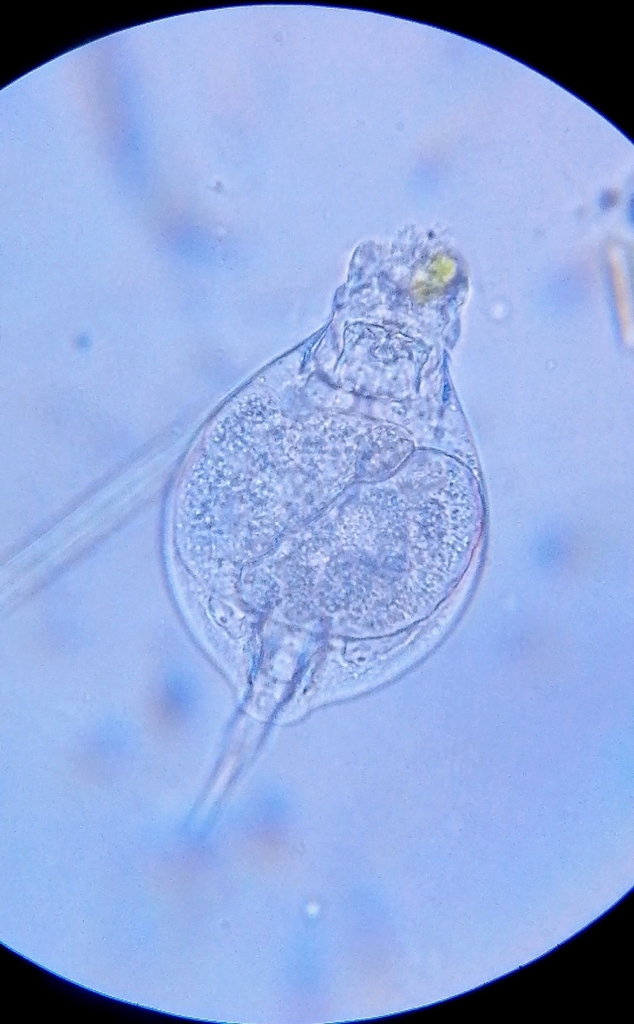
Lepadella paparoa

Scientific Classification & Quick Facts
Classification
Known For
Full profile in progress — check back soon.
Lepadella paparoa is a microscopic rotifer—a creature so small it exists at the threshold of visibility to the human eye. Like all members of the phylum Rotifera, this animal belongs to an ancient lineage of aquatic invertebrates that have persisted for hundreds of millions of years, inhabiting freshwater and marine environments across the globe. Despite their diminutive size, rotifers are remarkably complex organisms, equipped with distinct organ systems and the ability to colonize nearly every aquatic habitat on Earth.
Lepadella paparoa represents one of many species within the diverse family Lepadellidae, though detailed information about its specific distribution and ecological role remains limited. Its conservation status is currently unknown, reflecting the broader challenge of documenting and monitoring microscopic organisms that rarely receive public attention. What makes this species noteworthy is its membership in a group that exemplifies life at the smallest scales—organisms that demonstrate that biological complexity and ecological importance are not determined by body size.
Identification and Appearance
Lepadella paparoa is a microscopic rotifer belonging to the family Lepadellidae. Like all members of this genus, it is a minute aquatic organism requiring magnification to observe its anatomical features in detail. The species inhabits freshwater environments and shares the characteristic body plan typical of rotifers: a compact anterior region bearing ciliated structures for feeding and locomotion, and a posterior trunk terminating in a foot-like appendage.
Detailed morphological measurements and descriptions specific to Lepadella paparoa remain limited in widely accessible taxonomic literature. Identification of this species relies on microscopic examination of internal and external structures, particularly the arrangement of lorica plates, the form of the trophi (jaw structures), and the morphology of the foot and toes. As with most rotifer species, accurate identification typically requires preparation of specimens for optical or electron microscopy and comparison with type material or detailed taxonomic keys.
The genus Lepadella comprises armoured rotifers characterized by a hard, sculptured covering called a lorica. Members of this group are generally found in benthic (bottom-dwelling) habitats of freshwater systems, where they graze on bacteria, algae, and organic detritus. Lepadella paparoa represents one of numerous described species within this diverse genus, each with subtle morphological distinctions that define their taxonomy and ecological roles.
Distribution and Habitat
Lepadella paparoa is a rotifer species with extremely limited documented distribution data. Current records do not provide sufficient geographic information to establish a clear global range, regional concentration, or pattern of occurrence across countries or continents.
Specific habitat preferences, elevation ranges, and seasonal activity patterns for this species remain undocumented in available biodiversity databases. The scarcity of observational records suggests either genuinely localized occurrence, specialization to rarely surveyed microhabitats, or limited taxonomic attention to rotifer biodiversity in regions where the species may be present.
Future surveys and molecular work may expand our understanding of L. paparoa‘s true distribution and ecological niche. Rotifers are ubiquitous in freshwater and moist terrestrial environments worldwide, but detailed biogeographic data for most species remain sparse.
Biology and Behavior
Behavior
Lepadella paparoa is a rotifer, a microscopic animal inhabiting freshwater and brackish environments. Like other rotifers, it is a benthic organism that moves through water columns and across substrate surfaces using its characteristic corona of cilia. These hair-like structures create water currents for both locomotion and feeding. The species exhibits the typical sedentary to semi-mobile lifestyle of its genus, remaining in or near suitable microhabitats rather than undertaking large-scale migrations.
As a member of the genus Lepadella, this species likely occupies interstitial spaces within sediments and among aquatic vegetation, where it exploits microhabitats rich in organic matter and bacterial communities. Rotifers of this type are often more abundant in shallow, vegetated zones of water bodies where detritus accumulates and oxygen levels fluctuate with light and season. Their activity patterns are governed by water temperature, oxygen availability, and food resource distribution at the microscopic scale.
Diet
The feeding ecology of Lepadella paparoa follows the generalist pattern of many lepadellid rotifers. The species is a detritivore and bacteriophage, using its ciliated corona to draw fine organic particles, bacteria, and small algal cells into its buccal apparatus. It processes decaying plant material, fecal pellets from larger organisms, and dissolved organic compounds present in the water films around sediment grains.
Because of its minute size—typical rotifers measure 0.2 to 0.5 millimetres—Lepadella paparoa can access food resources unavailable to larger animals. It feeds continuously in microhabitats where decomposition generates abundant bacterial and fungal growth, making it an efficient consumer of organic detritus in nutrient-rich freshwater systems.
Reproduction
Rotifers in the genus Lepadella reproduce both sexually and asexually depending on environmental conditions. Under favorable conditions—adequate food, stable temperature, and low population density—females produce clones via parthenogenesis, allowing rapid population increase. When conditions deteriorate or crowding increases, sexual reproduction occurs; males develop, and females produce hardy diapausing eggs capable of surviving desiccation and freezing.
Developmental time in rotifers is rapid, often spanning only 3 to 7 days from egg to reproductive adult at moderate temperatures. This short generation time, combined with the capacity for both asexual and sexual reproduction, enables Lepadella paparoa to respond quickly to seasonal changes and resource availability in its microhabitat, making it a resilient component of freshwater zooplankton and meiofaunal communities.
Conservation and Threats
Lepadella paparoa is a rotifer species with no formal IUCN Red List assessment. As a microscopic organism, this species has received limited conservation attention, and its population status and trends remain undocumented in scientific literature. Like many small aquatic invertebrates, it exists below the threshold of conventional wildlife monitoring programmes.
Threats and Conservation Efforts
The primary threat to Lepadella paparoa and similar rotifers is habitat degradation, particularly freshwater pollution and eutrophication. Changes in water chemistry, nutrient overload from agricultural runoff, and contamination from industrial or urban sources can alter the microhabitats these organisms depend on. Additionally, alterations to freshwater ecosystems through damming, drainage, or climate-driven shifts in water availability pose indirect risks to rotifer populations.
No dedicated conservation programmes or legal protections specifically target Lepadella paparoa. However, broader freshwater conservation efforts—including wetland protection, water quality improvement, and ecosystem restoration—benefit this species indirectly. Inclusion of rotifers in biodiversity surveys and freshwater monitoring would strengthen baseline knowledge of their distribution and population dynamics.
Cultural Significance
Lepadella paparoa is a microscopic rotifer whose cultural significance is primarily tied to its role in scientific research and conservation efforts centred on New Zealand’s biodiversity. The species is named after Paparoa National Park on the West Coast of New Zealand’s South Island, a region that has become a focal point for native species conservation. While the organism itself does not feature in traditional folklore or cultural practices, it represents part of the wider ecological heritage that communities in the Paparoa Ranges seek to protect and understand.
The species gains contemporary cultural importance through community-led conservation initiatives operating in the Paparoa Ranges near Greymouth. These efforts reflect growing public engagement with New Zealand’s threatened native fauna and flora, many of which have been pushed to the brink of extinction by introduced predators and habitat destruction. Populations that once ranged across the West Coast now survive primarily in forested refugia like Paparoa National Park, making species inventories and ecological studies—including research on microscopic organisms like Lepadella paparoa—part of broader efforts to document and conserve remaining native biodiversity before knowledge of these species is lost entirely.
Fun Facts
Lepadella paparoa belongs to the rotifer genus Lepadella, a group of microscopic animals so small they require a microscope to observe. Rotifers are among the most abundant freshwater animals on Earth, yet most people never encounter them directly.
- Rotifers can survive extreme conditions — many species in this group can enter a state of suspended animation called cryptobiosis, allowing them to endure freezing temperatures, desiccation, and radiation that would kill most organisms.
- The genus Lepadella is found worldwide — members of this genus have a cosmopolitan distribution, inhabiting freshwater ecosystems across every continent and adapting to diverse environmental conditions.
- They are filter feeders with a distinctive crown — Lepadella rotifers use a crown-like structure called a corona to create water currents that sweep food particles into their mouths, allowing them to feed on bacteria, algae, and organic detritus.
- Rotifers reproduce both sexually and asexually — many rotifer species, including members of Lepadella, can reproduce through parthenogenesis (asexual reproduction) when conditions are favorable, then switch to sexual reproduction when stressed.
- They complete their entire life cycle in days — Lepadella species typically mature and reproduce within 3–5 days, allowing populations to explode rapidly when food and water conditions are ideal.
- Rotifers are essential indicators of water quality — the presence and diversity of rotifer species, including Lepadella, serve as important biological markers for assessing the health and pollution levels of freshwater habitats.
Related Species
Was this profile helpful?