
Eurotatoria · Ploima
Lepadella Bidentata
Lepadella bidentata

Scientific Classification & Quick Facts
Classification
Known For
Full profile in progress — check back soon.
Lepadella bidentata is a microscopic rotifer—a member of the phylum Rotifera, a group of aquatic animals so small that most species require magnification to observe. Despite their minuscule size, rotifers are fierce predators and grazers in freshwater and brackish ecosystems, equipped with a characteristic wheel-like feeding apparatus called a corona. This particular species belongs to the family Lepadellidae and has been documented in limited geographic range, currently recorded from a single country.
The conservation status of Lepadella bidentata remains unknown, reflecting a broader gap in our understanding of microfaunal diversity worldwide. These organisms play an underappreciated ecological role in freshwater food webs, transferring energy from bacteria and algae to larger aquatic animals. Their restricted known distribution and limited documentation make this species a quiet representative of Earth’s vast microscopic biodiversity.
Identification and Appearance
Lepadella bidentata is a microscopic rotifer belonging to the family Lepadellidae. Like all rotifers, it is a minute aquatic organism requiring magnification to observe its anatomical features clearly. The genus Lepadella comprises some of the smallest multicellular animals on Earth, and L. bidentata exemplifies the remarkable morphological complexity found within this group.
General Morphology
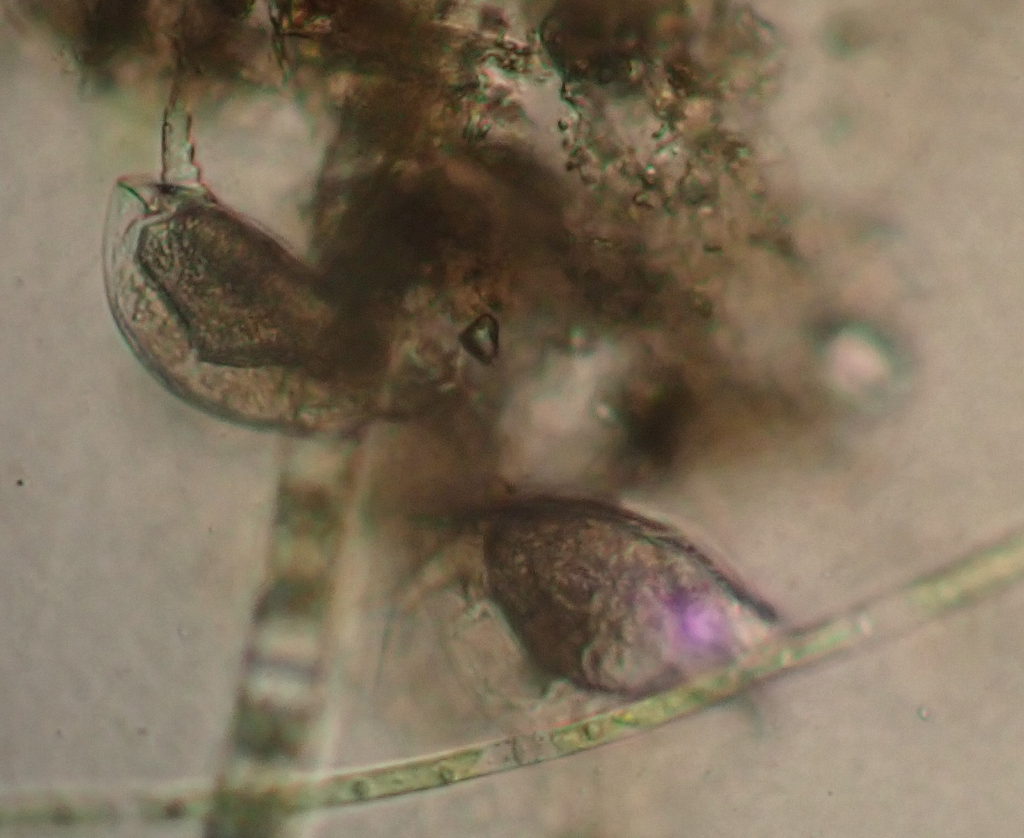
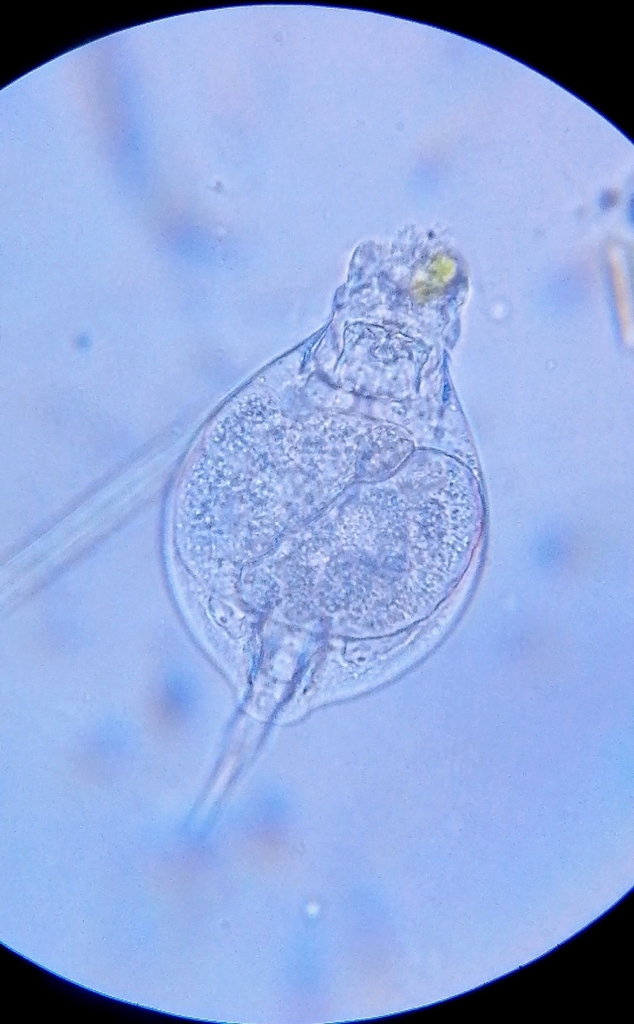
Members of the genus Lepadella are characterized by a flattened, oval body plan with a distinct anterior and posterior region. Lepadella bidentata exhibits the diagnostic features typical of its genus: a lorica (a hardened outer covering) that provides structural support, and a specialized corona of cilia used for feeding and locomotion. The species name “bidentata” refers to the two tooth-like projections or similar structural elements that distinguish this taxon from related species within the genus. These features are best observed under high-magnification microscopy (typically 400× or greater).
The rotifer’s body plan includes a muscular pharynx equipped with grinding structures called mastax, which processes food particles, and a complete digestive tract. Internal organs remain visible through the translucent body wall, allowing researchers to identify species based on the arrangement and morphology of key anatomical structures. Coloration is typically colourless to pale, with no significant pigmentation visible at standard magnifications.
Distribution and Habitat
Lepadella bidentata is a rotifer with a documented presence in Nigeria, representing the only recorded country location for this species. Current occurrence data is limited, reflecting either a genuinely restricted range or insufficient sampling effort in other regions where it may occur.
Elevation data and specific habitat preferences have not been characterized for this species. The available records do not indicate a clear seasonal pattern, and historical occurrence data across months remain unavailable. Further surveys, particularly in freshwater and brackish systems across West Africa and beyond, would help clarify the true geographic and ecological scope of this microscopic species.
Biology and Behavior
Behavior
Lepadella bidentata is a microscopic rotifer that inhabits freshwater environments. As a member of the Lepadellidae family, this organism exhibits the characteristic behaviors of rotifers, spending its existence among aquatic sediments, algae, and organic detritus. Its movements are driven by the beating of its corona—a ring of cilia around the mouth that generates currents for both locomotion and feeding.
The species remains largely solitary, with no documented social structure or aggregation behavior. Its activity patterns follow the availability of food resources and environmental conditions such as water temperature and oxygen levels. Movement occurs primarily through ciliary action, allowing the organism to navigate through the water column and across substrate surfaces in search of sustenance.
Diet
Lepadella bidentata, like most rotifers, is a filter feeder that consumes bacteria, small algae, and organic particles suspended in freshwater. Its corona creates feeding currents that draw microscopic food particles toward its mouth. The organism processes these materials through its simple digestive system, extracting nutrients necessary for growth and reproduction.
This feeding strategy positions the species as a minor but functional component of freshwater food webs, converting microbial biomass into living tissue available to small predators such as copepods and early fish larvae.
Reproduction
Lepadella bidentata reproduces primarily through asexual parthenogenesis under favorable conditions, allowing rapid population growth when food and environmental conditions are suitable. Females produce clones of themselves without the involvement of males, a reproductive strategy that enables quick exploitation of abundant resources.
Sexual reproduction occurs episodically, typically during periods of environmental stress or overcrowding, producing diapausing eggs that can survive harsh conditions. These hardy eggs allow populations to persist through unfavorable seasons in dormancy before resuming development. The lifespan of individual L. bidentata is brief—usually measured in days—but high reproductive rates ensure population continuity across generations.
Conservation and Threats
Lepadella bidentata is a microscopic rotifer with no formal assessment on the IUCN Red List. Like many invertebrates of its size and habitat preference, this species lacks dedicated conservation monitoring and status evaluation. The absence of an official assessment reflects broader challenges in conserving organisms that are difficult to survey and often overlooked in biodiversity research.
The specific threats facing L. bidentata remain undocumented in scientific literature. However, as a freshwater rotifer typically found in small water bodies, it is likely sensitive to habitat degradation, including pollution, water extraction, and eutrophication of aquatic systems. Population trends are unknown, and no dedicated conservation programmes currently protect this species.
Conservation Efforts and Research Needs
No legal protections or targeted conservation initiatives exist for L. bidentata. Conservation action for this species would benefit from baseline surveys to establish its current distribution and population status. Protecting the small freshwater habitats in which it lives—whether through wetland designation, pollution controls, or watershed management—would indirectly support this and countless other microscopic species that depend on clean water.
Cultural Significance
Lepadella bidentata is a microscopic rotifer with minimal documented cultural significance. As a minute aquatic organism, this species has not featured prominently in human folklore, art, cuisine, or traditional medicine. Its presence in scientific literature is primarily limited to taxonomic classification and biodiversity databases rather than cultural records or ethnographic documentation.
The species remains largely unknown outside specialized scientific contexts. With zero recorded observations in citizen science platforms and limited representation in cultural repositories, Lepadella bidentata exemplifies the vast majority of Earth’s biodiversity—organisms of genuine ecological importance whose roles in nature far exceed their visibility in human culture. Its study belongs primarily to the domain of invertebrate systematics and freshwater ecology rather than cultural anthropology or humanities.
Fun Facts
- Lepadella bidentata belongs to the rotifers, a group of microscopic animals so small they are typically invisible to the naked eye. These creatures are among the most abundant multicellular organisms on Earth, yet remain largely unknown to the general public.
- Members of the genus Lepadella are found on every continent except Antarctica, making them truly cosmopolitan in their distribution. This extraordinary reach across diverse climates and ecosystems speaks to the adaptability of rotifers as a group.
- Rotifers in the family Lepadellidae possess a specialized feeding structure called a corona, which is ringed with cilia that trap food particles suspended in water. The distinctive tooth-like structures in the species name “bidentata” (meaning “two-toothed”) refer to features visible under a microscope.
- Despite their microscopic size, rotifers have complete organ systems including a brain, digestive tract, and reproductive organs, making them far more complex than single-celled organisms. Lepadella bidentata is a fully-formed animal in miniature.
- Many rotifer species can enter a state called cryptobiosis, surviving extreme desiccation and temperature fluctuations by entering a dormant condition. This survival strategy allows populations to persist through harsh seasonal changes in freshwater habitats.
- Rotifers are primarily filter feeders, consuming bacteria, algae, and organic particles from freshwater environments. Their role in aquatic food webs is crucial despite their invisibility, as they process enormous quantities of microbial biomass.
Related Species
Was this profile helpful?