
Eurotatoria · Ploima
Lepadella Triptera
Lepadella triptera
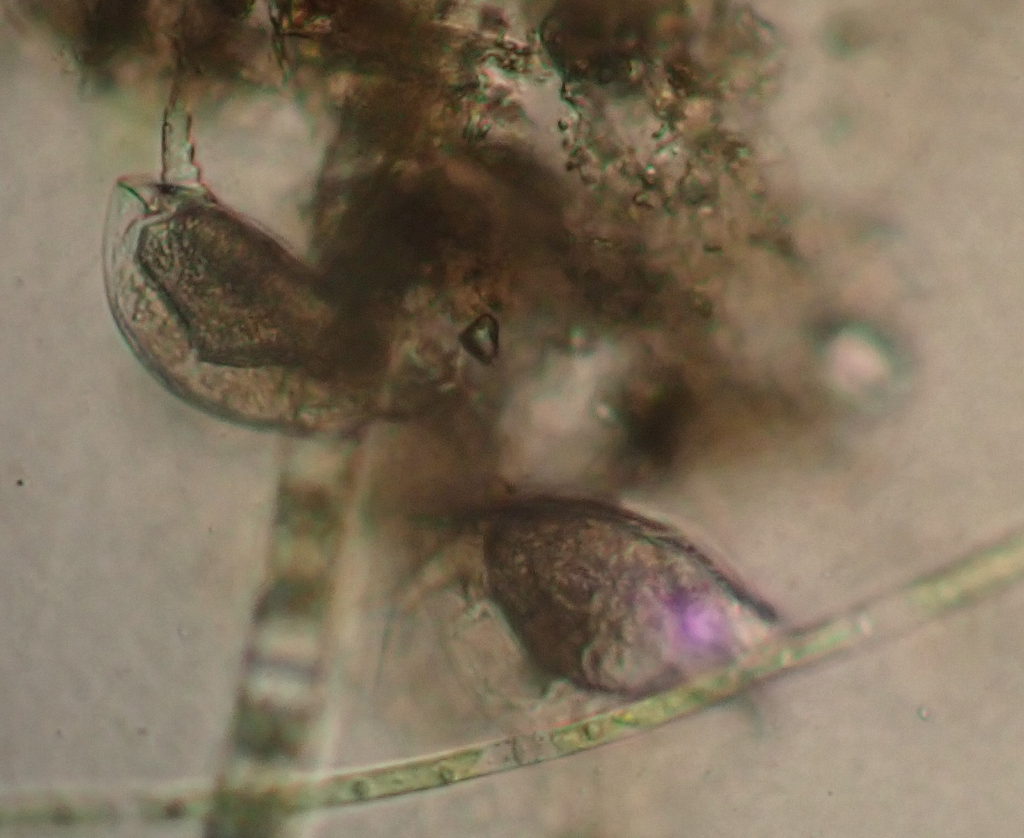
© Michelle Casanova · iNaturalist · CC BY-NC 4.0
Scientific Classification & Quick Facts
Classification
Known For
Full profile in progress — check back soon.
Lepadella triptera is a microscopic rotifer belonging to the family Lepadellidae, a group of ancient aquatic animals that have persisted virtually unchanged for over 300 million years. Despite their diminutive size—typically less than 0.5 millimetres—these remarkable creatures inhabit freshwater ecosystems across the globe, with confirmed records from 34 countries spanning multiple continents. Their conservation status remains unknown, a reflection of how little the scientific community still understands about microscopic fauna at a global scale.
What makes Lepadella triptera particularly noteworthy is its ecological role as a keystone grazer in freshwater microhabitats. As a member of the zooplankton community, it feeds on bacteria, algae, and detritus, thereby regulating microbial populations and nutrient cycling in aquatic systems. The tripteran morphology—likely referring to three-lobed or three-winged structures characteristic of the genus—distinguishes this species within the Lepadellidae family and reflects specific adaptations for movement and feeding in its aquatic niche. Understanding such minute organisms enriches our knowledge of freshwater biodiversity and the intricate processes that sustain aquatic ecosystems worldwide.
Identification and Appearance
Lepadella triptera is a microscopic rotifer belonging to the family Lepadellidae. Like all rotifers, this organism is extremely small and requires magnification to observe its anatomical details. The species occurs at an average elevation of approximately 685 metres, suggesting a preference for mid-altitude freshwater environments.
Detailed morphological data specific to L. triptera remains limited in widely accessible literature. The genus Lepadella is characterized by a distinctive lorica—a hard, transparent outer casing—that provides structural support and protection. Members of this genus typically possess appendages suited to their filter-feeding lifestyle in aquatic systems. Specific measurements of body length, weight, and precise distinguishing features for this species would require examination of specialized taxonomic literature or direct observation under high-magnification microscopy.
Identification of Lepadella triptera relies on detailed morphological comparison with congeners, particularly focusing on the form and arrangement of lorical plates, the structure of the corona (ciliated feeding apparatus), and other microscopic characteristics. Accurate species-level determination generally demands expertise in rotifer taxonomy and examination using light microscopy or electron microscopy. Field collection and preservation techniques are essential for reliable identification in biodiversity surveys.
Distribution and Habitat
Lepadella triptera is a cosmopolitan rotifer with records spanning 34 countries across multiple continents. GBIF records show the highest concentration in Italy (13 observations), followed by Australia (8), the United States (7), France (6), and Antarctica (6). Additional significant populations occur in Austria, Poland, the United Kingdom, and the Democratic Republic of the Congo, indicating a truly global distribution pattern.
The species occurs across a broad elevation range, from 15 metres above sea level to 1,420 metres, with an average of 684.7 metres. This vertical distribution suggests L. triptera inhabits microhabitats at both lowland and montane elevations, adapting to diverse environmental conditions. The absence of specific habitat classification in formal records reflects the difficulty in standardizing microhabitat descriptions for microscopic freshwater organisms.
Seasonal occurrence data reveal a pronounced peak in January, with 12 observations recorded during that month. Activity remains relatively consistent through spring and autumn (April–May and August show 6–9 observations each), while summer months (June–July) and late autumn (November) show minimal or no records. This pattern likely reflects sampling effort and seasonal availability of water bodies rather than strict phenological constraints, though winter dormancy or aggregation in specific microhabitats during colder months may contribute to the January peak.
Biology and Behavior
Behavior
Lepadella triptera is a rotifer, a microscopic animal that inhabits freshwater and brackish environments. Like other rotifers, it moves through water using its corona—a ring of cilia (hair-like structures) around its mouth. These cilia beat in a coordinated pattern that propels the organism forward and also draws food particles toward its feeding apparatus. The triptera designation in its name refers to the three-lobed foot characteristic of this species, which it uses to attach temporarily to substrates while feeding.
This species exhibits the typical sessile or semi-sessile lifestyle of many rotifers, remaining relatively stationary while feeding in dense vegetation, algal mats, or sediment. Movement is generally limited to short migrations between food sources or in response to environmental changes such as oxygen depletion or temperature shifts. Rotifers in this genus are sensitive to water quality and are often used as bioindicators of aquatic ecosystem health.
Diet
Lepadella triptera is a filter feeder and detritivore. It consumes suspended organic particles, bacteria, and small algal cells that it captures using the ciliary currents generated by its corona. The organism’s mouth leads to a muscular mastax—a grinding apparatus unique to rotifers—which processes food particles before they enter the digestive system. This feeding strategy is typical of bdelloid rotifers, the group to which Lepadella belongs.
Reproduction
Lepadella triptera reproduces asexually through parthenogenesis (virgin birth), where females produce clones of themselves without genetic contribution from males. This reproductive strategy allows populations to expand rapidly under favorable conditions—adequate food, stable temperature, and good water quality. The rotifer produces eggs that hatch into juvenile forms within days, and sexual maturity occurs quickly, enabling successive generations to begin reproduction within a short timeframe.
Under environmental stress such as food scarcity, temperature extremes, or chemical changes, sexual reproduction may be induced. Males are produced less frequently and only under these challenging conditions, allowing the species to generate genetic diversity when adaptation becomes necessary. Eggs produced through sexual reproduction develop thicker shells and enter a dormant state, enabling survival through unfavorable periods until conditions improve and hatching resumes.
Conservation and Threats
Lepadella triptera is a microscopic rotifer with no formal assessment on the IUCN Red List. Like many microfauna species, its conservation status remains undocumented, reflecting the broader challenge of monitoring and protecting organisms at this scale. Without systematic population surveys or threat assessments, the true conservation needs of this species remain largely unknown.
Threats
The primary threats to Lepadella triptera and other freshwater microfauna are habitat degradation and water quality decline. Eutrophication, pollution, and loss of aquatic vegetation in freshwater ecosystems directly impact rotifer populations. Climate change may also alter the temperature and chemical composition of freshwater habitats, though species-specific responses are not yet documented for this taxon.
Conservation Efforts
No targeted conservation programmes or legal protections currently exist for Lepadella triptera. Protection of this species occurs indirectly through broader freshwater ecosystem conservation and water quality management policies. Wetland preservation and restoration projects that maintain healthy aquatic habitats benefit rotifers alongside other microorganisms and macroinvertebrates.
Given the lack of specific population data and threat information, further research on the distribution and ecological role of Lepadella triptera is essential. Community science initiatives that document microscopic aquatic life can help build baseline knowledge of rotifer diversity and abundance across different freshwater systems.
Cultural Significance
Lepadella triptera occupies a distinct niche in scientific culture rather than in traditional human folklore or symbolism. As a microscopic rotifer, it exists largely beyond the everyday awareness of the general public, yet it holds measurable importance in ecological research and environmental monitoring. The species appears in scientific literature primarily as an indicator organism for water quality assessment and ecosystem health.
In hydrological and ecological research, Lepadella triptera serves a practical role in monitoring at-risk freshwater systems. The species was identified as one of three dominant rotifer taxa found across seven stressed springs in the southwestern United States, where groundwater depletion and drought conditions threaten water security. Its presence alongside Lepadella patella and Philodina megalotrocha indicates the organism’s resilience in springs with elevated calcium concentrations (468–775.2 mg/L), making it valuable for assessing spring ecology under environmental stress. This presence in multiple springs under similar pressure demonstrates the rotifer’s utility as a biomarker for water-quality studies and conservation monitoring.
Within the scientific community, rotifers as a group—including species related to Lepadella triptera—are increasingly recognized for their cultural significance in developmental and evolutionary research. Model rotifers such as Brachionus manjavacas have become established tools for investigating evolution, stress responses, aging biology, and maternal effects in laboratory settings. While Lepadella triptera itself is not documented as a formal model organism, its ecological prominence in natural spring systems positions it within a broader cultural narrative of rotifers as essential organisms for understanding both aquatic ecosystems and fundamental biological processes.
Fun Facts
Lepadella triptera is a microscopic rotifer that inhabits freshwater environments across the globe. Despite its size—typically less than 0.5 millimetres—this organism plays a measurable role in aquatic food webs and nutrient cycling.
- Rotifers like Lepadella triptera are among the smallest multicellular animals on Earth, visible only under a microscope, yet they possess a complete digestive system, nervous system, and reproductive organs.
- The name “rotifer” comes from the wheel-like appearance of the organism’s corona—a ring of cilia that rotates to draw in food particles and propel the creature through water.
- As a member of the family Lepadellidae, Lepadella triptera is equipped with a protective lorica (a hard outer casing), which distinguishes it from softer-bodied rotifer groups.
- Lepadella triptera exhibits a cosmopolitan distribution, meaning it is found on multiple continents and across diverse freshwater habitats—from ponds to lakes to soil moisture films—making it one of nature’s most successful microscopic colonisers.
- Many rotifer species, including members of Lepadella, can reproduce asexually through parthenogenesis when environmental conditions are favourable, allowing rapid population growth without the need for a mate.
- Rotifers are exceptional survivors: some species can enter a state called cryptobiosis, where metabolic activity nearly stops, allowing them to endure extreme desiccation and temperature fluctuations that would kill most aquatic animals.
- The genus Lepadella has been used extensively in freshwater ecology research as a bioindicator of water quality, since rotifer composition and abundance reflect the health and nutrient levels of their habitat.
Photo Gallery
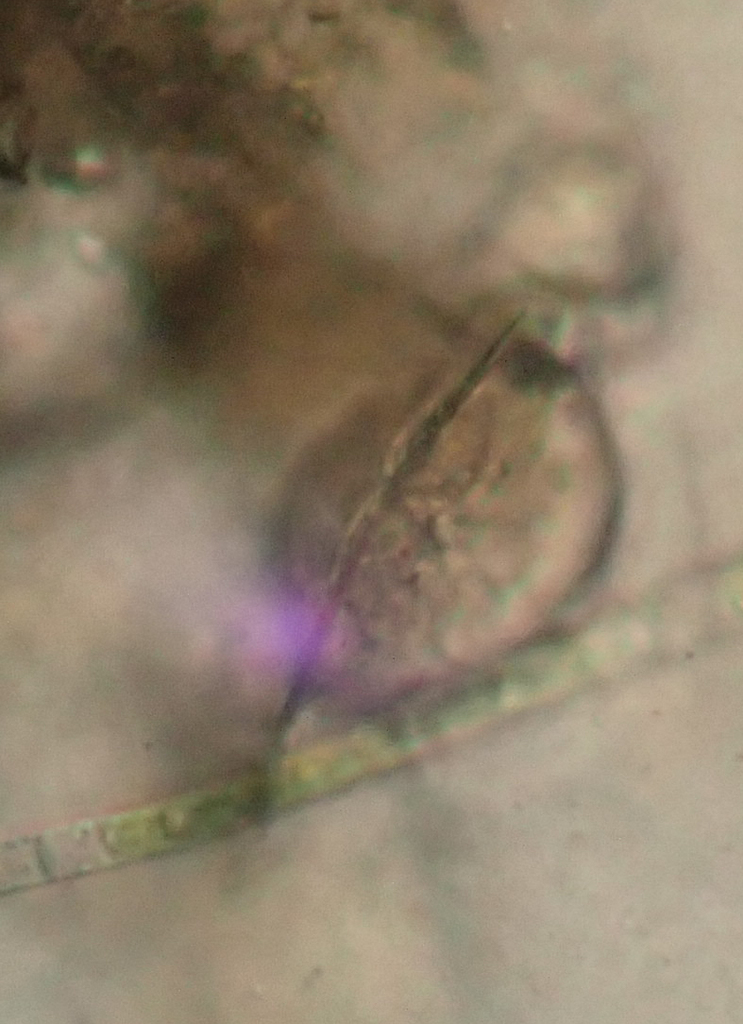
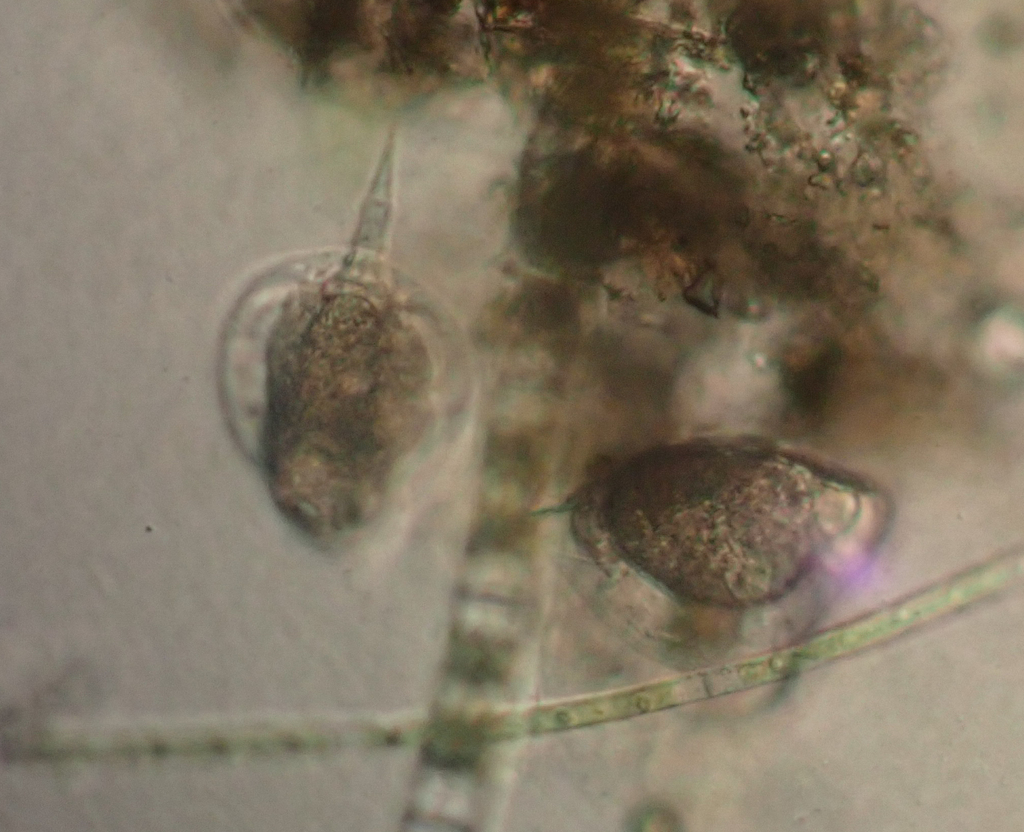
Michelle Casanova · CC BY-NC 4.0
Related Species

Was this profile helpful?