
Eurotatoria · Ploima
Lepadella Cryphaea
Lepadella cryphaea

Scientific Classification & Quick Facts
Classification
Known For
Full profile in progress — check back soon.
Lepadella cryphaea is a microscopic rotifer belonging to the family Lepadellidae, a group of freshwater animals so small that hundreds could fit on the head of a pin. These transparent, wheel-bearing creatures inhabit aquatic environments across at least five countries, yet remain largely unknown to the general public—confined to the specialized focus of hydrobiologists and freshwater ecologists who study life in microcosms.
Despite its diminutive size, Lepadella cryphaea is a fully functional animal with genuine ecological importance in freshwater food webs, where it feeds on even tinier organisms and serves as prey for small aquatic predators. Its conservation status remains unknown, reflecting the broader challenge of tracking biodiversity among organisms that require microscopes to study. Understanding this species and others like it is essential to appreciating the hidden complexity of freshwater ecosystems worldwide.
Identification and Appearance
Lepadella cryphaea is a microscopic rotifer belonging to the family Lepadellidae. As with most rotifers, this species is extraordinarily small and requires magnification to observe its anatomical features in detail. The genus Lepadella comprises benthic and interstitial species that occupy freshwater and brackish environments, often found in sediments and detritus at elevations averaging around 858 metres.
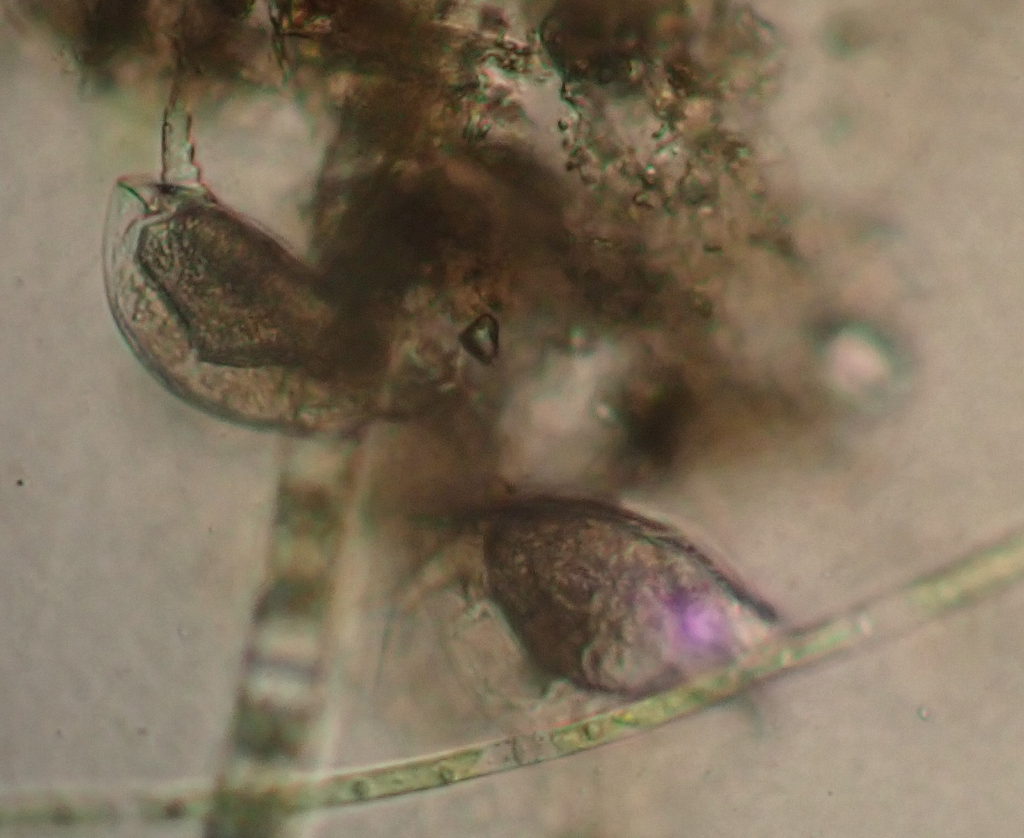
The body plan of L. cryphaea reflects the typical architecture of lepadellid rotifers: a compact, muscular trunk with a ciliated corona at the anterior end used for feeding and locomotion. The organism possesses a characteristically rigid lorica (external shell-like cuticle) that provides structural protection. Like other members of the genus, it bears foot appendages adapted for attachment to substrates, which facilitates its cryptic lifestyle in sediment matrices and among organic debris. The exact dimensions of this species remain poorly quantified in standard literature, reflecting the minimal body size characteristic of rotifers generally.
Distinguishing L. cryphaea from congeners requires careful microscopic examination of lorical morphology, including the arrangement and form of dorsal and ventral plates, the shape of the foot, and the structure of the rostrum. Sexual dimorphism typical of rotifer species—with males being smaller and often degenerate—applies to this taxon, though detailed comparative descriptions between sexes are limited. The cryptic nature of this species (reflected in its species epithet cryphaea) means it inhabits concealed microhabitats within sediment and detrital substrates, where it feeds on bacteria, organic particles, and small algae.
Distribution and Habitat
Lepadella cryphaea has been recorded across five countries on two continents, with the highest concentration of observations in the United States and Nigeria, each with three documented records. Single observations also occur in Austria, Guatemala, and Poland, indicating a scattered but genuine global presence. This rotifer’s broad geographic range suggests it may occupy multiple ecological niches or have been inadvertently transported through human activity.
Elevationally, L. cryphaea occupies a wide band from 216 metres to 1,500 metres above sea level, with an average elevation of 858 metres. This vertical spread indicates tolerance for both lowland and montane freshwater environments. The species shows a sparse but consistent temporal pattern, with three records concentrated in the months of March and August, though the limited dataset prevents definitive seasonal conclusions.
The ecological habitats preferred by L. cryphaea remain poorly documented, as no specific habitat classifications are yet recorded for this species. Like many rotifers, it likely occurs in freshwater microhabitats—including temporary pools, moss beds, and sediment-rich waters—across both tropical and temperate regions, but field surveys targeting specific habitat types would be necessary to confirm its ecological preferences.
Biology and Behavior
Behavior
Lepadella cryphaea is a rotifer, a microscopic freshwater animal belonging to the phylum Rotifera. Like other members of its genus, this species exhibits the characteristic behaviors of rotifers adapted to life in aquatic microhabitats. It inhabits small water bodies and moist substrates where it moves through the water column using its distinctive corona—a ciliated wheel-like structure at its anterior end that generates water currents for locomotion and feeding.
The species is solitary and does not form colonies or display complex social interactions. Its daily activity centers on grazing and maintaining position within its microhabitat, moving slowly through water or sediment according to local currents and chemical gradients. Rotifers of this type are generally hardy organisms, capable of surviving in environments with fluctuating oxygen levels and periodic desiccation by entering a dormant state.
Diet
Lepadella cryphaea is a detritivore and microphagous feeder, consuming particles of organic matter, bacteria, and microscopic algae. Using its corona to create feeding currents, the rotifer draws food particles toward its mouth. It plays a minor but measurable role in nutrient cycling within freshwater ecosystems, breaking down dissolved organic material and converting it into biomass available to small aquatic predators.
Reproduction
Reproduction in Lepadella cryphaea follows the reproductive strategy typical of many rotifer species. The organism is capable of both sexual and asexual reproduction, with asexual reproduction (parthenogenesis) being the dominant mode under stable environmental conditions. Females produce eggs that develop into clones of the parent without fertilization, allowing rapid population growth when resources are abundant.
Sexual reproduction occurs in response to environmental stress—declining food availability, overcrowding, or temperature fluctuations. Males are produced only under these conditions and are typically smaller and short-lived compared to females. After mating, females produce hardened resting eggs (cysts) capable of withstanding harsh conditions including freezing and desiccation, enabling the species to persist through unfavorable seasons and colonize new habitats through water dispersal.
Conservation and Threats
Lepadella cryphaea is a microscopic rotifer with no formal conservation assessment on the IUCN Red List. Like most rotifers, this species has not been evaluated for threatened status, reflecting the limited focus of global conservation efforts on microscopic aquatic organisms. Without baseline population data or documented threats, the conservation status remains unknown.
The genus Lepadella comprises small freshwater rotifers distributed across diverse aquatic habitats. L. cryphaea occurs in freshwater environments, where it feeds on bacteria, algae, and organic detritus. Its ecological role as a microbial grazer contributes to nutrient cycling and water quality in its habitat, though the full extent of its ecological significance remains poorly understood due to limited research on rotifer communities.
Threats and Conservation Efforts
No specific threats to L. cryphaea have been formally documented. However, like all freshwater microorganisms, this species is potentially vulnerable to habitat degradation through water pollution, eutrophication, and loss of wetland areas. Climate change, altered precipitation patterns, and shifts in water chemistry could affect the local conditions that support rotifer populations, though such impacts have not been studied for this particular species.
No targeted conservation programmes or legal protections exist for L. cryphaea. The species benefits indirectly from general freshwater habitat protection and wetland conservation initiatives. Recording and monitoring rotifer diversity through community science platforms and scientific surveys would improve knowledge of this species’ distribution and population status.
Cultural Significance
Lepadella cryphaea is a rotifer with minimal direct cultural significance to human societies. As a microscopic organism belonging to the family Lepadellidae, it does not feature in folklore, mythology, cuisine, or traditional medicine. The species exists largely outside the scope of human cultural awareness, known primarily to scientists and specialists in aquatic microbiology rather than to the general public.
The ecological importance of Lepadella cryphaea and related rotifers has relevance to environmental management and conservation practices. Urban stormwater treatment wetlands—constructed systems designed to manage runoff before water enters natural waterways—often harbor populations of rotifers and other microorganisms. Understanding the behavior and ecological interactions of species like L. cryphaea contributes to the effective design and maintenance of these systems, which serve human interests in water quality and ecosystem protection. The rotifer’s role in aquatic food webs and its influence on wildlife populations make it an indirect factor in the broader human effort to understand and manage freshwater ecosystems.
Fun Facts
Lepadella cryphaea is a rotifer—a microscopic animal so small that thousands could fit on the head of a pin. Despite their diminutive size, rotifers are fully formed organisms with distinct body systems, including a nervous system, digestive tract, and reproductive organs.
These creatures inhabit freshwater environments worldwide, from moss-covered rocks to the finest sediments of ponds and lakes. Their name, derived from Latin, reflects their most remarkable feature: a crown of beating cilia that resembles a rotating wheel when viewed under a microscope.
- Rotifers like L. cryphaea can enter a state called cryptobiosis, essentially pausing all metabolic activity when their environment dries out—they can survive for years in this dormant state and revive when water returns.
- Many rotifer species, including members of the genus Lepadella, reproduce asexually through parthenogenesis, meaning females can produce clones of themselves without requiring males.
- The rotifer’s corona (wheel organ) is not a single spinning structure but rather two or three rings of coordinated cilia that create the illusion of rotation—a optical effect that fooled early microscopists into naming the entire group after this false impression.
- Lepadella species are benthic dwellers, living on or near the substrate of freshwater habitats where they feed on bacteria, algae, and organic detritus by using their muscular pharynx to draw food into their mouth.
- Rotifers are a crucial link in freshwater food chains, serving as a primary food source for small fish larvae, copepods, and other microorganisms despite their microscopic proportions.
- The body wall of L. cryphaea and related rotifers is covered by a transparent, elastic cuticle that provides protection while allowing flexibility—this armor-like covering is shed and replaced multiple times as the animal grows.
- Some rotifer species have been observed to possess a form of biological immortality in laboratory conditions, with populations showing negligible senescence when food is abundant and environmental stress is absent.
Related Species
Was this profile helpful?