
Eurotatoria · Ploima
Lepadella Lindaui
Lepadella lindaui
UNKNOWN
Scientific Classification & Quick Facts
Classification
Known For
Full profile in progress — check back soon.
Lepadella lindaui is a microscopic rotifer belonging to the family Lepadellidae, an ancient group of aquatic invertebrates that have persisted for over 300 million years. Like all rotifers, this species inhabits freshwater environments where it navigates the miniature worlds of sediments, vegetation, and water columns invisible to the naked eye. Despite its diminutive size, Lepadella lindaui represents a triumph of biological efficiency—a fully formed organism with muscles, nerves, and sensory organs compressed into a body measured in fractions of a millimetre.
The conservation status of Lepadella lindaui remains unknown, reflecting the broader challenge of assessing microscopic species diversity. With such a small body size, this rotifer’s range and abundance have not been formally documented across countries, yet its presence in freshwater habitats suggests a likely distribution across multiple temperate and subtropical regions. What makes Lepadella lindaui particularly worth studying is its role as part of the zooplankton community—organisms that process primary production, recycle nutrients, and form the foundation of aquatic food webs that sustain fish and other aquatic life.
Identification and Appearance
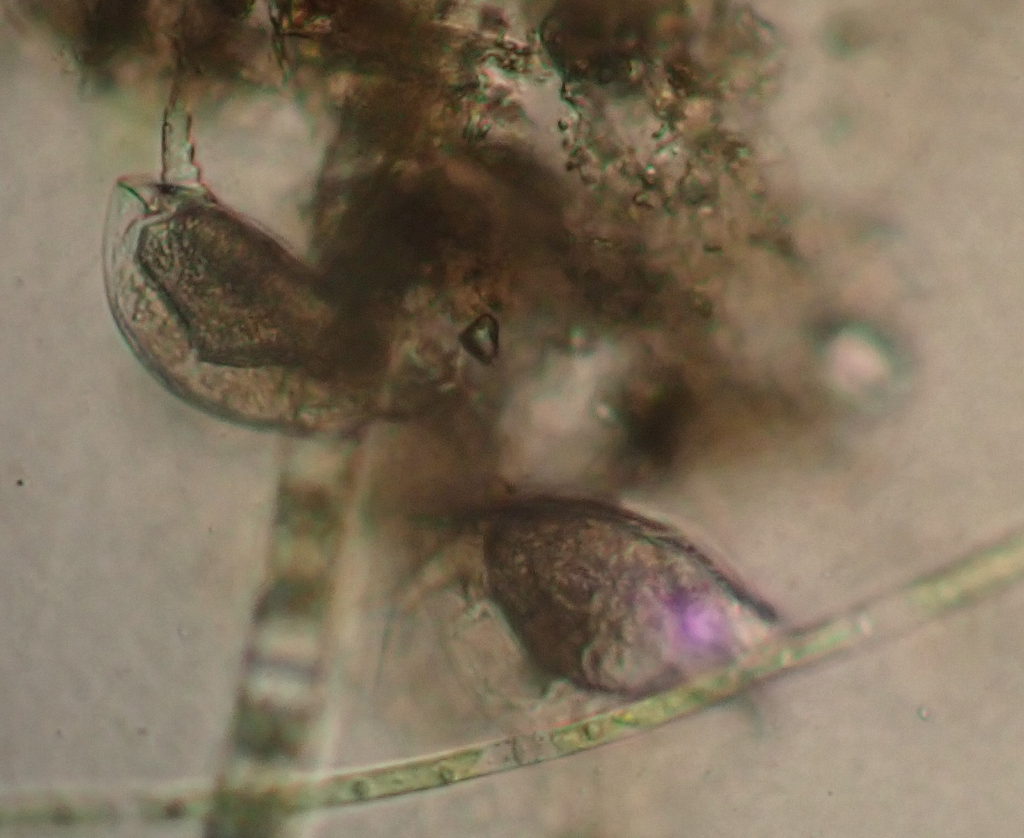
Lepadella lindaui is a microscopic rotifer belonging to the family Lepadellidae, a group of small aquatic invertebrates found in freshwater and brackish environments worldwide. Like all rotifers, this species is transparent or translucent, making detailed observation of internal structures possible under appropriate magnification. The body is compact and elongated, adapted for movement through water and sediment.
The defining characteristics of L. lindaui include the presence of a distinctive foot with terminal digits (toes), which is typical of the genus Lepadella. The corona—the anterior feeding apparatus ringed with cilia—is well-developed and used for filter feeding on microscopic particles and organic detritus. The species exhibits the bilaterally symmetrical body plan characteristic of rotifers, with the digestive and reproductive systems visible through the transparent lorica (outer wall).
Sexual dimorphism is absent in L. lindaui, as is typical for most rotifer species; males are either rare or absent entirely, and reproduction occurs primarily through parthenogenesis (asexual reproduction). Individual specimens measure in the range of tens to low hundreds of micrometres, requiring microscopic examination for proper identification. Distinguishing L. lindaui from closely related Lepadella species depends on precise morphological features of the foot, the corona structure, and the arrangement of spines or other cuticular ornamentation, best observed under high magnification using phase-contrast or electron microscopy.
Distribution and Habitat
Lepadella lindaui is a rotifer species with limited documented occurrence data in scientific records. Current distribution records do not provide sufficient geographic information to identify specific countries or regions where this species has been reliably recorded. The scarcity of occurrence data suggests that this species may have a restricted range, occur in poorly sampled habitats, or may be difficult to detect and identify in the field.
Habitat preferences and elevation requirements for Lepadella lindaui remain inadequately documented. As with many rotifer species, members of the genus Lepadella typically inhabit freshwater microhabitats including moss, lichen, and soil moisture films, but specific ecological requirements for this species have not been established in the available literature. Without comprehensive survey data, the true extent of its distribution and environmental preferences cannot be reliably determined.
Further field surveys and targeted sampling in diverse freshwater microhabitats would be needed to clarify the global distribution and habitat associations of this species. Rotifers are often underrepresented in biodiversity inventories due to their microscopic size and the specialized expertise required for accurate identification, which may explain the limited data currently available for Lepadella lindaui.
Biology and Behavior
Behavior
Lepadella lindaui is a rotifer, a microscopic organism belonging to the phylum Rotifera. Like other members of its genus, this species inhabits freshwater environments where it moves through water columns and across substrate surfaces. Rotifers of the genus Lepadella are benthic or semi-benthic, meaning they spend much of their time near or on the bottom of their aquatic habitats, creeping along sediments and algal mats using their characteristic foot and toes.
The behavioral ecology of L. lindaui follows patterns typical of small rotifers: it exhibits limited active movement relative to larger animals, relying instead on water currents and its own ciliary activity to locate food sources. Daily activity rhythms are driven by light availability and food concentration gradients in the water. These organisms respond to chemical cues and physical disturbances, making them sensitive indicators of local environmental conditions in their microhabitats.
Diet
As a rotifer, Lepadella lindaui is a microphagous feeder, consuming microscopic food particles suspended in water or found on substrate surfaces. The species feeds primarily on bacteria, small algae, and organic detritus. Its feeding apparatus consists of a muscular pharynx (mastax) equipped with grinding plates called trophi, which allow the organism to break down food particles into digestible sizes.
Feeding occurs continuously throughout the day as the rotifer encounters suitable food sources in its microenvironment. The ciliated corona (crown-like structure at the anterior end) generates water currents that guide particles toward the mouth, enabling passive filter-feeding supplemented by active particle selection and ingestion.
Reproduction
Lepadella lindaui reproduces through a combination of asexual and sexual reproduction, a strategy common to many rotifers. Under favorable environmental conditions—adequate food, suitable temperature, and low population density—females produce eggs parthenogenetically (asexually), generating clonal offspring without requiring males. This allows rapid population growth when resources are plentiful.
When environmental stress increases (food scarcity, temperature extremes, or overcrowding), the population shifts to sexual reproduction. Males appear, and females produce haploid eggs that must be fertilized. These sexually produced eggs develop thick protective shells (resting eggs) capable of surviving harsh conditions, including desiccation and freezing. This reproductive flexibility enables the species to exploit favorable periods while enduring environmental hardship through dormant stages.
Conservation and Threats
Lepadella lindaui has not been formally assessed by the IUCN Red List, so its official conservation status remains unknown. This small rotifer lacks comprehensive population monitoring across its range, making it difficult to determine whether it faces genuine conservation risk or remains stable in suitable habitats.
Rotifers like L. lindaui are microscopic aquatic organisms that inhabit freshwater and brackish environments worldwide. Their small size and cryptic nature mean they are rarely surveyed in systematic biodiversity assessments, leaving significant gaps in knowledge about their distribution, abundance, and ecological requirements.
Threats
No specific threats have been formally documented for Lepadella lindaui. However, as a freshwater microorganism, it is potentially vulnerable to habitat degradation affecting aquatic ecosystems—including water pollution, eutrophication, drought, and loss of suitable microhabitats. The extent to which these pressures affect this particular species remains unstudied.
Conservation Efforts
There are no known targeted conservation programmes or legal protections for L. lindaui. Its conservation status depends largely on the protection of broader freshwater habitats and water quality standards that benefit entire rotifer communities and other microorganisms.
Cultural Significance
Lepadella lindaui is a rotifer of significant importance in aquaculture and laboratory research rather than in traditional human culture or folklore. Its primary cultural relevance stems from its role in intensive rotifer production systems, where it serves as a model organism for studying food-organism interactions and population dynamics in controlled environments.
In aquaculture settings, Lepadella species are cultivated as live food for larval fish and crustaceans. Research on Lepadella nutrition has demonstrated that diet composition directly affects organism density and population growth. Studies using microalgae such as Haematococcus pluvialis, Chlorella vulgaris, and Isochrysis galbana as food sources have revealed optimal feeding protocols for maximizing production yields. These findings have become foundational knowledge for hatchery managers and aquaculture producers seeking to rear high-quality rotifer cultures at scale.
Beyond production applications, Lepadella lindaui and related congeners have emerged as valuable subjects in ecological and trait-based plankton research. Field surveys of freshwater reservoirs and water bodies have documented Lepadella as a recurring component of rotifer communities, particularly in littoral zones associated with aquatic vegetation. This ecological presence has contributed to broader scientific understanding of freshwater zooplankton assemblages and their response to environmental variation.
Fun Facts
Lepadella lindaui belongs to the genus Lepadella, a group of microscopic rotifers in the family Lepadellidae. These tiny animals reveal the hidden complexity of freshwater and marine ecosystems.
- Microscopic size: Lepadella lindaui is a rotifer, meaning it is typically smaller than 0.5 millimetres in length and requires a microscope to observe in detail.
- Ancient lineage: Rotifers have existed for over 300 million years, making them among the oldest animal groups still thriving today.
- Cosmopolitan distribution: The genus Lepadella is found across the globe, occurring in diverse freshwater and marine environments from tropical to polar regions.
- Transparent body: Like many rotifers, Lepadella lindaui possesses a largely transparent body, which allows researchers to observe its internal organs and feeding structures without dissection.
- Dual feeding strategy: Rotifers in the genus Lepadella use a ciliated corona (crown-like structure) to capture organic particles and microorganisms from their environment.
- Ecological indicator: The presence and abundance of rotifer species like Lepadella lindaui serves as a bioindicator of water quality and ecosystem health in freshwater systems.
- Asexual reproduction capability: Many rotifer species, including members of Lepadella, can reproduce asexually through parthenogenesis, allowing rapid population growth when conditions are favourable.
Conservation Status
LC · NT · VU · EN · CR · EW · EX
Related Species
Was this profile helpful?