
Eurotatoria · Ploima
Lepadella Glossa
Lepadella glossa
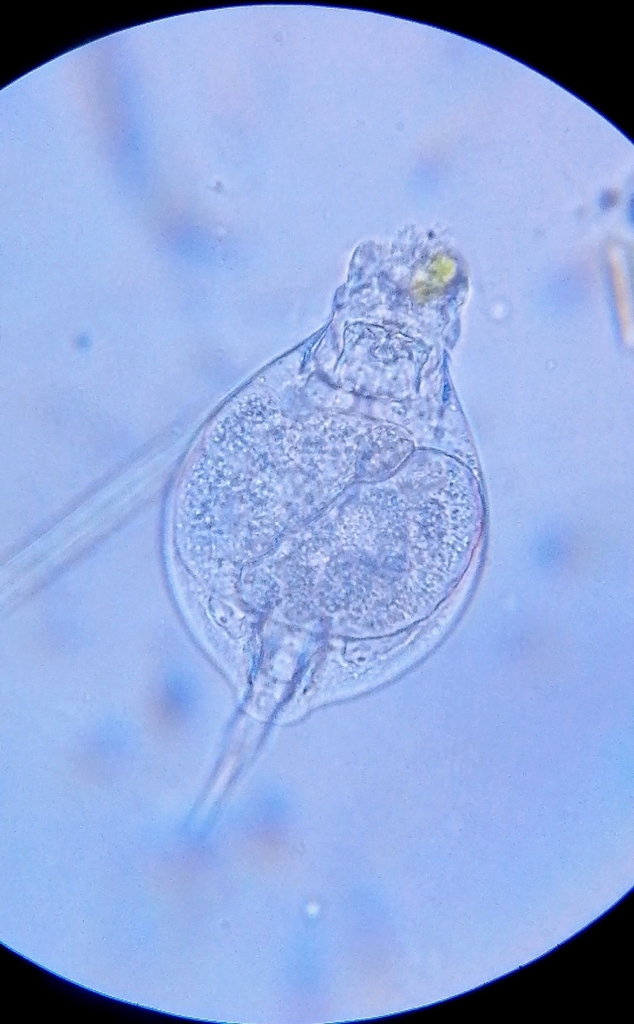
© no rights reserved · iNaturalist · CC0 1.0
Scientific Classification & Quick Facts
Classification
Known For
Full profile in progress — check back soon.
Lepadella glossa is a microscopic rotifer belonging to the phylum Rotifera, a group of aquatic invertebrates so small they inhabit the spaces between sand grains and within water droplets. At a scale invisible to the naked eye, this species nonetheless represents one of nature’s most successful body plans—one perfected over hundreds of millions of years. Found in a single country to date, Lepadella glossa remains poorly documented, yet it exemplifies the vast diversity of life that thrives in freshwater ecosystems across the globe.
Classified within the family Lepadellidae, Lepadella glossa occupies a niche in the intricate world of meiofauna—organisms that filter through the substrate of freshwater habitats. Its conservation status remains unknown, a reflection of how little is known about microscopic species worldwide. Despite its minute size, understanding this rotifer contributes to our broader comprehension of freshwater biodiversity and the hidden engines of aquatic ecosystems.
Identification and Appearance
Lepadella glossa is a microscopic rotifer belonging to the family Lepadellidae. Like all rotifers, it is a tiny aquatic organism that requires magnification to observe its anatomical details. The genus Lepadella is characterized by a lorica—a transparent, hardened outer casing that provides structural support and protection.
Members of the genus Lepadella are distinguished by their compact body form and the presence of specialized structures adapted to their microscopic aquatic environment. The lorica in this species is typically smooth or finely sculptured, and the organism possesses internal organs visible through its transparent body wall under appropriate magnification. Like other lepadellid rotifers, L. glossa features a corona (a ciliated feeding apparatus) at its anterior end, along with a muscular pharynx equipped with mastax—specialized jaws used to process food particles.
Precise morphological measurements and detailed descriptions of sexual dimorphism for Lepadella glossa require examination of taxonomic literature and prepared specimens under high-magnification microscopy. Identification at the species level typically depends on the specific configuration of lorica ornamentation, the arrangement of sensory organs, and the morphology of reproductive structures. The species is best studied through light microscopy or electron microscopy, using standard rotifer identification keys and comparative anatomy.
Distribution and Habitat
Lepadella glossa has a limited documented range, with records concentrated in Ukraine. The two known occurrences in Ukraine represent the extent of the species’ currently recorded distribution, making it a localized taxon with a restricted geographic footprint.
The species shows a marked seasonal presence, with observations concentrated in July. This summer peak suggests a preference for warmer months, though the lack of records across other seasons may reflect sampling effort rather than true seasonal absence. Elevation data for this species remains unavailable in current records, limiting our understanding of its vertical distribution preferences.
Specific habitat associations for Lepadella glossa have not been formally documented in available literature. As a rotifer, this microscopic organism likely inhabits freshwater environments such as ponds, lakes, or biofilms on vegetation, though precise habitat characterization awaits targeted field surveys in its known range.
Biology and Behavior
Behavior
Lepadella glossa is a microscopic rotifer inhabiting freshwater environments. Like other members of the genus Lepadella, this species is a benthic organism, meaning it lives on or near the substrate of aquatic habitats. Its movement is facilitated by a corona of cilia—hair-like structures that enable locomotion through water and assist in feeding. The species exhibits the sedentary lifestyle typical of rotifers, remaining largely in one location while drawing water currents toward its feeding apparatus.
Rotifers of this genus are generally solitary, though they may aggregate in areas with abundant food resources. Daily activity centers on continuous feeding and water circulation. The species is transparent or translucent, which is characteristic of many rotifers and aids in predator avoidance through concealment.
Diet
Lepadella glossa is a filter feeder, subsisting on microscopic organic particles suspended in water. Its diet includes bacteria, algae, and detritus—the decomposed remains of plant and animal matter. The ciliated corona acts as a filtering mechanism, drawing water into the rotifer’s mouth and trapping food particles of suitable size.
This species thrives in nutrient-rich freshwater environments where organic matter and microorganisms are abundant. It plays a minor but functional role in freshwater food webs, processing bacterial and algal biomass and converting it into consumable tissue for small predators such as copepods and other zooplankton.
Reproduction
Lepadella glossa reproduces through both asexual and sexual means, a reproductive strategy common to the rotifer phylum. Under favorable conditions—adequate food, stable temperature, and low population density—females produce diploid eggs that develop parthenogenetically (without fertilization), generating clones of the mother. This asexual reproduction allows rapid population growth when resources are plentiful.
When environmental stress occurs—such as food scarcity, overcrowding, or seasonal cooling—the population shifts to sexual reproduction. Males develop, and females produce haploid eggs that require fertilization. These sexual eggs develop a thick protective shell, forming diapausing embryos capable of surviving harsh conditions in a dormant state. Once conditions improve, these embryos hatch, reestablishing the population. The lifespan of individual rotifers is brief, typically measured in days to weeks, but their reproductive flexibility ensures population persistence through environmental fluctuations.
Conservation and Threats
Lepadella glossa has not been formally assessed by the IUCN Red List, so its official conservation status remains unknown. This rotifer—a microscopic freshwater organism—falls outside the scope of most conventional conservation monitoring programmes, which typically focus on larger, more visible fauna. Without a formal assessment, the true conservation needs and population health of this species cannot be clearly determined.
The absence of detailed threat data for Lepadella glossa reflects a broader knowledge gap regarding microscopic freshwater biodiversity. Many rotifers inhabit ephemeral water bodies, temporary pools, and small-scale aquatic habitats that are vulnerable to drainage, pollution, and habitat modification. Freshwater environments worldwide face increasing pressure from agriculture, urbanisation, and climate change, which may indirectly affect rotifer populations. However, no specific documented threats to Lepadella glossa are currently recorded.
Conservation Efforts
No targeted conservation programmes or legal protections are documented for Lepadella glossa. The species would benefit from broader freshwater ecosystem protection and water quality management initiatives. Preserving small wetlands, ponds, and temporary aquatic habitats supports rotifer diversity, including undocumented species like this one.
Cultural Significance
Lepadella glossa is a rotifer of minimal direct cultural significance to human societies. As a microscopic freshwater organism, it lacks the visibility and accessibility that typically generate folklore, mythology, or symbolic meaning in human culture. The species does not feature in culinary traditions, traditional medicine, or artistic representation.
The cultural presence of L. glossa exists almost entirely within scientific and academic contexts. Taxonomic confusion surrounding rotifer classification has prompted specialized educational resources, including essays clarifying hierarchical relationships within the group. The species has attracted attention from researchers studying rotifer ecology and nutrition, particularly in experimental settings where it has been cultured alongside microalgae to investigate growth responses to different food sources. This research interest reflects a growing recognition of rotifers as model organisms in trait-based plankton ecology, where their small size and rapid reproduction make them valuable for understanding freshwater ecosystem dynamics. Rather than occupying human culture broadly, L. glossa remains known primarily to specialists in invertebrate zoology and aquatic biology.
Fun Facts
Lepadella glossa is a rotifer—a microscopic animal so small that thousands could fit on the head of a pin. Despite their diminutive size, rotifers are complex organisms with functional organ systems, including a nervous system and digestive tract. Members of the genus Lepadella are found on every continent, making them among Earth’s most successful microscopic animals.
- Rotifers possess a crown of cilia called the corona, which they use to create feeding currents and propel themselves through water. Lepadella glossa uses this structure to capture microscopic food particles from its aquatic environment.
- Members of the family Lepadellidae, to which Lepadella glossa belongs, are among the most abundant rotifers in freshwater ecosystems. Their numerical dominance reflects their remarkable adaptability to diverse water conditions.
- The genus Lepadella reproduces primarily through asexual parthenogenesis, meaning females can produce offspring without male fertilization. This reproductive strategy allows populations to expand rapidly when environmental conditions are favorable.
- Despite lacking a brain, rotifers have a primitive nervous system with sensory organs that detect light, chemicals, and physical touch. This allows Lepadella glossa to respond to environmental changes and locate food sources.
- Rotifers can enter a state of cryptobiosis when their habitat dries up, suspending all metabolic activity and surviving for years in a desiccated form. When water returns, they revive and resume normal activity—a survival strategy that may help Lepadella glossa persist through seasonal droughts.
- The transparent body of Lepadella glossa allows scientists to observe its internal organs directly under a microscope, making it a valuable organism for studying microscopic animal anatomy and physiology.
Photo Gallery
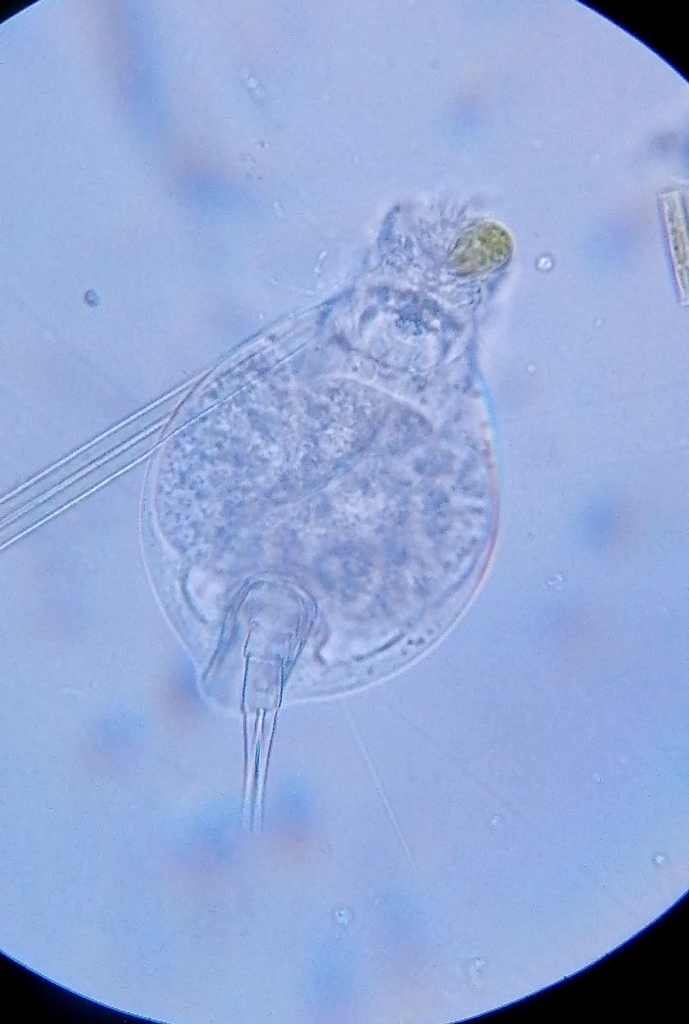
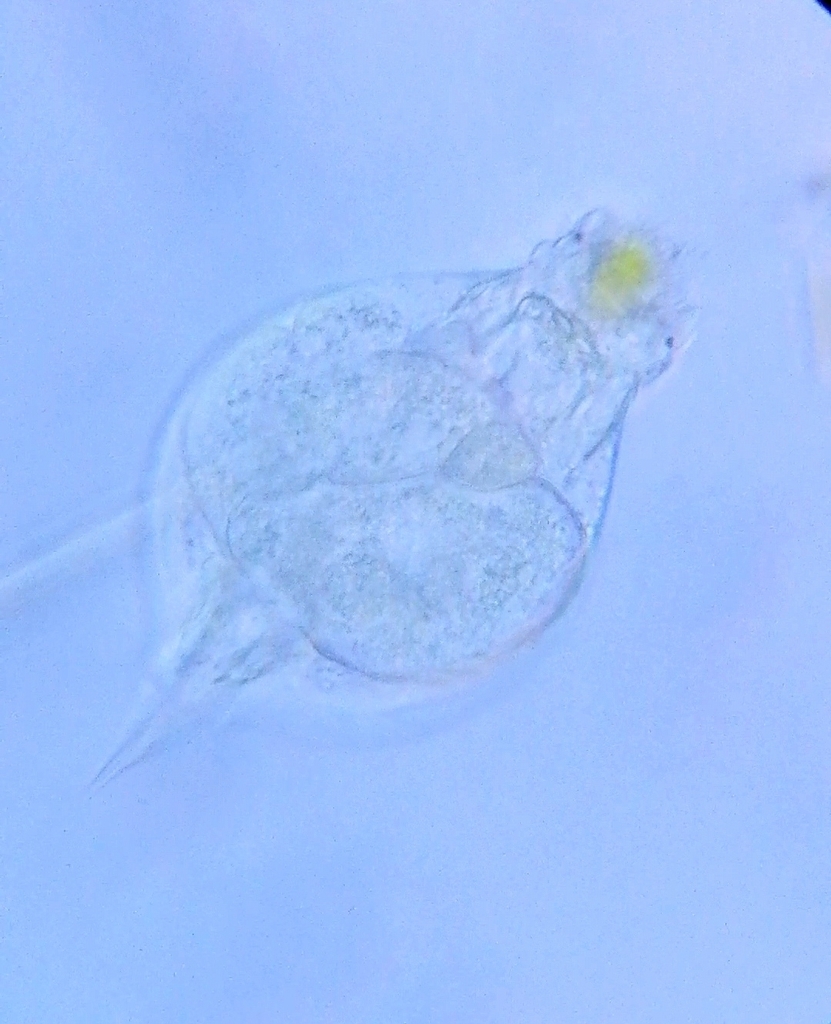
no rights reserved · CC0 1.0
Related Species

Was this profile helpful?