
Diplopoda · Polydesmida
Common Pink Flat-back Millipede
Pseudopolydesmus serratus
Also known as: Common Pink Flat-back
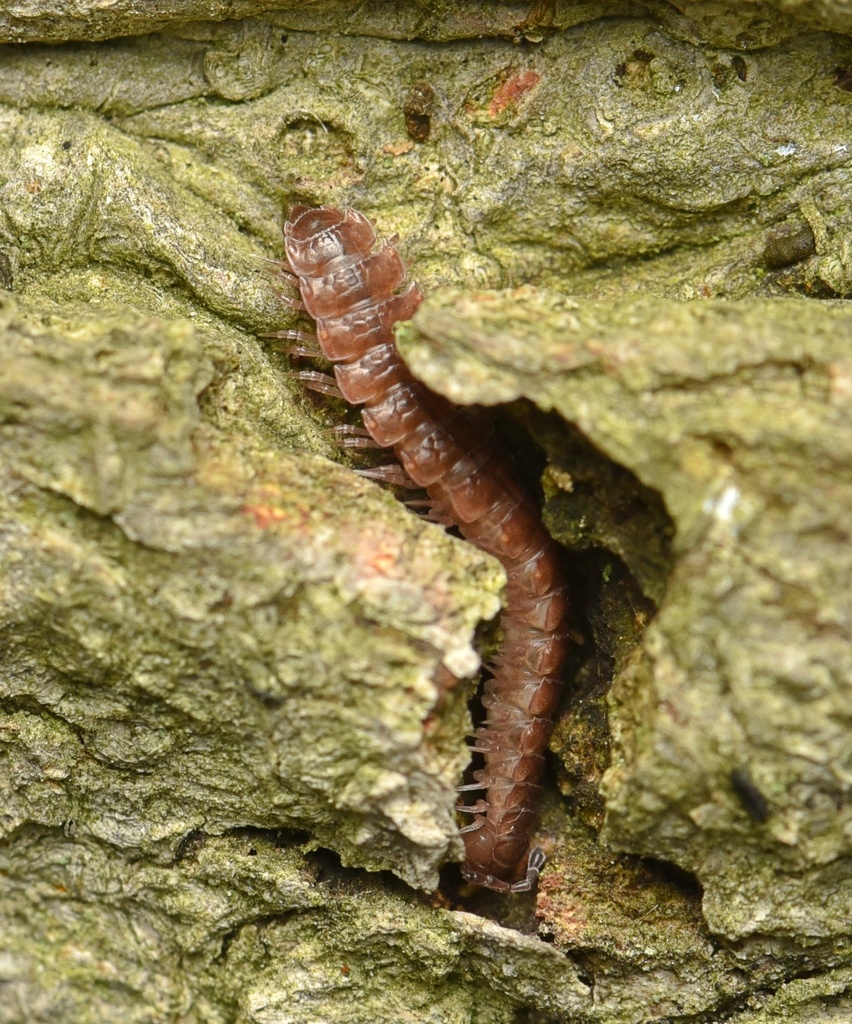
© David Stutzman · iNaturalist · CC BY 4.0
Scientific Classification & Quick Facts
Classification
Known For
Detailed measurements for this species are still being verified.
The common pink flat-back millipede, Pseudopolydesmus serratus, is a small arthropod belonging to the family Polydesmidae, characterized by its distinctive flattened body form and soft pink coloration. This unassuming invertebrate inhabits ecosystems across at least two countries, playing a quiet but essential role in leaf litter decomposition and soil nutrient cycling. Despite its humble appearance and modest global distribution, the species exemplifies the hidden diversity of millipedes—a class often overlooked yet crucial to forest health.
Like many arthropods, Pseudopolydesmus serratus has received limited scientific attention, with its conservation status listed as unknown. Nonetheless, common species such as this one often prove more resilient than rarer relatives and continue to thrive in disturbed habitats where they encounter human-modified landscapes. Understanding the ecology and distribution of widespread millipedes helps naturalists and soil scientists appreciate the functional diversity that sustains decomposition networks in temperate and subtropical forests.
Identification and Appearance
Pseudopolydesmus serratus, the Common Pink Flat-back Millipede, is a small arthropod belonging to the order Polydesmida. The species derives its common name from its characteristic flattened body profile and predominant pink to reddish colouration, which distinguishes it from many darker millipede species. This millipede is readily identified in the field by its compact, dorsoventrally compressed body plan, a morphological adaptation that allows it to navigate through leaf litter and soil crevices with ease.
The body segments of P. serratus display the typical polydesmid structure, with lateral paranota (wing-like expansions) extending from each diplosegment, creating the distinctive flat appearance. The exoskeleton exhibits a smooth to slightly granulated texture, and the pink coloration is remarkably consistent across populations. This colouration, likely serving as camouflage or signalling function within forest floor microhabitats, makes the species conspicuous when encountered on damp leaf surfaces or under rotting wood. Fine details of segmentation and the serrated quality referenced in the species epithet are visible under magnification.
Sexual dimorphism in P. serratus follows patterns typical of diplopods, with males possessing modified gonopods (leg-like reproductive structures) on the seventh body segment, while females retain unmodified walking legs throughout. Adult individuals maintain their characteristic pink hue throughout their active season, though preserved specimens may fade significantly. The species remains relatively uniform in appearance across its range, with no documented colour morphs or regional variation patterns.
Distribution and Habitat
Pseudopolydesmus serratus is found across a limited geographic range in North America, with the overwhelming majority of observations concentrated in the United States. A total of 285 recorded occurrences establish the species as far more prevalent in the US than elsewhere in its range. Canada hosts a smaller but documented population, with 15 records indicating that the species extends into North American territory north of the contiguous United States.
Elevation data for this species remain unavailable, so the vertical distribution across mountainous or variable terrain cannot be determined from current records. Specific habitat preferences are likewise not documented in existing occurrence datasets, limiting detailed characterization of the environmental conditions the species favors.
Seasonal activity shows a pronounced pattern of spring emergence. Observations peak sharply in April, with 147 records concentrated in that single month. A secondary surge in activity occurs in March (103 records) and May (28 records), indicating a narrow window of peak detectability during early to mid-spring. The absence of records from June through December suggests either seasonal dormancy, reduced surface activity, or low observation effort during the warmer and colder months. This strong seasonal signature reflects either reproductive timing, favorable microhabitat moisture conditions in spring, or heightened detection rates when the millipede is most mobile.
Biology and Behavior
Behavior
Pseudopolydesmus serratus is primarily nocturnal, spending daylight hours concealed beneath leaf litter, rotting wood, and soil where humidity remains high. The species is gregarious by nature, often aggregating in groups within suitable microhabitats. These millipedes move slowly across the forest floor, their flattened body structure allowing them to navigate through narrow crevices and compacted soil layers.
When disturbed, this flat-back millipede exhibits a characteristic defensive coiling behavior, rolling into a tight spiral to protect its softer ventral surface. The species produces no toxins and poses no threat to humans, though it should be handled gently to avoid injury to its delicate exoskeleton.
Diet
Pseudopolydesmus serratus is a detritivore, feeding on decaying organic matter including dead leaves, decomposing plant material, and fungal growth within the leaf litter layer. The millipede plays an important role in nutrient cycling by breaking down plant debris and facilitating the return of nutrients to the soil. Specialized mandibles allow it to process fibrous plant material efficiently.
Reproduction
Reproduction in Pseudopolydesmus serratus follows the seasonal patterns typical of temperate-zone millipedes. Mating occurs in spring and early summer, with males transferring spermatophores to females during brief courtship encounters. Females subsequently deposit eggs in small clutches within protected soil chambers or decaying wood, where moisture levels remain optimal for embryonic development.
Juvenile millipedes emerge with fewer body segments than adults and undergo a series of molts as they grow, adding segments and legs with each instar. The species reaches sexual maturity within one to two years, depending on environmental conditions and food availability. Parental care is minimal, with females abandoning eggs once they are laid.
Conservation and Threats
Pseudopolydesmus serratus, the Common Pink Flat-back Millipede, has not been formally assessed by the IUCN Red List. This absence of formal evaluation means that the species’ global conservation status remains unknown, and no official population trend data has been compiled at the international level. The lack of assessment does not indicate security; rather, it reflects the general scarcity of conservation research directed toward millipedes, a group that receives far less attention than vertebrates or charismatic invertebrates.
Without documented threats in the available scientific literature or population monitoring data, the primary conservation challenge for this species is the absence of baseline knowledge. Like many soil-dwelling arthropods, P. serratus likely faces pressures from habitat loss, soil disturbance, and changes in leaf litter accumulation—key resources for detritivorous millipedes. Urbanization, agricultural intensification, and the removal of dead wood from managed forests may reduce suitable microhabitats, though the species’ apparent commonness in at least some regions suggests it retains some resilience to landscape change.
Conservation Efforts
No dedicated conservation programmes or legal protections specifically target P. serratus. Protection of this species depends on broader habitat conservation: maintaining forests with diverse age structures, preserving leaf litter and rotting wood on the forest floor, and limiting soil compaction in woodland areas. These practices benefit not only millipedes but entire soil invertebrate communities essential to nutrient cycling and ecosystem health.
Cultural Significance
Pseudopolydesmus serratus is a flat-backed millipede in the family Polydesmidae with a broad distribution across eastern North America. While specific cultural significance tied to this species remains undocumented in mainstream sources, millipedes as a group have appeared in various cultural contexts across human societies, from folklore to scientific study.
The species itself has primarily entered human awareness through scientific and naturalistic documentation rather than traditional cultural practices. One notable instance involved the discovery of a fragmented female specimen in North Carolina that was recovered from the gut contents of a bullfrog, making P. serratus the only Pseudopolydesmus species documented from that particular region at the time of the find. Such discoveries contribute to our understanding of local biodiversity and food webs in Eastern woodland ecosystems.
Contemporary interest in P. serratus centers on its role as a model organism for studying millipede taxonomy and morphology. The species has been instrumental in clarifying the evolutionary relationships within the genus Pseudopolydesmus, with detailed anatomical descriptions helping naturalists distinguish it from related species. Its presence in natural history records and scientific collections reflects the ongoing importance of common, widespread arthropods in expanding knowledge of local fauna.
Fun Facts
- Despite their name, millipedes do not have a thousand legs—Pseudopolydesmus serratus typically has between 20 and 30 body segments, each bearing two pairs of legs, giving them roughly 80 to 120 legs total. The “milli” prefix persists from medieval confusion between millipedes and their many-legged relatives.
- The pink coloration of this species serves as a visual warning to potential predators that they produce defensive secretions when threatened. These chemical compounds taste acrid and can irritate the eyes and mucous membranes of would-be attackers.
- Flat-back millipedes are among the most important detritivores in leaf litter ecosystems, breaking down dead plant material and accelerating nutrient cycling. A single millipede can process several times its own body weight in leaf litter over the course of a season.
- Pseudopolydesmus serratus is strictly nocturnal, emerging from soil and debris only after dark to feed on decomposing vegetation. During the day, they burrow into moist soil or hide under logs where humidity levels remain high.
- Millipedes breathe through simple tubes called spiracles located along the sides of their body segments, rather than through complex lungs. This ancient respiratory system is one reason they must live in damp environments—they lose water rapidly if exposed to dry air.
- The flat, dorsoventrally compressed body shape that gives this species its common name allows it to squeeze into narrow crevices and tight spaces within the soil matrix. This adaptation makes them nearly invisible to predators and helps them access food sources in compact microhabitats.
- Reproduction in flat-back millipedes involves elaborate courtship displays where males perform rhythmic movements to signal receptiveness to females. Females then deposit fertilized eggs in moist soil chambers, where they develop without parental care.
Photo Gallery
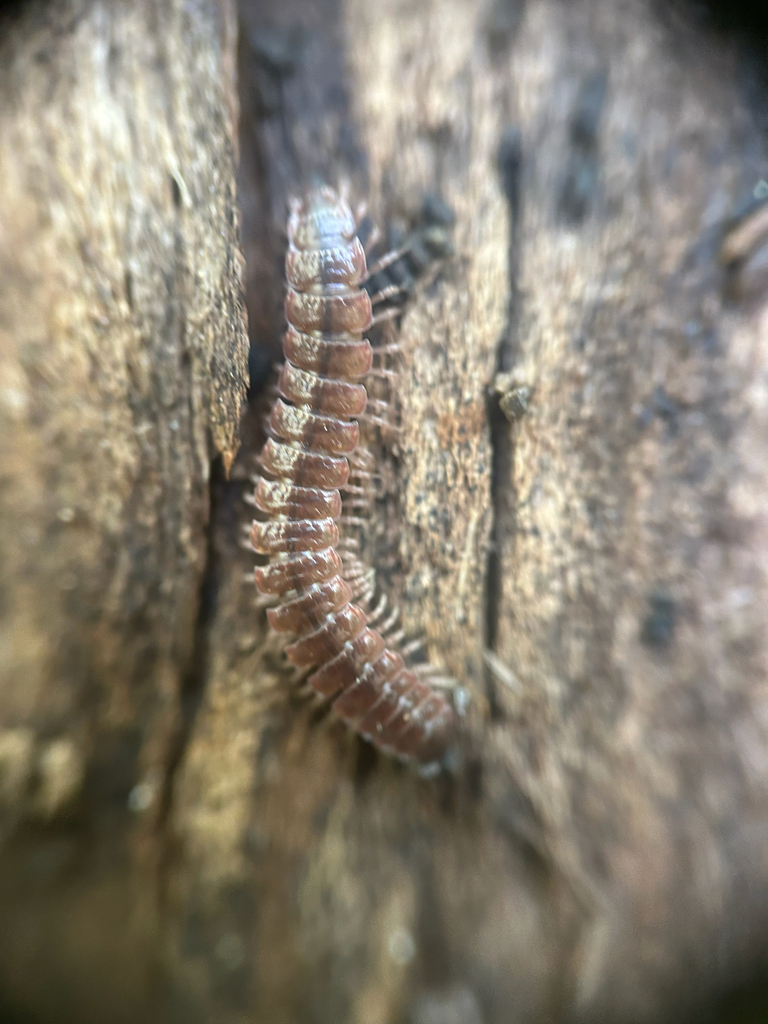
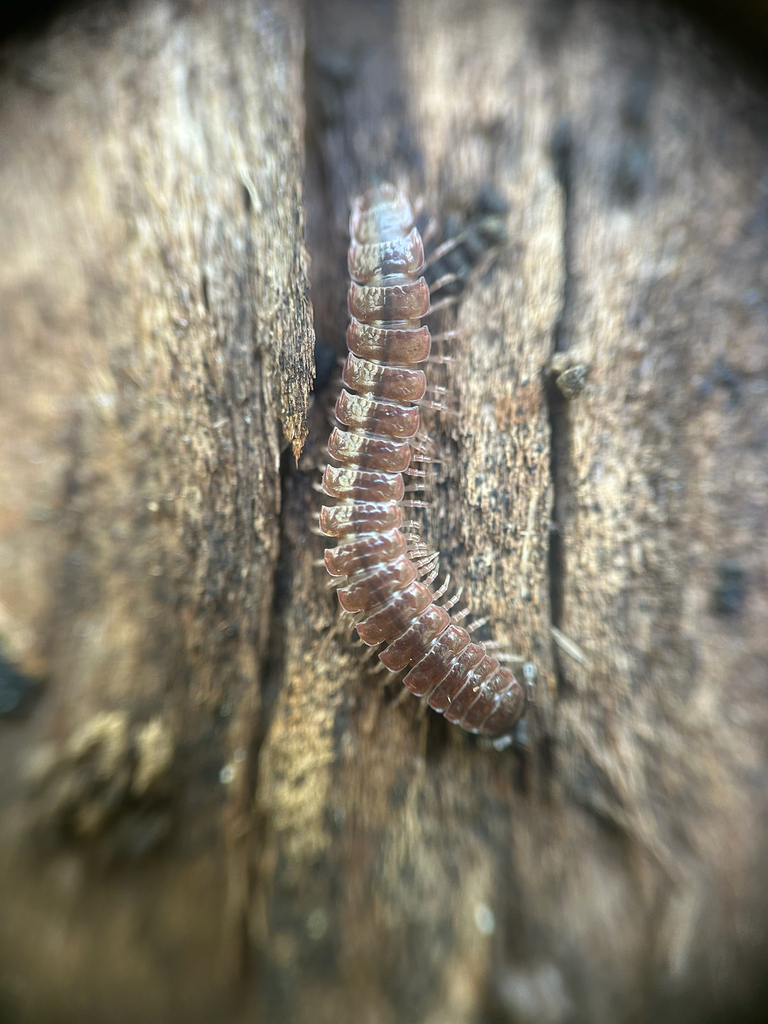
David Stutzman · CC BY 4.0
Related Species


Was this profile helpful?