
Mammalia · Cetacea
Common Dolphin
Delphinus delphis
Least ConcernAlso known as: Atlantic Dolphin, Baja-neritic common dolphin, Black Sea Common Dolphin, Criss-cross Dolphin, Crisscross Dolphin
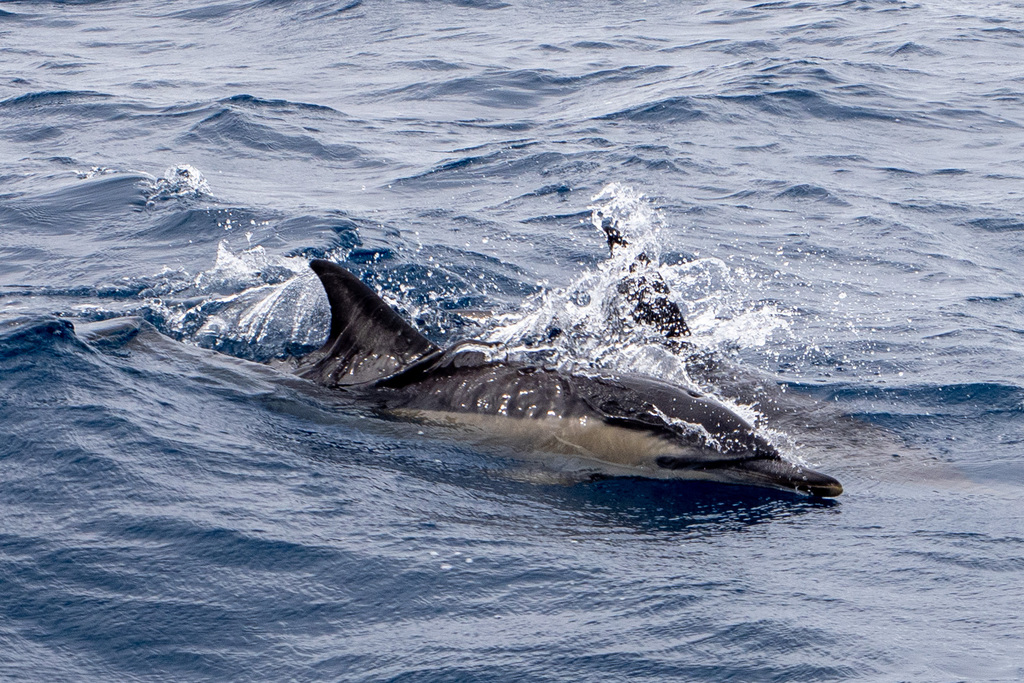
© no rights reserved · iNaturalist · CC0 1.0
The common dolphin is one of the ocean’s most recognizable cetaceans, distinguished by its striking hourglass-shaped body pattern and sleek, streamlined form. Found across temperate and tropical waters spanning at least 22 countries, Delphinus delphis thrives in coastal and open-ocean environments from the Atlantic to the Pacific. The species currently maintains a Least Concern conservation status, reflecting its relative abundance and adaptability to diverse marine habitats.
What sets the common dolphin apart is its combination of intelligence, athleticism, and highly developed social structure. These animals form pods that can number in the thousands, hunting cooperatively and maintaining complex hierarchies. Their intelligence and curiosity have made them subjects of intense scientific study, and their global distribution makes them both an indicator of ocean health and a keystone species in marine ecosystems worldwide.
Identification and Appearance
Delphinus delphis, the common dolphin, is a small cetacean with a streamlined body built for agility in open waters. Adults typically range from 1.5 to 2.4 metres in length and weigh between 100 and 136 kilograms, making them noticeably smaller than many other dolphin species. Sexual dimorphism is minimal in this species, though males may reach the upper limits of size ranges slightly more often than females.
Coloration and Markings
The common dolphin displays a distinctive and elegant colour pattern. The dorsal surface is dark grey or charcoal, contrasting sharply with a white or pale grey ventral (underside) surface. A characteristic feature is the hourglass or figure-eight pattern on the flanks—dark grey coloration on the shoulders extends forward and downward, while a lighter band runs along the side, creating a visually striking appearance. The rostrum (beak) is slender and well-defined, with a white tip, and the chin region often shows lighter coloration. The dorsal fin is tall, curved, and dark, rising prominently from the back.
Distinctive Features
Several anatomical traits separate the common dolphin from related species. The animal possesses a pronounced melon (rounded forehead bulge), though less extreme than in some dolphin species. The flippers are relatively long and pointed, adapted for precise maneuvering. The tail flukes are deeply notched and symmetrical, providing powerful propulsion. The teeth are numerous—typically 200 to 260 across both jaws—and finely pointed, ideal for gripping slippery prey. The overall body shape tapers smoothly from the robust midsection to the peduncle (tail stock), presenting a hydrodynamic silhouette perfectly suited for sustained swimming and hunting in pelagic and coastal waters.
Distribution and Habitat
Delphinus delphis occurs across 22 countries worldwide, with a strong presence in temperate and subtropical oceans. iNaturalist observations show the highest concentration in the United States (114 records), followed by Mexico, Australia, and New Zealand (32 records each). The species also inhabits waters off the United Kingdom, Norway, Portugal, the Netherlands, Russia, and Spain, indicating a truly cosmopolitan distribution across both Atlantic and Pacific basins.
This dolphin favours offshore and near-shore marine environments across a broad latitudinal range. Being a pelagic cetacean, it does not rely on specific elevation zones—elevation data are not applicable to this strictly aquatic species. Common dolphins thrive in productive waters where food availability supports large populations, particularly in upwelling zones and continental shelf regions.
Seasonal patterns in observation records reveal a marked peak in February, with 120 sightings recorded during that month compared to zero observations from April through December. This concentration suggests heightened survey effort or increased dolphin activity during the boreal winter and early spring, possibly linked to migration patterns, breeding cycles, or increased prey availability in certain regions during these months.
Biology and Behavior
Behavior
Common dolphins are highly social cetaceans that live in groups ranging from a few individuals to several hundred. These pods often exhibit coordinated hunting and travelling behaviour, swimming in formation and communicating through clicks, whistles, and body movements. They are diurnal and crepuscular, with peak activity during dawn and dusk, though they remain active throughout daylight hours.
The species engages in elaborate surface behaviour including leaping, breaching, and bow-riding on boat waves—actions that may serve social bonding and communication functions. Individuals within pods establish hierarchies and form lasting social bonds. Common dolphins are curious animals that frequently approach vessels and swimmers, though such encounters are typically non-aggressive in character.
Diet
Common dolphins are carnivorous marine hunters that feed primarily on small fish and squid. Their diet consists mainly of lanternfish, anchovies, sardines, herring, and other schooling fish species, along with various cephalopods. They hunt cooperatively in groups, herding prey fish into tight balls to facilitate feeding—a tactic that increases hunting efficiency and reduces energy expenditure per individual.
Feeding intensity varies seasonally and geographically, depending on prey availability and ocean productivity. Individual dolphins consume approximately 10–15 kilograms of food per day, requiring frequent hunting bouts throughout the day.
Reproduction
Common dolphins reach sexual maturity between 3 and 12 years of age, with considerable variation between populations. Breeding occurs year-round in tropical and subtropical waters, though temperate populations exhibit more distinct seasonal peaks, typically in summer months. Males and females engage in courtship displays involving synchronized swimming, touching, and acoustic signalling.
Gestation lasts approximately 10–11 months, resulting in a single calf born tail-first in the water. Newborn calves measure around 0.7–0.8 metres in length and depend entirely on maternal milk for the first year of life. Lactation continues for 18–24 months in some populations, during which the calf remains close to its mother and learns foraging and social skills from pod members. Common dolphins can live approximately 25 years in the wild, allowing for multiple reproductive cycles during their lifetime.
Conservation and Threats
Delphinus delphis, the common dolphin, holds a Least Concern status on the IUCN Red List. This classification reflects a species with a wide global distribution and populations that remain stable across most of its range. However, stability at a global scale masks regional vulnerabilities and localized declines in certain ocean basins.
Threats
Common dolphins face multiple cumulative pressures. Incidental capture in fishing nets—particularly in gillnets and purse seines—remains a significant source of mortality, especially in the Mediterranean and eastern Pacific. Pollution, including marine debris and chemical contaminants, affects water quality in key habitats. Climate change alters prey availability and ocean conditions, while vessel traffic increases noise pollution and collision risk in busy shipping lanes. Regional overfishing reduces food stocks that these cetaceans depend on, and some populations experience targeted hunting in parts of Japan and Peru.
Conservation Efforts
Multiple international frameworks protect common dolphins across their range. The European Union’s Marine Strategy Framework Directive and Habitats Directive safeguard populations in European waters. CITES (Convention on International Trade in Endangered Species) listings restrict commercial trade. Several marine protected areas, including sanctuaries in the Mediterranean and North Atlantic, provide designated refuge zones. National regulations vary by country, but many have established fishing restrictions or seasonal closures in areas with high dolphin concentrations.
Cultural Significance
The common dolphin occupies a significant place in human consciousness, particularly as a symbol of marine conservation in the modern era. Since the 1990s, concern for its protection has grown substantially across the Atlantic, especially in regions like the Bay of Biscay and the Spanish Mediterranean. This shift reflects a broader cultural recognition of cetaceans as species worthy of protection, driving the implementation of international conservation frameworks including the European Union’s Habitats Directive, the Barcelona Convention, and the Bonn Convention on Migratory Species.
Historically, the relationship between humans and common dolphins was far more adversarial. Between the 1870s and 1970s, systematic culling campaigns and intentional takes represented a major source of mortality for the species. These deliberate killings slowed or largely ceased by the 1970s, marking a turning point in human attitudes. However, this cultural shift toward protection has not fully insulated the species from harm—other negative human impacts, particularly industrial fishing practices, have intensified dramatically since then, making the common dolphin a focal point for discussions about sustainable fisheries and marine mammal welfare in contemporary conservation discourse.
Fun Facts
The common dolphin holds several remarkable distinctions in the cetacean world. Here are some surprising facts about this globally abundant marine mammal.
- The common dolphin is the most abundant cetacean on Earth, with an estimated global population of approximately six million individuals. This staggering number makes it far more numerous than any other whale or dolphin species.
- Delphinus delphis is currently the only living member of its genus, making it the sole representative of Delphinus in modern oceans. Despite this solitary status, the genus remains the type genus of the entire subfamily Delphininae, anchoring the classification of all crested dolphins.
- Common dolphins are closely related to a diverse family of smaller cetaceans, including bottlenose dolphins, spinner dolphins, spotted dolphins, Fraser’s dolphins, and several other species. All of these relatives belong to the same subfamily, reflecting their shared evolutionary origin.
- The species exhibits remarkable acrobatic behavior, often leaping up to 6 metres out of the water in coordinated groups, creating spectacular displays that have captivated observers for centuries.
- Common dolphins are highly social and cooperative hunters, working together in pods that can number in the hundreds to coordinate prey capture and share feeding opportunities across their range.
- Their distinctive hourglass-shaped color pattern—with darker backs, lighter bellies, and uniquely colored flanks—makes them one of the most visually recognizable dolphin species and aids researchers in identifying individuals in the wild.
Conservation Status
LC (Least Concern) · NT · VU · EN · CR · EW · EX
Photo Gallery
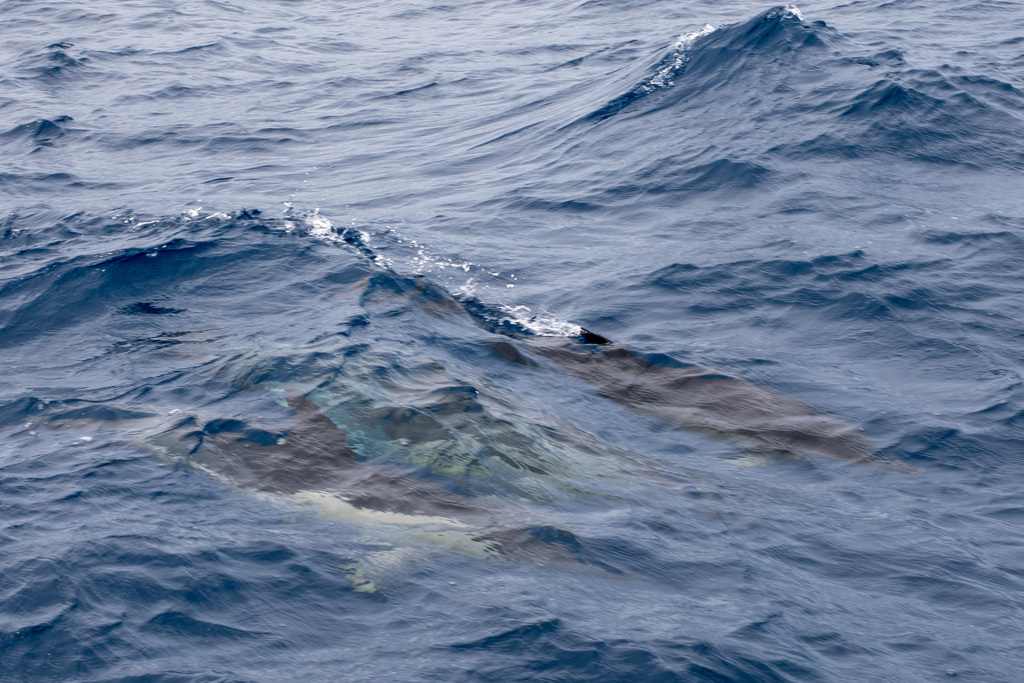

no rights reserved · CC0 1.0
Related Species



Was this profile helpful?