
Mammalia · Cetacea
Blue Whale
Balaenoptera musculus
EndangeredAlso known as: Blue Rorqual, Northern Indian Ocean Blue Whale, Northern Indian Ocean population, Pygmy Blue Whale (brevicauda); Antarctic Blue Whale, Sibbald's rorqual
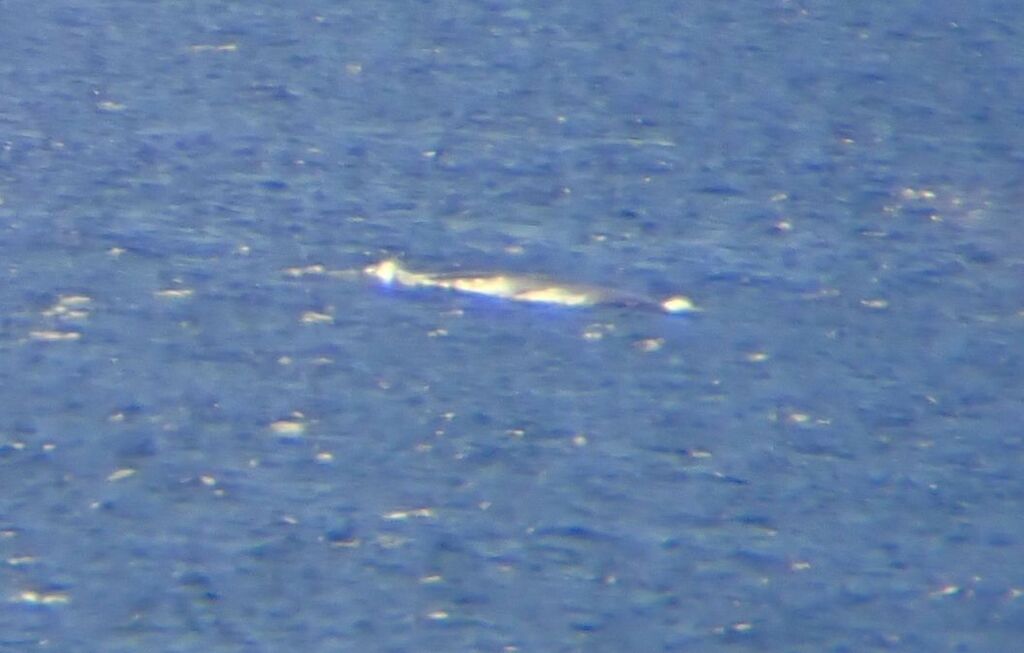
© Em Lamond · iNaturalist · CC BY 4.0
Scientific Classification & Quick Facts
Classification
At a Glance
The blue whale is the largest animal ever to have lived on Earth—a creature so vast that its heart alone weighs as much as an elephant and its tongue can be as long as a city bus. Found across oceans in at least 13 countries, this cetacean commands attention not through aggression or speed, but through sheer magnitude and the mystery of deep waters. Yet despite its dominance of the marine realm, the blue whale remains one of our planet’s most vulnerable giants.
The species is classified as Endangered under the IUCN Red List, a status that reflects the devastating impact of 20th-century whaling, which decimated populations from roughly 350,000 individuals to fewer than 5,000 by the 1960s. Today, though some populations show signs of recovery, blue whales face ongoing threats from ship strikes, entanglement in fishing gear, noise pollution, and the effects of climate change on their prey. Their recovery story, incomplete though it remains, offers insights into how marine conservation can work at the largest scale imaginable.
Identification and Appearance
The blue whale is the largest animal ever to exist on Earth. Adults typically reach 25 to 27.1 metres in length, with weights up to 190,000 kilograms. The body is notably slender compared to other baleen whales, built for speed and long-distance migration across ocean basins.
The head structure is distinctive: a broad, U-shaped rostrum (snout) dominates the front of the body, followed by a massive but tapered trunk. The flippers are thin and elongated relative to body size, serving as steering apparatus. A small, sickle-shaped dorsal fin sits close to the tail, and the flukes (tail lobes) are wide, thin, and powerful—the primary propulsive organs. The body is deep blue-grey across the dorsum and lighter on the ventral (belly) side, though individuals often appear mottled or marbled due to diatom and algae accumulation on the skin.
Feeding Apparatus
The upper jaw is lined with 70 to 400 black baleen plates, each less than 1 metre in length. These horny plates hang from the upper jaw and filter water during feeding. The throat region bears 60 to 88 longitudinal grooves that expand dramatically during feeding lunges, allowing the whale to engulf enormous volumes of water—up to 90 tonnes per gulp. Once the mouth closes, the tongue and throat muscles contract, forcing water back out through the baleen plates while retaining krill prey on the inner surface.
Blue whales can live up to 110 years in the wild, making them among the longest-lived animals on the planet. Sexual dimorphism is minimal in blue whales; females tend to be slightly larger than males on average, a pattern observed in many baleen whale species.
Distribution and Habitat
Balaenoptera musculus, the blue whale, is found across the world’s oceans, with recorded observations concentrated in specific marine regions. Mexico leads in sighting frequency with 112 records, followed by Portugal (62 records) and Antarctic waters (50 records). The United States, Chile, and New Zealand each show moderate observation counts, while more scattered records come from Georgia, Argentina, Sri Lanka, and Spain. These distribution patterns reflect both the species’ wide oceanic range and regional variation in research effort and marine traffic.
Blue whales inhabit deep ocean waters and coastal areas, with no fixed elevation range as applicable to marine species. The seasonal distribution shows marked variation, with peak presence in February when 103 observations were recorded. From January through April, sightings cluster heavily, suggesting concentrated seasonal migration or feeding periods in certain regions. The species shows minimal to no recorded observations during the months of June through November, indicating pronounced seasonal movement patterns as whales follow food sources between polar and temperate waters.
The concentration of records in Mexico and the eastern Pacific, combined with Antarctic observations, aligns with the species’ known migratory behaviour. Blue whales undertake extensive pole-to-pole migrations, moving between high-latitude feeding grounds during summer months and lower-latitude breeding grounds in winter. The peak in February captures populations during their presence in accessible waters, particularly near continental shelves and productive upwelling zones where krill aggregations support feeding activity.
Biology and Behaviour
Behavior
Blue whales are predominantly solitary animals, though they occasionally occur in pairs. During periods of high food productivity, they gather in groups exceeding 50 individuals. Populations undertake extensive migrations, traveling to polar summer feeding grounds and returning to equatorial winter breeding waters. Research published in the Proceedings of the National Academy of Sciences demonstrates that blue whales use memory to locate productive feeding areas, suggesting sophisticated spatial cognition and learned knowledge of seasonal prey locations.
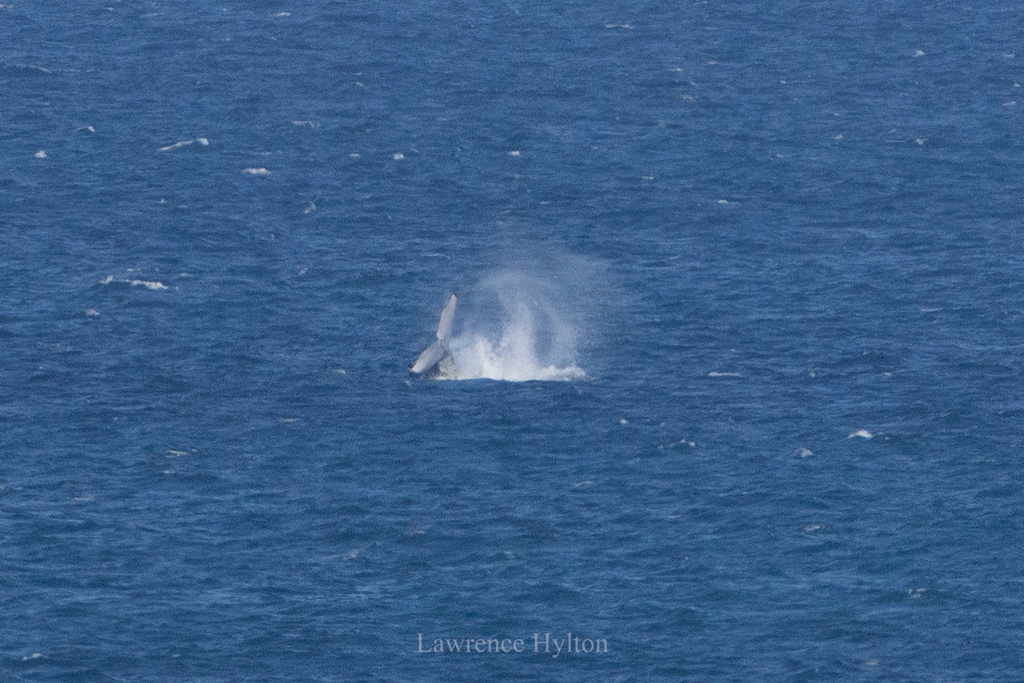
The characteristic blow of a blue whale—a tall, columnar spray visible from great distances—is used to identify individuals at sea. These animals are generally non-aggressive toward humans and pose no documented threat to people, though their sheer size demands respectful distance from vessels in their presence.
Diet
Blue whales are filter feeders specializing in krill, primarily the Antarctic krill Euphausia superba. An individual may consume up to 4 tonnes of krill daily during peak feeding season. They feed by lunging through swarms of krill with their mouths open, taking in enormous volumes of water before closing their jaws and forcing water out through their baleen plates, which trap the small crustaceans inside. This feeding strategy concentrates their foraging in nutrient-rich polar waters where krill densities reach seasonal peaks.
Reproduction
Blue whales breed during winter months in warm equatorial waters. Females reach sexual maturity around age 5–15 and have a gestation period of approximately 10–12 months. They typically produce a single calf, born tail-first during the winter breeding season. Newborn calves measure roughly 7 metres in length and weigh approximately 2.7 tonnes.
Lactation lasts about 6–7 months, during which the mother remains with her calf continuously, protecting and nursing it through warm breeding grounds. The calf then accompanies its mother on the migration to feeding areas, learning essential routes and locations through observation and experience. Females typically breed every 2–3 years, making reproduction a long-term investment in individual offspring.
Conservation and Threats
The blue whale is classified as Endangered on the IUCN Red List, reflecting its recovery from near extinction but continued vulnerability. This status acknowledges that while populations are increasing globally, the species remains at serious risk and requires ongoing protection. Blue whales faced catastrophic decline during the twentieth century due to intensive whaling, which reduced their numbers from approximately 360,000 to just a few thousand by the 1960s.
Historical Context and Recovery
Commercial whaling brought blue whales to the brink of extinction. Industrial hunting methods and the high value of whale oil drove populations to collapse across every ocean basin. The international whaling moratorium, implemented in 1986 through the International Whaling Commission, halted legal commercial hunting and allowed populations to begin recovering. This landmark agreement remains one of the most significant marine conservation achievements, though some populations remain far below historical levels.
Current Threats
Although whaling has ceased in most regions, blue whales face serious contemporary threats. Ship strikes kill whales in busy shipping lanes, particularly in areas where migration routes overlap with major ports. Climate change and ocean warming affect food availability, as blue whales depend entirely on krill—small crustaceans highly sensitive to water temperature and oceanographic conditions. Noise pollution from shipping, seismic surveys, and military sonar disrupts communication and feeding behaviour. Entanglement in fishing gear, ocean acidification affecting krill populations, and localized chemical pollution also pose ongoing risks.
Conservation Efforts
International protections extend beyond the whaling moratorium. Many countries enforce vessel speed restrictions in critical feeding and migration areas to reduce ship-strike mortality. Marine protected areas in Antarctica and other regions provide seasonal refuge. Research programs track population recovery and monitor whale health, while acoustic monitoring networks detect stress responses to human-made noise. Some shipping lanes have been rerouted away from known blue whale concentration areas, demonstrating how practical mitigation can coexist with maritime commerce.
Cultural Significance
Blue whales occupy a singular place in human consciousness as symbols of the natural world’s grandeur and fragility. Their immense size—the largest animal on Earth—inspires awe and wonder in those who encounter them, whether through direct observation or scientific knowledge. This emotional connection drives global marine conservation initiatives and connects people across cultures to the health of our oceans. The species has become an ambassador for ocean protection, making its endangered status a rallying point for environmental action.
The naming of the blue whale itself carries cultural weight. The genus name Balaenoptera translates to “winged whale,” while the species name musculus likely means “muscle”—though some scholars suggest it may be a diminutive form of “mouse,” possibly a playful pun by Carl Linnaeus when he formally described the species in Systema Naturae. This etymological curiosity reflects the historical moment when European naturalists were systematizing the natural world and occasionally indulging in scientific humor.
Fun Facts
- The blue whale is the largest animal known to have ever existed, even larger than the biggest dinosaurs. Maximum confirmed lengths reach 29.9–30.5 metres, with individuals weighing up to 190–200 tonnes—equivalent to about 33 elephants or 1,500 adult humans.
- Despite their colossal size, blue whales feed on some of the ocean’s tiniest creatures: krill, shrimp-like animals often just 5 centimetres long. A single blue whale consumes up to 4 tonnes of krill per day during feeding season by filtering seawater through baleen plates in their mouth.
- Blue whales belong to the rorqual family, characterised by expandable throat grooves that allow them to engulf enormous mouthfuls of water while feeding. These grooves can stretch like an accordion, accommodating volumes of water equal to their own body weight.
- Four recognised subspecies inhabit different ocean regions: B. m. musculus in the North Atlantic and North Pacific, B. m. intermedia in the Southern Ocean, B. m. brevicauda in the Indian Ocean and South Pacific, and B. m. indica in the Northern Indian Ocean. A potential fifth subspecies may exist in waters off Chile.
- Their distinctive greyish-blue colouration is not uniform across their body—the upper surface is darker blue while the underside is considerably lighter. This countershading (darker above, lighter below) helps them blend with the ocean when viewed from above or below, providing camouflage despite their enormous size.
- Blue whales produce the loudest calls of any animal on Earth, with vocalizations reaching up to 188 decibels underwater. These low-frequency calls travel thousands of kilometres through the ocean, allowing whales to communicate across entire ocean basins.
- Female blue whales give birth to a single calf after a gestation period of approximately 11 months, and newborns weigh around 2.7 tonnes at birth. Calves consume roughly 50 litres of their mother’s milk daily and can gain up to 90 kilogrammes per day during their first year.
Ecology
Diet
Behavior
Conservation Status
LC · NT · VU · EN (Endangered) · CR · EW · EX
Photo Gallery
Em Lamond · CC BY 4.0
Related Species
Was this profile helpful?