
Amphibia · Anura
Common Frog
Rana temporaria
Also known as: European Common Frog, Grass Frog
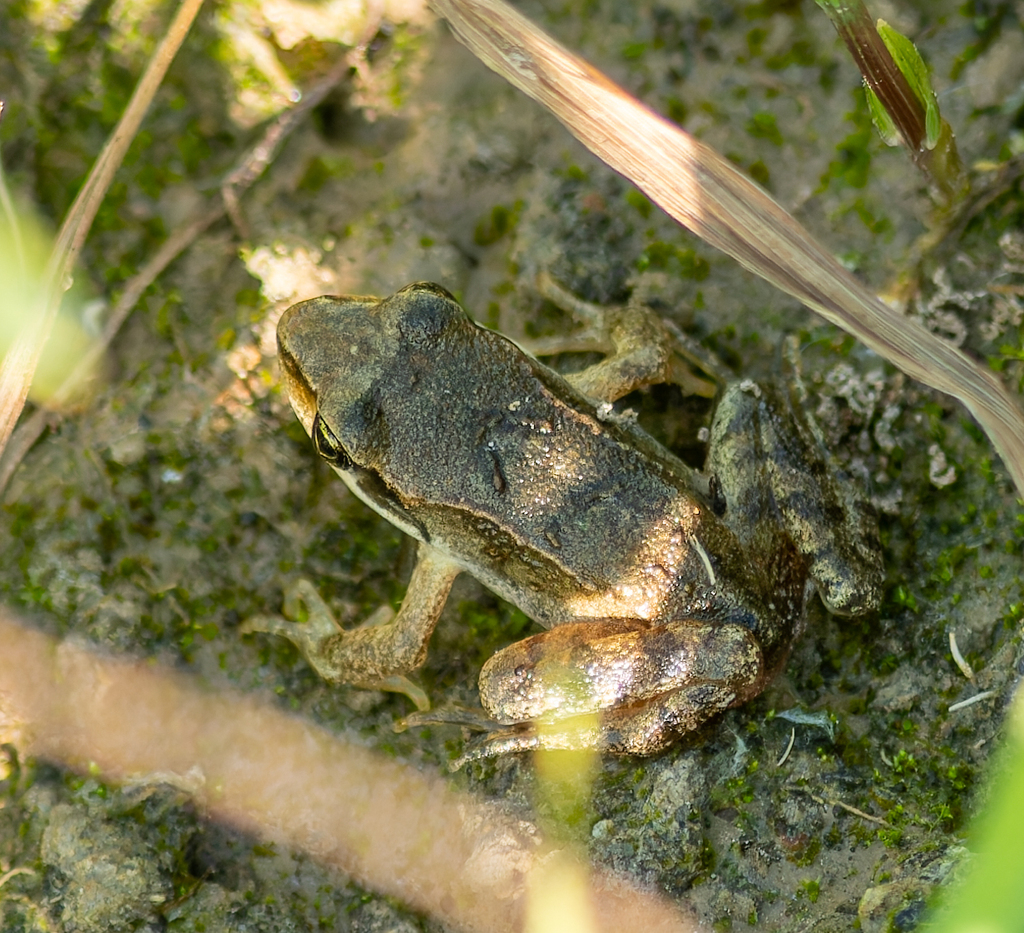
© Alexander Naumov · iNaturalist · CC BY-NC 4.0
The common frog is one of Europe’s most familiar amphibians, its distinctive croak echoing through wetlands and gardens from early spring through summer. Found across 15 countries and listed as Least Concern by the IUCN, Rana temporaria remains widespread and locally abundant throughout much of its range. Yet this apparent security masks a deeper story: the species has undergone significant declines in many regions due to habitat loss, pollution, and the spread of amphibian diseases, making it a valuable indicator of environmental health.
What sets the common frog apart is its adaptability and ecological importance. As both predator and prey, it occupies a central role in freshwater food webs, controlling invertebrate populations while sustaining birds, snakes, and other vertebrates. Its rapid breeding cycle—explosive aggregations in ponds and ditches during spring—makes it easy to study and monitor, transforming it into a key species for understanding amphibian population dynamics and the broader impacts of environmental change on biodiversity.
Identification and Appearance
Rana temporaria is a small frog with a squat, robust body. Adults typically measure 6–9 cm in body length, with an average weight of 22.7 grams. Females are usually slightly larger than males, though both sexes remain compact and well-suited to their terrestrial and semi-aquatic habitats across northern Europe.
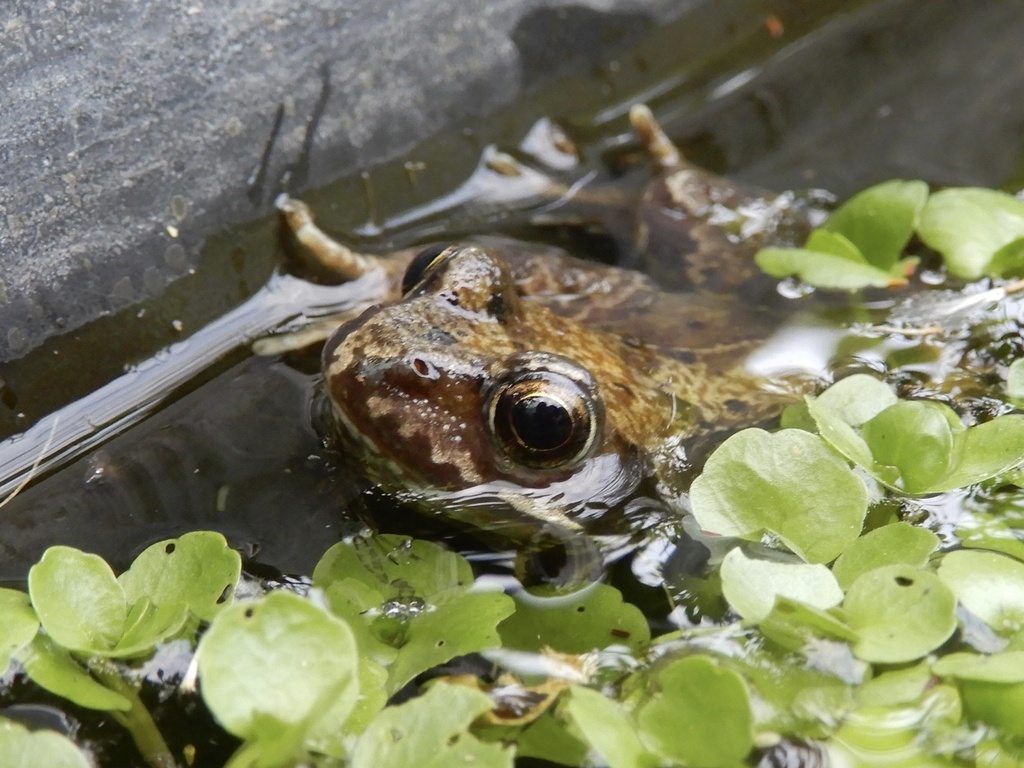
Colouration is highly variable. The back and flanks range from olive green to grey-brown, brown, olive brown, grey, or yellowish tones, with some individuals displaying rufous hues. This flexibility in colour is functional—the frog can lighten and darken its skin to match surrounding vegetation and soil. Occasional colour variants occur: black and red individuals have been recorded in Scotland, while albino frogs with yellow skin and red eyes emerge from time to time in wild populations.
Seasonal and Sexual Variation
During the mating season, males typically develop a distinctive greyish-blue colouration, making them easy to distinguish from females at breeding sites. This colour change is temporary and subsides outside the reproductive period, returning the male to his typical brown or green appearance. Females retain their standard colouration year-round but are noticeably heavier and more robust than males, an adaptation linked to egg production and reproduction.
Distribution and Habitat
Rana temporaria is widespread across northern and western Europe, with a confirmed presence in at least 15 countries. The species shows particularly strong populations in the United Kingdom and Netherlands, where GBIF records total 112 and 107 occurrences respectively. Significant populations also occur in France (25 records) and Spain (23 records), demonstrating a broad latitudinal range across the continent. Eastern European records are more sparse, with Russia, Belarus, and other regions represented by only a handful of observations.
The species exhibits a highly seasonal pattern of recording activity, with the vast majority of observations concentrated in January, when 201 records were logged. February shows a marked decline to 99 records, with no confirmed observations recorded from March through December across the dataset. This pattern likely reflects the species’ winter breeding behavior and increased visibility during the amphibian breeding season, when individuals gather at spawning sites and are more readily detected by naturalists and researchers. Specific elevation data is not available for this dataset, though Rana temporaria is known to occupy lowland and montane zones across its range in suitable freshwater habitats.
Biology and Behavior
Behavior
Common frogs are largely solitary outside the breeding season, spending daylight hours sheltered in damp vegetation, leaf litter, or beneath logs and stones. They are primarily nocturnal hunters, becoming active at dusk when they emerge to forage. During winter, they enter a state of torpor, burying themselves in pond mud or under leaf litter to survive freezing temperatures. In spring, their behavior shifts dramatically as they congregate in large numbers at breeding ponds, often returning to the same water bodies year after year.
These frogs are quick and agile on land, using powerful hind legs to leap between feeding sites. They rely heavily on vision to locate prey, snapping at moving insects with remarkable speed and precision. When threatened, common frogs produce a rapid escape jump and emit distinctive croaking calls—particularly intense during the breeding season when males establish territories and call to attract females.
Diet
Common frogs are carnivorous and opportunistic feeders, preying on a wide variety of invertebrates. Insects form the bulk of their diet, including flies, mosquitoes, beetles, and caterpillars. Larger individuals also consume spiders, millipedes, and small slugs. Tadpoles are primarily herbivorous, grazing on algae and detritus in ponds, though some cannibalism occurs when food is scarce or population density is high.
Reproduction
Breeding occurs in early spring, typically between February and April in the Northern Hemisphere, triggered by rising water temperatures. Males arrive at breeding ponds first and establish calling sites, producing loud croaks that can be heard up to one kilometer away. Females arrive several weeks later and select males based on call intensity and site quality. Amplexus (mating embrace) lasts several hours, during which the female deposits her eggs while the male fertilizes them externally.
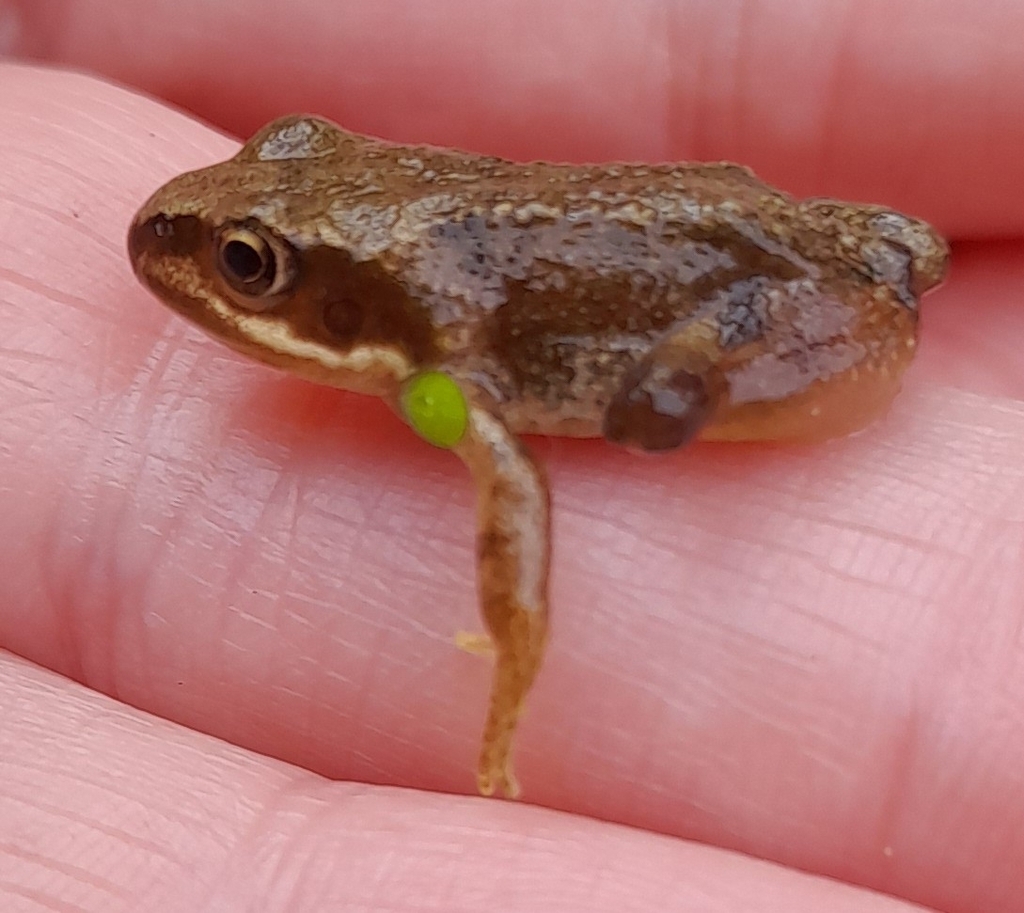
A single female produces 1,500 to 4,000 eggs, laid in large gelatinous clusters that sink to the pond bottom. Tadpoles develop within these clusters for 12 to 16 days before hatching. Development from tadpole to froglet takes 12 to 16 weeks, with metamorphosis occurring in late spring or early summer. Young frogs leave the water at 8 to 12 millimeters in length and typically reach sexual maturity between two and three years of age. Adults can live for more than 20 years in the wild, with some individuals recorded living up to 27 years.
Conservation and Threats
Rana temporaria is classified as Least Concern on the IUCN Red List, reflecting its wide geographic range and stable populations across much of Europe. This status indicates that the species is not currently facing imminent extinction at a global scale. However, regional declines have been documented in parts of its range, and ongoing threats require continued monitoring and protective measures.
The population trend for the common frog is currently increasing, a positive sign that conservation efforts and habitat management in many areas are proving effective. This recovery contrasts with historical declines observed in the mid-to-late 20th century, when widespread habitat loss and pollution significantly reduced populations across western Europe.
Threats
Ranavirus represents one of the most serious threats to common frog populations. This highly contagious pathogen has caused mass mortality events in wild amphibian populations worldwide, with mortality rates sometimes exceeding 90 per cent in affected populations. The disease spreads readily in crowded breeding sites and has become a major limiting factor in many frog populations, particularly where breeding ponds are densely populated or where stressed frogs are more susceptible to infection.
Beyond disease, common frogs face threats from habitat degradation, including the loss and fragmentation of breeding ponds, wetland drainage for agricultural development, and pollution from fertilisers and pesticides. Climate change poses an additional concern, potentially altering breeding phenology and water availability in key habitats. Introduced predators, notably fish species introduced to garden ponds, also impact tadpole survival rates in some regions.
Conservation Efforts
The common frog benefits from legal protection in many European countries and is listed under various habitat protection directives. The creation and restoration of breeding ponds, combined with habitat corridors to facilitate movement between populations, has contributed to the species’ population recovery in recent decades. Many conservation organisations actively monitor ranavirus outbreaks and provide guidance to pond owners on biosecurity measures to prevent disease transmission.
Fun Facts
Rana temporaria, the common frog, is one of Europe’s most widespread amphibians, yet it harbours several unexpected traits and quirks that make it far more interesting than its name suggests.
- The common frog goes by at least eight distinct common names across its range, including ‘European Holarctic true frog’ and ‘European grass frog’, reflecting both its broad geographic distribution and the varied languages of the regions it inhabits.
- Its range spans from Ireland in the west to Japan in the east, making it one of the most geographically extensive frog species in the Northern Hemisphere, yet it is conspicuously absent from Iceland, the Americas, and much of southern Europe.
- The nominative subspecies, Rana temporaria temporaria, is unusually terrestrial for a semi-aquatic frog, spending much of its life on land rather than in water—a trait that sets it apart from many of its relatives.
- Despite being found as far north as Scandinavia and even on the remote Scottish island of Isle of Lewis, the common frog mysteriously avoids most of the Iberian Peninsula, southern Italy, and the southern Balkans, suggesting climate or historical factors have shaped its distribution in complex ways.
- The farthest west any population occurs is Ireland, yet the species is absent from the nearby island of Iceland despite Iceland’s similar northern latitude, indicating that ocean barriers and post-glacial recolonisation history have been crucial in determining where this frog can live.
Photo Gallery
Alexander Naumov · CC BY-NC 4.0
Related Species
Was this profile helpful?