
Squamata
Sand Lizard
Lacerta agilis
Least Concern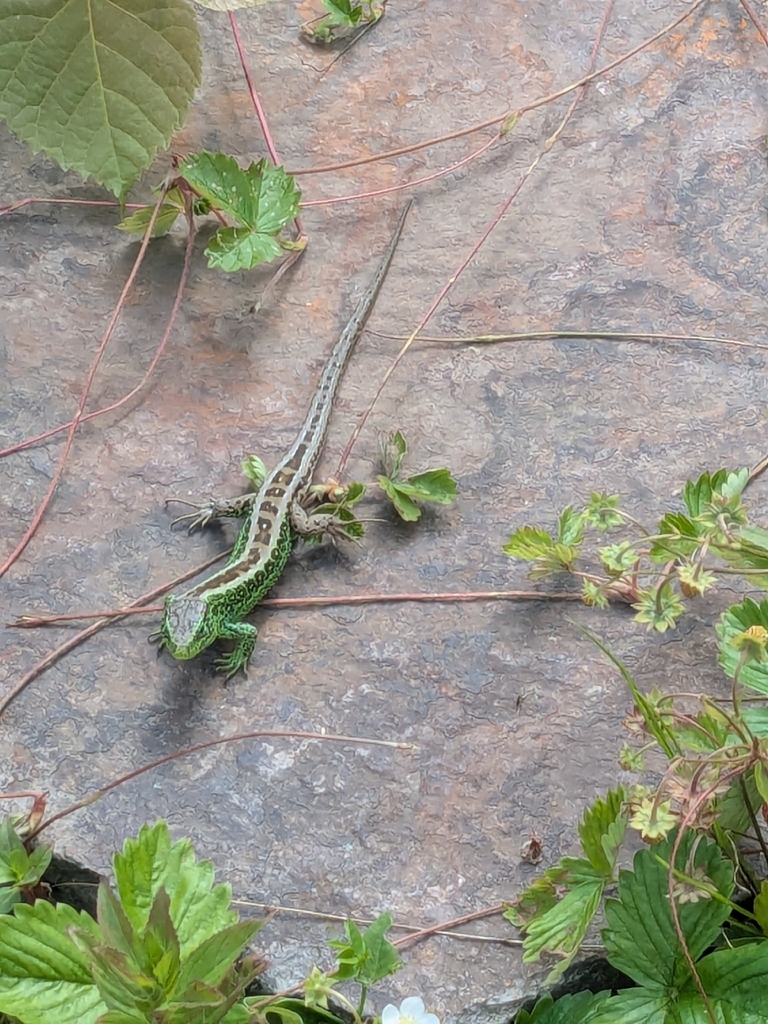
© Nadija Antonova · iNaturalist · CC BY 4.0
Scientific Classification & Quick Facts
Classification
At a Glance
The Sand Lizard is a compact, agile reptile that thrives across the warm, open habitats of Europe and western Asia. Measuring just 20–24 centimetres in total length, Lacerta agilis is built for speed and precision—a small predator perfectly adapted to the sandy and stony substrates where it hunts for insects and small invertebrates. Found across 13 countries, this member of the family Lacertidae remains widespread and maintains a conservation status of Least Concern, reflecting its resilience in fragmented landscapes.
What makes Lacerta agilis particularly noteworthy is its role as an indicator species for healthy, open-ground ecosystems. Its presence signals the preservation of early-succession habitats—heathlands, dunes, and sparse grasslands—that have become increasingly rare across much of Europe. Despite its broad range, the species faces localised pressures from habitat loss and fragmentation, making population monitoring and habitat protection essential to its long-term survival in many regions.
Identification and Appearance
Size and Build
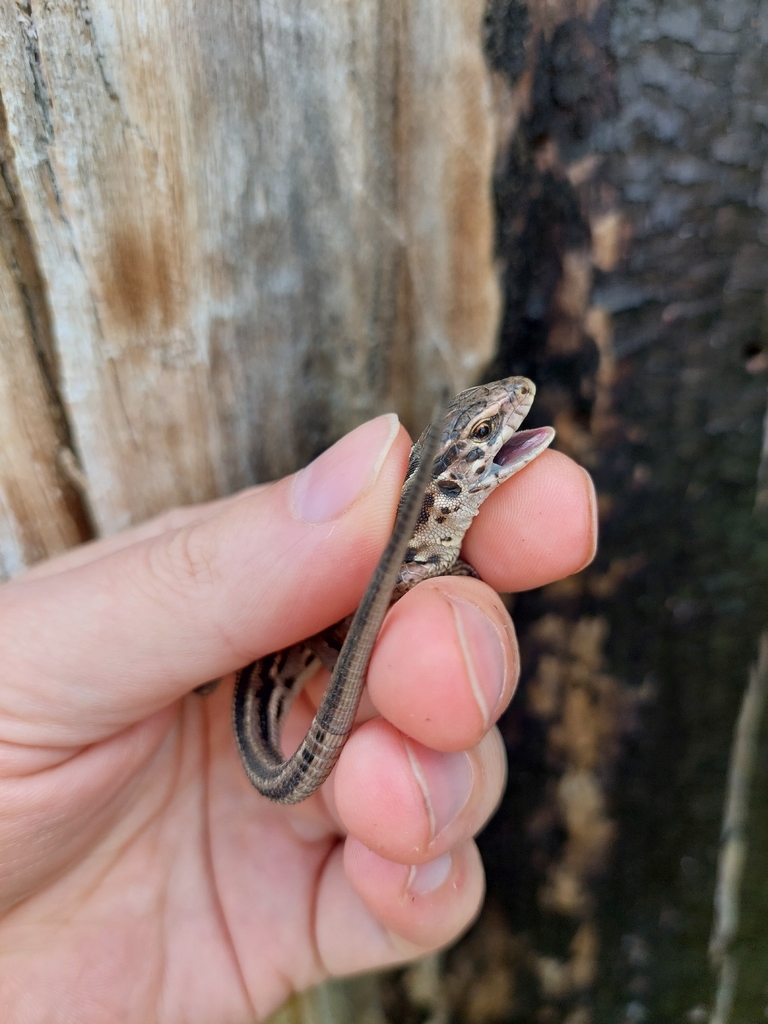
The sand lizard is a small to medium-sized lizard with a compact, four-legged body. Males reach a maximum total body length of 19.3 centimetres, while females are slightly smaller at 18.5 centimetres. The body is robust and well-suited to life in sandy terrain, with relatively short limbs and a tapering tail that accounts for much of the total length.
Colouration and Markings
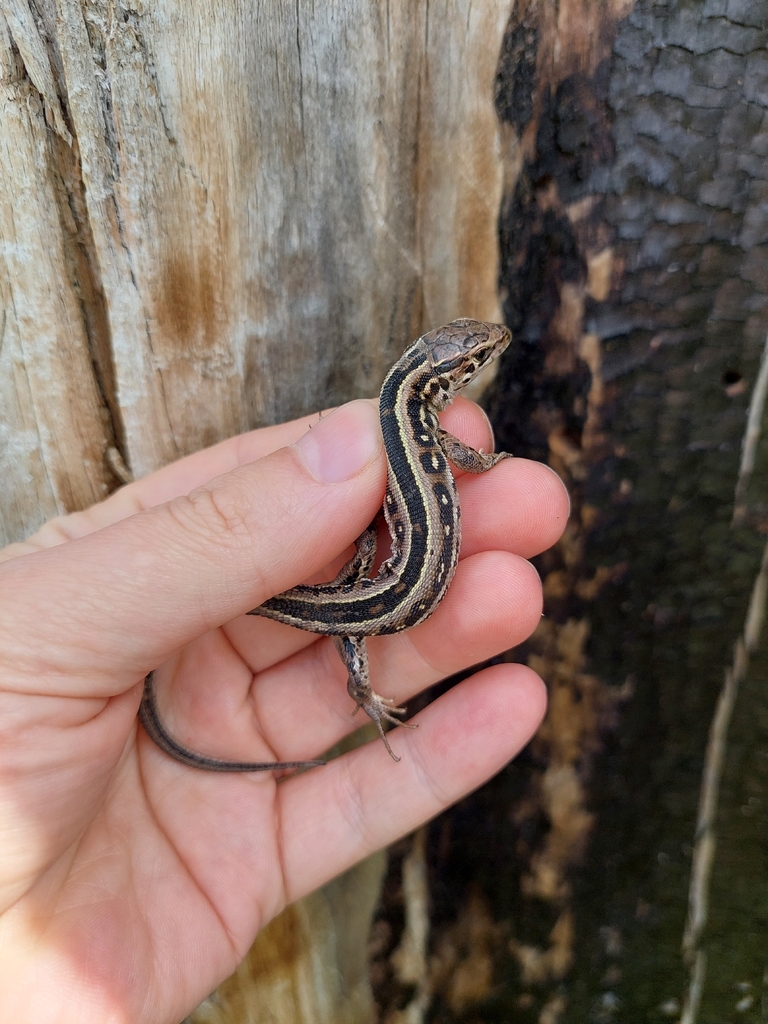
Lacerta agilis displays distinctive ocellated (eye-shaped) markings arranged in lateral and dorsal stripes across its body and flanks. These markings consist of dark patches with pale centres, creating a characteristic spotted or striped pattern that varies considerably across the species’ European and Russian range. The base coloration is typically brown, grey, or tan, providing effective camouflage in sandy and rocky habitats.
Sexual Dimorphism
Males and females differ noticeably in appearance and colouration. Males possess finer, more delicate markings than females and undergo dramatic seasonal colour changes. During the spring mating season, males’ flanks turn a brilliant bright green—a signal of breeding condition and territorial status. This vibrant coloration fades again by late summer, returning to more subdued tones. Females maintain more uniform colouration year-round and typically display bolder, coarser dorsal and lateral markings than males.
In the two main western subspecies, L. a. agilis and L. a. argus, the dorsal stripe running down the back is thin and interrupted, or may be absent entirely. Regional variation in pattern intensity and base coloration occurs across the species’ broad geographic distribution, reflecting local adaptation to different soil types and vegetation.
Distribution and Habitat
Lacerta agilis occurs across central and western Europe, with a range spanning at least 13 countries. The Netherlands holds the largest concentration of records, followed by Germany and Austria. Additional populations are documented in the United Kingdom, Czech Republic, Poland, France, Romania, Slovakia, and Bosnia and Herzegovina, reflecting a distribution centred on temperate European regions.
The species exhibits a strongly seasonal presence in recorded data, with activity concentrated in the early months of the year. March represents the peak observation month, accounting for the majority of sightings, while February shows moderate activity. Records drop to zero from April onward in the available dataset, reflecting either genuine dormancy during warmer months or a shift in detectability. This pattern suggests that spring emergence coincides with the primary window for documenting this lizard in the wild.
Specific elevation data for the species are not currently available. Sand lizards favour open, well-drained habitats typical of their range across northern and central Europe, where they exploit sandy and gravelly substrates. Their presence across both lowland and upland regions of their range indicates tolerance for varied altitudes, though detailed elevational preferences remain undocumented in the present dataset.
Biology and Behavior
Behavior
Sand Lizards are diurnal and highly active during warm daylight hours, basking on sandy substrates to regulate their body temperature. They are solitary creatures outside the breeding season, maintaining individual territories that they defend against rivals. Males are particularly territorial and will engage in aggressive displays—head-bobbing, body inflation, and color intensification—when confronting competitors. These displays often escalate to physical combat, where males interlock their jaws and wrestle for dominance.
The species exhibits remarkable site fidelity, returning repeatedly to preferred basking spots and burrows. Sand Lizards rely on burrows for shelter, thermoregulation, and protection from predators. They move with quick, darting sprints across open sand, pausing frequently to scan for threats and prey. When threatened, they will flee toward nearby cover or burrows rather than confront predators.
Diet
Sand Lizards are carnivorous and opportunistic feeders. They consume a wide range of small invertebrates, including insects, spiders, beetles, grasshoppers, and ant larvae. Juvenile lizards feed on smaller prey items such as tiny arthropods, while adults tackle larger insects and even small vertebrates when encountered. Foraging occurs primarily during midday when prey activity is highest and ambient temperatures are warmest.
Reproduction
Breeding occurs in spring, typically from April to June in European populations. Males become highly active during this period, pursuing females and engaging in courtship displays involving head-bobbing and body coloration changes. Mating is preceded by intense competition between males, with dominant individuals securing access to females.
Females are oviparous and lay eggs in burrows or shallow depressions in loose sand. Clutch sizes typically range from 5 to 12 elongated eggs, which are left unattended after deposition. Incubation takes approximately 7 to 10 weeks under warm sand conditions, with hatchlings emerging in late summer or early autumn. Sex determination in this species is chromosomal (XY system), with environmental temperature playing a minor modulatory role during development.
Conservation and Threats
Lacerta agilis, the sand lizard, holds a status of Least Concern on the IUCN Red List, indicating that the species is not currently at immediate risk of extinction. However, this classification masks a concerning underlying trend: populations are decreasing across much of the species’ range. Despite the relatively stable global assessment, regional declines and local extinctions in parts of Europe highlight the need for targeted conservation action to prevent further deterioration.
Threats
The sand lizard faces a convergence of interconnected threats that degrade and eliminate suitable habitat. Habitat destruction—through urban development, agricultural intensification, and land conversion—directly removes breeding and foraging grounds. Beyond outright loss, habitat degradation from inappropriate land management practices, such as excessive vegetation encroachment or the removal of sandy substrates, renders previously suitable areas unsuitable for breeding and thermoregulation. Habitat fragmentation isolates populations, preventing gene flow and increasing vulnerability to local extinction, particularly in regions where suitable sandy habitats have become increasingly patchy.
Climate change introduces additional pressure by altering temperature and moisture regimes in sandy habitats, potentially affecting egg incubation success and juvenile survival. Lack of active habitat management is itself a threat: many sand lizard populations depend on low vegetation cover and open sandy areas that naturally become overgrown without intervention. Without management to maintain these conditions, even nominally protected sites can decline in quality. In some areas, misguided management practices—such as excessive tree planting in naturally open habitats or suppression of natural disturbances—further compound the problem.
Conservation Efforts
Several European countries have implemented legal protections for sand lizards, and the species is included in Annex IV of the EU Habitats Directive, affording it legal protection throughout much of its range. Conservation initiatives focus on habitat restoration, particularly in the United Kingdom, Germany, and other strongholds where dedicated programmes actively manage sites to maintain open sandy conditions. Translocation programmes have been used to reinforce declining populations and reestablish the species in parts of its former range.
Fun Facts
- Sand lizards can change color dramatically depending on their mood and social status, with males displaying vivid green flanks and bright spots during breeding season to attract females and intimidate rivals.
- Unlike many lizard species, sand lizards are viviparous—they give birth to live young rather than laying eggs, with females typically producing 4–15 offspring in midsummer after a gestation period of about six weeks.
- These lizards are highly territorial and can be surprisingly aggressive; males will bite and wrestle each other in fierce combat disputes, and both sexes will defend their preferred basking and hunting spots from intruders.
- Sand lizards have a specialized heating behavior called “stilting,” where they elevate their bodies high on their legs to absorb warmth from the sun-warmed sand below while minimizing heat loss through their belly—an efficient thermoregulation strategy in open habitats.
- Their eyesight is exceptionally acute, allowing them to spot moving insects and potential threats from considerable distances; they rely far more on vision than on smell or hearing when hunting.
- Sand lizards are one of the few European reptiles with a fragmented distribution, occurring in isolated populations across northern Europe, with some populations separated by hundreds of kilometers of unsuitable habitat.
- When threatened, a sand lizard may autotomize—drop and wriggle its tail to distract a predator—but unlike some lizards, it cannot regenerate a perfect replica; the new tail lacks the original bone structure and is more rigid.
Conservation Status
LC (Least Concern) · NT · VU · EN · CR · EW · EX
Photo Gallery
Nadija Antonova · CC BY 4.0
Related Species
Was this profile helpful?