
Sordariomycetes · Hypocreales
Ergot
Claviceps purpurea
Also known as: Rye Ergot, Rye Ergot Fungus, cereal ergot, rye & brome ergot
© no rights reserved · iNaturalist · CC0 1.0
Scientific Classification & Quick Facts
Classification
Known For
Detailed measurements for this species are still being verified.
Claviceps purpurea, commonly known as ergot, is a fungal pathogen that transforms the seeds of grains—particularly rye, wheat, and barley—into hard, dark, horn-like structures called sclerotia. Rather than destroying the plant outright, this ascomycete hijacks the grain’s reproductive tissue, replacing it with its own fungal body while leaving the plant otherwise intact. This deceptive coexistence has shaped human history in ways few microorganisms can claim, from triggering widespread poisonings that altered medieval European societies to becoming a source of powerful pharmaceutical compounds used in modern medicine.
Found across at least 25 countries worldwide, ergot demonstrates a remarkable evolutionary strategy: it produces secondary metabolites toxic to livestock and humans, yet these same chemicals have proven invaluable to pharmaceutical science. The fungus belongs to the family Clavicipitaceae within the phylum Ascomycota, and its conservation status remains unknown—a reflection of how little we still understand about the ecology and distribution of many fungal species. Understanding ergot is essential not only for grain safety and food security but also for appreciating how a microscopic parasite can intersect with human disease, agriculture, pharmacology, and cultural memory.
Identification and Appearance
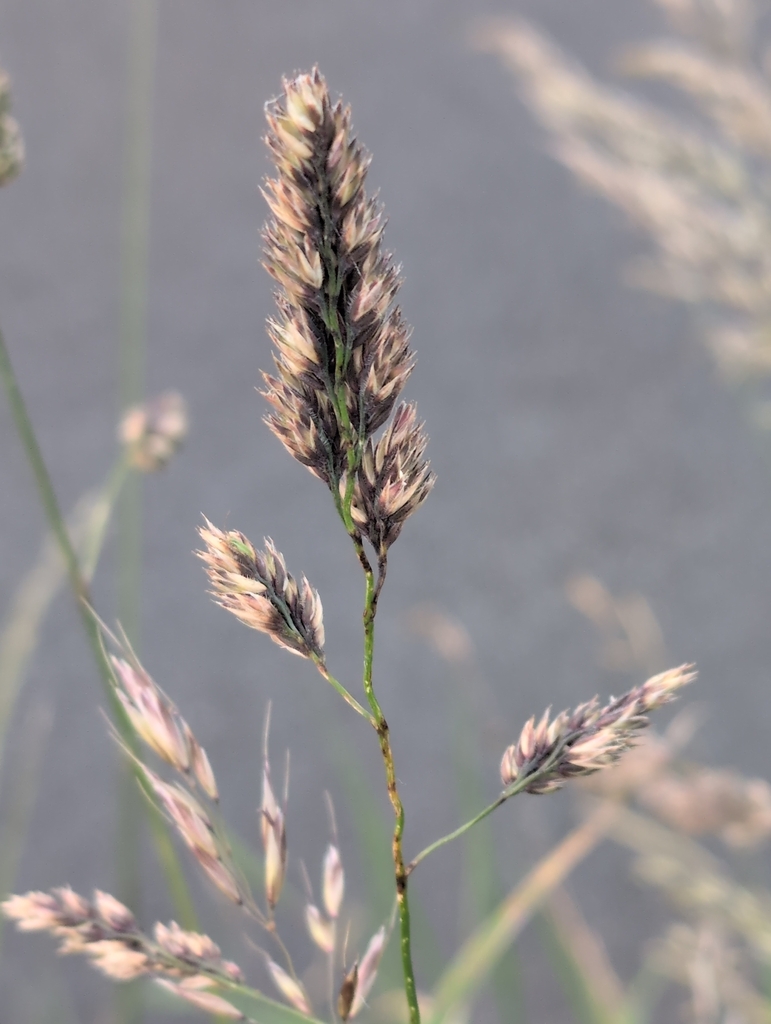
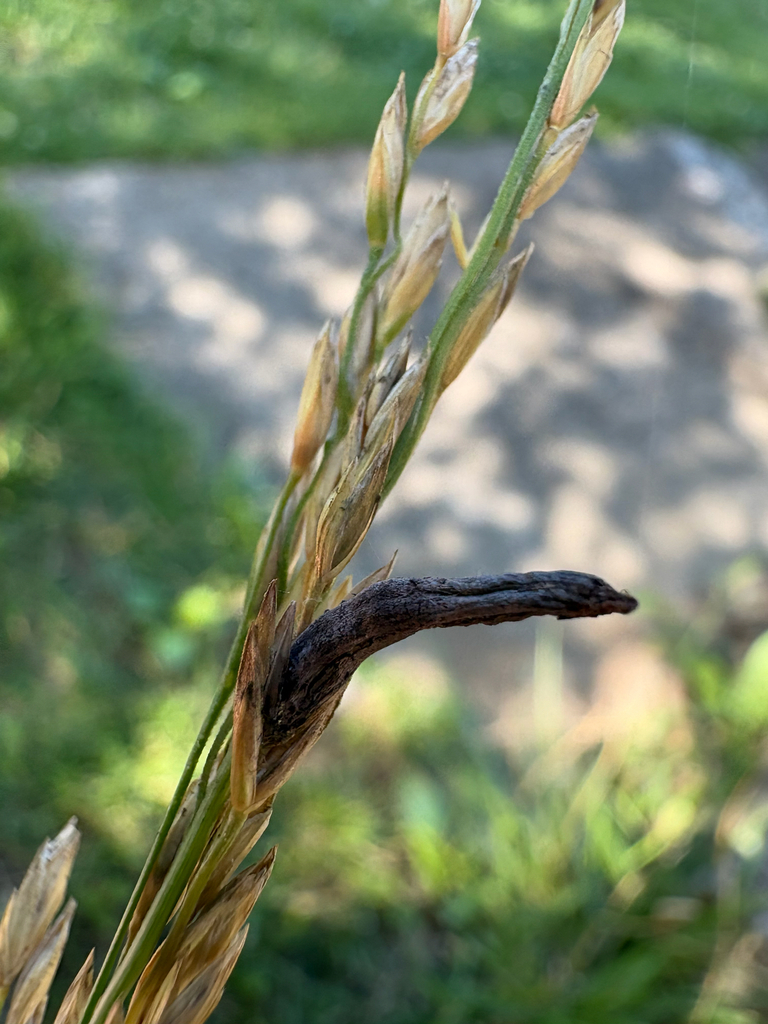
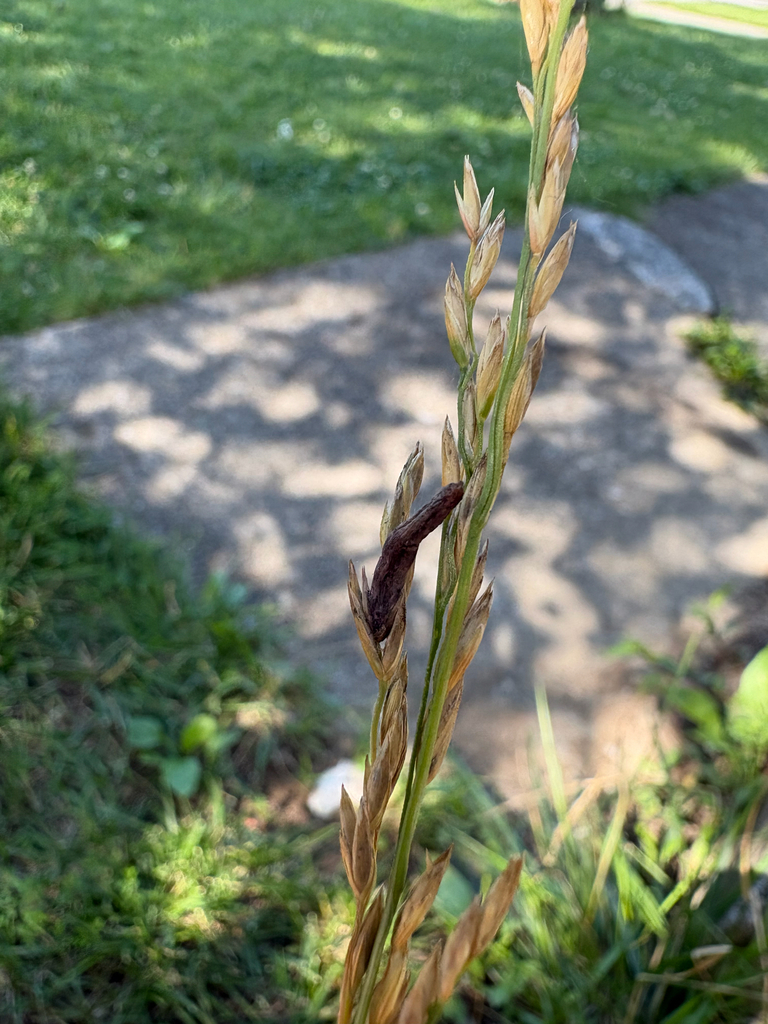
Claviceps purpurea, commonly known as ergot, is a fungal pathogen that replaces the grain of infected cereals—most notably rye, wheat, and barley—with a distinctive sclerotium. The sclerotium is the resting stage of the fungus and appears as a hard, compact body where a healthy grain kernel would develop. These ergot bodies are dark purple to black in colour, often with a slightly curved or comma-like shape, and typically measure 8–15 millimetres in length. The surface is smooth and hard, with a characteristic dark exterior that contrasts sharply against the pale grain head of its host plant.
When fresh, ergot sclerotia may have a slightly bluish-black hue, but they darken further as they mature and dry. The interior is dense and compact, composed of tightly packed hyphae that form a consolidated mass capable of surviving harsh winter conditions. Individual ergot bodies are easily distinguished within a grain head because they are substantially larger and darker than normal grains, and they protrude beyond the chaff. The fungus produces no visible fruiting bodies during its parasitic phase on the host plant—the sclerotium itself is the overwintering structure that will eventually give rise to stalked fruiting bodies (perithecia) when conditions become favourable.
Seasonal appearance
The visual transformation of an infected grain head occurs progressively through the growing season. Early infection may present as a sticky, honey-like secretion called honeydew that oozes from the developing grain, attracting insects that aid spore dispersal. As the sclerotium hardens and darkens over weeks, the honeydew stage gives way to the fully formed, dark purple-black ergot body. By harvest time, ergot masses are readily visible in the grain head and can be separated manually from harvested grain, though contamination of grain stocks remains a persistent agricultural concern.
Distribution and Habitat
Claviceps purpurea, commonly known as ergot, has a wide distribution across temperate regions of the Northern Hemisphere and extends into the Southern Hemisphere. The fungus has been recorded in 25 countries, with particularly high concentrations in Central and Northern Europe. Germany leads with 115 observations, followed by Austria (28), the United Kingdom (23), Denmark (20), and the Netherlands (20). The species also appears in North America, notably the United States (16 observations), and has established populations in New Zealand (14 observations).
Ergot occurs across a narrow elevation band, typically found between 724 and 958 metres, with an average of approximately 871 metres. This elevation preference reflects the fungus’s dependence on its primary hosts—cereal grains such as rye, wheat, and barley—which are cultivated across temperate agricultural landscapes and upland regions. The species shows a marked seasonal pattern, with strong presence during the northern summer months. July represents the peak activity period, with 168 observations recorded; activity builds through spring and early summer (June shows 46 observations) before ceasing entirely by late summer and autumn.
Ecology and Lifecycle
Lifecycle
Claviceps purpurea is an obligate pathogen that completes its lifecycle exclusively on grass flowers, particularly those of rye, wheat, barley, and wild grasses. The fungus begins as dormant sclerotia—hard, dark resting structures roughly the size of a grain of wheat—that persist in soil or within plant debris through winter. When conditions favour grain flowering in spring and early summer, these sclerotia germinate to produce flask-shaped fruiting bodies called perithecia, which release spores into the air during wet weather.
These airborne spores land on the open flowers of susceptible grasses and penetrate the developing ovary. The fungus then colonises the ovary tissue, replacing the seed with a compact mass of fungal tissue and hyphal filaments. Over several weeks, this mass darkens and hardens into a new sclerotium, ready to be dispersed during harvest or to survive in soil until the next growing season. A single infected grain head can produce multiple sclerotia, amplifying infection pressure in subsequent years.
Ecological Role
Claviceps purpurea functions as a facultative parasite within wild and cultivated grass ecosystems. Rather than killing its host outright, it redirects the plant’s reproductive energy into its own biomass, reducing seed set while ensuring its own survival and dispersal. In natural grassland communities, ergot infection can influence plant population dynamics by reducing seed viability in dominant grass species, potentially altering competitive balances. The sclerotia are occasionally consumed by rodents and other small mammals, though the toxins they contain may affect these animals.
Uses
Historically, Claviceps purpurea holds a dark place in human medicine and agriculture. During the Middle Ages and Early Modern period, ergot-contaminated grain caused widespread ergotism—a disease marked by hallucinations, convulsions, gangrene, and death—across Europe. Thousands died in recurring epidemics, and the condition became known as “St. Anthony’s Fire.”
Despite its dangers, ergot gained pharmaceutical relevance in the 20th century. The sclerotia contain ergot alkaloids, including ergotamine and lysergic acid, which have legitimate medical applications. Ergotamine is used to treat migraines by constricting blood vessels, while lysergic acid serves as a precursor in the synthesis of lysergic acid diethylamide (LSD). Historically, ergot extracts were also used to induce labour and control postpartum haemorrhage, though modern obstetrics relies on safer alternatives.
Conservation and Threats
Claviceps purpurea, commonly known as ergot, has not been formally assessed by the IUCN Red List. This fungal pathogen does not fit traditional conservation frameworks because it is not endangered or at risk of extinction. Instead, ergot represents an ongoing challenge for agricultural systems and food security rather than a species requiring protection from human activity.
Ecological Role and Agricultural Context
Ergot is a parasitic fungus that infects grains, particularly rye, wheat, and barley, replacing the developing seed with a hard, dark fungal body called a sclerotium. The fungus itself is not threatened; rather, its prevalence depends on environmental conditions and agricultural practices. Wet, cool growing seasons favour ergot infection, and the fungus can persist in soil and plant debris for several years.
The primary concern with ergot is human and animal health rather than the fungus’s survival. Ergot alkaloids—particularly ergotamine—accumulate in infected grain and can cause ergotism (also called St. Anthony’s Fire) in humans and animals that consume contaminated food. Historically, ergotism caused mass poisonings in medieval Europe. Modern food safety standards and grain cleaning technologies have largely eliminated this risk in developed nations, though contamination remains a concern in regions with limited agricultural infrastructure.
Conservation Efforts and Pest Management
No traditional conservation programmes protect ergot itself. Instead, agricultural and public health authorities focus on ergot control and prevention. Modern strategies include crop rotation, field sanitation to remove infected plant material, use of resistant grain varieties, and proper grain storage and cleaning. In the European Union and many other regions, maximum limits for ergot alkaloids in food and animal feed are legally enforced to prevent contamination.
Cultural Significance
Claviceps purpurea has played a significant role in human history through both accidental and intentional cultivation. The fungus naturally infects cereal crops like rye and wheat, but its agricultural importance extends beyond parasitism. Agricultural production of Claviceps purpurea on rye is employed to produce ergot alkaloids, valuable compounds with pharmaceutical applications. This controlled cultivation represents a shift from viewing the organism purely as a crop disease to recognizing it as a source of bioactive compounds.
Beyond agricultural production, the fungus has been studied extensively in laboratory settings using potato dextrose agar, wheat seeds, and oat flour as growth substrates. The development of saprophytic cultivation methods—growing the fungus on non-living organic matter—has enabled consistent production of ergot alkaloids independent of infected crops. These laboratory and cultivation techniques underscore the species’ transition from historical agricultural pest to an organism deliberately cultivated for its biochemical properties and medicinal potential.
Fun Facts
- Claviceps purpurea exclusively targets outcrossing grains like rye, yet rarely infects self-pollinating oats—a specificity rooted in how the fungus exploits the plant’s reproductive biology. This selectivity has shaped cereal agriculture for millennia, making rye fields particularly vulnerable while oat crops remain largely spared.
- The ergot sclerotium—a hardened, horn-like body that replaces the grain—is the fungus’s survival structure and can remain dormant in soil for years, waiting for optimal conditions to germinate. A single infected ear produces sclerotia so toxic that consuming even small amounts can trigger severe poisoning.
- Ergotism, also called Saint Anthony’s Fire, has shaped human history: outbreaks across medieval Europe killed thousands and caused hallucinations, convulsions, and gangrene in survivors. The disease was so prevalent that it influenced religious doctrine and artistic depictions of demonic possession.
- While C. purpurea principally infects rye, it also colonises triticale, wheat, and barley—crops that became ergot reservoirs wherever they were grown in cool, damp climates. This host range made ergotism a recurring plague across northern Europe and Russia until grain storage and cleaning standards improved.
- The ergot fungus uses a cunning reproductive strategy: it produces sweet, sticky spores on infected grain ears that attract insects, which then disperse the fungus to new flowers across the field. This pollinator-mediated spread ensures rapid infection during the plant’s vulnerable flowering period.
- Paradoxically, ergot alkaloids from C. purpurea became the foundation for modern medicine: ergotamine extracted from sclerotia was used to synthesise LSD and remains a critical pharmaceutical precursor for treating migraines and controlling postpartum bleeding.
- A grain lot needs only 0.05% ergot contamination by weight to pose a serious poisoning risk to humans and livestock, yet the fungus produces no visible symptoms until sclerotia replace the grain entirely. This silent invasion made ergot a constant threat to pre-industrial food security.
Ecology
Edibility
Photo Gallery
no rights reserved · CC0 1.0
Related Species
Was this profile helpful?